
Which vinyl siding cleaner actually works without turning Saturday into an all-day scrubbing marathon? If you've stood in front of your house with a bucket and a brush wondering why nothing seems to cut through years of grime, mildew, and oxidation, you're not alone. The good news: the right no-scrub formula does the heavy lifting for you. Our top pick for 2026 is the Home Armor E-Z House Wash — a hose-end spray that blasts through algae and mildew with zero scrubbing required. But it's not the right choice for every situation, so keep reading.
Vinyl siding is one of the most popular exterior cladding materials in North America — durable, low-maintenance, and cost-effective. But "low-maintenance" doesn't mean zero maintenance. Over time, dirt, algae, mold, and oxidation build up on the surface, dulling the color and potentially degrading the material. The EPA recommends addressing mold and mildew on exterior surfaces promptly to prevent spread and structural issues. A purpose-built vinyl siding cleaner is the most efficient way to do that — no ladders, no rented pressure washers, no back strain. Browse more options in our cleaning category to round out your home maintenance toolkit.
We've reviewed seven of the best vinyl siding cleaners available on Amazon in 2026, covering everything from budget-friendly hose-end sprays to concentrated formulas for pressure washers, plus one specialty restorer for siding that's lost its original color. Whether you have a pressure washer or just a garden hose, there's a solution on this list that fits your setup, your budget, and your level of grime.

Contents


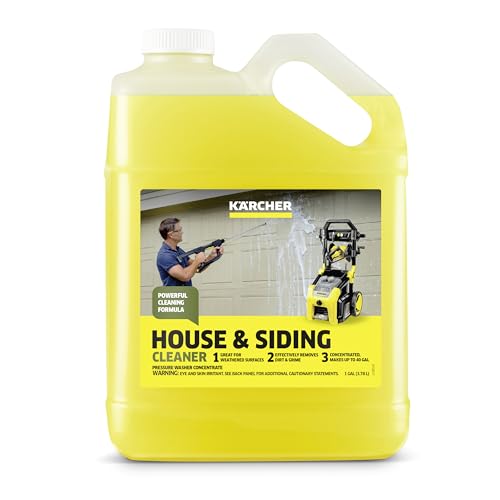


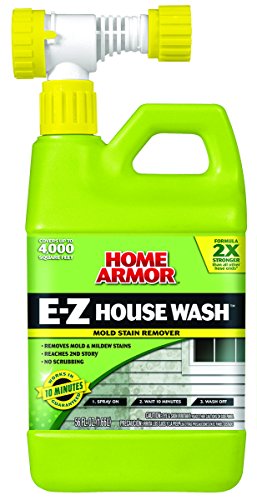

If you want the most hands-off vinyl siding cleaning experience possible, the Home Armor E-Z House Wash is your answer. This 64-ounce hose-end sprayer connects directly to your garden hose — no mixing, no measuring, no bucket. You point and spray, let it dwell for a few minutes, and rinse. The formula is specifically engineered to dissolve algae, mildew stains, and dirt on contact, which means the scrub brush stays in the garage where it belongs.
The hose-end design is the star here. The built-in dilution mechanism meters the concentrate as water flows through, so you get consistent coverage across your entire house without wasting product. For a single-story home, one 64-ounce bottle covers the whole exterior comfortably. The ready-to-use convenience makes this ideal for homeowners who clean their siding once or twice a year and don't want to invest in a pressure washer setup. Results on light-to-moderate mildew and algae are dramatic — surfaces that looked permanently stained often come clean with a single application and a rinse.
On heavily soiled surfaces or deep-set oxidation stains, you may need a second pass or a light wipe-down. But for the vast majority of vinyl siding cleaning jobs in 2026, this is the product that delivers on its "no scrubbing" promise consistently.
Pros:
Cons:
Kärcher is a name synonymous with pressure washing equipment, and their House & Siding Cleaner lives up to that reputation. This is a highly concentrated detergent that makes up to 40 gallons of ready-to-use cleaner from a single bottle — that's enough solution to wash a large multi-story home twice over. If you already own a pressure washer, this is the most cost-effective professional-grade siding cleaner you can buy on Amazon in 2026.
The formula is biodegradable and designed for quick rinsing, which matters more than it sounds. Some lesser concentrates leave a soapy film on siding that attracts new dirt within days of cleaning. Kärcher's quick-rinse chemistry prevents that. The detergent is compatible with all standard pressure washer detergent tanks and works on siding, brick, stucco, concrete, fences, and decks. Mix at the recommended ratio for vinyl siding and you'll see dirt and grime lift immediately as the stream hits the surface.
The trade-off is that you do need a pressure washer to use this effectively. Trying to apply a concentrate of this type with a garden hose dilution sprayer defeats the purpose. But if your cleaning setup already includes a pressure washer, the Kärcher concentrate is one of the smartest buys on this list — the per-gallon cost is dramatically lower than any ready-to-use formula.
Pros:
Cons:
Krud Kutter has built a loyal following among DIY homeowners and professional painters alike, and this Multi Purpose House Wash earns its place on our list with a straightforward spray-and-rinse formula that works across vinyl siding, brick, stucco, and gutters. The 32-ounce concentrated formula is designed for hose-end dilution, so you get extended coverage without paying for a gallon of mostly water.
What sets Krud Kutter apart from basic house washes is its ability to handle mixed-surface exteriors. If your home has vinyl siding alongside brick columns, stucco accents, or painted wood trim, you don't need four different cleaners. Apply it uniformly, let it dwell, and rinse. It tackles dirt, grime, mold stains, and general weathering effectively. For painted surfaces, test a small area first, but on standard vinyl and masonry materials, performance is reliable and consistent. If you're also tackling tough buildup in other areas of your home, check out our guide to the best grout cleaning machines for surfaces where a chemical cleaner alone won't cut it.
The spray-and-rinse application is genuinely no-scrub on light-to-moderate soiling. On older homes with years of buildup, you may need to work in sections and apply a second pass on stubborn spots. At 32 ounces, this isn't the largest bottle on the list, but the concentrated formula means the actual coverage is competitive with larger ready-to-use options.
Pros:
Cons:
If you're dealing with serious mildew — the kind that comes back every spring, clings to shaded north-facing walls, or has visibly blackened sections of your siding — you need a cleaner with actual disinfecting power. Mean Green Mildew Destroyer with Bleach is that cleaner. It doesn't just remove the visible stain; it kills the mildew organism at the surface, which dramatically slows regrowth compared to bleach-free alternatives.
The formula is EPA-registered as effective against Salmonella enterica and Staphylococcus aureus in 30 seconds, which tells you how seriously the active ingredients work. For exterior vinyl siding, this translates to thorough mildew elimination rather than surface-level stain masking. Apply it to the affected sections, let it dwell, and rinse. On moderate mildew, you'll see results in minutes. On severe biological buildup, a second pass may be needed, but the outcome — truly clean siding with delayed regrowth — justifies the extra step.
The bleach content is worth noting. Keep it away from landscaping, rinse thoroughly, and avoid contact with metal fixtures. If you have colored siding, test a small inconspicuous area first to confirm colorfastness. For standard white and light-colored vinyl siding, it's a non-issue. This is also a capable indoor cleaner for soap scum in bathrooms and kitchen surfaces, so the bottle earns its space under the sink after your exterior cleaning day is done. If you're interested in tackling limescale and mineral deposits elsewhere around your home, our best limescale remover guide has solid options worth checking out.
Pros:
Cons:
The EZ House Wash 64oz is the straightforward, no-frills option on this list — and that's actually a selling point. Made in the USA, this formula delivers reliable house washing performance at a price point that makes regular cleaning economically sensible. You're not paying for elaborate packaging or brand marketing premiums; you're paying for a product that cleans your siding effectively.
At 64 ounces, it matches the Home Armor on volume, and the formulation is similarly designed for hose-end application on typical exterior dirt, algae, and light mildew. For homeowners who clean their siding twice a year and want a dependable workhorse formula without paying a premium, this checks every box. The domestic manufacturing is a meaningful differentiator for buyers who prioritize American-made products.
Where it falls short is in the battle against severe mildew or deep-set oxidation — this is a maintenance cleaner, not a heavy-duty remediation product. If your siding is in good overall shape and you're cleaning it regularly, the EZ House Wash keeps it that way efficiently. If you've let things go for five or more years, you may need to start with something stronger and use this for follow-up maintenance.
Pros:
Cons:
Foam cannon cleaning has gone mainstream, and 30 SECONDS has answered with a soap specifically engineered for the format. This 16-ounce concentrate creates an ultra-thick clinging foam that stays on vertical siding surfaces far longer than a liquid spray — and dwell time is where cleaning chemistry does its best work. The longer the formula sits on grime, dirt, and stains, the less mechanical effort you need to remove them.
The formula is compatible with most foam cannons designed for both pressure washers and garden hose sprayers, which makes it accessible even without high-pressure equipment. For pressure washer foam cannon users, the results are impressive: thick foam blankets the siding, dissolves surface contaminants, and rinses clean without leaving residue. For garden hose foam sprayer users, the performance is still solid for light-to-moderate soiling, though heavy grime may require a second pass.
Multi-surface capability is a genuine strength here. Beyond vinyl siding, you can run this same foam cannon session across your wood deck, concrete driveway, brick walls, canvas awnings, and plastic patio furniture. The formula is professional-grade in its cleaning action but gentle enough that you're not worrying about etching or discoloring treated surfaces. For the foam cannon enthusiast who wants one bottle to handle their entire exterior cleaning day, this is the one to buy. You might also want to keep a good heavy-duty spray bottle on hand for detail work and spot treatment after your foam session.
Pros:
Cons:
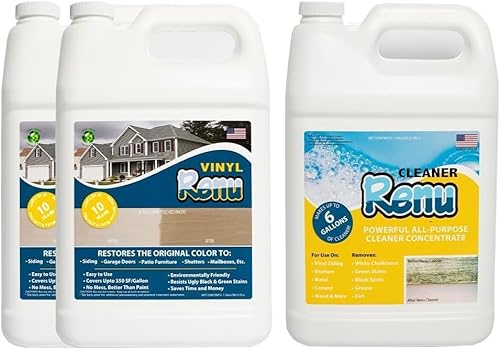
Vinyl Renu isn't a cleaner in the traditional sense — it's a siding restorer, and that distinction is critical. If your vinyl siding is clean but has turned chalky, faded, or lost the deep color it had when first installed, no amount of washing will fix that. Oxidation and UV degradation break down the surface pigments and plasticizers, and that damage is chemical, not just cosmetic. Vinyl Renu reverses that process by penetrating the vinyl surface and restoring the original color and sheen from within.
The results, according to the manufacturer and backed by a 20+ year track record, are immediate and lasting. Apply once and your siding can look new for a decade or more — the formulation includes UV inhibitors that slow the re-oxidation process dramatically. Vinyl Renu works on vinyl, metal (aluminum) siding, and Hardie board (fiber cement), making it genuinely versatile across exterior cladding types. The application process is straightforward: clean the surface first, then apply Vinyl Renu with a cloth or applicator pad and work it into the surface.
This product solves a problem no conventional cleaner can address. If your neighbor painted their siding because they thought fading was irreversible, Vinyl Renu is what they didn't know about. The economics are compelling too — one application every 10 years at a fraction of the cost of repainting or re-siding. For homeowners dealing with older homes where the siding color has genuinely degraded, this is a transformative product that belongs at the top of your research list. If you're freshening up your home's exterior, you might also want to take care of the surrounding areas — our guide to the best upholstery steam cleaners covers interior cleanup that often gets overlooked during exterior projects.
Pros:
Cons:
Your application equipment is the first filter. Match the cleaner to the tools you actually own — buying a concentrate designed for pressure washer detergent tanks when you only have a garden hose is a waste of money and effort.
Not all grime is the same, and the right product depends on what you're actually dealing with.
Know what's on your exterior before you spray anything. Most products on this list are safe for standard vinyl, but there are important caveats.
The sticker price doesn't tell you much. A $15 concentrate that makes 40 gallons beats a $12 ready-to-use bottle that covers one house in actual cost per cleaning.
Most cleaners on this list are optimized for vinyl siding but also work on brick, stucco, and concrete. Hardie board (fiber cement) is compatible with most formulas, though always check the product label first. Wood siding requires more caution — avoid bleach-based products unless specifically labeled as safe for wood, and rinse thoroughly to prevent grain damage. Aluminum siding handles most of these cleaners well. When in doubt, test on a small hidden section and wait 10 minutes before committing to the full surface.
No. Most products on this list work with just a garden hose. The Home Armor E-Z House Wash and EZ House Wash both come as hose-end sprayers — no pressure washer required. Krud Kutter also works with hose-end dilution. The Kärcher concentrate and 30 SECONDS Foam Cannon Soap are most effective with a pressure washer or foam cannon, but the garden hose options are genuinely capable for average residential cleaning jobs.
Most homes benefit from one thorough cleaning per year, typically in spring after winter grime has accumulated. Homes in humid climates, surrounded by trees, or on the north-facing side of a property may develop algae and mildew faster and benefit from cleaning twice per year. If you see visible green film, black streaks, or chalky oxidation starting, clean immediately rather than waiting for the annual schedule — the longer biological growth sits, the harder it becomes to remove without scrubbing.
Use bleach-based cleaners carefully around landscaping. Pre-soak the soil and plant foliage near your work area with plain water before applying the cleaner — saturated soil absorbs less chemical runoff. Work in sections and rinse each section completely before moving on. Avoid spraying directly onto plants or grass. After cleaning, flush the surrounding area with water again. Most diluted bleach-based formulas used at recommended concentrations won't kill established plants if you follow these steps, but dense flower beds directly adjacent to the foundation are the highest-risk areas to manage carefully.
Avoid cleaning in direct hot sunlight if possible. High surface temperatures cause cleaning solutions to evaporate before they can dwell and work effectively, reducing cleaning performance and potentially leaving streaks. Work in the early morning or evening, or tackle sections that are in shade first. On overcast days, you have more flexibility. If you must work in sun, work in smaller sections, apply the product, and rinse quickly before it dries on the surface.
A cleaner removes surface contamination — dirt, algae, mildew, grime. A restorer addresses subsurface chemical degradation — oxidation, UV fading, color loss. Cleaning can make faded siding look somewhat better by removing the chalky residue that accumulates on oxidized surfaces, but it can't reverse the underlying pigment and plasticizer breakdown. Vinyl Renu is a restorer: it penetrates the vinyl and rebuilds the color and finish from within. If your siding is clean but still looks dull and faded, a restorer is what you need, not more cleaning product.
 |
 |
 |
 |

About Liz Gonzales
Liz Gonzales grew up surrounded by art and design in a New York suburb, with both parents teaching studio arts at the State University of New York. That environment sharpened her eye for aesthetics and spatial detail — skills she now applies to evaluating home products where form and function both matter. She has spent the past several years writing about lighting, home decor accessories, and outdoor living gear, with a particular focus on how products perform in real residential settings rather than showrooms. At Linea, she covers lighting fixtures and bulb reviews, outdoor and patio gear, and general home product comparisons.
You can Get FREE Gifts. Furthermore, Free Items here. Disable Ad Blocker to receive them all.
Once done, hit anything below
|
|
|
|