
Which heavy duty steam vacuum cleaner actually delivers the deep clean your home deserves, and which ones are just marketing hype wrapped in plastic? If you have been staring at listings wondering whether to invest in a canister unit or a compact stick-style cleaner, you are not alone. The McCulloch MC1385 is our top pick for 2026 — it combines a 2-hour runtime, 23 accessories, and chemical-free power that few competitors can match at the price point. But the right machine depends on your floor types, your cleaning frequency, and how much storage space you actually have. Read on and we will walk you through every worthy contender on the market right now.
Steam cleaning technology has come a long way from the bulky commercial-only machines of previous decades. Today's best units heat water to temperatures exceeding 200°F and deliver pressurized steam that dissolves grease, kills bacteria, and lifts embedded grime without a single drop of chemical cleaner. That matters especially if you have children, pets, or anyone in your household with chemical sensitivities. The cleaning category has exploded with options in recent years, but not all steam cleaners are built equally — tank capacity, steam pressure, accessory quality, and heat-up time separate the genuinely useful machines from the frustrating ones that run cold after fifteen minutes. Understanding those distinctions is what this guide is built to do.
We have evaluated canister units, upright designs, and combination steam mops across multiple real-world use cases — tile grout, carpet fibers, sealed hardwood, automotive upholstery, kitchen appliances, and bathroom surfaces. Whether you are upgrading from a basic mop or replacing a worn-out unit, the reviews and buying guidance below will help you make a confident, informed decision. If you are also dealing with embedded pet stains, pairing your steam cleaner with one of the best carpet shampooers for pets gives you a two-stage system that handles even the most stubborn biological messes.
Contents


The McCulloch MC1385 sets the standard for what a household canister steam cleaner should deliver in 2026. Its large-capacity boiler produces continuous steam for up to two full hours without requiring you to stop, refill, and wait for the tank to re-pressurize — a frustration that plagues nearly every budget competitor on the market. That 2-hour runtime on a single fill is the single most important operational advantage the MC1385 holds over its siblings and rivals, and it is the reason professional detailers and serious home cleaners keep recommending this unit year after year. The steam reaches surfaces at high pressure and consistent temperature, which means grease on stovetop grates, mildew in tile grout, and brake dust on wheel wells all respond quickly without scrubbing.
McCulloch packs 23 accessories into the package, and most of them are genuinely useful rather than padding the box count. The brass brush is essential for grout work, the squeegee transforms bathroom tile and glass cleaning, and the angled nozzle lets you reach behind toilet bases and under appliance lips that standard mop heads cannot access. Every accessory stores on-board or in the included bag, which keeps your cleaning caddy organized rather than scattered across a shelf. The canister design rolls smoothly across floors on integrated casters, and the hose length gives you enough reach to clean vehicle interiors, engine bays, and upholstery without repositioning the unit every few minutes.
Build quality is solid throughout — the plastic housing feels dense rather than hollow, the connections seat firmly without leaking steam, and the fill cap seals reliably under pressure. If you are stepping up from a basic steam mop and want a machine that handles every surface in and around your home without chemicals or repeat passes, the MC1385 is the cleaner to buy. It costs more than the MC1275, but the runtime upgrade alone justifies the difference for anyone who cleans large homes or detailed vehicles regularly. For comparison with other floor-specific machines, our guide to the best laminate floor cleaner machines covers complementary options if you have sensitive flooring throughout your home.
Pros:
Cons:
If the MC1385 is beyond your budget but you still want genuine McCulloch performance and build quality, the MC1275 delivers the same core technology at a meaningfully lower price. The runtime drops to 45 minutes per fill rather than the flagship's two hours, and the accessory count trims from 23 down to 18, but the fundamental cleaning mechanism — pressurized chemical-free steam — remains identical. For smaller homes, apartment living, or users who clean in focused sessions rather than marathon whole-house sessions, the MC1275's limitations rarely present a real problem. You fill, heat, clean one or two rooms, and you are done before the tank runs dry.
The 18 included accessories cover all the essential bases: floor mop with pads for hard floors, nylon brushes for general scrubbing, a brass brush for heavy grout and metal work, a squeegee for glass and smooth tile, and a scrub pad for stubborn stuck-on residue. The accessory quality matches the MC1385 — these are not cheap plastic attachments that crack after a dozen uses. McCulloch has kept the same connector system across both models, so the accessories are interchangeable and replacement parts are widely available. The MC1275 also handles personal car detailing effectively; the combination of targeted nozzles and sustained high-temperature steam loosens road grime, dissolves interior stains, and sanitizes fabric surfaces without leaving chemical residue or damp patches that take hours to dry.
Where the MC1275 earns its value-pick designation is the balance of coverage and cost for a typical household. If you are cleaning ceramic tile bathrooms, sealed kitchen floors, laminate in common areas, and occasional automotive work, this machine handles all of it without asking you to pay for the extended runtime capacity you would rarely use anyway. The shorter sessions actually encourage you to clean more frequently, which is arguably better for surface maintenance than one long session every few weeks. For anyone who has been relying on a basic spin mop and wants a genuine step up in sanitation and surface results, the best rug shampooer and cleaning machine options paired alongside this unit create a comprehensive floor-care system.
Pros:
Cons:
The Vax 15-in-1 Steam Fresh Combi takes a different design philosophy than either McCulloch canister model, packaging steam cleaning versatility into a lightweight combination unit that transitions quickly between upright mop mode and handheld detail mode. That flexibility is the core selling proposition here, and for the right user it is genuinely compelling. Fifteen cleaning configurations in a single compact machine means you are not storing a large canister unit plus a separate handheld steamer — you have one tool that adapts to floor cleaning, countertop sanitizing, bathroom detail work, and garment steaming without buying multiple appliances. The 0.5-litre tank is smaller than either McCulloch unit by design, keeping the overall weight manageable during upright use.
The Steam Fresh Combi heats up quickly and delivers consistent steam at temperatures suitable for sanitizing hard surfaces, loosening soap scum, and refreshing fabric upholstery. The combination design means the hose and nozzle system detaches cleanly so you can switch from mopping a kitchen floor to steaming a bathroom vanity without carrying a separate unit into the room. Vax has built a strong reputation in the UK market for durable steam cleaning products, and the build quality here reflects that heritage — the plastic housing is lightweight but does not feel fragile, and the steam output remains steady throughout the tank cycle rather than tapering as the water level drops. The accessories cover the most common household tasks effectively, including a range of brushes, a carpet glider, and nozzles sized for different detail work.
The trade-off you accept with the Vax is the smaller tank capacity compared to the McCulloch canister models. If your cleaning sessions typically run longer than the tank allows, you will refill more frequently than you would with the MC1385. The Vax is also better suited for hard surface sanitizing and light fabric work than for heavy-duty grout scrubbing or automotive deep cleaning, where the sustained high-pressure output of a purpose-built canister unit has a clear edge. That said, for urban apartments, studio layouts, and households where storage space is genuinely limited, the Vax 15-in-1 delivers a breadth of cleaning capability in a footprint that neither McCulloch matches. According to Wikipedia's overview of steam cleaning technology, steam at temperatures above 175°F eliminates the vast majority of common household bacteria and allergens on contact — a benchmark the Vax comfortably meets on hard surfaces.
Pros:
Cons:

Picking the right steam cleaner in 2026 comes down to matching the machine's core specifications to the way you actually clean, not the way you imagine you might clean. Here are the four criteria that matter most when you are making this decision.
Tank capacity is the variable that most directly determines how satisfying or frustrating your cleaning sessions will be. A machine with a small tank — under 0.75 litres — will require refills during any whole-home session, and every refill means waiting for the boiler to re-pressurize before you can continue. Canister units with larger tanks like the MC1385 give you uninterrupted two-hour sessions that let you move room to room without stopping. If you clean a 1,000 square foot apartment twice a week, a 0.5-litre tank is perfectly serviceable. If you are maintaining a 2,500 square foot house or regularly detailing vehicles, you want the largest tank you can afford. Consider also how often you plan to use the machine — infrequent users often overestimate how much runtime they need, while daily cleaners consistently underestimate it.
Not all steam cleaners produce steam at the same pressure or temperature, and those differences translate directly into cleaning performance on tough jobs. Higher-pressure steam penetrates grout joints, lifts embedded carpet fibers, and dissolves polymerized grease on kitchen surfaces far more effectively than low-pressure output that simply wets the surface without doing meaningful mechanical work. Look for units that specify operating temperatures above 200°F and sustained pressure ratings rather than peak figures measured at startup. Consistent output throughout the tank cycle is what separates professional-grade units from entry-level machines that start strong and taper as the water heats out. Canister units with sealed boiler chambers generally maintain more consistent pressure than open-reservoir designs.
The accessories included with a steam cleaner determine the range of surfaces and tasks you can tackle without buying aftermarket attachments. Evaluate the accessory set against your specific cleaning environment before purchasing rather than using total count as a proxy for quality. Key accessories to prioritize include:
On-board accessory storage is a practical feature that keeps your workflow efficient — hunting through a separate bag for the right brush while holding a hot steam wand is exactly the kind of friction that makes cleaning feel like a chore rather than a routine. Connectivity standards also matter: if the manufacturer uses a proprietary connector, check that replacement accessories are widely available before you commit.
Steam cleaners come in three primary configurations — upright mop, canister, and combination units — and each design fits a different cleaning pattern and storage situation. Upright steam mops are fast to deploy and intuitive for routine floor maintenance but limited in surface versatility. Canister units like both McCulloch models offer the broadest surface coverage and highest performance but require more storage space and take slightly longer to move between tasks. Combination units like the Vax 15-in-1 split the difference, offering genuine multi-mode flexibility in a compact footprint at the cost of some raw performance on heavy-duty tasks. Your available storage space is a practical constraint that should factor into your decision early, not as an afterthought — a large canister unit that ends up stored in an inconvenient location will get used far less than a compact unit that lives in the broom closet. If you are building out a complete floor care toolkit, our review of the best spin mop and bucket systems covers the complementary wet mopping side of hard floor maintenance that steam cleaners work well alongside.
For hard sealed surfaces like tile, grout, sealed hardwood, laminate, and vinyl, a quality steam cleaner absolutely replaces chemical floor cleaners and delivers superior sanitization results at the same time. Steam at temperatures above 200°F kills the vast majority of household bacteria and allergens on contact without leaving chemical residue that requires rinsing. That said, you still need dry dusting or vacuuming before steaming to remove loose debris, since steam pushes particles around rather than collecting them. For unsealed wood, unglazed stone, or surfaces with worn finishes, steam cleaning requires caution — always check the flooring manufacturer's recommendations before applying steam to a surface you are uncertain about.
Heat-up time varies by tank size and boiler design, but most canister units in this category reach operating temperature in 8 to 12 minutes from a cold start. Smaller handheld and combination units typically heat faster — often in under 5 minutes — because their boiler chambers hold less water. The McCulloch MC1385 and MC1275 both fall in the 8 to 10 minute range for initial heat-up, which is worth factoring into your cleaning routine. Some users start the unit while gathering their accessories and clearing the floor, so the heat-up time does not feel like dead waiting time. Units that advertise 30-second heat-up times are invariably low-pressure designs that do not deliver sustained high-temperature steam for tough cleaning tasks.
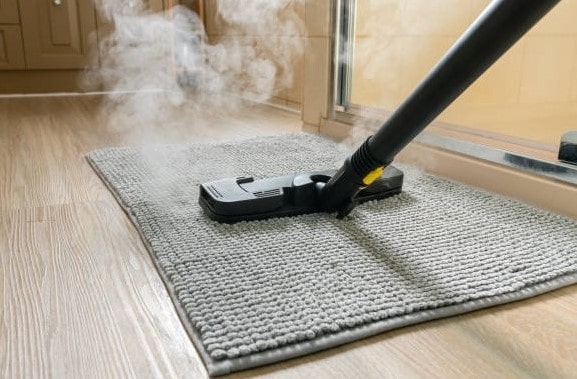
Steam cleaning is safe for most carpet and upholstery when you use the correct accessory and technique, but the results differ from hard surface cleaning in important ways. On carpet, steam loosens and sanitizes surface-level fibers and kills dust mites effectively, but it does not extract the loosened debris the way a wet extractor does — you steam, then vacuum, rather than expecting the steam alone to remove embedded dirt. For upholstery, the fabric type matters significantly: synthetic and natural fiber upholstery with colourfast dyes generally responds well, while delicate fabrics like silk, velvet, or anything labelled dry-clean-only should not be steam cleaned at all. Always test in an inconspicuous area first and keep the steam head moving to avoid saturating any single spot.
Several surface types are genuinely incompatible with steam cleaning and will be damaged by high-temperature pressurized moisture. Avoid steam cleaning on unsealed hardwood floors, unglazed ceramic or natural stone that has not been sealed, delicate painted surfaces, antique furniture with shellac or wax finishes, and any laminate flooring that the manufacturer has specifically marked as not steam-mop compatible. Steam can also damage electronics, rubber gaskets on certain appliances, and cardboard or particleboard materials. In the automotive context, avoid directing sustained steam onto rubber seals, electrical connectors, and sensors — the MC1385's car detailing capability is best applied to painted bodywork, interior hard plastics, glass, and upholstery rather than under-hood electrical components.
Descaling frequency depends entirely on your local water hardness. In areas with hard water — which is the majority of the United States — mineral deposits accumulate in the boiler tank and on internal components with every use cycle, gradually reducing steam output pressure and eventually shortening the unit's functional lifespan. Descaling every 2 to 3 months is the standard recommendation for hard-water households that use the unit weekly. McCulloch units typically use a distilled-water or descaling-tablet approach; always check your specific model's manual before using any descaling solution to confirm compatibility. Using distilled or filtered water from the start significantly slows mineral buildup and extends the time between required descaling treatments.
The bactericidal effectiveness of steam cleaning is well-documented and not simply marketing language. Steam at sustained temperatures of 175°F and above destroys the cellular structure of most common household bacteria, including E. coli, Salmonella, and Staphylococcus, as well as dust mite bodies and eggs, mold spores, and many common allergens — all without chemical disinfectants. The key variable is dwell time: you need to maintain the steam contact with the surface long enough for the heat to penetrate, which means moving the steam head slowly and deliberately over contaminated areas rather than sweeping it quickly. This is particularly relevant for grout joints, mattress seams, and carpet fibers where allergens concentrate in protected micro-environments that surface wiping cannot reach.
Buy the largest tank you can store comfortably — runtime is the one spec you will never regret having more of, and the one you will always notice when it runs short.
 |
 |
 |
 |

About Linea Lorenzo
Linea Lorenzo has spent over a decade testing home gadgets, cleaning products, and consumer electronics from his base in Sacramento, California. What started as a personal obsession with keeping his space clean and stocked with the right tools evolved into a full-time writing career covering the home products space. He has hands-on experience with hundreds of cleaning solutions, robotic and cordless vacuums, and everyday household gadgets — evaluating them for performance, value, and real-world usability rather than spec sheet appeal. At Linea, he covers home cleaning guides, general how-to tutorials, and practical product advice for everyday home care.
You can Get FREE Gifts. Furthermore, Free Items here. Disable Ad Blocker to receive them all.
Once done, hit anything below
|
|
|
|