
Heating systems running with improper air-fuel ratios waste up to 30% of their fuel, according to the U.S. Department of Energy — and a quality combustion analyzer is the single tool that tells you exactly where that efficiency is being lost. Whether you're an HVAC technician tuning a residential furnace or a facilities engineer managing industrial boilers, the right analyzer gives you hard data on flue gas composition, stack temperature, oxygen levels, and CO concentrations in real time. Without it, you're guessing.
In 2026, the combustion analyzer market ranges from compact residential units under $500 to fully spec'd multi-gas instruments exceeding $3,000. The differences aren't just price — they reflect sensor count, measurement accuracy, data logging capability, and whether the unit is rated for residential or commercial work. Choosing the wrong tool for your application means either overspending on features you won't use, or fielding a unit that can't handle the job site demands you face daily.
This guide reviews seven of the top-rated combustion analyzers available right now, breaking down their specs, real-world performance, and who each one is built for. If you're also outfitting your HVAC toolkit, check out our roundup of the best dryer vent cleaning kits — another essential for complete system maintenance. For a deeper breakdown of how these instruments work and what to prioritize when buying, visit our full combustion analyzer guide.
Contents
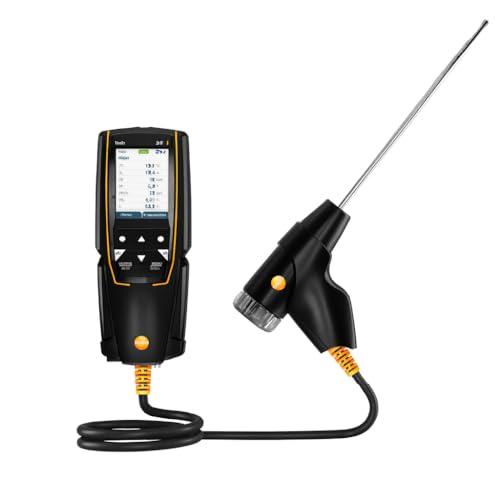




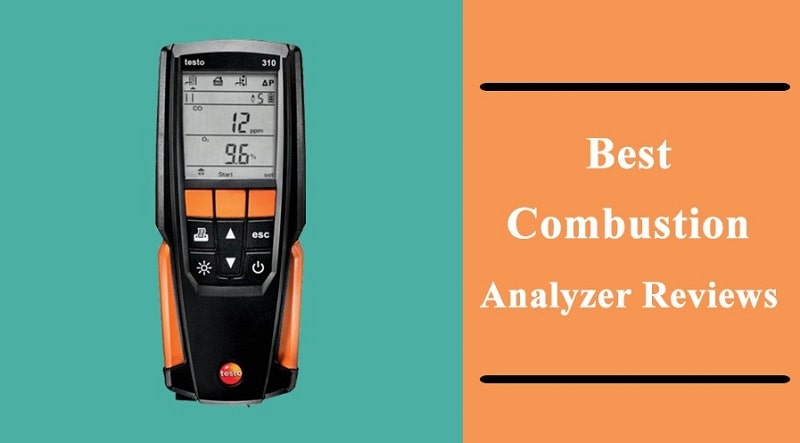
The testo 310 II establishes itself as the best all-around combustion analyzer for HVAC professionals in 2026 by packing a comprehensive measurement suite into a well-designed, app-connected package. It measures flue gas O2, CO (without H2 compensation), draft, flue gas temperature (via K-type and J-type thermocouple), efficiency, flue gas loss, and ambient CO simultaneously. That's a full diagnostic picture on one screen, without toggling between modes or waiting for sensor warm-up cycles.
The smart app integration is a genuine differentiator here. You can view, log, and share measurement data wirelessly — a feature that becomes indispensable when you're documenting compliance work or sending reports to clients directly from the job site. The intuitive menu reduces the learning curve significantly; technicians new to the unit report being productive within minutes, not hours. Sensor accuracy across its stated ranges is tight, and the probe construction is solid enough for daily field use.
Where the 310 II makes its trade-offs: it measures CO without H2 compensation, which matters in environments where hydrogen cross-sensitivity could skew readings. For residential natural gas and oil furnace work, this is rarely a problem. For industrial or mixed-fuel environments, you'll want to consider a unit with H2-compensated CO sensors. Build quality is premium Testo — the instrument feels substantial, not plastic-cheap, and the probe assembly is designed for longevity.
Pros:
Cons:
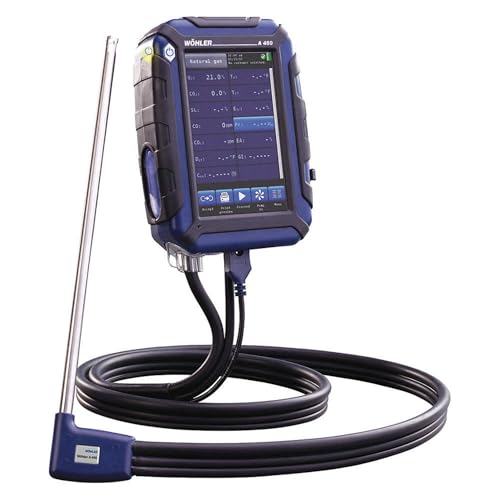
Germany's Wohler has a decades-long reputation in combustion diagnostics, and the Model A 450 L represents the upper tier of what that reputation produces. This instrument is built for professionals who demand durability and display clarity above all else. The 5-inch color touchscreen is impact-resistant and large enough to read all measured values simultaneously at a glance — a critical advantage when you're working in dimly lit mechanical rooms or awkward crawl spaces. The rugged housing is engineered to handle the physical demands of industrial environments.
Made in Germany, the A 450 L reflects European manufacturing standards in its sensor calibration, material selection, and QC processes. The all-measured-values-at-a-glance display philosophy means you're not hunting through sub-menus during a service call — every critical parameter is on screen at once. For service contractors who invoice by the hour, that readability directly translates to faster diagnostics and more jobs per day.
The trade-off is cost. The Wohler 8390 carries a price tag that positions it firmly in the professional and commercial segment. It's not the unit you buy for occasional residential tune-ups. But for HVAC service companies, boiler technicians, and commercial facilities teams who use combustion analyzers daily, the investment in Wohler's build quality and display engineering is defensible. Data logging and reporting capabilities align with what professional technicians expect at this price point.
Pros:
Cons:
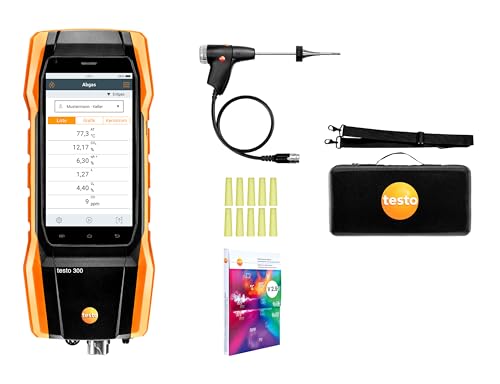
The testo 300 HVAC Kit is purpose-built for residential combustion work — furnaces, boilers, and water heaters — and it excels in that role. Its CO and O2 sensors carry a six-year life expectancy, which is exceptional in a segment where sensor replacement costs often exceed the original purchase price within three years. The CO range extends to 4,000 ppm, covering even worst-case scenarios in poorly maintained systems. On top of that, the unit measures temperature, draft, and differential pressure in a single package.
The standby-to-measurement workflow is notably well executed. One button press from standby initiates measurement — no boot sequence, no warm-up delay, no fumbling through screens. Extra-strong rear magnets allow hands-free operation, which matters when you're navigating a boiler room solo. The kit includes a spare probe, giving you built-in redundancy without a separate accessory purchase. Testo designed this one for technicians who run residential service calls back-to-back.
The testo 300 connects to the testo Smart App for wireless data transfer and report generation. Compared to its sibling, the 310 II, the 300 is oriented toward simpler residential applications rather than complex flue gas analysis scenarios. If your work is primarily residential — especially natural gas — the 300 kit delivers exceptional value. It measures CO, O2, temperature, draft, and differential pressure reliably, with sensor longevity that justifies the investment over a multi-year service life.
Pros:
Cons:
UEi's C161C earns its place in this roundup through a combination of practical design and an industry-standout warranty program. The unit ships with a hard carrying case — protection that matters when instruments ride in service vans over rough terrain daily. The large 6-line backlit display is easy to read in low-light environments, and the UEi Service+ program offers up to a 10-year warranty with annual recertification — a commitment level that few competitors match and that directly reduces your total cost of ownership over a long service life.
Annual recertification is not just a warranty claim; it's a calibration maintenance schedule built into the ownership experience. For technicians who depend on measurement accuracy for compliance documentation, knowing the instrument is regularly calibrated and warranted provides genuine peace of mind. UEi positions the C161C squarely in the residential HVAC segment, covering the measurements that matter most for furnace and boiler tune-up work.
The C161C is a no-frills, get-it-done unit. It won't impress with a giant color touchscreen or Bluetooth connectivity. What it delivers is reliability, readable output, physical protection via its included case, and a warranty program that backs you up year after year. If long-term cost certainty and manufacturer support matter more than premium features, the UEi C161C is the rational choice. Pair it with a thorough understanding of HVAC maintenance tools — our guide to the best underground wire locators covers another essential diagnostic instrument for field technicians.
Pros:
Cons:
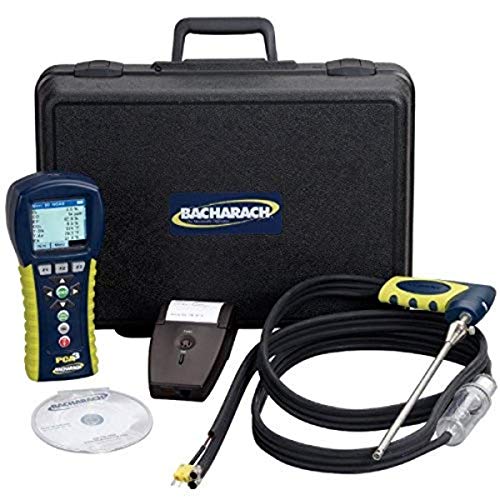
The Bacharach PCA3 265 is in a different category from residential analyzers. Its six-sensor electrochemical array — field-upgradable — supports O2, CO, NO, NO2, and additional gases depending on configuration. Field-upgradable sensors mean you're not locked into the configuration you bought; as your work expands into new fuel types or regulatory requirements, the instrument grows with you. This is the combustion analyzer for commercial boiler plants, industrial burner systems, and emissions compliance work where multi-gas measurement is non-negotiable.
The large full-color graphic display with bright backlighting, zoom display function, and dimming mode reflects Bacharach's understanding of the varied lighting conditions professionals work in — from bright outdoor installations to dark mechanical rooms. The built-in printer is a significant differentiator: on-site report printing for client sign-off or regulatory documentation, without needing a phone, app, or separate Bluetooth printer. U.S.-based calculation standards are baked in, which matters for engineers working to ASHRAE or EPA compliance frameworks.
Measurements include O2, stack temperature, primary and ambient temperature, and pressure/draft. The PCA3's NOx measurement capability puts it in compliance territory that simpler residential analyzers can't reach. It's a heavier, more complex instrument — the learning curve is steeper, and the price reflects its capabilities. But for commercial and industrial combustion work in 2026, it's one of the most capable portable analyzers available in this format.
Pros:
Cons:
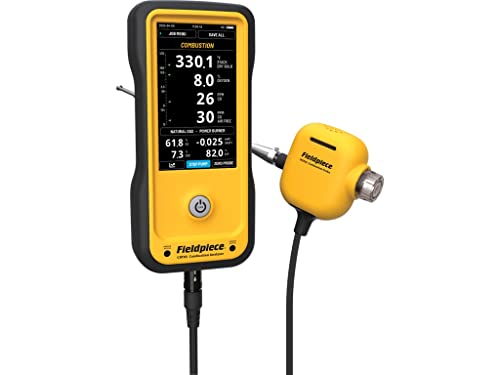
Fieldpiece built its reputation in HVAC test instruments by understanding what technicians actually need on the job, and the CAT85 reflects that philosophy. Its most distinctive feature is live draft monitoring combined with a built-in manometer — measuring combustion efficiency and system pressure in the same unit, simultaneously. For residential and light commercial HVAC work, eliminating a separate manometer from your toolkit is a meaningful simplification. One instrument, two critical measurements, one hand.
The CAT85 is compact and designed for portability — a factor that matters when you're carrying a tool bag up stairs or into attic spaces. Fieldpiece's ecosystem integration is also worth noting: if you already use Fieldpiece meters and gauges, the CAT85 connects into the same workflow and, where applicable, the same app platform. The live draft reading updates continuously rather than requiring discrete test sequences, giving you a real-time view of system behavior as you make adjustments.
Fieldpiece manufactures the CAT85 in China. For buyers focused on manufacturing origin, that's a relevant data point. Performance-wise, technicians report accurate and repeatable readings across typical residential fuel types. The instrument covers the measurement parameters essential for residential combustion tune-ups: O2, CO, efficiency, flue temperature, and live draft via the integrated manometer. It won't replace a multi-gas commercial analyzer, but it delivers everything a residential HVAC technician needs in a compact, logically organized package.
Pros:
Cons:
The Bacharach Fyrite Intech is the entry point to the Bacharach combustion analyzer lineup, and it offers the brand's core measurement quality — O2 and CO — at a more accessible price. The CO accuracy specification of ±10 ppm from 0–200 ppm and ±5% from 201–2,000 ppm gives you precise readings in the ranges most relevant to residential safety checks. CO2 resolution of 0.1% is suitable for standard combustion efficiency assessments on natural gas and oil systems.
This is a focused instrument. It measures O2, CO, and CO2, and it does those measurements accurately. It doesn't attempt to be a multi-parameter analyzer with pressure, NOx, or differential measurement — and that simplicity is actually a feature for users who need reliable CO and O2 readings without paying for capabilities they'll never use. It's powered by four AAA batteries, which makes field replacement easy when you don't have a charging outlet available.
The Fyrite Intech comes with a carrying case and is designed for straightforward residential and light commercial combustion checks. It's the right choice for independent service technicians who perform combustion analysis as one part of a broader maintenance visit, not as the primary diagnostic instrument for complex systems. Bacharach's measurement heritage — the company has been building combustion instruments since 1909, as documented on Wikipedia's combustion analysis entry — provides meaningful credibility even at this price point. If you need a reliable backup analyzer or a primary unit for occasional residential work, the Fyrite Intech is the sensible pick.
Pros:
Cons:
The combustion analyzer market in 2026 spans a wide range of capabilities and price points. Before you buy, you need to match the instrument to your actual work — not the most expensive spec sheet you can find. Here's what to evaluate.
This is the first and most important filter. Your application determines which parameters you actually need to measure, and instruments are engineered for specific use cases.
Trying to use a residential analyzer for commercial work — or overpaying for industrial capability you'll never deploy — are both expensive mistakes. Match the instrument to the site.
Electrochemical sensors are the heart of any combustion analyzer, and their performance degrades over time. Sensor replacement costs can approach 30–50% of the original instrument price — a factor that dramatically affects total cost of ownership calculations.
How you read and record data is as important as how accurately you measure it. Modern combustion analysis increasingly requires documentation — for client reports, regulatory compliance, or service records.
Combustion analyzers work in demanding environments — hot flue gases, particulate-heavy exhausts, and the physical demands of field service work. Build quality is not a cosmetic consideration.
For technicians building out a complete diagnostic toolkit, our review of the best power supply testers covers another precision measurement instrument worth adding alongside your combustion analyzer.
A combustion analyzer measures the composition and properties of exhaust gases produced by a combustion process. Core measurements include oxygen (O2) content, carbon monoxide (CO), carbon dioxide (CO2), flue gas temperature, stack draft, combustion efficiency, and flue gas losses. Advanced units also measure nitrogen oxides (NO, NO2), sulfur dioxide (SO2), and ambient CO for technician safety. Together, these readings tell you whether a heating system is burning fuel completely, safely, and efficiently.
Most manufacturers recommend annual calibration for combustion analyzers used in regular field service. Electrochemical sensors drift over time and with exposure to high concentrations of target gases. The UEi C161C's annual recertification program builds this schedule into the warranty. For compliance and documentation work, more frequent calibration may be required by regulatory standards. Always check the calibration date before relying on readings for client reports or regulatory submissions.
O2-based analysis measures the residual oxygen in flue gases directly, which is the more accurate and reliable method used in modern electronic analyzers. CO2-based analysis calculates CO2 levels from O2 readings or measures them directly — it was more common in older chemical (orsat) analyzers. Electronic combustion analyzers in 2026 use electrochemical O2 sensors as the primary measurement and derive CO2 and efficiency from that baseline. O2 measurement is more precise and less susceptible to interference from different fuel types.
You can use a residential analyzer for basic checks on small commercial boilers, but the measurements may be insufficient for full compliance work. Commercial boilers often require NOx measurement, extended CO ranges, pressure measurement capabilities, and printed documentation that residential units don't provide. For commercial applications, the Bacharach PCA3 with its multi-gas sensor array and built-in printer is the appropriate choice. Using an underpowered instrument for commercial compliance work risks incomplete diagnostics and regulatory non-compliance.
For residential heating systems, CO levels in flue gas are monitored differently from ambient CO. In flue gas, CO concentrations above 200 ppm (air-free) on natural gas systems indicate incomplete combustion and require investigation. The EPA's indoor air quality guidelines identify ambient CO above 35 ppm as a health concern for extended exposure. A properly tuned residential furnace should produce ambient CO readings well below this threshold. Elevated flue gas CO combined with draft issues can indicate a cracked heat exchanger — a life-safety situation requiring immediate remediation.
Both are excellent for residential work, with different emphasis. The testo 310 II is better suited for technicians who handle a wider range of heating systems — it supports both K-type and J-type thermocouples and measures pressure in addition to the standard suite, making it more versatile for complex flue and exhaust gas analysis. The testo 300 kit prioritizes simplicity and long sensor life (up to 6 years) with one-button operation and strong rear magnets for hands-free use. For high-volume residential service with maximum ease of use, the 300 kit is the practical choice. For technicians who also handle more complex or varied systems, the 310 II's broader measurement capability makes it the better investment.
The right combustion analyzer isn't the one with the most sensors — it's the one calibrated to your actual job site, with sensor longevity and support you can count on year after year.
 |
 |
 |
 |

About Linea Lorenzo
Linea Lorenzo has spent over a decade testing home gadgets, cleaning products, and consumer electronics from his base in Sacramento, California. What started as a personal obsession with keeping his space clean and stocked with the right tools evolved into a full-time writing career covering the home products space. He has hands-on experience with hundreds of cleaning solutions, robotic and cordless vacuums, and everyday household gadgets — evaluating them for performance, value, and real-world usability rather than spec sheet appeal. At Linea, he covers home cleaning guides, general how-to tutorials, and practical product advice for everyday home care.
You can Get FREE Gifts. Furthermore, Free Items here. Disable Ad Blocker to receive them all.
Once done, hit anything below
|
|
|
|