
Which steam mop actually belongs on your hardwood floors — and which ones will warp them, void your warranty, or leave streaks you never asked for? That's the question every homeowner should ask before buying. If you want the short answer: the Reliable Pronto Plus 300CS is our top pick for most people cleaning hardwood, laminate, and tile in 2026. But the right choice depends on your floor type, your cleaning habits, and whether you need a machine that does more than just mop. Keep reading — we break it all down.
Steam mops have come a long way since the basic pad-on-a-stick design. Today's models pump out pressurized steam that lifts grease, bacteria, and grime without a single drop of chemical cleaner. That matters for hardwood floors especially, where harsh detergents can dull the finish over time and even penetrate the wood grain. According to the U.S. Environmental Protection Agency, reducing chemical cleaning agents indoors improves air quality significantly — so switching to steam is a smart move for your family and your floors.
Before we dive into the hands-on reviews, it's worth understanding where steam mops fit in your broader cleaning toolkit. They complement — not replace — a good vacuum. You'll still want to remove dry debris before steaming; otherwise, you're just pushing grit around. If you're also dealing with stubborn grout lines alongside your hardwood, check out our guide to the best grout cleaning machines for a deeper look at dedicated grout tools. And if you're unsure whether your flooring is worth the investment, our comparison of ceramic tile vs. hardwood flooring costs might help you put everything in perspective.

Contents


The McCulloch MC1385 is not a slim, minimalist steam mop. It's a full canister system with a 48-ounce boiler, 23 accessories, and a 2-hour runtime that positions it as a genuine all-in-one cleaning workhorse. If your home has hardwood, tile, grout, granite, laminate, and a couple of cars in the garage — this is the machine that covers all of it without needing a second appliance. The pressurized steam reaches surfaces that a conventional mop can't touch, including grill grates, appliance interiors, and deep-set grout channels.
On hardwood floors specifically, the MC1385 delivers consistent, even steam through its floor mop attachment. The key here is control: you regulate how much steam contacts the floor, which is critical on sealed hardwood where excess moisture is the enemy. The machine heats up in roughly 8–10 minutes and maintains steady pressure throughout the session. The 23-piece accessory kit includes nylon and brass brushes, a squeegee, a scraper, an angled nozzle, and reusable mop pads — all of which store on-board or in the included bag. That kind of organization matters when you're switching from floors to a bathroom to a car interior in a single cleaning session.
The trade-off is size and setup time. The canister design is bulkier than a stick-style steam mop, and you'll be dragging the unit behind you as you mop. For a studio apartment or a small kitchen, that's overkill. But for a 2,000-square-foot home where you want one machine to do genuine deep cleaning across every surface, the MC1385 earns its place. The 2-hour runtime is genuinely useful — you can tackle a full house without stopping to refill and re-heat.
Pros:
Cons:
The Reliable Pronto Plus 300CS earns the top spot in this roundup because it solves the hardest problem with steam mops on hardwood: giving you enough power to actually clean while giving you enough control to avoid damaging the floor. At 1,200 watts, it generates consistent, controllable steam that cuts through grime without flooding your boards with excess moisture. The 2-in-1 design separates into a handheld steam cleaner and a floor mop, which means you can go from mopping the kitchen floor to blasting a stubborn stain on your countertop without grabbing a second machine.
Fast heat-up is a real feature, not marketing language. The 300CS is ready in under 30 seconds in most conditions, which changes how you think about steam cleaning — it becomes something you do quickly between tasks rather than a production you schedule around. The steam time is long enough to handle a full apartment in one pass. Pair that with the 14-piece accessory kit (which includes microfiber floor pads, a steam jet nozzle, a grout brush, and a window squeegee) and you have a legitimately capable machine that doesn't feel like it belongs in a commercial cleaning fleet. If you're also researching vacuum options for your tile or hardwood, our best vacuum for tile floors guide pairs well with this review.
The wall mount storage bracket is a detail that separates the Pronto Plus from competitors at similar price points. You can mount the unit on a wall, hang the cord, and store every accessory in one place. That's the kind of thoughtful design that makes a cleaning product feel like it was built by someone who actually uses cleaning products. For everyday hardwood floor maintenance in 2026, this is the machine we'd put in our own homes without hesitation.
Pros:
Cons:
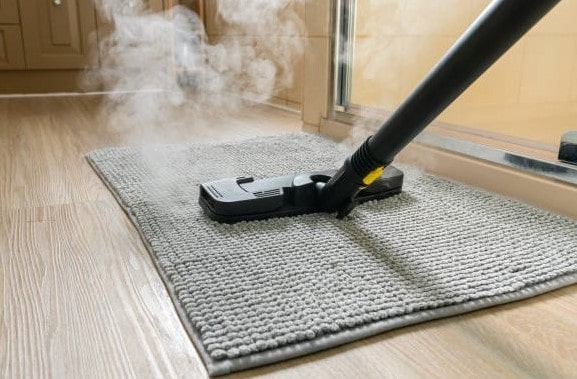
The Kärcher Garment Steamer is a fundamentally different product from the other two on this list, and that distinction matters. This is an attachment — not a standalone unit — designed to expand the capabilities of Kärcher's SC 3 EasyFix steam cleaner. If you already own that machine, this accessory transforms it into a clothing and textile steamer capable of handling everything from a pressed linen suit to delicate silk blouses. The steam intensity is controlled by adjusting the distance between the nozzle and the fabric, which gives you nuanced control that a traditional iron simply can't replicate.
In practice, the garment steamer excels at the jobs that fall between a full wash and a full iron. You wore a blazer to dinner, it picked up a faint food smell, and it doesn't need washing — just a quick pass with steam. Or you pulled curtains out of storage and they're wrinkled but otherwise clean. The Kärcher attachment handles both scenarios quickly and without the risk of scorching that comes with a dry iron set too high. It is safe on delicate fabrics, and the heat and moisture combination neutralizes odors rather than just masking them.
Be clear about what this product is before you buy: it is not a floor mop accessory, and it will not clean your hardwood. If you're reading this guide specifically for floor cleaning, this product is a complementary purchase for a household that already has or plans to buy the Kärcher SC 3. That said, if you own that base unit, this attachment is genuinely worth adding — it extends the value of a machine you've already invested in and replaces a standalone garment steamer you'd otherwise need to buy separately.
Pros:
Cons:
Steam mops are not all built the same, and choosing the wrong one for your floor type can do real damage. Hardwood is especially sensitive to moisture — prolonged contact with water or steam causes boards to swell, warp, and eventually buckle. The buying criteria below are the ones that actually matter when you're shopping in 2026.
The steam your mop produces needs to be hot enough to sanitize (typically above 200°F) but delivered in a controlled way that doesn't saturate the floor surface. Look for units that offer adjustable steam output. A machine locked to a single high-steam setting is risky on hardwood — you want the ability to dial back on sensitive areas and push harder on tough stains. Variable steam settings are a non-negotiable feature if your home has a mix of hardwood, laminate, and tile.
Canister systems like the McCulloch generally produce higher pressure than upright stick mops, which makes them better for grout and heavy-duty cleaning but requires more care on delicate wood finishes. For everyday hardwood maintenance, a well-controlled 1,200W upright like the Reliable Pronto Plus hits the right balance.
These two specs determine how the machine fits into your daily routine. A 30-second heat-up time means you'll actually use the mop regularly — it becomes a quick habit rather than a scheduled event. A slow heat-up of 8–12 minutes pushes the machine toward weekly deep-cleaning use. Neither is wrong; they serve different lifestyles.
Water tank size directly translates to runtime. A small tank in a handheld-style unit might give you 10–15 minutes of continuous steam — enough for a bathroom or a kitchen but not a full open-plan ground floor. The McCulloch's 48-ounce boiler and 2-hour runtime exist at the opposite end of the spectrum and suit whole-home cleaning sessions. Know your square footage and your cleaning style before you decide which trade-off you can live with.
A steam mop is only as versatile as its accessory kit. Microfiber floor pads are the standard, but the quality of those pads varies significantly. Cheap pads shed fibers, lose their grip on the mop head, and wear out quickly. Look for units that include multiple washable pads and whose replacement pads are readily available and reasonably priced.
Beyond pads, think about what other surfaces you want to clean. If your home has tile, grout, sealed stone, and hardwood, a unit with a grout brush, angled nozzle, and scrub pad attachment earns back its higher price through replaced specialty tools. If you only need hardwood floor cleaning, a simpler unit with quality pads is all you need — don't pay for 23 accessories you'll never touch.
This is the most underrated factor in the buying decision. Not all hardwood floors are steam-mop safe. Unsealed, waxed, or hand-scraped hardwood finishes can be damaged by steam regardless of which machine you use. Check your floor's finish type and your flooring manufacturer's care guidelines before you buy any steam mop. Most modern factory-finished hardwood is sealed and can tolerate light steam cleaning, but engineered wood products and older solid hardwood floors warrant extra caution. When in doubt, test in a closet or inconspicuous corner before committing to a full-room clean.
Yes, but only on properly sealed hardwood. Most modern factory-finished hardwood floors can handle a steam mop used correctly — meaning quick passes, appropriate steam settings, and no prolonged contact with the surface. Unsealed, waxed, or hand-scraped hardwood is not safe for steam cleaning. Always verify your floor type and check your flooring manufacturer's maintenance guidelines before using any steam mop.
A canister steam cleaner stores water in a large boiler unit that you pull behind you on wheels, with a hose connecting to various attachments. It produces higher pressure steam, holds more water, and works across a wider range of surfaces — floors, appliances, grout, automotive interiors. A stick steam mop is a self-contained upright unit that's lighter, faster to heat up, and easier to maneuver, but typically has a smaller tank and fewer accessories. For hardwood floor cleaning, a stick mop is usually more practical. For whole-home deep cleaning, a canister delivers more power and range.
For most households, once a week is sufficient — steam cleaning removes bacteria, allergens, and embedded grime that dry sweeping and vacuuming leave behind. High-traffic areas like entryways and kitchens may benefit from more frequent cleaning, but daily steam mopping is excessive and will shorten the life of your floor's finish over time. Always vacuum or sweep first to remove dry debris, then steam mop.
Yes. Steam at temperatures above 212°F kills common household bacteria, dust mites, and many viruses on contact. No chemical disinfectant is required. This is one of the primary advantages of steam cleaning, especially for homes with children, pets, or allergy sufferers. The key is maintaining consistent steam temperature — units that lose pressure mid-session may not sanitize as effectively toward the end of a tank.
Use caution. Most laminate flooring manufacturers advise against steam mops because laminate is made with a fiberboard core that absorbs moisture through seams and edges, causing swelling and warping over time. If you do use a steam mop on laminate, use the lowest steam setting, keep passes short, and never let steam pool at board seams. A damp microfiber mop is generally the safer long-term choice for laminate. For more detail on how different floor types compare, read our breakdown of ceramic tile vs. hardwood flooring.
At minimum: multiple microfiber floor pads (you need one to use while another is in the wash), a grout brush if your home has tile, and a small nozzle for spot cleaning. Everything beyond that depends on your home. Car detailing, appliance cleaning, and garment steaming are genuine use cases that justify extra accessories — but only if you'll actually use them. Buying a 23-piece kit and using 4 pieces is a waste of money. Start with the basics, then add accessories as specific needs arise.
 |
 |
 |
 |

About Linea Lorenzo
Linea Lorenzo has spent over a decade testing home gadgets, cleaning products, and consumer electronics from his base in Sacramento, California. What started as a personal obsession with keeping his space clean and stocked with the right tools evolved into a full-time writing career covering the home products space. He has hands-on experience with hundreds of cleaning solutions, robotic and cordless vacuums, and everyday household gadgets — evaluating them for performance, value, and real-world usability rather than spec sheet appeal. At Linea, he covers home cleaning guides, general how-to tutorials, and practical product advice for everyday home care.
You can Get FREE Gifts. Furthermore, Free Items here. Disable Ad Blocker to receive them all.
Once done, hit anything below
|
|
|
|