
Over 40 million Americans deal with cracked, torn, or peeling vinyl and leather surfaces every year — and most of them have no idea that a $20 repair kit can save them hundreds (or thousands) on replacement furniture and auto upholstery. Whether it's a cat-scratched couch, a sun-damaged car seat, or a beloved jacket showing its age, vinyl repair kits have become one of the most cost-effective DIY solutions in home maintenance.
The market for vinyl and leather repair products has grown significantly through 2026, with new formulations that dry faster, match colors more precisely, and bond more durably than anything available even a few years ago. But not all kits are created equal. Some work best on small scratches while others tackle deep tears. Some require heat tools while others cure at room temperature. Choosing the wrong kit for your specific damage type means wasted money and frustration.
We spent weeks testing the top-rated vinyl repair kits across different damage types, surface materials, and application methods. From liquid compounds to self-adhesive patches, from professional-grade heat-cure systems to simple peel-and-stick solutions, this guide covers everything you need to restore your vinyl and leather items to like-new condition. If you're also dealing with worn floors around your furniture, check out our guide to the best vinyl floor cleaning machines to keep your entire space looking fresh.

Contents




With over one million satisfied customers worldwide, the Coconix Leather & Vinyl Repair Kit has earned its reputation as the go-to solution for DIY leather and vinyl restoration. This all-in-one kit includes everything you need to fix tears, holes, scratches, and peeling surfaces without any prior repair experience. The compound dries to a flexible finish that moves with the material rather than cracking under stress — a common failure point with cheaper alternatives.
The color-matching system is where this kit truly shines. You get a full spectrum of base colors including brown, black, burgundy, cream, tan, white, red, blue, and yellow, along with a foolproof mixing guide that walks you through creating custom shades. Whether you're matching a dark espresso leather sofa or a light beige car interior, the range covers virtually any surface you'll encounter. The mixing cups included in the kit make the blending process clean and controlled.
Application is straightforward — clean the damaged area, mix your color match, apply in thin layers, and let each layer dry before adding the next. The compound bonds well to both genuine leather and synthetic vinyl, and the cured repair remains flexible over time. For large tears, you'll want to use the included backing fabric before applying the compound. Results are best on smooth or lightly textured surfaces; heavily grained leather may need some texture work after the repair cures.
Pros:
Cons:
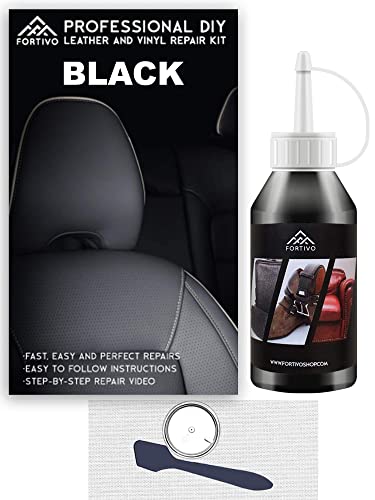
If your damaged item is black, the FORTIVO kit eliminates the biggest headache of vinyl repair: color matching. This kit comes pre-mixed in a rich, true black that matches the vast majority of black leather and vinyl surfaces right out of the container. No mixing, no guessing, no ending up with a repair that looks slightly off in certain lighting. You open the kit, follow the five-step process, and you're done.
The repair compound itself is a high-quality adhesive formula that dries quickly and bonds permanently to leather, vinyl, PU, pleather, bonded leather, and Italian leather. The no-heat-required formula makes this one of the safest options for DIY repairs — you won't accidentally burn your material with a heat tool or damage surrounding areas. It handles everything from surface scratches and scuffs to deeper tears, holes, rips, burns, and cracks. The instructions walk you through a clear five-step process that even first-timers can follow confidently.
FORTIVO markets this for an impressive range of applications: couches, sofas, chairs, car seats, bags, purses, shoes, jackets, belts, luggage, boots, boat seats, RV seats, motorcycle seats, recliners, and more. In practice, it performs best on smooth to medium-textured black surfaces. The compound fills well and sands smooth, making it ideal for furniture and automotive work where you need an invisible repair on black material.
Pros:
Cons:
Time is money, and the ReStor-it Quick 20 respects both. This kit delivers complete repairs in just 20 minutes — apply the compound, walk away, and come back to a cured, ready-to-use surface. That's roughly a quarter of the drying time many competitors require, making it the clear winner when you need fast results before guests arrive or you need your car seat fixed before a Monday morning commute.
The kit includes seven pre-mixed colors along with a color mixing guide, mixing cups, an applicator tool, and detailed instructions. The no-heat repair process is a standout feature — you simply apply the compound and let it air-cure. This makes it safer and simpler than heat-cure systems, especially for beginners who might be nervous about using a hot iron near expensive leather. The seven-color system gives you enough range to match most common furniture and automotive colors through mixing.
Where the Quick 20 excels is on burns, holes, rips, and tears across all types of leather and vinyl. The compound fills voids cleanly and levels well with the included applicator. For surface scratches, it's perhaps overkill — a simpler cream might suffice — but for structural damage where you need to rebuild missing material, the 20-minute cure time combined with solid bond strength makes this kit genuinely impressive. It's a professional-style repair with consumer-friendly simplicity.
Pros:
Cons:
The Permatex Ultra Series is the kit you reach for when you want results that rival what a professional upholstery shop delivers. This is a heat-cure system — it includes a plug-in electric heat iron that fuses the repair compound into the damaged material at a molecular level, creating bonds that are stronger and more durable than any air-dry alternative. You're paying for permanence here.
This pack of six complete kits makes it ideal for professionals, fleet managers, or anyone managing multiple vehicles or properties. Each kit contains the professional electric heat tool, seven color compounds, clear vinyl adhesive and filler, grain pattern paper (for recreating leather texture), a metal spatula, and plastic dashboard hardening powder. That dashboard powder is a unique inclusion — it's specifically formulated for hard vinyl surfaces like dashboards and door panels that need rigidity rather than flexibility.
The grain pattern paper deserves special mention. After you apply and heat-cure the compound, you press the grain paper into the still-warm surface to imprint a realistic leather texture. This is the step that separates invisible professional repairs from obvious patches, and it's something most consumer-grade kits don't include. For automotive detailing and cleaning professionals, this kit is the standard. The heat tool does require a learning curve — practice on a hidden area first — but once you master the technique, the results are genuinely indistinguishable from undamaged material.
Pros:
Cons:
The COCONIX Leather Care PRO is the premium sibling of our top-rated Coconix kit, specifically engineered for black and gray surfaces. While the standard Coconix kit gives you a rainbow of mixing options, the PRO narrows its focus to deliver superior results on the most common furniture and auto interior colors. If you own a black leather sofa, dark gray car seats, or charcoal accessories, this is the kit designed specifically for your repair.
The liquid leather compound in this kit is formulated for ease of use above all else. COCONIX markets it with a bold promise: "Just apply it and wait. That's it." And honestly, that's not far from the truth. The instructions are clearer and more streamlined than most competitors, making this a confidence-builder for first-time users. The compound handles scratches, tears, cracks, burn holes, and rips equally well, and the cured finish matches the flexibility of the original material.
One of the strengths of the PRO kit is its versatility across material types. It adheres to genuine leather, synthetic leather, car seats, steering wheels, purses, shoes, belts, and upholstery. The black and gray shade range means you can match everything from jet black to silver-gray, with the mixing guide helping you nail those in-between charcoal tones that are so common in automotive interiors. For anyone maintaining a fleet of vehicles with dark interiors, this kit pays for itself on the first repair. You might also want to keep your repaired car seats clean with a good carpet and upholstery shampooer to maintain that fresh look.
Pros:
Cons:
With 10 base colors and unlimited mixing possibilities, the ARCSSAI Leather Repair Kit offers the broadest color-matching capability in this roundup. If you're dealing with an unusual shade — think olive green office chairs, burnt orange vintage sofas, or custom-dyed leather accessories — this is the kit that won't leave you frustrated with a "close enough" match. The 10-color system means fewer mixing steps to reach your target shade, reducing the trial-and-error that plagues kits with fewer base colors.
The kit is designed with beginners explicitly in mind. ARCSSAI emphasizes that no technical expertise is needed — the instructions are detailed but written in plain language, with step-by-step color matching guidance that takes the guesswork out of the process. The repair compound is a fast-drying liquid adhesive that handles the full spectrum of damage: scratches, cuts, holes, tears, rips, cracks, pet damage, and peeling surfaces. It works on genuine leather, faux leather, leatherette, bicast, PU, synthetic, and premium upholstery materials.
Performance-wise, the ARCSSAI compound dries to a professional finish that blends seamlessly when the color match is dialed in correctly. The adhesive strength is solid — repairs hold up to daily use on high-traffic surfaces like sofa cushions and car seats. For pet owners dealing with cat claw damage or dog scratches, this kit provides enough compound and color options to handle multiple repairs across different pieces of furniture. The fast-drying formula means you can complete several repairs in a single afternoon session.
Pros:
Cons:
Sometimes you don't need a full repair kit with mixing compounds and applicators — you just need a clean, instant fix. The Numola Leather Repair Patch is an 8×11 inch self-adhesive patch that you simply cut to size, peel off the backing, and press onto the damaged area. Repairs literally take seconds, not minutes or hours. For large tears, worn-through areas, or situations where compound-based repairs aren't practical, patches offer a completely different approach to the problem.
Numola has been in the leather patch market longer than most competitors, and that experience shows in the material quality. The patch texture is designed to mimic natural leather grain, blending in with most smooth-to-medium textured surfaces. The adhesive backing is strong and waterproof — once pressed firmly, it stays put through normal wear, cleaning, and temperature changes. The patch material itself is soft, thin, wear-proof, anti-curl, and easy to clean, so it doesn't look or feel like an obvious repair.
The 8×11 inch size gives you enough material to cover one large area or cut multiple smaller patches for scattered damage. You can cut any shape you need with regular scissors — round corners tend to stay adhered better than sharp corners over time. This approach works exceptionally well for the underside of furniture arms, seat backs, and other areas where a smooth patch is preferable to a compound repair. It's also the fastest option for covering pet damage while you decide whether a full professional reupholstery is worth the investment. If you're looking for other ways to maintain your furniture and floors, our commercial mop guide covers tools for keeping surrounding areas spotless.
Pros:
Cons:
The first decision you need to make is which repair method suits your situation. Compound-based kits (like Coconix, FORTIVO, and ARCSSAI) use a liquid or paste that fills damage and cures in place — these deliver the most invisible repairs but require patience and some skill. Adhesive patches (like Numola) provide instant coverage but are visible on close inspection — best for hidden areas or temporary fixes. Heat-cure systems (like Permatex) create the strongest bonds and can replicate leather grain texture, but require more skill and carry a slight risk of heat damage if misused.
For most homeowners dealing with a single couch or car seat repair, a compound-based air-dry kit is the sweet spot between quality results and ease of use. Professionals and fleet managers should invest in heat-cure systems for repairs that need to last years under heavy use. Patches are your emergency solution — keep one in the glove box or junk drawer for quick fixes.
Nothing ruins a vinyl repair faster than a color mismatch. The best kits give you enough base colors to mix virtually any shade through their included mixing guides. As a general rule, more base colors means fewer mixing steps and a faster path to your target shade. If your damaged item is black, save yourself the hassle and buy a black-specific kit like the FORTIVO or COCONIX PRO — pre-mixed black is far more consistent than mixing your own from multiple colors.
For unusual colors (green, orange, purple, custom automotive shades), look for kits with at least 7-10 base colors. Always test your mixed color on a hidden area of the item before applying to the visible damage. Color can shift slightly as the compound dries, so let your test patch fully cure before comparing. According to the Wikipedia article on leather processing, different tanning methods affect how leather absorbs repair compounds, which can also impact color appearance.
Not all repair compounds work on all materials. Genuine leather, bonded leather, vinyl, PU (polyurethane), pleather, bicast, and faux leather all have different surface properties that affect adhesion. Most quality kits in 2026 work across multiple material types, but always verify before purchasing. The product listings should explicitly state which materials they support.
Pay special attention if you're repairing automotive vinyl — car interiors experience extreme temperature swings, UV exposure, and constant friction that test repair bonds more aggressively than furniture. Kits that specifically mention automotive applications have been formulated to handle these stresses. Similarly, items that flex constantly (shoes, jackets, bags) need compounds that cure to a flexible finish rather than a rigid one.
A repair kit is only as good as the tools it includes. At minimum, you want: the repair compound itself, a color mixing guide, mixing cups or palette, an applicator tool, and clear instructions. Premium kits add backing fabric (for structural repairs), grain pattern paper (for texture matching), spatulas, sandpaper, and cleaning supplies. The more complete the kit, the less likely you'll need to pause mid-repair for a supply run.
Consider whether you'll need the kit for one repair or ongoing maintenance. If you have pets, kids, or high-traffic furniture, investing in a comprehensive kit with generous compound quantities pays off quickly. For a one-time fix on a single small scratch, even a basic kit provides more than enough material.
Yes, but technique matters. For tears larger than two inches, you need to apply backing fabric or mesh behind the tear first to provide structural support, then build up the repair compound in multiple thin layers. Without backing, the compound will sink into the tear and crack when the surface flexes. Most kits include backing material, and the instructions will walk you through the process for larger damage.
A properly applied repair using a quality compound kit lasts 2-5 years on furniture and 1-3 years on high-wear surfaces like car seats. Heat-cured repairs tend to last longer than air-dried ones. The biggest factor in longevity is surface preparation — thoroughly cleaning and lightly sanding the damaged area before application ensures the compound bonds properly. Repairs that peel prematurely almost always result from inadequate prep work.
No. Most modern repair kits in 2026 use air-cure compounds that require no heat at all. Heat-cure systems (like the Permatex) produce stronger bonds and allow texture imprinting, but they're optional rather than necessary for most home repairs. If you're a beginner, start with an air-cure kit to build confidence before considering heat-cure systems.
Yes, but choose your kit carefully. Dashboards are rigid vinyl, not flexible leather, so you need a compound that cures hard rather than flexible. The Permatex kit specifically includes dashboard hardening powder for this purpose. Flexible leather repair compounds applied to dashboards will remain soft and may collect dirt or peel in high-heat conditions. For dashboards, a heat-cure system with hardening powder delivers the best results.
It depends on the repair method and your skill level. Compound-based repairs with accurate color matching and grain texture imprinting can be virtually invisible. Adhesive patches are always visible at close range. For the most invisible results, use a heat-cure kit with grain pattern paper, and practice on a hidden area first. Even with air-dry kits, careful application and color matching produces repairs that are unnoticeable from normal viewing distances.
Most modern repair kits work on both leather and vinyl — check the product description to confirm. The compound chemistry in 2026 kits is designed to bond with both natural and synthetic materials. However, some kits optimized for soft leather may not cure properly on rigid vinyl surfaces like dashboards. When in doubt, test on a hidden spot first. The key difference is flexibility — leather repairs need to stay flexible, while some vinyl repairs (like dashboards) need to cure rigid.
Match your repair method to your damage type — compounds for invisible fixes, heat-cure for permanent bonds, patches for instant coverage — and always test your color on a hidden spot before committing to the visible repair.
 |
 |
 |
 |

About Linea Lorenzo
Linea Lorenzo has spent over a decade testing home gadgets, cleaning products, and consumer electronics from his base in Sacramento, California. What started as a personal obsession with keeping his space clean and stocked with the right tools evolved into a full-time writing career covering the home products space. He has hands-on experience with hundreds of cleaning solutions, robotic and cordless vacuums, and everyday household gadgets — evaluating them for performance, value, and real-world usability rather than spec sheet appeal. At Linea, he covers home cleaning guides, general how-to tutorials, and practical product advice for everyday home care.
You can Get FREE Gifts. Furthermore, Free Items here. Disable Ad Blocker to receive them all.
Once done, hit anything below
|
|
|
|