
Picture a homeowner who has just finished installing new vinyl plank flooring throughout the living room and kitchen, only to realize that the old string mop sitting in the utility closet is the last tool those pristine new floors need. Finding the right mop for vinyl plank surfaces means navigating a crowded market where dozens of products promise streak-free results but deliver very different levels of protection and performance in practice.
Vinyl plank flooring ranks among the most popular choices for modern homes, prized for its durability, water resistance, and convincing wood-grain appearance, yet it demands thoughtful maintenance to stay looking its best year after year. According to established guidance on vinyl flooring care, this material is sensitive to abrasive cleaners and excessive moisture pooling at the seams, which makes mop selection genuinely consequential rather than an afterthought. Buyers who have already explored the differences between vinyl and laminate flooring will recognize that moisture management is a recurring theme across both materials and that the wrong cleaning tool can shorten a floor's useful life considerably.
This guide covers seven highly rated mops available in 2026, spanning electric spin mops, traditional bucket-and-spin systems, all-in-one vacuum-mop combos, and lightweight spray mops across a broad range of price points. Readers who want to extend their cleaning routine beyond floors will find useful context in guides like 15 Places You Probably Forget to Clean, since many of the mops reviewed here perform impressively in tight corners and along baseboards as well. The broader collection of home cleaning tools and reviews offers additional context for buyers building out a complete household cleaning kit in 2026.
Contents
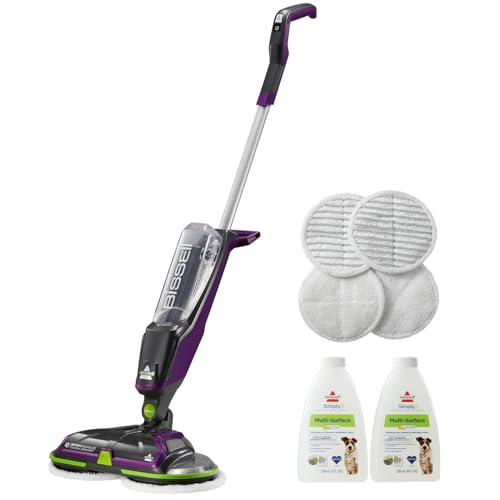


The Bissell Spinwave Cordless Pet Spin Mop operates on an 18V battery system that delivers approximately 20 minutes of cordless runtime, which proves sufficient for most single-room cleaning sessions without interruption or the inconvenience of a trailing power cord. Its dual spinning pad design applies gentle but effective scrubbing action to sealed vinyl plank floors, making it particularly well-suited for households where pets leave behind sticky residue, tracked-in mud, or dried paw prints that a flat spray mop might struggle to fully dislodge in a single pass. The on-demand spray feature allows targeted application of Bissell cleaning formula precisely where it is needed, rather than saturating the entire floor with each cleaning stroke — a meaningful advantage for vinyl planks, which can warp or lift at the seams when subjected to prolonged moisture exposure.
Performance on textured or embossed vinyl plank patterns is genuinely strong, with the rotating pads conforming reasonably well to surface variations rather than skimming over raised grain lines and recessed channels. The machine-washable pads represent a notable long-term cost saving compared to disposable pad systems, and the ergonomic handle design reduces wrist fatigue during extended sessions across larger floor areas. Build quality sits solidly in the mid-range tier, with a plastic construction that feels durable enough for daily use without the premium feel of higher-priced models, and the corded charging system means buyers should plan for a four-hour recharge window between longer cleaning sessions in multi-room homes.
For households with multiple pets or heavily trafficked entry areas, the Spinwave Cordless earns strong marks for tackling the kind of persistent ground-in grime that flat spray mops frequently leave behind after a single pass. The spray dispenser can be slightly finicky when the solution bottle runs low, occasionally distributing formula unevenly across the floor surface, and the 20-minute runtime requires buyers to work efficiently across larger open-plan layouts to complete a full cleaning cycle on a single charge.
Pros:
Cons:
The O-Cedar EasyWring Microfiber Spin Mop has maintained its position as one of the most consistently recommended floor-cleaning systems in its category, largely because its foot-pedal wringing mechanism allows for precise moisture control without the user ever needing to touch the mop head directly between strokes. Hands-free wringing is a genuine quality-of-life improvement that most buyers notice after a single use, and the built-in Splash Guard on the bucket keeps water contained during both the wringing process and room-to-room transport across the home. For vinyl plank floors specifically, the ability to wring the mop head down to a nearly damp state is particularly valuable, since standing water pooling at plank seams is one of the primary causes of long-term moisture damage in floating floor installations.
The microfiber mop head is impressively effective at capturing fine dust, pet hair, and general grime through millions of advanced microfiber strands that trap particles at a microscopic level rather than simply pushing debris across the surface. O-Cedar recommends replacing the mop head refill every three months under regular use, a guideline that most users find reasonable given how well the head performs when properly maintained and machine-washed after each session. The conical bucket design makes wringing mechanically straightforward, and the triangular mop head shape allows the unit to access floor corners with noticeably less maneuvering than a standard round or rectangular head alternative requires.
The system's primary limitation is its dependence on a bucket, which adds a setup and teardown step compared to cordless or spray mop alternatives — a meaningful consideration for quick daily touch-up cleaning rather than full weekly deep-cleaning sessions. The handle, while adjustable, has been noted by taller users as slightly shorter than ideal at maximum extension, which can cause some stooping during extended use across larger floor areas. Nevertheless, as a comprehensive floor-cleaning system that balances cost, performance, and long-term sustainability, the EasyWring remains difficult to surpass at its price point in 2026.
Pros:
Cons:
The Bissell CrossWave Cordless Max occupies a premium position in the floor-cleaning market, combining vacuuming and mopping functions into a single cordless unit that addresses both tasks simultaneously rather than requiring two separate cleaning passes across the same floor area. With up to 30 minutes of battery life, it handles the wet and dry messes that vinyl plank floors accumulate through daily household activity — from dry crumbs and pet hair to spilled beverages and tracked-in mud — without switching between appliances or attachments mid-session. Two-Tank Technology keeps fresh cleaning solution and dirty water in completely separate internal reservoirs throughout the entire cleaning cycle, which prevents the common problem of redistributing diluted grime back across the floor as the session progresses and the dirty water tank fills.
The self-cleaning mode is a thoughtfully designed feature that flushes the brush roll and internal pathways with clean water at the end of each session, reducing the maintenance burden that has historically made multi-function floor cleaners less appealing for regular everyday use. Performance on vinyl plank specifically is strong, with the brush roll sized and configured to clean effectively without generating the aggressive scrubbing action that could potentially scuff surface finishes over time with repeated use. The unit also transitions to area rug cleaning without requiring a manual adjustment, making it a practical choice for homes with a mix of hard flooring and textile rugs throughout the main living areas.
The primary trade-off compared to simpler spray mop designs is weight and mechanical complexity — the CrossWave Cordless Max is noticeably heavier than a conventional flat mop, which some users find tiring during longer cleaning sessions across multiple rooms. Pack-in cleaning formulas allow buyers to start cleaning immediately out of the box, though ongoing formula costs represent an additional ownership expense beyond the significant initial purchase price that buyers should factor into their total budget evaluation.
Pros:
Cons:
The Swiffer WetJet has earned its place as one of the most recognizable floor-cleaning products on the market through a combination of genuine everyday convenience and reliable routine performance, and the 2026 Starter Kit delivers an accessible entry point complete with 10 cleaning pads, a bottle of cleaning solution, and pre-installed batteries ready for immediate use. Assembly requires nothing more than snapping the handle sections together, loading the solution bottle, and attaching a pad — a process that takes under two minutes and requires no tools, making it genuinely effortless for households of all configurations to begin using right away. The push-button spray mechanism delivers a targeted burst of cleaning solution directly ahead of the mop pad, allowing steady, controlled application across open floor areas as well as focused spot treatment of specific dirty zones.
On vinyl plank floors, the WetJet's disposable pad system is simultaneously its greatest strength and its most notable limitation: the absorbent, textured pads capture dirt and lock it away from the floor surface rather than redistributing it, but the ongoing cost of replacement pads adds up considerably over months of regular use compared to washable microfiber alternatives. The cleaning solution is formulated to be safe across sealed hard surfaces, though buyers should verify that their vinyl plank installation is properly sealed before using any liquid-dispensing mop, particularly with older or budget-tier floors where the protective surface coating may be thinner than standard. The battery-powered pump is quiet and mechanically consistent, and the overall weight of the unit — considerably lighter than bucket-based or all-in-one systems — makes carrying it between rooms or maneuvering around appliances and furniture effortless throughout a session.
For households seeking the fastest possible path to a clean floor on a daily basis without setup or preparation steps, the WetJet delivers commendably, and its widespread retail availability means replacement pads and compatible solution are rarely difficult to source. The trade-off is both environmental and financial, since the disposable pad system generates more household waste than microfiber alternatives — a consideration that increasingly influences purchasing decisions among buyers evaluating long-term sustainability alongside upfront convenience and cost.
Pros:
Cons:
The Bona Hardwood Floor Spray Mop Premium has cultivated a devoted following among floor-care enthusiasts who prioritize surface chemistry alongside mechanical cleaning performance, and the 2026 version maintains the design philosophy that has made Bona a widely trusted name across professional and consumer floor care markets alike. The extra-large mop pad covers a generous cleaning surface per pass, noticeably reducing the total number of strokes required to cover a standard room, and the refillable solution reservoir accepts any Bona economy-size floor cleaner refill or Bona concentrate packet, keeping long-term supply logistics straightforward and predictable. The residue-free, fast-drying formula is one of Bona's most consistent selling points, leaving vinyl plank floors clean and visually clear rather than dulled by chemical film or the progressive streaking that accumulates with lesser formulas over repeated cleaning sessions.
Bona's cleaning solution is specifically engineered for sealed hard floors, and while the product markets itself toward hardwood, its pH-neutral chemistry is equally well-suited to sealed vinyl plank, laminate, and tile surfaces — buyers who have consulted guides on safe floor-cleaning methods for sensitive surfaces will recognize that pH-neutral formulas are consistently recommended over acidic or alkaline alternatives for floors with delicate protective coatings. The spray mechanism distributes solution evenly ahead of each mop stroke without creating wet pools that could seep into plank seams and cause long-term damage at the subfloor level. The dense microfiber pad captures fine particles and absorbs solution residue effectively in a single pass, reducing or eliminating the need for a drying period after cleaning is complete.
The Bona Spray Mop's primary limitation is its relative compatibility with Bona-branded products — while the solution reservoir is technically refillable with third-party formulas, the mop performs most consistently with Bona's own solution line, which carries a moderate price premium compared to generic alternatives. The overall durability of the handle assembly has occasionally been cited as a weakness in long-term user reviews, with the locking mechanism showing signs of wear after extended periods of heavy daily use, though Bona's customer support response for warranty situations is generally well-regarded across online communities.
Pros:
Cons:
The Rubbermaid Reveal Spray Mop Floor Cleaning Kit distinguishes itself from many competitors through a combination of a fully refillable solution bottle, three reusable microfiber wet pads included in the starter kit, and the claim that its microfiber technology removes up to 99% of tested bacteria, allergens, and dust without requiring chemical cleaners — a meaningful attribute for households with young children, allergy sufferers, or pets that spend significant time on the floor. The 50% greater dirt pickup claimed for the microfiber pad versus traditional cotton mop heads translates to real-world cleaning performance that most users can perceive after the first session, particularly on textured vinyl plank where standard pads tend to skim over recessed grain lines rather than cleaning into them. The hand-pump spray trigger is consistently rated as reliable and durable across user reviews, delivering a fine, even mist across a broad path ahead of the mop head with each firm squeeze.
Multi-surface compatibility is broad — the Reveal handles hardwood, vinyl, laminate, and tile with equal competence, and its refillable bottle means buyers can use whatever floor-cleaning solution they prefer rather than being locked into a proprietary product line with its associated recurring costs. The three included replacement heads provide meaningful value in the starter package, effectively covering a full year of pad supply if users follow the recommended three-month replacement cycle and machine-wash the pads between sessions to maintain full cleaning performance. The cordless, no-battery design eliminates both charging requirements and battery replacement costs over the product's lifespan, keeping ongoing ownership costs predictably and attractively low.
The Rubbermaid Reveal's head design is slightly less articulated than some competitors, which can make cleaning immediately along wall edges and behind bathroom fixtures somewhat more effortful than with a fully pivoting head mop. Buyers who clean very large floor areas in a single session may also find that rotating through three pads requires some laundry scheduling, particularly in households using the mop daily where freshly washed pads may not always be available when needed. As a sustainable, low total-cost cleaning solution for 2026, however, the Reveal compares favorably across its category from both performance and value perspectives.
Pros:
Cons:
The Libman Freedom Spray Mop Kit arrives as a strong value-oriented choice that performs above its price point through a combination of practical design features and an unusually generous accessory package — two additional replacement microfiber heads are included in the box alongside the primary pad, effectively providing a complete supply for the first year of use under typical cleaning schedules without any additional purchase required at setup. The 360-degree swivel pivoting neck is the standout mechanical feature, allowing the mop head to navigate fluidly around table legs, chair bases, and bathroom fixtures without requiring the user to reposition their body or awkwardly angle the handle, which significantly reduces the physical effort of cleaning complex household layouts. The 24-ounce refillable solution tank is generously sized relative to most competitors at this price tier, reducing the frequency of mid-session refills during cleaning runs that cover multiple connected rooms.
Compatibility with any cleaning solution of the buyer's choosing represents a genuine advantage over mops optimized for or restricted to proprietary formulas, and the tank's design makes filling and measuring solution straightforward without the spill-prone funneling that some narrow-mouth competitors require. The microfiber pad performs well on vinyl plank surfaces, capturing and trapping both fine dust particles and heavier debris without the smearing tendency that cheaper flat-weave alternatives sometimes exhibit on smooth sealed surfaces. Maneuverability in tight spaces around appliances and furniture is consistently one of the Libman Freedom's strongest practical attributes in real-world user feedback, and buyers who clean homes with complex or cluttered floor layouts will notice the tangible benefit of the swivel design almost immediately during the first cleaning session.
Where the Libman Freedom most clearly reflects its value-tier positioning is in the handle's construction, which, while entirely functional for daily use, carries a slightly less premium feel compared to Bona or Rubbermaid alternatives available at higher price points. The spray trigger mechanism has been noted by some reviewers to require a firmer squeeze than competitors to achieve consistent misting across the full pad width, which can become mildly noticeable during very long sessions, though this observation appears more frequently in outlier reviews than in the broad mainstream user experience across verified purchase feedback.
Pros:
Cons:
Shopping for a mop that truly suits vinyl plank floors requires weighing several factors that go beyond simple price comparisons, since vinyl's particular sensitivity to excess moisture, harsh chemicals, and abrasive contact means that the wrong cleaning tool can gradually degrade a floor that might otherwise last two or three decades with proper care. The considerations below address the most consequential buying decisions that arise when evaluating options across this product category in 2026, covering the variables that separate effective long-term maintenance from surface-dulling, seam-damaging misuse.
Vinyl plank flooring is water-resistant along its surface, but the seams and edges of individual planks remain vulnerable to moisture infiltration that can cause warping, lifting, or mold growth beneath the floor over time — which makes the degree of moisture a mop deposits per pass the single most important performance variable to evaluate. Any mop selected for regular use on vinyl plank should be capable of operating in a genuinely damp rather than wet condition, meaning the pad delivers enough moisture to clean effectively while leaving no standing water visible on the surface after each stroke. Spin mop systems with foot-pedal wringing mechanisms, like the O-Cedar EasyWring, provide excellent mechanical control over moisture levels; targeted spray mops like the Bona Premium or Rubbermaid Reveal achieve comparable results by limiting solution delivery to small, controlled bursts ahead of the mop head rather than flooding a wide path. All-in-one systems like the Bissell CrossWave address this through separate tank technology, ensuring the fluid reaching the floor is always fresh solution rather than the contaminated mixture that builds up in single-tank designs over the course of a session.
Microfiber is the near-universal recommendation for vinyl plank floors because its split-fiber construction captures dust and fine particles at a microscopic level rather than simply displacing them across the surface, and its soft texture poses no risk of scratching or dulling the protective wear layer of the floor when used correctly. Buyers should verify that any microfiber pad under consideration is free of integrated abrasive scrubbing strips, which are designed for cleaning tile grout lines but can gradually dull the printed or embossed finish of vinyl plank over months of repeated contact. The machine-washable nature of microfiber pads is also an important long-term cost consideration that deserves attention during the purchase evaluation — a pad that survives dozens of laundry cycles and months of effective use represents significantly lower ongoing cost than disposable alternatives, though disposable systems like the Swiffer WetJet offer convenience advantages that legitimately justify their cost for time-constrained households maintaining floors on a daily schedule.
The cleaning solution applied alongside any mop is as consequential for vinyl plank floor longevity as the mop's mechanical design, since harsh chemical formulas with high pH values, solvent content, or wax additives can strip the surface coating that gives vinyl plank its luster and protective scratch resistance over repeated applications. Buyers who prioritize maximum formula flexibility should lean toward mops with refillable, solution-agnostic tanks — the Libman Freedom and Rubbermaid Reveal accept any third-party formula or even plain water, while proprietary systems like the Swiffer WetJet and Bissell Spinwave pair optimized cleaning chemistry with their mechanical design for convenience at the cost of ongoing supply lock-in. Regardless of mop type, buyers should verify through their flooring manufacturer's care documentation that any liquid cleaning solution is explicitly rated safe for their specific vinyl plank finish, particularly for installations with printed surface layers or thin wear coatings that require more cautious chemical contact than thicker commercial-grade vinyl products.
The physical complexity of a home's floor plan — the number of furniture pieces, door thresholds, bathroom fixtures, and tight corners present in each room — should factor meaningfully into mop selection, since a unit that performs impressively in open-floor tests may prove genuinely frustrating in a densely furnished living room or galley kitchen. Spray mops with 360-degree swivel heads, such as the Libman Freedom, navigate complex layouts most intuitively in everyday use, while larger all-in-one units like the Bissell CrossWave Max trade some tight-space maneuverability for their multi-function capability across both hard floors and area rugs. Corded electric units require conscious planning around outlet placement and cord management during use, while fully cordless options like the Bissell Spinwave eliminate that constraint at the cost of finite battery runtime that must be managed across larger multi-room cleaning sessions. Storage footprint is also worth evaluating for smaller living spaces — a compact spray mop with a removable, collapsible head typically stores in a fraction of the space required for a full bucket-and-mop system, which matters considerably in apartments and homes with limited utility closet space.
Microfiber flat spray mops and spin mops with foot-pedal wringing mechanisms are the safest options for vinyl plank floors in 2026, because they allow precise moisture control and operate at a damp rather than wet cleaning level throughout each session. Abrasive scrub pads, steam mops, and traditional string mops that deposit excess water on the surface should generally be avoided on vinyl plank installations, particularly around plank seams and edges where moisture infiltration risk is consistently highest.
Most vinyl plank manufacturers explicitly advise against using steam mops on their products, as the high heat and concentrated moisture generated by steam mops can soften the adhesive bonding layers beneath floating or glued-down vinyl plank, causing individual planks or tiles to warp, bubble, or separate at the seams over repeated applications. Buyers interested in steam cleaning should check their specific floor's warranty documentation carefully before attempting steam mop use on any vinyl plank surface, as most warranties are voided by steam exposure.
For most households in 2026, a light spray-mop pass every two to three days combined with a more thorough mopping session once per week strikes an effective balance between cleanliness and surface preservation without over-exposing the floor to moisture. High-traffic zones such as entryways, kitchens, and main hallways generally benefit from more frequent attention, while lower-traffic rooms such as home offices and guest bedrooms can typically be addressed on a weekly schedule without significant grime accumulation between sessions.
Reusable microfiber pads are generally the more economical and environmentally responsible long-term choice for regular vinyl plank maintenance, provided they are properly washed and allowed to dry fully between uses to prevent bacterial growth in the pad fibers. Disposable pad systems offer genuine convenience advantages for busy households or quick spot-cleaning situations, but their ongoing cost and waste generation make them a less sustainable solution than washable microfiber alternatives across an extended period of regular floor-care use.
pH-neutral, residue-free formulas specifically designed for sealed hard floors are the most consistently recommended cleaning solutions for vinyl plank surfaces across floor-care communities and manufacturer guidelines alike. Products from brands like Bona are widely used and trusted within the floor-care community for their predictable chemistry and fast-drying characteristics, while many maintenance-minded buyers find that a very diluted mixture of dish soap and warm water performs adequately for routine upkeep without risking surface damage or finish dulling over repeated applications.
All-in-one vacuum mop combinations like the Bissell CrossWave Cordless Max perform effectively on vinyl plank floors for households willing to invest in a premium tool that consolidates vacuuming and mopping into a single appliance pass. These units work most safely when their moisture delivery is calibrated to the damp setting appropriate for hard surfaces rather than carpet modes, and most modern all-in-one units include clearly labeled surface-specific settings that ensure safe, effective operation across the different floor types commonly found throughout a home.
The mop that keeps vinyl plank floors looking their best year after year is the one that delivers a consistently damp — never wet — clean, with a soft microfiber pad and a moisture-delivery system the buyer will actually use at the right frequency.
 |
 |
 |
 |

About Linea Lorenzo
Linea Lorenzo has spent over a decade testing home gadgets, cleaning products, and consumer electronics from his base in Sacramento, California. What started as a personal obsession with keeping his space clean and stocked with the right tools evolved into a full-time writing career covering the home products space. He has hands-on experience with hundreds of cleaning solutions, robotic and cordless vacuums, and everyday household gadgets — evaluating them for performance, value, and real-world usability rather than spec sheet appeal. At Linea, he covers home cleaning guides, general how-to tutorials, and practical product advice for everyday home care.
You can Get FREE Gifts. Furthermore, Free Items here. Disable Ad Blocker to receive them all.
Once done, hit anything below
|
|
|
|