
According to the U.S. Environmental Protection Agency, indoor air can be two to five times more polluted than outdoor air—and for the estimated 50 million Americans who deal with allergies every year, that statistic has real consequences. Finding the best vacuum for allergy sufferers isn't simply about buying the most powerful model on the shelf. It's about filtration quality, sealed systems, and consistent habits that keep allergens trapped instead of recirculated. Your cleaning routine is the foundation of healthier indoor air, and the vacuum you choose is where that foundation either holds or fails.

The most common indoor allergens—dust mites, pet dander, mold spores, and pollen—are microscopic. Some particles measure as small as 0.3 microns, which means an ordinary vacuum won't trap them reliably. Worse, a vacuum without proper filtration can redistribute allergens back into the air while it runs, leaving you more symptomatic after cleaning than before. The right vacuum changes that equation completely.
This guide covers what to look for before you buy, how different price tiers stack up, how to use and maintain your machine for maximum allergen control, and what to do when your vacuum isn't delivering results. Whether you're buying your first allergy-specific vacuum or replacing one that's stopped performing, you'll find clear, actionable guidance here.
Contents
Most people treat a vacuum purchase as a one-time fix. Buy the right one, symptoms improve—done. The reality is more nuanced. The vacuum you choose sets the baseline for your indoor air quality for years, not just weeks. A poorly designed machine can actively worsen your symptoms by releasing fine particles back into the air. Getting this choice right from the start saves you money, frustration, and unnecessary exposure to the allergens you're trying to eliminate.
A true HEPA filter captures 99.97% of particles as small as 0.3 microns—that includes dust mite debris, pet dander, pollen, and mold spores. This isn't a marketing claim; it's a measurable standard established by the U.S. Department of Energy. Any vacuum you consider needs explicit "True HEPA" or "HEPA-certified" labeling to meet it.
Watch out for misleading language. Vacuums marketed as "HEPA-style," "HEPA-like," or "near-HEPA" don't meet the certified standard. They capture some allergens but leave the rest behind—or worse, send fine particles back into the air through a filter that isn't dense enough to stop them. If the packaging doesn't say "True HEPA," keep looking.
Here's what most buyers overlook: even a certified HEPA filter underperforms if the vacuum housing isn't sealed. Air follows the path of least resistance. Gaps around the filter, unsealed seams in the casing, or unfiltered motor vents let a portion of exhaust bypass the filter entirely—and that exhaust carries allergens directly back into the room.
A sealed system routes every cubic inch of air through the HEPA filter before it exits the machine. Look for terms like "sealed HEPA system" or "fully sealed filtration" when you're comparing models. Miele, certain Shark models, and several Dyson lines use this design. If you're deciding between cordless options, a detailed comparison like Dyson V7 vs V8 can help you confirm which specific model uses a sealed filtration path before you commit your money.
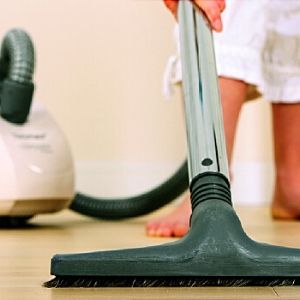
You don't need to spend a fortune to get meaningful allergen control, but your budget does shape what's available. Here's an honest look at what each price tier delivers—and where each one falls short.
At this price, you can find bagged uprights and lightweight canisters with true HEPA filters from brands like Shark and Hoover. The tradeoff is usually build quality and sealed system design. Most sub-$150 models include a HEPA filter but not a fully sealed housing. They're a meaningful upgrade over a standard vacuum and will reduce allergen levels, but they won't deliver the same containment as mid-range models with sealed systems.
This range is where sealed HEPA systems stop being a premium feature and start being standard. You'll find bagged and bagless uprights, canisters, and stick models with stronger motors, better suction consistency, and attachments purpose-built for upholstery and hard floors. For most households dealing with moderate allergies, this tier covers everything you need without overspending.
Premium vacuums from Miele, Dyson, and comparable brands offer the complete package: sealed multi-stage filtration, durable long-term construction, and specialized tools for every surface type. They're worth the investment if you have severe allergies, multiple pets, or large carpeted areas. The durability alone often means a lower cost-per-year compared to replacing budget models every two or three years.
| Price Range | Typical Features | Sealed System | Best For |
|---|---|---|---|
| Under $150 | True HEPA filter, basic attachments | Rarely included | Mild allergies, smaller spaces |
| $150–$250 | True HEPA, multi-surface capability, stronger motor | Sometimes included | Most households, moderate allergies |
| $250–$400 | Sealed HEPA, bagged option, full attachment set | Usually included | Severe allergies, pet owners |
| $400+ | Multi-stage sealed filtration, premium build, specialized tools | Always included | Maximum allergen control, large homes |
Even the best vacuum for allergy sufferers won't deliver results if you use it incorrectly. The machine matters, but technique and maintenance are what turn a good vacuum into an effective allergen management system.
Vacuum high-traffic areas and bedrooms at least twice a week. These are where allergen concentrations are highest—especially if you have pets. Slow, overlapping passes give the machine the time it needs to extract particles deeply embedded in carpet pile. Rushing through a room with quick, wide strokes leaves a significant percentage of allergens in place.
Getting technique right on different floor types takes some practice. For a detailed walkthrough of how to work carpet pile, rugs, and bare floors efficiently, how to vacuum a carpet and rug covers pass direction, attachment selection, and overlap patterns in depth.
A clogged HEPA filter loses filtration efficiency faster than most people expect. Replace or clean your filter on schedule—manufacturers typically recommend every three to six months, but if you have pets or severe symptoms, lean toward the three-month end of that range. A filter running past its service life doesn't just underperform; it can restrict airflow enough to strain the motor.
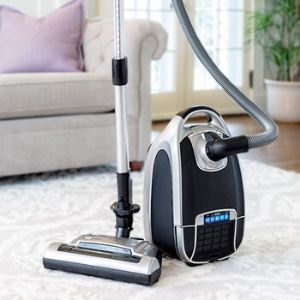
Not every allergy sufferer needs the same solution. The surfaces in your home, the severity of your symptoms, and whether you have pets all affect which features actually matter for your situation.
If you're upgrading from a vacuum with no HEPA filtration at all, any certified true HEPA model is a significant improvement. Focus on getting the filter right before worrying about additional features. An entry-level bagged upright with a true HEPA filter in the $100–$150 range will outperform a more expensive bagless model that lacks proper filtration.
Bagged models are generally the better call for allergy sufferers at the entry level. They contain allergens more securely during disposal—you remove the sealed bag and throw it away. Bagless models are convenient, but emptying the canister indoors releases a concentrated cloud of fine particles directly into your breathing space. If you go bagless, commit to emptying it outside every time.
If you've already made the basic upgrade and want to go further, these additional features deliver measurable improvements:
For primarily hard-floor households, a canister vacuum with a dedicated hard-floor tool often outperforms an upright. Upright brush rolls can scatter fine particles across smooth surfaces rather than pulling them in.
You bought the right vacuum, you're running it regularly, and your symptoms still haven't improved. Before concluding the machine isn't working, check these failure points—most of them are easy to fix.
Even well-built vacuums have a lifespan. If your machine is older than eight to ten years, the motor efficiency, filtration integrity, and housing seals have likely degraded past the point of reliable allergen control. Watch for these specific indicators:
If you're working through persistent issues with a bagged model specifically, verify you're using manufacturer-recommended bags. Off-brand bags frequently have lower filtration ratings that compromise the entire sealed system, no matter how good the vacuum itself is.
The two non-negotiable features are a true HEPA filter and a fully sealed system. The HEPA filter captures particles as small as 0.3 microns, and the sealed system ensures all exhaust exits only through that filter rather than leaking through gaps in the housing. Bagged models are also preferable to bagless for allergen containment during disposal, especially at the entry-level price tier.
Vacuum high-traffic areas and bedrooms at least twice a week. If you have pets, bump bedroom and pet-area vacuuming to daily. Consistency outperforms intensity—regular light sessions keep allergen load from building up, while infrequent deep cleans allow concentrations to reach symptomatic levels in between.
Bagless vacuums aren't disqualifying, but they require careful handling. Emptying the canister releases a concentrated burst of trapped allergens into the air. If you use a bagless model, always empty it outdoors, wear a mask during the process, and wipe the canister interior with a damp cloth before reinserting it. Bagged models are simply easier to manage safely.
 |
 |
 |
 |

About Liz Gonzales
Liz Gonzales grew up surrounded by art and design in a New York suburb, with both parents teaching studio arts at the State University of New York. That environment sharpened her eye for aesthetics and spatial detail — skills she now applies to evaluating home products where form and function both matter. She has spent the past several years writing about lighting, home decor accessories, and outdoor living gear, with a particular focus on how products perform in real residential settings rather than showrooms. At Linea, she covers lighting fixtures and bulb reviews, outdoor and patio gear, and general home product comparisons.
You can Get FREE Gifts. Furthermore, Free Items here. Disable Ad Blocker to receive them all.
Once done, hit anything below
|
|
|
|