
Ever stood in the vacuum cleaner aisle and felt completely overwhelmed by the options? With so many shapes, sizes, and price points lined up side by side, it's hard to know where to start. Understanding the different types of vacuum cleaners — and what each one is actually built to do — makes that decision far less stressful. This guide covers every major category so you can match the right machine to your home and cleaning routine. For a broader look at all things vacuuming, start with our vacuum cleaners guide.

Your floor type, the size of your space, and your household's specific needs — pets, allergies, kids — all shape which vacuum will genuinely work for you. A model that excels in a large carpeted family home may be completely wrong for a studio apartment with bare hardwood. Getting that match right means fewer frustrations, better results, and a machine you'll actually use regularly.
According to Wikipedia, vacuum cleaners have been evolving since the early twentieth century, and today's designs span everything from heavy-duty corded uprights to quiet, self-navigating robots. The variety can feel overwhelming — but once you understand what each type is designed to do, the right choice becomes much clearer.
Contents
Before you start comparing the different types of vacuum cleaners, it helps to know the traps most buyers fall into first. The wrong purchase doesn't just waste money — it means ending up with a vacuum you avoid using because it's too heavy, too noisy, or just wrong for your floors. For a broader look at how cleaning choices go sideways, this overview of common home cleaning mistakes and how to avoid them is worth reading alongside this guide.
It's tempting to grab the cheapest option on the shelf — or, conversely, to assume the priciest model must be best. Neither approach holds up in practice. A $450 carpet-focused upright is overkill if your apartment has tile and hardwood. A budget stick vacuum might be completely sufficient for your space, or it might fall apart in six months. The price tag alone tells you very little.
Floor type is one of the most important variables in vacuum selection — and one of the most overlooked. A vacuum optimized for deep-pile carpet will often scatter debris on hardwood instead of collecting it. If your home has a mix of surfaces, including various kitchen flooring types, you'll want a model with adjustable settings or multi-surface modes rather than one tuned to a single surface.
Each vacuum category exists because it solves a specific set of problems. Here's a clear-eyed look at what each type does well — and where it falls short.
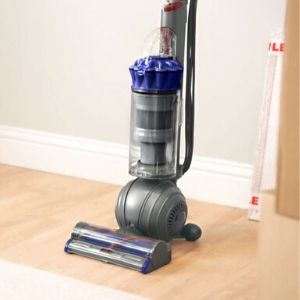
Upright vacuums are the classic single-unit design: motor, dustbin, and brush roll all housed in one body you push across the floor. They're well-suited for large carpeted areas and generally offer strong, consistent suction without requiring multiple attachments for regular floor cleaning. The tradeoff is weight — most uprights are heavier and harder to maneuver around furniture legs or down staircases. If your household includes a heavy shedder like a husky, check our guide to the best vacuum for husky hair — upright models frequently top those lists for their deep-cleaning power on carpet.

Stick vacuums are slim, lightweight, and almost always cordless. They're designed for quick pickups and smaller homes where lugging out a full-size machine feels like overkill. Most modern stick vacuums also convert into handheld units, giving you two tools in one body. Battery life typically ranges from 20 to 60 minutes on a single charge, so very large homes may require pausing mid-clean to recharge. They perform best on hard floors and low-pile rugs, though premium models now handle medium-pile carpet respectably.
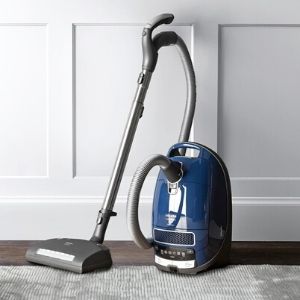
Canister vacuums separate the motor and dustbin into a unit you drag behind you, connected to the cleaning head by a flexible hose. This design makes them exceptionally maneuverable on stairs, upholstery, curtains, and tight corners. They tend to be quieter than uprights and deliver strong suction across both carpet and hard floors. The main downside is managing two separate pieces — the canister body and the wand — which takes some getting used to if you've only used uprights before.
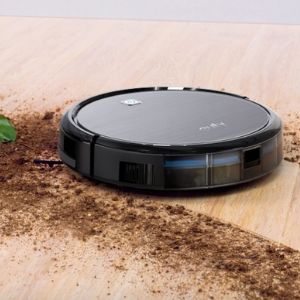
Robot vacuums navigate your floors autonomously, using sensors — and in premium models, laser mapping — to cover your home without you being involved at all. Think of them as a maintenance tool rather than a deep-cleaning solution. They keep dust and debris from building up between thorough vacuuming sessions, which is genuinely useful. They work well on hard floors and low-pile carpet; high-pile rugs and cluttered rooms slow them down significantly. If allergies are a concern in your home, see our post on the best vacuums for allergy sufferers for filter ratings and what to prioritize.
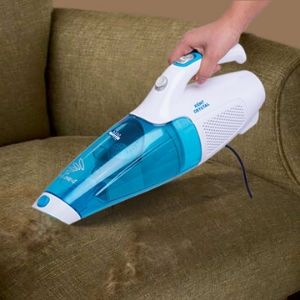
Handheld vacuums are compact, battery-powered tools designed for targeted cleaning: car interiors, upholstery cushions, stairs, or a quick crumb cleanup on the kitchen counter. They're not a substitute for a full-size machine, but they fill the gaps between main cleaning sessions faster and more conveniently than dragging out anything larger. Suction power is limited compared to bigger units, and dustbin capacity is small — so they're best used for spot cleaning rather than whole-room coverage.

Seeing the different types of vacuum cleaners laid out together makes the trade-offs much easier to evaluate. Use this table as a quick reference when you're comparing options — identify the row that best matches your primary use case, then shop within that category.
| Type | Best For | Floor Type | Cordless? | Typical Price Range |
|---|---|---|---|---|
| Upright | Large carpeted homes, deep cleaning | Carpet / Multi-surface | Some models | $80–$500+ |
| Stick | Small spaces, quick daily pickups | Hard floors / Low-pile carpet | Usually yes | $60–$700 |
| Canister | Stairs, upholstery, mixed floors | Carpet / Hard floors | Rarely | $100–$600+ |
| Robot | Daily maintenance, hands-free cleaning | Hard floors / Low-pile carpet | Yes (battery-based) | $150–$1,000+ |
| Handheld | Spot cleaning, cars, upholstery | Any surface (limited coverage) | Usually yes | $20–$200 |
Prices shift with brand, features, and retail timing. The goal here isn't to find the cheapest option in every row — it's to identify which category fits your actual needs, then find the best value within that segment.
Knowing the different types of vacuum cleaners is only useful if you can narrow it down to one that fits your home. Here's a practical way to work through the decision without getting sidetracked by spec sheets and marketing claims.
Walk through your home and take note of every floor surface you'll vacuum regularly. This sounds obvious, but most people skip it and end up with a mismatch. Your dominant floor type should drive your vacuum choice above everything else. If you have mostly hardwood with a couple of area rugs, a stick or canister vacuum will likely serve you better than a carpet-focused upright. If you have thick wall-to-wall carpet throughout, you need strong motorized suction.
Pro tip: If your home has more than two distinct floor types, a canister vacuum with multiple attachments gives you the most flexibility without needing to buy two separate machines.
Floor type alone doesn't tell the whole story. Pets, allergies, children, and how often you actually clean all shape which vacuum will genuinely work for you long-term. For a structured approach to whole-home cleaning that includes vacuuming as one part of a larger system, our guide to spring cleaning lays out a useful framework.
There's a real gap between entry-level and premium vacuums — but the gap isn't always where you'd expect it. More features don't automatically mean better cleaning results. What they do mean is more complexity, a higher price tag, and sometimes more components that can eventually fail.
A straightforward corded vacuum — no smart mapping, no self-emptying dock, no app connectivity — can still be an excellent cleaner. For homes without severe allergy concerns or complex multi-floor layouts, a simple model often outperforms expensive alternatives in raw cleaning power because it isn't constrained by battery limits or sensor overhead. You also tend to get a machine that's easier to maintain and repair.
Premium features earn their place in specific situations. If you're weighing a mid-range cordless upgrade and wondering what the extra cost actually buys, a direct comparison helps. Our Dyson V7 vs V8 comparison and Dyson V8 vs V10 comparison break down real-world performance differences between tiers. Upgrades tend to be genuinely worthwhile when:
Spending more only makes sense if the additional features match an actual problem you have, not a hypothetical one you might encounter someday.
Even a well-made vacuum underperforms when it isn't maintained. Most performance problems trace back to a handful of common causes, and most are easy to fix without calling for service. The same systematic thinking applies to other cleaning tools in your home — our guide on how to clean household furniture properly takes a similar step-by-step approach for upholstery care.
Reduced suction is the most common complaint among vacuum owners, and the cause is usually simple:
If your vacuum suddenly sounds different or shuts off during use, don't ignore it. A rattling sound usually means something hard has been sucked up and is bouncing around the dustbin or hose. A high-pitched whine often signals a blockage forcing the motor to work harder than it should. Most vacuums include a thermal cutoff switch that shuts the unit down automatically to prevent motor damage — if yours trips, unplug it, wait 30 minutes, clear any blockages, check the filter, and restart.
Canister vacuums are generally the most versatile option because they handle carpet, hard floors, stairs, and upholstery using interchangeable attachments. Cordless stick vacuums come close for everyday use, especially in smaller homes or apartments.
No — robot vacuums are best used as a maintenance tool between regular cleaning sessions. They're effective at keeping light dust and debris under control on a daily basis, but they don't match the deep-cleaning power of upright or canister models for thorough weekly cleaning.
Upright and canister vacuums with motorized brush rolls tend to perform best on pet hair, particularly on carpet. Look for tangle-free brush roll technology if shedding is heavy. Premium cordless stick vacuums have improved significantly in this area in recent years.
If anyone in your household suffers from allergies or asthma, HEPA filtration is worth prioritizing. HEPA filters capture particles as small as 0.3 microns — including pet dander, dust mite debris, and pollen — that standard filters allow to pass through the exhaust.
Most manufacturers recommend checking or cleaning filters monthly and replacing them every six to twelve months under normal use. Heavy use — especially in homes with pets or allergy sufferers — may require more frequent changes. Check your model's manual for specific guidance.
Yes, in many cases. If your home is small to medium in size with mostly hard floors, and you clean regularly, a quality cordless stick vacuum can handle primary cleaning duties. Large carpeted homes or households with heavy-shedding pets may need something more powerful for deep cleaning.
The right vacuum isn't the most expensive one on the shelf — it's the one that matches your floors, your household, and the way you actually clean.
 |
 |
 |
 |

About Linea Lorenzo
Linea Lorenzo has spent over a decade testing home gadgets, cleaning products, and consumer electronics from his base in Sacramento, California. What started as a personal obsession with keeping his space clean and stocked with the right tools evolved into a full-time writing career covering the home products space. He has hands-on experience with hundreds of cleaning solutions, robotic and cordless vacuums, and everyday household gadgets — evaluating them for performance, value, and real-world usability rather than spec sheet appeal. At Linea, he covers home cleaning guides, general how-to tutorials, and practical product advice for everyday home care.
You can Get FREE Gifts. Furthermore, Free Items here. Disable Ad Blocker to receive them all.
Once done, hit anything below
|
|
|
|