
Walking into a freshly renovated home, the first thing you notice is the floor. Warm planks stretching wall to wall — instantly grounding the entire space. That moment made me want to understand every decision behind the choice. If you're researching the types of hardwood floors, you're already thinking more carefully than most buyers do. The right floor transforms a room. The wrong one creates years of frustration. For more home upkeep strategies, browse our cleaning guides.
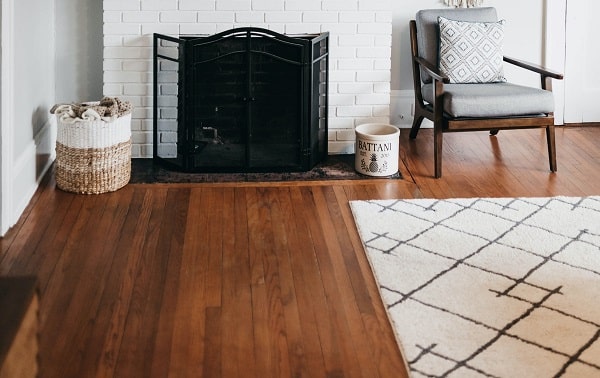
Hardwood flooring is not a single product. It's a category spanning dozens of species, construction methods, grades, and finishes. Each combination performs differently under real conditions. Your climate, subfloor type, lifestyle, and budget all shape the best choice for your home.
This guide cuts through the noise. You'll learn what separates solid from engineered, which species hold up in high-traffic zones, and how to protect your investment for decades to come.
Contents
Hardwood floors have been underfoot for centuries. Early settlers cut planks by hand — wide, uneven boards nailed directly to joists. No finish. No uniformity. Just raw wood doing its job.
The industrial revolution changed everything. Steam-powered sawmills produced consistent, narrower planks. Tongue-and-groove joinery became the standard. Floors became smoother, tighter, and more durable with every decade of refinement.
Today's options are the product of that long evolution. According to Wikipedia's overview of hardwood, the term refers to wood from deciduous trees — oak, maple, walnut, cherry, and others. Each species carries unique grain patterns, hardness ratings, and color ranges that define its character.
No other flooring category matches this combination of properties:
That combination — durability, aesthetics, and long-term return — is why hardwood remains the gold standard in residential flooring.
This is where most buyers get confused. Solid hardwood is one piece of wood, top to bottom. Engineered hardwood is a real wood veneer bonded over multiple layers of plywood or HDF core. Both look nearly identical on the surface. Their performance differences, however, are significant.
| Feature | Solid Hardwood | Engineered Hardwood |
|---|---|---|
| Construction | Single solid wood piece | Real veneer + plywood core |
| Moisture resistance | Low | Moderate to high |
| Refinishing cycles | 5–8 times | 1–3 times |
| Subfloor compatibility | Above grade only | Above, on, or below grade |
| Typical cost | $5–$15 per sq ft | $3–$12 per sq ft |
| Expected lifespan | 75–100+ years | 20–50 years |
For a deeper look at how engineered stacks up against its closest competitor, read our comparison of engineered hardwood floors vs. laminate.
The Janka hardness rating measures a wood's resistance to denting and surface wear. Higher numbers mean harder wood. Here's how the most common species rank:
If this is your first hardwood purchase, keep it straightforward:
Start with a forgiving species in a neutral finish. You can always upgrade in a future room. Don't make the learning curve expensive.
You're ready to move into premium territory when:
Premium species like walnut, white ash, and hickory reward careful installation. They punish shortcuts and sloppy acclimation.
These zones take the most punishment. Durability leads every decision:
Kitchens deserve special attention. Moisture from spills and dishwashers makes engineered hardwood the safer call over solid in most kitchen installations. The dimensional stability of the engineered core is a real advantage here.
These rooms don't take abuse. Use that freedom to choose what you love visually.
Bedrooms are the right place to take aesthetic risks. The floor won't let you down.
Consistency is your best defense. Dust and fine grit act like sandpaper under foot traffic. They wear the finish down faster than almost anything else.
Daily habits:
Weekly habits:
If you're dealing with stubborn residue or old product buildup, our guide on how to get wax off hardwood floors walks through safe removal without damaging the finish.
Wood expands in summer humidity and contracts in winter dryness. That cycle causes gaps, cupping, and squeaking if you ignore it.
Pro tip: Never use a steam mop on hardwood floors — the heat and moisture can cause irreversible warping and delamination, especially in engineered planks.
Applying a fresh topcoat is the single highest-impact maintenance move most homeowners skip. Most people wait too long — until the wood itself is visibly damaged and a full refinish becomes unavoidable.
Your main finish options:
These quick wins cost almost nothing and deliver compounding returns:
These habits take minutes to implement. Their cumulative impact over five or ten years is significant.
Myth: Hardwood floors are too difficult to maintain.
Reality: A consistent routine takes less than 10 minutes a day. The real effort comes from neglect — not from maintenance. Neglected floors require expensive intervention.
Myth: All hardwood looks the same.
Reality: Species, cut method, grade, stain color, and finish sheen produce dramatically different results. Two "oak" floors installed side by side can look like entirely different products.
Myth: Engineered hardwood is fake or synthetic.
Reality: The top wear layer is 100% real hardwood. The engineered core adds dimensional stability. It is not laminate. The distinction matters when you're comparing products and pricing.
Myth: You can't install hardwood below grade.
Reality: You can, with the right product. Engineered hardwood with a proper moisture barrier handles below-grade installations reliably. Solid wood does not — that's a genuine limitation, not a myth.
Focus your energy on these four factors instead of the myths:
These four variables determine most long-term outcomes. Get them right and your floor will perform for decades.
The two primary construction types are solid hardwood and engineered hardwood. Beyond construction, floors are categorized by wood species (oak, maple, walnut, hickory, and others), surface grade, plank width, and finish type. Each variable affects performance, appearance, and price.
Neither is universally better — it depends on your installation conditions. Solid hardwood suits above-grade spaces with stable humidity. Engineered hardwood works in basements, over radiant heat, or in climates with wide humidity swings. Both use real wood on the surface.
Hardness is measured by the Janka rating. Brazilian Cherry (2350), Hickory (1820), and Maple (1450) are among the hardest commercially available species. Red and white oak fall in the middle range and are the most practical choice for most homes.
It is generally not recommended. Bathrooms generate significant moisture that causes solid hardwood to warp and cup. If you want the look of wood in a bathroom, consider luxury vinyl plank or tile with a wood-look finish instead.
Most solid hardwood floors need a full refinish every 7 to 10 years, depending on traffic and maintenance. You can extend that cycle significantly by screening and recoating the finish every 3 to 5 years before the wood itself becomes exposed.
The Janka hardness test measures the force required to embed a steel ball halfway into a wood sample. The result is expressed in pounds-force (lbf). Higher numbers indicate harder, more dent-resistant wood. It is the standard industry benchmark for comparing flooring species.
Yes, in most markets hardwood floors add measurable resale value. Real estate studies consistently show that buyers prefer hardwood over carpet and most other flooring types. The return varies by market and condition of the floor, but it is generally considered a strong investment.
Use a dry microfiber mop or dust mop daily to remove grit and debris. For weekly cleaning, use a barely damp mop with a pH-neutral hardwood cleaner. Avoid wet mopping, steam mops, and any product that leaves a residue or film on the surface.
Now that you understand the full landscape of types of hardwood floors — from construction and species to maintenance and myths — you're ready to make a confident, informed choice. Start by confirming your subfloor type and measuring your space, then visit a flooring showroom to see and feel samples in person. Photos never do justice to real wood grain and finish variation. The right floor is out there for your home, your budget, and your lifestyle. Go find it, and give it the care it deserves.
 |
 |
 |
 |

About Linea Lorenzo
Linea Lorenzo has spent over a decade testing home gadgets, cleaning products, and consumer electronics from his base in Sacramento, California. What started as a personal obsession with keeping his space clean and stocked with the right tools evolved into a full-time writing career covering the home products space. He has hands-on experience with hundreds of cleaning solutions, robotic and cordless vacuums, and everyday household gadgets — evaluating them for performance, value, and real-world usability rather than spec sheet appeal. At Linea, he covers home cleaning guides, general how-to tutorials, and practical product advice for everyday home care.
You can Get FREE Gifts. Furthermore, Free Items here. Disable Ad Blocker to receive them all.
Once done, hit anything below
|
|
|
|