
Are you struggling to decide between two of Dyson's most popular cordless models — and not sure whether the extra cost is really justified? This Dyson V7 vs V8 comparison walks you through every meaningful difference so you can make a confident purchase. Both vacuums have earned loyal followings in the home cleaning community, and both deserve a close look before you commit your money. The honest answer is that the V8 is the stronger machine overall, but whether that extra strength matters for your specific home is a different question entirely.

The Dyson V7 and V8 belong to the same cordless stick vacuum family, sharing the same core design and many of the same attachments. Where they diverge is in suction power, battery runtime, and filtration — three areas that matter considerably depending on how you use your vacuum day to day. If you've ever wondered what separates a capable vacuum from a great one, understanding the different parts of a vacuum cleaner and how they function can help you make sense of those spec differences before spending.
Before diving into the detailed breakdown, it helps to know that neither model is a bad choice — they simply serve slightly different needs. Work through each section below, identify which factors apply most to your home, and let the comparison guide your decision.
Contents
The fastest way to understand the gap between these two models is to put the numbers next to each other. The table below covers every specification that has a practical effect on your daily cleaning experience, so you can see exactly what you're gaining — or giving up — with each choice.
| Feature | Dyson V7 | Dyson V8 |
|---|---|---|
| Suction Power | 100 AW | 115 AW |
| Battery Life (Eco Mode) | Up to 30 minutes | Up to 40 minutes |
| Battery Life (Max Mode) | Up to 6 minutes | Up to 7 minutes |
| Filtration Type | Post-motor filter | Whole-machine HEPA |
| Dustbin Capacity | 0.54 L | 0.54 L |
| Weight | 2.14 kg (4.7 lbs) | 2.61 kg (5.75 lbs) |
| Charge Time | Approx. 3.5 hours | Approx. 5 hours |
| Noise Level | ~83 dB | ~82 dB |
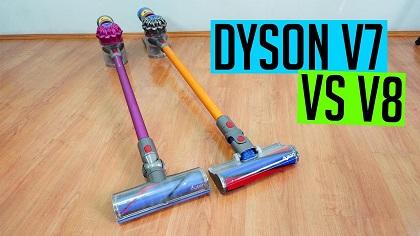
A few points stand out right away. The V8 gives you 10 extra minutes of Eco-mode runtime, which can be the difference between finishing your full cleaning session on a single charge or having to stop and wait. The whole-machine HEPA filtration on the V8 is also a meaningful upgrade — according to Wikipedia's overview of HEPA filtration, these filters capture at least 99.97% of airborne particles at 0.3 microns, making them genuinely valuable for allergy sufferers. On the other side, the V7 is lighter by nearly half a kilogram and charges faster, two advantages that matter on longer cleaning days.
Raw numbers can mislead if you don't put them in context. Keep these points in mind as you compare:
Choosing between these two models isn't purely a spec exercise — it's about matching the vacuum's capabilities to your real-world habits and your home's actual demands. If you've looked into the benefits of maintaining a clean home, you already know that having the right tool in hand makes the habit far easier to sustain over the long run.
The V7 is a strong match if your routine tends to look like this:
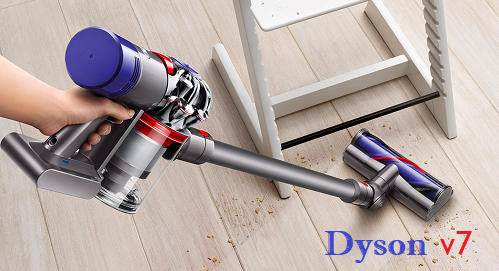
For those situations, the V7 handles the job well and saves you real money in the process. You're not leaving meaningful performance on the table — you're simply avoiding paying for capabilities you won't regularly use.
The V8 starts to make considerably more sense when your situation includes any of the following:
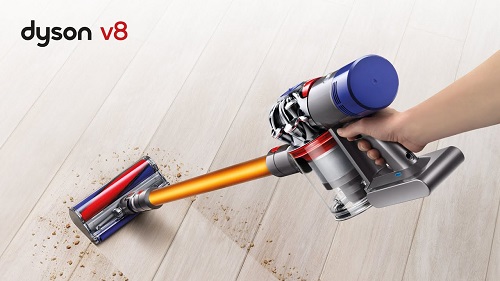
For allergy-prone households, the V8's HEPA filtration alone can justify the price difference — expelled air quality matters just as much as pickup performance when someone is sensitive to fine particles and dander.
Whichever model you end up with, a handful of practical habits will help you extract more value from every cleaning session. Most of these apply equally to both the V7 and V8, since their core mechanics are nearly identical and their attachments are interchangeable.
Both vacuums ship with a range of attachments, and matching the right tool to the right surface makes a noticeable difference in your results.
If you want a deeper dive into technique for different surface types, the guide on how to vacuum carpets and rugs effectively covers the approach in practical detail.
Pro tip: Default to Eco mode for everyday sessions and reserve Max mode for stubborn patches of embedded debris — the suction difference on routine messes is minimal, but the battery life difference is dramatic enough to matter across a full cleaning session.
Battery management is the area where V7 and V8 users most commonly run into frustration, and most of it is preventable with a few simple habits.
Both the V7 and V8 are engineered to last, but they do require consistent basic upkeep to maintain their performance over time. Neglecting maintenance is one of the most common reasons these vacuums lose suction well before they should, and that decline is entirely preventable if you stay on top of a few routine tasks.
The filter is the single most critical maintenance component on either machine. Handle it correctly and your vacuum will perform consistently for years.
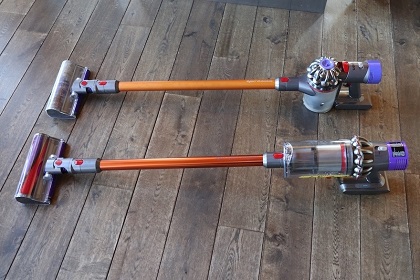
Both models share the same 0.54-liter dustbin with Dyson's hygienic point-and-shoot release mechanism. A few habits make the process cleaner and protect suction performance over time.
For a broader look at maintaining a tidy home beyond vacuuming alone, the 10 tips for keeping your home organized pairs naturally with a consistent vacuum routine and helps reinforce the habits that make cleaning feel less like a chore.
Many buyers make the same missteps during this comparison, and those mistakes tend to lead to regret in one direction or the other — either overspending on power they don't need, or underspending and dealing with frustrating limitations. Reviewing broader common home cleaning mistakes can sharpen your thinking here as well.
The V7 costs less, and that's a genuinely attractive advantage — but price should be your last consideration, not your first. Here's why leading with cost gets buyers into trouble:
Your floor composition shapes which model will genuinely serve you better, and it shapes which attachments you'll rely on most heavily throughout your ownership.
For most households with carpets, pets, or allergy sufferers, the V8's additional runtime, stronger suction, and whole-machine HEPA filtration make the price difference genuinely worthwhile. If you have a smaller space with mostly hard floors and short cleaning sessions, the V7 delivers solid performance at a meaningfully lower cost.
Yes. Both models are compatible with the same range of Dyson V-series accessories. Any attachment designed for the V7 or V8 will fit both machines, which also gives you flexibility if you upgrade later and want to carry your existing tools over.
The V7 runs up to 30 minutes in Eco mode, while the V8 extends that to up to 40 minutes. In Max mode, both models are limited to approximately 6–7 minutes. Actual runtime varies depending on which attachment you're using and whether your floor type puts more load on the motor.
Yes, in a meaningful way. The V8's whole-machine HEPA filtration captures allergens, fine dust, and pet dander before they're exhausted back into the room air. The V7's post-motor filter performs well for general dirt removal but does not meet the HEPA standard, so the expelled air contains more fine particles.
The V8 has a clear advantage for pet hair due to its stronger suction and HEPA filtration, which captures dander alongside the visible hair. That said, the V7 paired with a mini motorized tool still does a competent job on upholstery and low-pile carpet — the performance gap is most apparent on thick rugs and high-traffic carpeted areas.
The best vacuum isn't the most powerful one on the shelf — it's the one that genuinely matches your home, your habits, and the specific messes you face every single day.
 |
 |
 |
 |

About Linea Lorenzo
Linea Lorenzo has spent over a decade testing home gadgets, cleaning products, and consumer electronics from his base in Sacramento, California. What started as a personal obsession with keeping his space clean and stocked with the right tools evolved into a full-time writing career covering the home products space. He has hands-on experience with hundreds of cleaning solutions, robotic and cordless vacuums, and everyday household gadgets — evaluating them for performance, value, and real-world usability rather than spec sheet appeal. At Linea, he covers home cleaning guides, general how-to tutorials, and practical product advice for everyday home care.
You can Get FREE Gifts. Furthermore, Free Items here. Disable Ad Blocker to receive them all.
Once done, hit anything below
|
|
|
|