
What would you do if your kitchen floor started cupping, staining, or cracking within a year of installation? Most homeowners face exactly that scenario because they chose a material without understanding how different the types of kitchen flooring actually perform under real conditions. Spills, dropped pots, constant foot traffic, and grease all make the kitchen floor one of the hardest-working surfaces in your home, and daily cleaning gets significantly easier when your floor is matched to how your kitchen actually functions. This guide breaks down every major option — what it costs, where it excels, and where it fails.
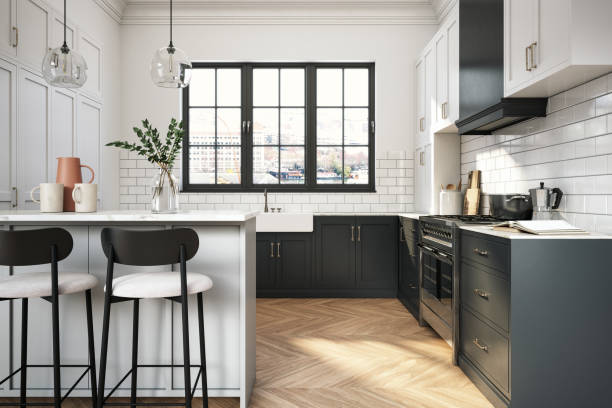
Today's market offers more variety than ever — from classic hardwood and ceramic tile to resilient luxury vinyl and eco-friendly cork — so there's a well-matched option for nearly every budget and lifestyle. The challenge isn't finding choices; it's narrowing them down to what actually fits your kitchen's specific conditions and your household's daily demands.
Before you start comparing prices or pulling up samples, think through three questions: How much moisture and steam does your kitchen generate on a typical day? How many people and pets move through the space? And how long do you plan to stay in this home? Your answers will narrow the field faster than anything else in this guide.
Contents
Hardwood is one of the most sought-after types of kitchen flooring because it adds warmth and a timeless character that few other materials can replicate convincingly. Solid hardwood is genuinely vulnerable to moisture, however, and can warp or cup in kitchens with high steam or frequent spills. Engineered hardwood — which bonds a real wood veneer over a dimensionally stable plywood core — handles humidity fluctuations far better. For a deeper look at wood species and finish options, our guide on types of hardwood floors covers the full landscape in practical detail.

Laminate flooring mimics wood or stone at a fraction of the price, making it one of the most accessible types of kitchen flooring for budget-conscious renovations. A photographic layer beneath a tough wear surface can convincingly replicate almost any species or stone finish available. The critical limitation is moisture — standard laminate is not waterproof, and standing water at seams causes swelling you cannot reverse. Our comparison of engineered hardwood floors versus laminate breaks down where each material wins and where it falls short for kitchens specifically.
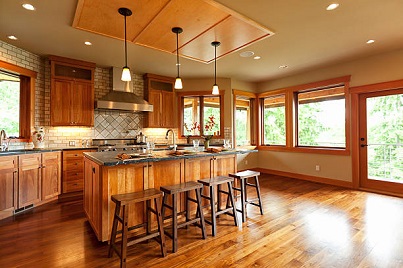
Cork is a natural, renewable material that feels noticeably softer underfoot than tile or hardwood, which makes it appealing for kitchens where you spend long stretches standing while cooking. It also brings natural antimicrobial properties and mild thermal insulation — two qualities few synthetic floors can match. Sealed cork resists moisture reasonably well, though it needs resealing every few years to maintain that protection reliably. For a related look at how cork performs in wet environments, our cork bathroom flooring guide is a useful next read.

Bamboo is technically a grass, but once processed and finished it behaves like hardwood — and earns its place among the top types of kitchen flooring because it's harder than many traditional wood species. Strand-woven bamboo in particular is exceptionally dense and scratch-resistant, making it a strong candidate for high-traffic kitchens where durability is the primary concern. One caution: cheaper bamboo products can off-gas formaldehyde, so buying from a manufacturer with documented low-emission certifications genuinely matters here.

Linoleum is frequently confused with vinyl, but it's an entirely different product made from linseed oil, cork powder, wood flour, and natural pigments — meaning it's biodegradable in ways that vinyl simply isn't. With proper sealing it holds up well to moisture, resists bacteria naturally, and comes in a wide range of colors and inlaid patterns. It's also one of the more eco-conscious choices among all the types of kitchen flooring currently on the market.
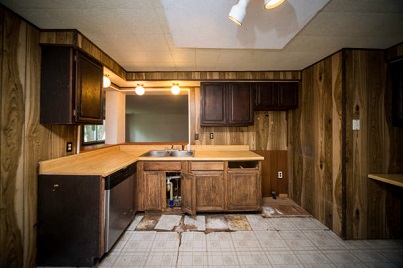
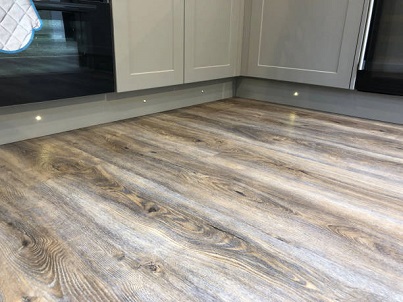
Luxury vinyl plank has arguably become the most practical choice among all types of kitchen flooring for homeowners who want durability without a premium price tag. LVP is 100% waterproof, highly scratch-resistant, and available in convincing wood and stone looks that are difficult to distinguish from the real thing. According to Wikipedia's overview of luxury vinyl tile, this format has grown rapidly across the residential market due to its combination of affordability and practical performance in high-wear environments.
Modular carpet tiles occasionally appear in low-traffic kitchen dining areas, where they add warmth and acoustic softening that hard surfaces can't provide. Individual damaged tiles can be swapped out without replacing the entire floor, which limits maintenance costs over time. That said, carpet tiles are not appropriate near the stove, sink, or dishwasher — grease and food particles embed in fibers quickly, and keeping them genuinely clean demands consistent, thorough vacuuming every week.
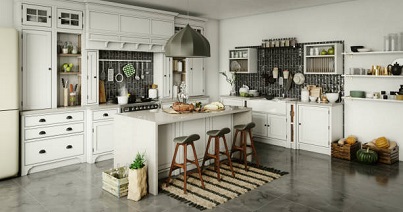
Tile is among the most durable types of kitchen flooring you can install — it handles moisture, heat, and heavy foot traffic for decades without complaint when properly laid. Porcelain is denser and less porous than ceramic, making it the stronger performer for kitchens specifically. The main trade-offs are that tile is cold and hard underfoot, and grout lines require regular maintenance to stay free of staining and bacteria over the years.
Pro tip: If your tile floor develops condensation and becomes slippery during temperature swings, our guide on how to stop tile floor from sweating walks through the fix — it's usually a ventilation and subfloor temperature issue that's fully solvable.
Budgeting for a new kitchen floor means looking beyond just the material price per square foot — you also need to factor in installation labor, underlayment, and realistic lifespan before you can make a meaningful comparison between options. The table below gives you a working reference for each major material type.
| Flooring Type | Material Cost (per sq ft) | Install Cost (per sq ft) | Lifespan (years) | Water Resistance |
|---|---|---|---|---|
| Solid Hardwood | $5–$12 | $4–$8 | 25–100+ | Low |
| Engineered Hardwood | $4–$9 | $3–$7 | 20–40 | Medium |
| Laminate | $1–$5 | $2–$5 | 15–25 | Low–Medium |
| Luxury Vinyl Plank | $2–$7 | $2–$5 | 15–25 | High |
| Ceramic Tile | $1–$5 | $4–$8 | 20–50+ | High |
| Porcelain Tile | $3–$8 | $4–$9 | 30–50+ | Very High |
| Cork | $2–$5 | $3–$6 | 10–25 | Medium (if sealed) |
| Bamboo | $3–$8 | $3–$7 | 20–25 | Medium |
| Linoleum | $2–$4 | $3–$6 | 20–40 | Medium–High |
Keep in mind that regional labor rates and product quality tiers can shift these numbers significantly for your area. If you're working within a tight renovation budget, our article on kitchen floor ideas on a budget offers practical strategies for getting a quality result without overspending on the wrong material.
Worth knowing: Hard-surface flooring — tile, vinyl, or hardwood — is significantly easier to keep allergen-free than any carpet option, and if anyone in your household has respiratory sensitivities, that practical difference in daily air quality is worth weighing seriously in your decision.
If you're planning a DIY laminate job, our guide to laminating at home walks through the full process step by step and covers the tools you'll need before your first cut.
Old-style floor waxes can accumulate on hardwood and linoleum over repeated applications, leaving a cloudy or yellowed film that makes the surface look dirty even directly after you've cleaned it. If you're dealing with that issue on a wood floor, our guide on how to get wax off hardwood floor walks through a safe, effective removal method that won't harm the underlying finish or the wood beneath it.
Porcelain tile and luxury vinyl plank are consistently the strongest performers for kitchen durability. Porcelain is nearly indestructible against moisture and heavy impact, while LVP offers full waterproofing with excellent scratch resistance at a significantly lower price point than natural stone or solid hardwood.
Engineered hardwood is a reasonable choice for kitchens that don't generate heavy moisture, but solid hardwood carries a real risk of warping near sinks, dishwashers, and high-steam cooking areas over time. If you love the wood aesthetic, engineered hardwood delivers most of the visual appeal with far better dimensional stability in humid conditions.
Laminate and standard vinyl sheet flooring are typically the most affordable types of kitchen flooring, with material costs often starting below $2 per square foot. Luxury vinyl plank costs a bit more but delivers significantly better water resistance, making it a more practical long-term value for most kitchens when you factor in lifespan.
In a kitchen environment, yes — LVP outperforms laminate because it is fully waterproof, while laminate remains vulnerable to moisture damage at seams and edges. Both materials look similar and install in similar ways, but LVP holds a clear functional advantage in the one room where water exposure is unavoidable on a regular basis.
For pet households, scratch resistance and waterproofing are the two priorities that matter most. Luxury vinyl plank, porcelain tile, and strand-woven bamboo all handle pet claws well and clean up easily after accidents. Avoid solid hardwood and standard laminate if your pets have indoor accidents, as moisture will degrade both materials relatively quickly.
Cork can work well in kitchens if you're willing to reseal the surface every two to three years to maintain its moisture protection. It provides excellent cushioning for long cooking sessions and has natural antimicrobial properties that make it an interesting alternative to synthetic floors. Its main limitations are vulnerability to sharp impacts and the ongoing commitment to resealing that it requires.
Lifespan varies significantly by material: porcelain tile can last 50 years or more with proper grouting, solid hardwood can last a century if refinished periodically, and luxury vinyl plank typically delivers 15–25 years under residential use. Budget laminate and vinyl sheet flooring at the lower end of the quality range often show visible wear after 10–12 years in high-traffic kitchens.
The floor you choose won't just shape how your kitchen looks — it will determine how your kitchen functions for every year you live in that home, so match it to your reality, not your wishlist.
 |
 |
 |
 |

About Liz Gonzales
Liz Gonzales grew up surrounded by art and design in a New York suburb, with both parents teaching studio arts at the State University of New York. That environment sharpened her eye for aesthetics and spatial detail — skills she now applies to evaluating home products where form and function both matter. She has spent the past several years writing about lighting, home decor accessories, and outdoor living gear, with a particular focus on how products perform in real residential settings rather than showrooms. At Linea, she covers lighting fixtures and bulb reviews, outdoor and patio gear, and general home product comparisons.
You can Get FREE Gifts. Furthermore, Free Items here. Disable Ad Blocker to receive them all.
Once done, hit anything below
|
|
|
|