
You're standing in the cleaning aisle — or more likely, scrolling through dozens of product listings at midnight — trying to figure out which spin mop is actually worth buying. There are bucket systems, cordless electrics, pedal wringers, and everything in between. It's a lot to sort through.
Spin mops have genuinely changed the way people clean hard floors. Unlike traditional string mops that just push dirty water around, a good spin mop wrings itself out, stays damp (not soaking wet), and picks up grime instead of smearing it. If you're mopping tile, hardwood, laminate, or vinyl, the right spin mop can cut your cleaning time in half. For more flooring cleaning options, check out our guide to the 15 Best Microfiber Spray Mops.
In this 2026 roundup, we tested and researched six of the most popular spin mop systems — from the classic bucket-and-handle setup to cordless electric models with self-propulsion. Whether you want hands-free wringing, pet-safe cleaning, or a lightweight electric option, there's something here for you. Let's get into the picks.

Contents




The O-Cedar EasyWring is probably the most recognized spin mop on the market for good reason. It's been refined over several iterations, and in 2026 it remains one of the most practical, affordable options for everyday home cleaning. The built-in foot pedal wringer lets you squeeze moisture out of the mop head without touching it — your hands never come near the dirty water. The integrated splash guard keeps water contained when you're wringing or carrying the bucket from room to room, which is a small but genuinely useful detail.
The microfiber mop head (made from millions of fine fibers) does an excellent job of picking up dust, pet hair, and sticky residue from tile, hardwood, laminate, and vinyl floors. It works effectively with plain water alone, which means you don't have to buy specialty cleaning solutions. The mop head is machine washable, and O-Cedar recommends replacing it every three months under normal use — replacement heads are widely available and inexpensive. The handle is angled to help you reach under furniture without repositioning yourself constantly.
Where does it fall short? The bucket is on the smaller side, so if you're cleaning a large open-plan home you may need to refill more than once. Some users also find the plastic bucket feels lightweight compared to premium alternatives. But for the price point and the sheer ease of daily use, it's hard to beat for most households.
Pros:
Cons:
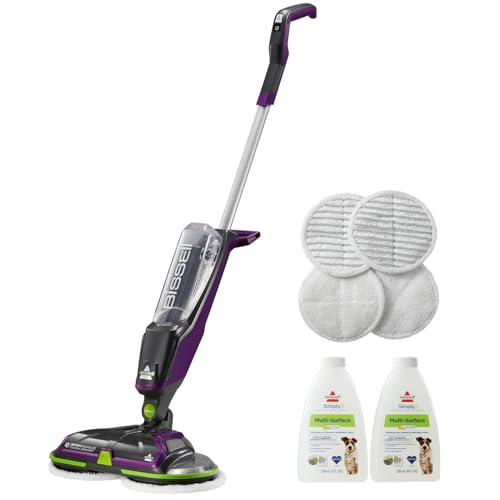
If you have pets, floor cleaning takes on a whole new level of urgency. The Bissell Spinwave Cordless is purpose-built for that challenge. It runs on an 18V battery giving you about 20 minutes of cordless runtime — enough to clean a typical home's hard floors in a single charge. No cord means you move freely through rooms without unplugging and re-routing, and it's especially useful for navigating around pet crates, furniture, and food bowls.
The dual rotating pads spin against the floor to scrub away stuck-on messes — think dried food, muddy paw prints, and sticky residue that a regular damp mop would just smear around. The on-demand spray feature lets you dispense Bissell's cleaning formula exactly where you need it, rather than pre-soaking the entire floor. It's safe on sealed hardwood, tile, linoleum, and laminate. The washable pads are reusable, which cuts down on long-term running costs.
The 20-minute runtime is the main trade-off. If you have a very large home or want to do a deep clean across multiple floors, you'll be waiting for the battery to recharge between sessions. It's also heavier than a traditional bucket mop, and the Bissell cleaning formula costs extra over time compared to plain-water systems. That said, for pet households dealing with daily messes on hard floors, the convenience and cleaning power make this worth considering seriously.
Pros:
Cons:
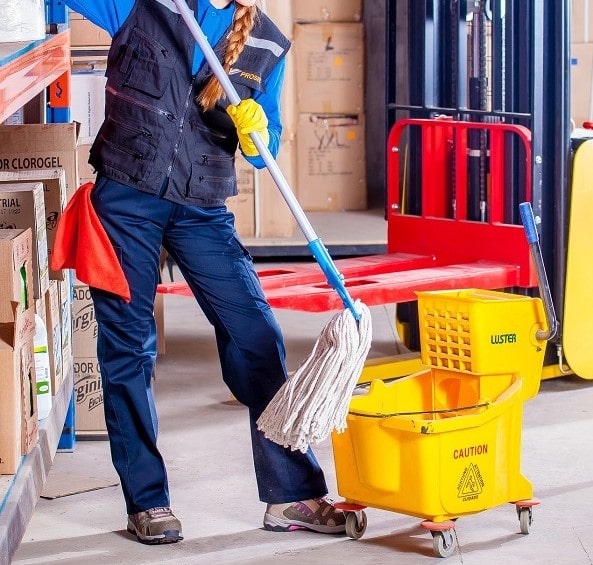
The Casabella Spin Mop takes a fundamentally different approach to the classic bucket problem: instead of one bucket doing double duty, it uses two separate chambers to keep clean water completely separated from dirty water. That means you're always rinsing your mop head in fresh water and mopping with a genuinely clean pad — not recycling the same grimy liquid across your whole floor. If you've ever noticed your floors look streaky after mopping, this is often why, and the two-bucket design solves it directly.
Operation is foot-pedal driven, so wringing is hands-free. The spinning handle also helps you control moisture level without bending down. A built-in measuring cup makes it easy to add the right amount of cleaning solution, and a scraper tool is included for removing dried-on debris before you mop. The microfiber head features a hex (hexagonal) design that's shaped to fit into corners — a genuine functional improvement over round mop heads that leave triangular patches of grime untouched. You get an extra mop head refill in the box, which is a nice bonus out of the gate.
The system is a bit bulkier than single-bucket options because you're carrying two chambers. If storage space is tight in your home, that's worth factoring in. First-time users might also need a moment to get used to the pedal mechanism, but once you're used to it, it becomes second nature quickly.
Pros:
Cons:
The Libman Tornado stands out for giving you precise control over how wet your mop head is. Push the handle into the spin chamber once and you get a damp mop — ideal for sealed hardwood or laminate that you don't want sitting in excess water. Push it multiple times and you wring it nearly dry — useful for floors that are very sensitive to moisture. This level of moisture control is something most spin mops don't offer, and it makes the Tornado a smart pick if your home has a mix of floor types.
The system comes with one extra refill mop head out of the box, giving you two total to rotate through — helpful if you're doing a big cleaning session and want a fresh head partway through. The ultra-absorbent microfiber head lifts and traps dirt effectively, and it's machine washable. The mop is designed to dry floors faster than traditional wet mops, which reduces the window for slipping accidents. If you're also concerned about floors with light-sensitivity to water, pair this with tips from our Best Microfiber Mop for Laminate Floors in 2026 guide.
The bucket and mop combo is straightforward to assemble and use. The spin mechanism is handle-operated rather than foot-pedal driven, so if you prefer not to balance on one foot while mopping, this is a more comfortable option. One thing to note: the wringer chamber is positioned at the top of the bucket, meaning you need to lift the mop fully upright to engage the spin — a minor ergonomic quirk but one to be aware of in tight spaces.
Pros:
Cons:
If bending, pushing, and straining while mopping is a concern for you — whether due to back pain, fatigue, or simply wanting to make the chore less exhausting — the BLONEX Cordless Electric Mop takes a notably different approach. The dual-rotating motors create natural forward propulsion, meaning you guide the mop rather than push it. You steer, the mop moves itself. For people who clean large floor areas regularly or have physical limitations, this distinction matters a lot.
The 250ml detachable water tank is semitransparent, so you can see your water level at a glance without lifting or shaking the unit. Detaching the tank for refilling is straightforward — carry it to the sink, fill it, click it back in. The built-in headlights illuminate the floor ahead of you, which sounds like a gimmick but is actually useful for catching dust buildup under darker furniture. The mop is lightweight and designed for one-handed use, making it easy to navigate around table legs and chair bases. No cords means no tripping hazards and no limit on reach.
The 250ml tank is on the smaller side — you'll refill more frequently than with a bucket system for large spaces. Because it's an electric appliance rather than a traditional mop, it's also more expensive upfront and has more components to maintain over time. It's a specialized tool rather than an all-purpose replacement for a bucket mop, but for daily light cleaning or users who need a more ergonomic solution, it's genuinely impressive. You might also want to pair it with a good cordless vacuum for hardwood floors to handle dry debris before mopping.
Pros:
Cons:
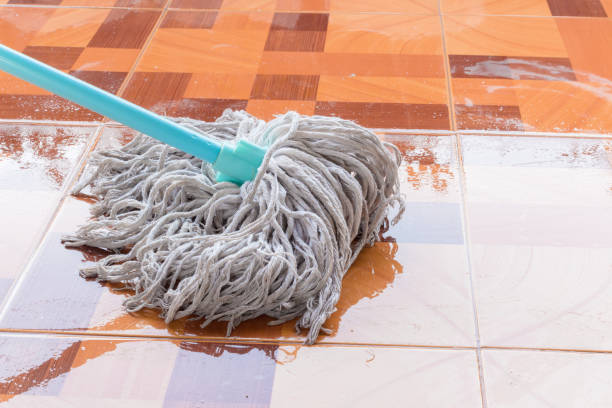
The Eyliden 360° system has a clever two-stage spin mechanism that sets it apart from the usual press-and-spin designs. Press the handle down to wash the mop head in the lower chamber, then lift to spin-dry it in the upper chamber — all within the same bucket. The 360° rotation means the mop head can swivel freely around furniture legs, into corners, and under low-clearance spaces without you having to awkwardly reposition. Your hands stay completely dry throughout the entire process, which is a meaningful convenience if you're doing multiple rooms in a session.
The stainless steel adjustable handle extends from 43 to 51 inches, which accommodates a wide range of user heights without needing adapters or extensions. If you're taller than average and tired of hunching over a too-short mop handle, this is a practical advantage. The system comes with two microfiber mop heads in the box — soft enough not to scratch sealed floors, absorbent enough to handle real messes. The bucket is described as sturdy and crack-resistant, which matters if you're carrying it full of water across multiple rooms.
The lock mechanism on the handle needs a little getting used to — you open the lock for washing and drying, and close it when you're actually mopping. It's a simple system once you understand it, but first-time users sometimes find the instructions aren't entirely clear. The overall build quality feels solid for the price range, though it won't feel as premium as higher-end options. For anyone browsing our broader cleaning category, this system sits comfortably in the mid-range sweet spot.
Pros:
Cons:
Not every spin mop is the right fit for every home. Before you spend money, think through these four factors — they'll narrow your options fast.
This is the biggest fork in the road. A traditional bucket-and-handle spin mop is:
A cordless electric mop (like the Bissell Spinwave or BLONEX) offers:
If your home is under 1,500 sq ft and you mop weekly, a traditional system is probably enough. If you clean daily, have chronic back pain, or deal with heavy pet messes, an electric mop may justify the cost.
In a single-bucket system, you rinse your mop head in the same water you started with. By room three, that water is pretty grimy — and you're technically mopping with dirty water. A two-bucket system (like the Casabella) separates clean rinse water from dirty used water, giving you consistently cleaner results. If streak-free, truly clean floors matter to you, the two-bucket design is worth the extra bulk. According to CDC guidance on household hygiene, cross-contamination during cleaning is a real concern — especially if you're mopping a bathroom and then a kitchen.
Not every mop is safe on every floor. Here's a quick reference:
Microfiber (a synthetic fiber with ultra-fine strands) is the standard for spin mop heads in 2026. Better microfiber holds more water, releases grime faster, and lasts longer between washes. When comparing products, check:
Products that include two heads out of the box (Libman, Eyliden) give you more immediate value. Products with proprietary heads (some Bissell models) may lock you into a specific replacement brand.
A spin mop is a floor cleaning tool that uses a rotating (spinning) mechanism to wring out the mop head without you touching it. You dip the head in a bucket of water, then press a foot pedal or push a handle into a spin chamber to centrifugally wring out the excess water. The result is a damp-not-wet mop that cleans floors without soaking them. Most spin mops use microfiber heads that pick up dirt and bacteria more effectively than traditional cotton string mops.
Yes, with the right technique. The key is controlling moisture — hardwood floors (especially unsealed or older ones) can warp or swell if too much water is left sitting on them. Use a spin mop with good wringing control (like the Libman Tornado), wring the head as dry as possible before mopping hardwood, and mop in small sections so water doesn't pool. Always check your floor manufacturer's guidelines before using any wet cleaning method.
Most manufacturers recommend replacing the mop head every three months under regular use (mopping once or twice a week). If you mop daily, consider replacing every 6–8 weeks. Signs it's time to replace: the head doesn't absorb water well anymore, it smells even after washing, or the fibers are visibly worn down or matted. Machine washing after every use extends the life of each head significantly.
Yes, most spin mops are compatible with diluted floor cleaning solutions. However, always check the product instructions — some systems (like the O-Cedar EasyWring) are specifically designed to work effectively with plain water alone, which is gentler on floors and cheaper to maintain. If you use a concentrated cleaner, dilute it heavily. Avoid bleach-based solutions with microfiber heads, as they can degrade the fibers over time and reduce cleaning effectiveness.
A traditional string mop or flat mop requires manual wringing — either by hand (unhygienic) or by pressing against a wringer built into the bucket. You have limited control over how wet the mop stays, and the mop head usually doesn't spin, so it can't clean in 360° directions. A spin mop uses centrifugal force to wring the head evenly, keeps your hands dry, often rotates a full 360°, and uses microfiber that captures more particles. The result is a cleaner floor with less effort and less water used.
For some households, yes — but not for everyone. Cordless electric mops like the Bissell Spinwave are excellent for daily light cleaning and pet messes. But they have limited runtime (typically 20 minutes), a smaller water capacity, and higher upfront cost. A traditional spin mop with a bucket handles larger volumes of water, doesn't require charging, and tends to cost less. Many users find that having both — a bucket mop for deep cleaning sessions and an electric mop for daily touch-ups — gives the best of both worlds.
 |
 |
 |
 |

About Linea Lorenzo
Linea Lorenzo has spent over a decade testing home gadgets, cleaning products, and consumer electronics from his base in Sacramento, California. What started as a personal obsession with keeping his space clean and stocked with the right tools evolved into a full-time writing career covering the home products space. He has hands-on experience with hundreds of cleaning solutions, robotic and cordless vacuums, and everyday household gadgets — evaluating them for performance, value, and real-world usability rather than spec sheet appeal. At Linea, he covers home cleaning guides, general how-to tutorials, and practical product advice for everyday home care.
You can Get FREE Gifts. Furthermore, Free Items here. Disable Ad Blocker to receive them all.
Once done, hit anything below
|
|
|
|