
You've just refinished your hardwood floors, or maybe you're simply tired of dragging a heavy bucket mop across the house every weekend, and now you're standing in the cleaning aisle — or scrolling through dozens of listings — wondering which dust mop will actually protect your investment without scratching the surface or leaving streaks behind. It's a surprisingly easy purchase to get wrong, because not every microfiber mop is designed with hardwood floors in mind, and the wrong pad material can do more damage than good over time. The good news is that the cleaning market in 2026 has some genuinely excellent options at nearly every price point, and this guide breaks them all down so you can make a confident decision today.
Hardwood floors need a gentler touch than tile or linoleum, and choosing the wrong mop head or using too much water can warp boards and dull the finish over months of regular use. According to the U.S. Department of Energy, maintaining clean, undamaged flooring also contributes to better indoor air quality and home energy efficiency — so your mop choice matters more than you might think. Whether you're dealing with pet hair, fine dust, or sticky grime, the seven picks below cover dry dusting, light wet mopping, and everything in between, with honest pros and cons for each one.
If you're also curious about wet mop options that go a step further, our roundup of the 15 best microfiber spray mops is a helpful companion read. For those with laminate or mixed flooring throughout the home, the best microfiber mop for laminate floors in 2026 guide covers surface-specific needs in more detail. But if hardwood is your primary concern, keep reading — you're in the right place.

Contents




This flat mop comes packaged with three double-sided replacement pads, and that detail alone sets it apart from most entry-level options you'll find in this price range. One side of each pad is dense chenille (a looped, soft fabric great for trapping large debris like pet hair and dust bunnies), while the other side is flat microfiber designed for more focused scrubbing on sticky spots and stubborn grime. The extendable handle reaches 58 inches, which means you can clean under most sofas and beds without bending down at all, and the wide mop head covers more floor per pass than standard-width designs do.
The flip-up ends of the mop head are a genuinely useful feature rather than a marketing gimmick — they allow the pad to fold upward and reach into tight baseboards and wall corners without you needing to kneel or awkwardly angle the handle. All three pads are machine washable and designed to hold up through hundreds of wash cycles, so your upfront cost spreads out nicely over time. For everyday hardwood floor maintenance in 2026, this is a highly practical starter kit that covers both dry dusting and light damp mopping in a single tool.
One thing to keep in mind is that this mop doesn't come with a built-in spray mechanism, so you'll need a separate spray bottle or bucket if you want to do wet mopping sessions — which is actually fine for hardwood because controlled moisture application is safer than a mop that saturates the floor automatically.
Pros:
Cons:
Bona has been a trusted name in hardwood floor care for decades, and this spray mop is the most purpose-built option in the lineup for people who want a complete wet-and-dry solution in a single unit. The built-in cartridge reservoir holds Bona's own floor cleaner (or any economy-size refill you find at most grocery stores), and a trigger on the handle lets you spray a fine mist directly in front of the mop head as you move forward. The cleaning solution is residue-free and fast-drying, which matters on hardwood because standing moisture is the enemy of both the wood and its finish over time.
The extra-large mop pad covers more square footage per pass than many competitor designs, and the pad itself is washable and reusable, so you're not constantly buying replacements. The spray mechanism is well-integrated — it doesn't drip or over-saturate the floor, which is one of the most common complaints about cheaper spray mops that release too much liquid in a single pull. If you clean your hardwood floors two or three times per week, this is the kind of tool that makes the routine feel genuinely easy rather than like a chore you keep putting off.
The main trade-off with this mop is that it's optimized for Bona's own cleaner formulas, and while you technically can use other liquids, the spray mechanism is calibrated for thinner, water-based solutions — thicker cleaners may clog it over time. Also, it comes with only one replacement pad in the box, so if you clean large areas frequently, you may want to order extras before you need them.
Pros:
Cons:
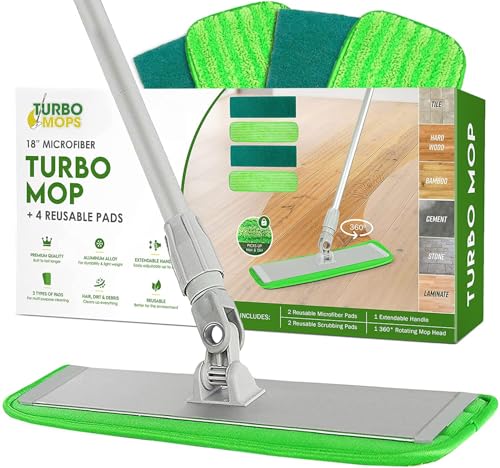
The 18-inch mop head on this Turbo model is wider than what you'll find on most residential mops, and the 360-degree rotating joint (the pivot point where the handle meets the mop frame) makes it genuinely easy to steer around chair legs, table bases, and pet toys without having to lift and reposition the mop every few seconds. It ships with four reusable microfiber pads, which is a solid count for a set in this price tier, and the pads work on both hardwood and tile floors without any surface-specific adjustments needed. The aluminum telescoping handle extends to 60 inches, making it one of the tallest options on this list — a real advantage if you're taller than average or if you want to use it for light wall washing or window sill dusting.
The swivel action is where this mop earns its "best for" label, because cleaning under furniture — the place where dust bunnies and pet hair accumulate most stubbornly — becomes significantly easier when the head can rotate freely in any direction. You don't need to drag the mop out from under the couch and reinsert it from a different angle; you just steer it while the head follows along. The pads are machine washable and the aluminum frame resists corrosion, so this is a mop designed to last through years of regular use rather than one that's built to be replaced seasonally.
One area where this mop falls short compared to the Bona is moisture control — there's no built-in spray mechanism, so wet mopping still requires a separate bottle or damp-pad prep. The mop head is also not the most compact for storage in small utility closets, given the 18-inch width.
Pros:
Cons:
Masthome bundles five reusable microfiber pads with this mop, which is the most generous pad count in this entire lineup, and that alone makes it a strong contender if you clean frequently or if you have multiple flooring surfaces throughout your home. The 16 x 8.4 inch mop head is notably larger than the average flat mop head, so each forward stroke covers more ground — a real time-saver when you're cleaning a wide-open kitchen or living room floor. The elastic band attachment system for the pads is quick and intuitive: you stretch the pad corners over the frame clips and you're ready to clean in about thirty seconds flat.
The microfiber fabric is soft enough that it won't scratch even sensitive hardwood finishes, which is important because some cheaper pads use synthetic blends that can leave fine surface scratches over repeated use. The high absorbency of the material also means the floor dries faster after damp mopping compared to cotton or sponge alternatives — you're not leaving puddles behind that could seep into wood seams and cause swelling. A cleaning scraper is also included in the box, which is a small but practical addition for dealing with dried spills or stuck-on debris before you mop over them.
The trade-off with the Masthome is that it doesn't have a 360-degree swivel head, so maneuvering under furniture is less fluid than with the Turbo model. The handle also doesn't extend quite as high as some competitors, which may be a consideration if you're above average height and find yourself hunching forward on long cleaning sessions.
Pros:
Cons:
Libman takes an interesting design approach with this mop that separates it from every other option in this guide: the mop head has two distinctly different sides, and you flip it depending on what kind of cleaning you're doing at that moment. The microfiber finger side — long, looped strands that look almost like fringe — is exceptional at trapping and holding fine dust, pet dander, and hair without just pushing it around the floor. The flat microfiber side is better suited for damp mopping and washing away tracked-in grime or spilled liquids. A comb tool is included in the box, and you run it through the finger side after cleaning to strip out accumulated debris directly into a trash bin — it takes about ten seconds and keeps the pad working at full efficiency without needing to wash it every single session.
The 360-degree swivel head on a 49-inch handle makes it easy to navigate most standard rooms, and the 7 x 18.5 inch head size hits a practical middle ground — wide enough for efficient coverage but not so bulky that it gets stuck in bathroom doorways or around pedestal furniture bases. The 2-in-1 design is particularly useful in homes where you have both hardwood floors and areas that occasionally need a damp wipe-down, because you can switch between functions without carrying two separate tools around the house.
If you're comparing this to the Bona spray mop, the Libman doesn't have a built-in solution dispenser, so wet mopping still requires a pre-dampened pad or separate spray bottle. But for dry dusting — which is what most hardwood floors need most of the time — the finger-side pad is one of the best performers in this entire review.
Pros:
Cons:
If you're primarily looking for a no-fuss dry dust mop that captures pet hair and fine dust bunnies without spending a lot, the TrueYee earns its spot here with a well-made twisted microfiber pad and a handle that adjusts from 31 to 57 inches — a wider range than most competitors, which means it works whether you prefer cleaning closer to the floor or at full upright height. The twisted microfiber construction (individual fibers twisted together rather than flat-woven) creates more surface area contact with the floor, which means it picks up and holds onto fine particles more effectively than a standard flat microfiber pad of the same size.
The pad itself is made from soft, washable fabric that won't scratch hardwood, vinyl, or laminate, and the design is intentionally minimalist — there are no complex flip mechanisms, spray nozzles, or dual-sided configurations to learn. You unfold it, clip in the pad, and start cleaning. For pet owners dealing with daily hair accumulation between deeper cleans, this is an honest tool that does exactly what it promises without any bells and whistles getting in the way of daily usability.
The biggest limitation is that only one pad is included in the box, which means you'll need to wash and dry it before your next cleaning session if you use it frequently — and a wet pad sitting on a mop frame for hours isn't ideal for the frame's longevity or for timely cleaning schedules. If you go with TrueYee, buying a second pad upfront as a spare is a practical move.
Pros:
Cons:
The HOMTOYOU mop stands out in this lineup primarily because of its build quality — the handle is stainless steel with a durable aluminum mop frame and high-grade ABS plastic joints, and that combination of materials feels noticeably more solid in hand than the lighter handles on some of the other options here. The 360-degree rotating mop head moves fluidly in any direction, which makes it well-suited for cleaning corners and hard-to-reach high spots as well as standard floor use, and the modular handle design lets you shorten it by removing sections if you prefer a lower cleaning stance or need a more compact setup for tight storage spaces.
Four washable microfiber pads are included in the box, which gives you a healthy rotation so you're never waiting on a pad to dry before your next cleaning session. The pad clips hold firmly to the frame even when the head is rotating aggressively, which is a detail that matters — loosely-attached pads that slide or bunch up mid-clean are one of the most frustrating experiences with cheaper flat mops. The professional-grade microfiber removes dust, dog hair, and surface debris effectively, and it does so without leaving fiber residue on the floor, which cheaper microfiber blends sometimes do.
The HOMTOYOU is the most robustly built option in this guide, and if you're the kind of person who prefers paying slightly more upfront for something that lasts several years rather than replacing a flimsy mop annually, this one makes a compelling case. It's also worth noting that if you have both hardwood floors and high-ceiling corners that collect dust or cobwebs, the tall handle range and swivel head give you cleaning versatility that most floor mops don't offer. You can also compare it against spin mop designs in our best spin mop and bucket reviews if you're weighing a more traditional wringing-mop approach against a flat pad system.
Pros:
Cons:
Walking through a store or scrolling through listings, it's easy to assume all dust mops are basically the same tool with different price tags. In practice, the differences in pad material, head width, handle reach, and moisture handling can mean the difference between a floor that looks clean and a floor that actually is — and between a mop that lasts two years and one that ends up in the trash after four months. Here's what to pay attention to before you buy.
Microfiber (a synthetic fabric made from extremely fine polyester and nylon threads, thinner than a human hair) is the dominant material for hardwood floor mops in 2026, and for good reason. It picks up fine dust and microscopic particles through electrostatic attraction (the fabric literally pulls particles toward itself rather than just sweeping them aside), it's gentle enough for delicate finishes, and it washes cleanly in a standard machine without breaking down quickly. Cotton dust mops are still available and do a decent job with larger debris, but they tend to push fine dust around rather than capturing it, and they hold moisture longer — which increases the risk of water damage on hardwood seams. Chenille pads, like those on the first pick in this list, split the difference by combining high volume debris trapping with reasonable fine-particle pickup, and work especially well as a first-pass on heavily trafficked floors before a damp follow-up.
Handle length matters more than most buyers realize before they've spent twenty minutes cleaning a large open-plan kitchen with a handle that's two inches too short. A handle that forces you to hunch forward even slightly puts sustained strain on your lower back across a full cleaning session, and that adds up over weeks and months of regular use. For most adults, a handle that extends to at least 55 inches allows you to clean in an upright posture without bending, and handles in the 57-to-60-inch range give you the additional reach to get under sofas and beds from a comfortable standing position without kneeling. Look for handles with multiple telescoping segments rather than just two positions, because the more adjustment points available, the easier it is to find the exact height that works for your body.
The single biggest mistake people make when mopping hardwood floors is using too much water. Hardwood is a porous material, and even well-sealed floors can absorb moisture through micro-gaps between boards or at seams, causing the wood to swell, warp, or develop dark staining over time. The general rule of thumb for hardwood is "barely damp, never wet" — your mop pad should feel slightly moist to the touch, not saturated, and the floor should feel dry within a minute or two of mopping. Spray mops like the Bona are well-designed for this because they give you precise, fine-mist control over how much liquid hits the floor. If you're using a traditional flat mop for damp cleaning, wring the pad out thoroughly — or run it through a spin cycle in a dedicated mop bucket — before applying it to hardwood. If you'd like to compare how these dust mop options stack up against the best options specifically for laminate flooring, the best microfiber mop for laminate floors guide is a useful reference point for understanding surface-specific moisture thresholds.
The number of pads that come in the box isn't just a value calculation — it affects how convenient the mop is to use on a practical week-to-week basis. If you only have one pad and it's wet from today's mopping session, you either wait for it to dry or skip cleaning tomorrow. Having two or three pads in rotation means you can wash one, dry it overnight, and still have a clean pad ready for use the next day. Most quality microfiber pads are machine washable in cold or warm water and hold up through 100 to 300 wash cycles before the fibers begin to degrade — so a set of three pads used twice a week should last you well over a year before replacement. Avoid washing microfiber pads with fabric softener, as softener coats the fibers and dramatically reduces their electrostatic dust-trapping capability. Wash separately or with other microfiber items, and air dry or tumble on low heat.
Start at the far end of the room and work toward the exit in overlapping parallel passes, moving slowly enough for the pad to fully trap dust rather than pushing it forward. For dry dusting, keep the pad flat against the floor with light downward pressure — you don't need to press hard because microfiber works through surface contact, not force. Collect all debris into a central pile and vacuum or use a dustpan at the end, rather than dragging debris from room to room as you go.
For most households, a quick dry dust mop pass every one to two days keeps hardwood floors looking clean and prevents fine grit and debris from acting as an abrasive under foot traffic. Pet owners may want to do a daily pass because pet hair and dander accumulate quickly and can mat into the floor's finish over time. A damp mop session one to two times per week is plenty for most homes, and a deeper wet clean every two to four weeks is usually sufficient for finished hardwood.
Yes — in fact, microfiber dust mops are one of the recommended tools for engineered hardwood (wood with a real wood veneer over a plywood or composite core) because they clean gently without excessive moisture. Engineered hardwood is somewhat more tolerant of light dampness than solid hardwood, but the same rule applies: keep the pad barely damp rather than wet, and avoid saturating the seams between boards where water can penetrate and cause delamination of the layers over time.
For daily maintenance, a dust mop is usually sufficient on its own and is faster than vacuuming for flat hardwood surfaces. However, if you have significant debris accumulation — such as after cooking, tracked-in dirt from outside, or pet hair buildup — vacuuming first to pull up the bulk material and then following with a dust mop for fine dust gives you the best result. Using a cordless vacuum on hardwood floors with a soft-roll attachment before your mop pass is an especially effective combination for high-traffic areas.
For most users in 2026, reusable microfiber pads are the better choice on both cost and environmental grounds. A quality reusable pad, washed properly without fabric softener, performs at the same level or better than new disposables after many wash cycles, costs significantly less over a year of use, and produces far less landfill waste than single-use sheets. The only practical advantage of disposable pads is convenience in situations where you don't want to deal with washing — such as after cleaning up a large spill or heavily soiled area — but for routine daily maintenance, reusables are the smarter investment.
Use a cleaner specifically formulated for hardwood floors, such as Bona's hardwood floor cleaner, which is pH-neutral and residue-free. Avoid general-purpose household cleaners, vinegar, steam, or soap-based solutions — all of these can dull the finish, leave residue that builds up over time, or introduce enough moisture to damage the wood. When in doubt, lightly misting the floor with plain water and immediately mopping with a well-wrung pad is safer than using an untested cleaning product. Always test any new cleaner in a small, inconspicuous area before using it on your full floor surface.
The right dust mop for your hardwood floors is simply the one you'll actually use every day — choose one that feels comfortable in your hand, holds enough pads to fit your schedule, and respects your floor's finish by staying barely damp rather than soaking wet.
 |
 |
 |
 |

About Linea Lorenzo
Linea Lorenzo has spent over a decade testing home gadgets, cleaning products, and consumer electronics from his base in Sacramento, California. What started as a personal obsession with keeping his space clean and stocked with the right tools evolved into a full-time writing career covering the home products space. He has hands-on experience with hundreds of cleaning solutions, robotic and cordless vacuums, and everyday household gadgets — evaluating them for performance, value, and real-world usability rather than spec sheet appeal. At Linea, he covers home cleaning guides, general how-to tutorials, and practical product advice for everyday home care.
You can Get FREE Gifts. Furthermore, Free Items here. Disable Ad Blocker to receive them all.
Once done, hit anything below
|
|
|
|