Cleaning

Cork Bathroom Flooring Options

by Linea Lorenzo

Roughly 70% of the world's cork supply originates in Portugal, and a meaningful portion of it ends up underfoot as cork bathroom flooring options that combine natural warmth, cushioning, and a surprising resilience to moisture that few materials can match at a comparable price point. If you're rethinking your bathroom floor and want something beyond standard tile or vinyl, cork offers a compelling middle ground worth understanding before you commit to a purchase. You'll find maintenance strategies that pair with any flooring type throughout our cleaning guides on Linea.
Cork Bathroom Flooring Options

Cork is harvested from the bark of the Quercus suber oak tree without felling the tree itself, which makes it one of the more environmentally responsible flooring materials available today. According to Wikipedia's overview of cork as a material, its honeycomb cellular structure — approximately 200 million air-filled cells per cubic centimeter — gives it both natural compressibility and inherent resistance to liquid absorption that no synthetic material fully replicates.

Before you commit to cork, it pays to understand the full picture: what product formats exist, how cork actually performs in a humid bathroom over time, what installation and ongoing care will cost you, and how it compares to tile, vinyl, and laminate. This guide covers each area clearly so you can make a confident, informed decision.

What Cork Bathroom Flooring Options Are Available to You

The term "cork flooring" covers several distinct product formats, and choosing the right one matters more in a bathroom than in any other room because moisture exposure is a constant variable you can't simply design around. Understanding what's available helps you match the right product to your bathroom's conditions and your own comfort with installation work.

Types of Cork Flooring Products

  • Cork tiles (glue-down): Cut to size and bonded directly to the subfloor with adhesive; offer the best moisture resistance when properly sealed because there are no floating seams where water can penetrate.
  • Cork planks (click-lock floating): Easier to install as a DIY project, but floating seams are slightly more vulnerable to water intrusion if spills sit unaddressed for any length of time.
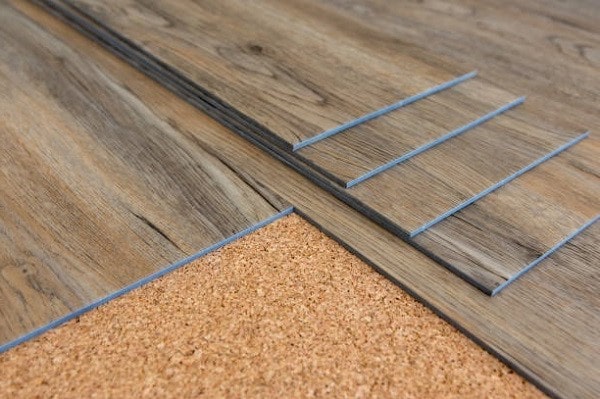
  • Cork-back luxury vinyl plank (LVP): A hybrid format with a waterproof vinyl wear surface over a cork base, giving you excellent moisture resistance on top with cork's cushioning and sound-dampening properties underneath.

For a deeper look at how cork functions in a structural support role beneath other flooring, the guide on cork underlayment flooring pros and cons explains its behavior as a base layer in detail.

Where Cork Works Best in the Bathroom

  • Half baths and powder rooms: Lower humidity and minimal splash exposure make these the easiest environment for cork to perform well without an aggressive resealing schedule.
  • Full bathrooms with good ventilation: Viable with a quality polyurethane sealer and a bathroom exhaust fan that actually moves air — don't treat either as optional.
  • Master bathrooms with radiant heat: Cork's insulating properties can reduce radiant heat efficiency, so factor that trade-off into your decision before purchasing.

If you're comparing bathroom-specific flooring formats more broadly, the overview of waterproof bathroom flooring ideas gives you a useful starting framework before you narrow down your options.

Advantages and Drawbacks of Cork in the Bathroom

Holds Its Own Against Humidity

No flooring material is perfect for bathrooms, and cork is no exception — but its specific combination of strengths and weaknesses makes it genuinely competitive for homeowners who prioritize comfort and sustainability over the zero-maintenance simplicity of fully waterproof tile or LVP.

Where Cork Excels

  • Thermal insulation: Cork feels noticeably warmer underfoot than tile, which matters considerably in cooler climates where stepping out of the shower onto a cold surface is a daily discomfort you'd rather eliminate.
  • Sound absorption: Its cellular structure dampens impact noise effectively, which is a real benefit in multi-story homes where bathroom activity transmits to the rooms directly below.
  • Anti-fatigue cushioning: Cork compresses slightly underfoot and rebounds, reducing the joint strain that accumulates from standing on hard surfaces over long periods of time.
  • Hypoallergenic and antimicrobial: Suberin, a naturally occurring waxy substance within cork cells, resists mold, mildew, and bacteria without requiring any chemical treatment on your part.
  • Renewable sourcing: Because the tree survives each harvest, cork carries a significantly lower environmental footprint than most hardwood or synthetic flooring alternatives.

Where Cork Falls Short

  • Seam vulnerability: Floating click-lock planks allow water to seep through joints if puddles sit unaddressed — glue-down tiles with sealed seams are the safer format for high-moisture zones.
  • Scratch susceptibility: Cork dents and scratches more easily than tile; pet claws and gritty foot traffic will mar the surface over time if you're not proactive about protection.
  • UV fading: Direct sunlight causes cork to lighten or yellow gradually, which is rarely an issue in windowless bathrooms but worth noting if you have a sun-facing room.
  • Periodic resealing: Unlike tile, cork requires resealing every few years to maintain its water resistance — that's an ongoing maintenance commitment, not a one-time task.

Re-seal your cork bathroom floor every three to five years at minimum — skipping this step is the single most common cause of premature cork failure in wet environments.

Long-Term Care for Cork Bathroom Floors

Cork rewards consistent, low-effort maintenance and punishes neglect fairly quickly in a bathroom setting. The good news is that the daily and weekly care routine is straightforward and doesn't require any specialized products beyond a quality sealer applied on a regular schedule.

Sealing and Routine Maintenance

  • Apply a water-based polyurethane sealer to new cork before first use, and reapply every three to five years depending on traffic and humidity levels in your specific bathroom.
  • The step-by-step walkthrough on how to apply polyurethane to floors covers prep, coat timing, and application technique in clear, practical detail worth reading before you start.
  • For daily cleaning, dry-sweep or use a dust mop to remove grit before it can grind into the surface under repeated foot traffic throughout the day.
  • For weekly cleaning, use a lightly damp mop with a pH-neutral cleaner — avoid steam mops entirely, since the combination of prolonged heat and moisture degrades cork over time.
  • Wipe up standing water immediately; don't let puddles sit near toilet bases, shower thresholds, or vanity plumbing connections where drips accumulate unnoticed.

Avoiding Common Damage

  • Place absorbent area rugs at the shower and bathtub exit points to catch the bulk of water before it reaches cork flooring directly.
  • Add felt pads to the legs of any furniture resting on cork — vanity stools, hampers, and storage cabinets all leave compression dents over time without them.
  • Maintain indoor relative humidity between 40% and 60%; excessive dryness causes cork to shrink and crack, while excessive humidity causes it to expand and buckle at seams.
  • Trim pet nails regularly to minimize surface scratching, since cork is softer than tile and shows claw marks more readily.

Understanding the Cost of Cork Bathroom Flooring

Cork flooring sits comfortably in the mid-range of bathroom flooring costs — more expensive than basic vinyl sheet goods but generally cheaper than high-end tile or natural stone when you account for both material and installation together.

Material Costs by Product Type

Product Type Material Cost (per sq ft) DIY Friendly? Water Resistance
Cork tiles (glue-down) $2 – $8 Moderate High (when sealed)
Cork planks (click-lock) $3 – $10 High Moderate
Cork-back LVP $2 – $6 High Very High
Professional installation (labor) $3 – $6 N/A Depends on product

Installation and Hidden Costs

  • Subfloor preparation: Cork requires a flat, clean subfloor — any high or low spots beyond 3/16 inch over 10 feet need leveling compound first, which adds both labor time and material cost.
  • Sealer: Budget $30 to $60 for a quality water-based polyurethane sealer, applied in two to three coats before first use and periodically thereafter during the floor's lifespan.
  • Moisture barrier: In bathrooms over concrete slab subfloors, a vapor membrane adds roughly $0.25 to $0.50 per square foot to your total material cost.
  • Waste factor: Order 10% to 15% extra material to account for cuts, pattern alignment, and any tiles or planks damaged during the installation process itself.

Tools and Supplies for Installing Cork Floors

Pets Comfort On Cork Floor

Installing cork tile or planks is well within reach for a confident DIYer, provided you have the right tools on hand and allow cork materials to acclimate in the installation room for 48 to 72 hours before you begin cutting or laying anything at all.

Essential Installation Tools

  • Utility knife or jigsaw: For cutting cork tiles cleanly to fit edges, corners, and irregular fixtures like toilet flanges without cracking the material.
  • Notched trowel: Required for glue-down tile installations; check your adhesive manufacturer's specification for the correct notch size before purchasing any trowel.
  • Tapping block and pull bar: Essential for click-lock plank installations to seat each row firmly without cracking the locking mechanism during the tapping process.
  • Rubber mallet: Provides the gentle, even force needed to seat tiles or planks without denting cork's relatively soft surface the way a steel hammer would.
  • Chalk line and measuring tape: For establishing accurate layout lines from the room's center point outward, which prevents a visually off-center finished result near doorways.

Preparation Supplies

  • Cork-compatible adhesive — contact cement or pressure-sensitive, depending on your tile manufacturer's specific recommendation for bathroom environments
  • Moisture barrier or vapor membrane for any installation over concrete subfloors where ground moisture is a factor
  • Self-leveling compound for addressing subfloor irregularities before any material goes down
  • Water-based polyurethane sealer to apply immediately after installation is complete, before the floor sees any water exposure

Cork vs. Other Bathroom Flooring Options

Choosing between cork and competing materials typically comes down to three priorities: water resistance, maintenance tolerance, and comfort underfoot. Each flooring type trades those factors differently, so your personal weighting of each priority should drive your final decision.

Cork vs. Tile

Tile is the traditional bathroom flooring standard for good reason — it's fully waterproof, extremely durable, and requires minimal maintenance beyond routine cleaning. However, tile is cold, hard, and unforgiving underfoot, which is where cork gains a clear advantage for anyone who spends meaningful time standing in the bathroom. If you've struggled with tile's tendency to produce condensation in humid conditions, the guide on how to stop tile floor from sweating is worth reading alongside this one. Cork doesn't sweat, but it does require periodic resealing — a trade-off some homeowners accept readily and others don't.

Cork vs. Vinyl and Laminate

Luxury vinyl plank offers fully waterproof performance at a comparable or lower price point, making it a direct competitor to cork when moisture resistance is your dominant priority for the bathroom. Cork-back LVP effectively splits the difference by combining a waterproof vinyl wear layer with cork's cushioning properties underneath — a compelling middle path if you want both. Standard laminate, by contrast, is a poor bathroom choice regardless of how it compares to cork, and understanding the core differences between flooring materials covered in the guide on types of hardwood floors helps clarify why moisture-sensitive materials belong strictly in dry zones. Cork with a proper polyurethane seal outperforms laminate on water resistance, but falls short of full LVP in prolonged wet conditions.

Frequently Asked Questions

Is cork flooring actually suitable for bathrooms?

Cork is suitable for bathrooms when properly sealed with a water-based polyurethane finish applied before first use and renewed every three to five years. Glue-down tiles offer better moisture resistance than click-lock planks because they eliminate the floating seams where water can slowly infiltrate over time.

How long does cork bathroom flooring last?

With consistent resealing and routine care, cork flooring in a bathroom can last 20 to 40 years. Lifespan depends heavily on humidity control, the quality of the sealer applied, and how quickly you address spills before water has time to penetrate the surface or seams.

Can you install cork flooring inside a shower enclosure?

You should not install cork inside any shower enclosure or area that receives direct, continuous water spray. Cork performs well in the dry zones of a bathroom, but it is not designed for wet-area applications where tile, stone, or waterproof membrane systems are the correct and safe choice.

What sealer works best on cork bathroom floors?

Water-based polyurethane is the most widely recommended option because it dries clear, resists yellowing over time, and creates a durable moisture barrier without the strong fumes associated with oil-based alternatives. Apply two to three thin coats and allow each coat to cure fully before applying the next.

How do you clean cork bathroom floors without damaging them?

Dry-sweep or dust-mop daily to remove grit before it grinds into the surface, and damp-mop weekly using a pH-neutral cleaner diluted in water. Avoid steam mops, soaking-wet mops, and any cleaner containing bleach or ammonia, as all of these degrade the sealer and dry out the cork with repeated use.

Next Steps

  1. Measure your bathroom floor area and add 15% for waste, then request physical samples from two or three cork flooring suppliers so you can evaluate texture and color under your actual bathroom lighting conditions before ordering.
  2. Inspect your subfloor carefully for soft spots, uneven sections, or existing moisture damage — address every issue you find before purchasing any materials to avoid a failed or short-lived installation.
  3. Choose your product format based on your bathroom's moisture exposure: glue-down cork tiles for full bathrooms with regular shower use, click-lock planks or cork-back LVP for lower-humidity powder rooms or half baths.
  4. Purchase your water-based polyurethane sealer at the same time as your flooring so you can apply it immediately after installation, before the floor sees any water exposure whatsoever.
  5. Set a recurring reminder to reseal every three years so that long-term maintenance stays on your radar before visible wear or water damage turns a routine task into an urgent and costly repair.
Linea Lorenzo

About Linea Lorenzo

Linea Lorenzo has spent over a decade testing home gadgets, cleaning products, and consumer electronics from his base in Sacramento, California. What started as a personal obsession with keeping his space clean and stocked with the right tools evolved into a full-time writing career covering the home products space. He has hands-on experience with hundreds of cleaning solutions, robotic and cordless vacuums, and everyday household gadgets — evaluating them for performance, value, and real-world usability rather than spec sheet appeal. At Linea, he covers home cleaning guides, general how-to tutorials, and practical product advice for everyday home care.

You can Get FREE Gifts. Furthermore, Free Items here. Disable Ad Blocker to receive them all.

Once done, hit anything below