
Last weekend, I walked barefoot across my living room rug and immediately regretted it. The fibers felt gritty — almost like walking on sand — and I had vacuumed just a few days earlier. Turns out, I was making several small mistakes that were undermining every pass. Knowing how to vacuum carpets and rugs properly is about more than just switching on a machine. It's a technique, and once you nail it, the results speak for themselves. If you're working on improving your whole home routine, our cleaning guides cover everything from floors to surfaces.

The vacuum you own matters far less than how you use it. Speed, direction, settings, and frequency all determine whether your carpet actually gets clean — or just looks clean on the surface. Most people vacuum the same way for years without realizing a few small adjustments would make a noticeable difference.
Before getting into the steps, it helps to understand your equipment. If you're not sure what your vacuum's attachments and settings actually do, the guide on different parts of a vacuum cleaner and their functions is worth reading first. Knowing your machine makes everything else in this post easier to apply.
Contents
Rushing is the most common mistake people make when learning how to vacuum carpets and rugs. When you push a vacuum too quickly, the brush roll doesn't have time to agitate the fibers and pull debris up from the base of the pile. Slow, deliberate strokes — especially on thick carpet — are far more effective than hurried passes. A reliable rule: move forward at a steady pace, then pull back just as slowly. Two slow passes beat four fast ones every time.
Before you switch anything on, take sixty seconds to remove large debris by hand. Coins, hair ties, small toys — these can clog hoses or damage the brush roll mid-session. Scan the floor quickly and clear anything that could wrap around the roller. If you have pets, a quick pass over nearby furniture with a lint roller also keeps hair from redistributing onto the floor while you vacuum. For more on managing that specific problem, see how to get rid of pet hair in your home.
Most vacuums let you adjust the cleaning head height for different floor surfaces. Setting it too low on thick pile damages the fibers and strains the motor. Setting it too high on low-pile means the suction barely grazes the surface. Match the head height to your carpet's thickness — your vacuum's manual usually shows which setting corresponds to each floor type. This one adjustment alone can noticeably improve your results.
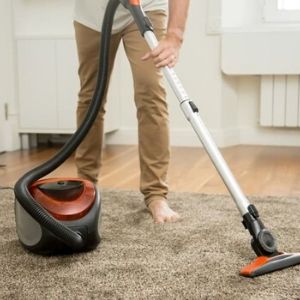
Upright vacuums remain the most popular choice for carpeted homes. They tend to offer wider cleaning paths and powerful brush rolls engineered specifically for deep-pile carpet. If most of your home is carpeted, an upright typically gives you the most efficient coverage. Most models include height adjustments for both low and high pile, and the wider head means fewer passes per room. The downside is bulk — uprights are harder to maneuver around furniture legs and into tight corners.
Canisters offer more flexibility. The long wand reaches under furniture without moving it, and swapping to a hard-floor attachment takes only seconds. If your home mixes carpet, area rugs, and hard floors, a canister handles all of it from a single machine. The trade-off is setup — you're assembling body, hose, and head each time. Whether you go corded or battery-powered changes the equation considerably; the corded vs. cordless vacuum comparison breaks down what to expect from each in terms of runtime and suction consistency.
According to the U.S. Environmental Protection Agency, vacuuming with a HEPA-filtered vacuum significantly reduces indoor allergens including dust mites and pet dander in carpeted spaces. If anyone in your household has allergies or asthma, filter quality and vacuum type matter just as much as how often you clean — sometimes more.
Installed carpet stays in place, so you can work in organized rows without it shifting under your feet. The most effective method is to vacuum in one direction first, then go back over the same area in a perpendicular direction. This cross-pattern approach loosens embedded debris from two angles instead of one. For high-traffic areas like hallways and living rooms, this technique at least once a week gives noticeably better results than a single-pass approach.
Always check the manufacturer's care label before vacuuming any area rug. Delicate materials — wool, silk, and hand-knotted styles — can't handle a motorized brush roll and should be cleaned on low suction with the beater bar turned off. Flat-weave rugs tolerate more suction but tend to curl at the edges; push furniture onto the corners beforehand to anchor them. For rugs with fringe, vacuum the body only. Handle the fringe by hand-shaking the rug outside or gently combing it out. Flipping the rug and vacuuming the underside every few months also extends its life.
| Feature | Wall-to-Wall Carpet | Area Rug |
|---|---|---|
| Brush roll | On (adjust height to pile) | Off for delicate types |
| Suction level | Medium to high | Low to medium |
| Vacuuming pattern | Cross-direction rows | With the pile/grain |
| Fringe | N/A | Avoid — hand-shake instead |
| Recommended frequency | Weekly (high traffic) | Weekly or bi-weekly |
| Vacuum the underside? | No | Yes, every few months |
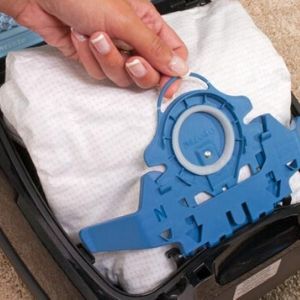
If your vacuum suddenly feels underpowered, the most likely culprits are a full dust bag or a dirty filter. Even bagless models have filters that need regular attention — typically every one to three months depending on how often you vacuum. A clogged filter chokes airflow and can cut suction by half. Empty the bin, clean or replace the filter, and check the hose for blockages before assuming anything is mechanically wrong with the motor.
Hair and thread wrap around the brush roll over time and eventually stop it from turning. This is especially common in households with long hair or pets. Turn the vacuum off, flip it over, and use scissors to carefully cut away any wrapped material. Most brush rolls can be removed entirely for a more thorough clean — your model's manual will show you how. A non-spinning brush roll on carpet means you're essentially just dragging the machine across the surface; it's worth five minutes to clear it properly.
If your vacuum is leaving visible pressure marks or uneven lines in the pile, the head height is most likely set too low. Raise it one notch and test again. Marks that appear as you move can also mean you're going too fast — slow down and let the suction do the work rather than forcing the machine forward. A clean, well-maintained home has real benefits beyond just appearance; the 8 benefits of a clean home are worth reviewing if you need a reason to stay consistent with the habit.
Entry-level vacuums can handle low and medium-pile carpet reasonably well. They usually have basic filtration and fewer adjustment options, but for a small space or light use, they're a workable starting point. Expect a shorter lifespan and less consistent performance on deep pile. If you're shopping in this range, prioritize models with a washable filter — it reduces ongoing costs and keeps suction steadier over time.
This tier is where most households find the best balance of performance and value. Mid-range models typically include HEPA filtration, multiple height settings, and more refined brush roll designs. If your home has mixed flooring — carpet in some rooms and hard floors in others — look for a model with easy head-swapping capability. It's also a good time to reconsider whether carpet is even the right choice for every room; the breakdown of carpet vs. laminate in the bedroom offers a useful perspective if you're weighing options.
High-end vacuums offer stronger motors, sensors that adjust suction automatically based on floor type, and tangle-resistant brush rolls that reduce maintenance. Some models include self-cleaning mechanisms. For large homes with thick carpet or consistent pet hair, the investment often pays off through better results and fewer replacements over time. Whether it's genuinely worth it depends on your square footage, flooring type, and how often you're running the machine.
For most households, once a week is a reasonable baseline for carpeted rooms. High-traffic areas and homes with pets or allergy sufferers benefit from two to three times per week. Area rugs placed in lower-traffic spots can typically go every one to two weeks without issue.
For wall-to-wall carpet, vacuuming in two perpendicular directions — a cross-pattern — gives the best results by loosening debris from multiple angles. For area rugs, vacuum with the pile grain to avoid stressing the fibers, particularly on delicate styles like wool or hand-knotted rugs.
No — a standard vacuum is not designed for wet surfaces and can be damaged or become a safety hazard if used on them. If carpet is wet from a spill or water damage, use a wet/dry vacuum rated for liquid pickup, or contact a professional carpet cleaning service.
For thick or high-pile carpet, raise the cleaning head to its highest or second-highest setting. This lets the brush roll spin freely without getting dragged down into the fibers. Lower settings are better suited to flat-weave or low-pile carpet where closer contact improves suction effectiveness.
Yes — running the brush roll over fringe can tear or tangle it quickly. Vacuum the body of the rug as normal, but leave the fringe untouched during that process. You can clean the fringe separately by hand-shaking the rug outside or gently working through it with your fingers or a wide-tooth comb.
 |
 |
 |
 |

About Liz Gonzales
Liz Gonzales grew up surrounded by art and design in a New York suburb, with both parents teaching studio arts at the State University of New York. That environment sharpened her eye for aesthetics and spatial detail — skills she now applies to evaluating home products where form and function both matter. She has spent the past several years writing about lighting, home decor accessories, and outdoor living gear, with a particular focus on how products perform in real residential settings rather than showrooms. At Linea, she covers lighting fixtures and bulb reviews, outdoor and patio gear, and general home product comparisons.
You can Get FREE Gifts. Furthermore, Free Items here. Disable Ad Blocker to receive them all.
Once done, hit anything below
|
|
|
|