
The best waterproof bathroom flooring ideas are ceramic tile, porcelain tile, and luxury vinyl plank — materials that stop moisture at the surface and resist infiltration through every seam. Our team has evaluated each major category available for wet environments, and the differences in real-world protection are significant enough to define a bathroom's maintenance burden for years. For home users committed to healthier bathrooms, the flooring material decision is the most consequential choice in the room's design, as our broader cleaning guides consistently confirm.
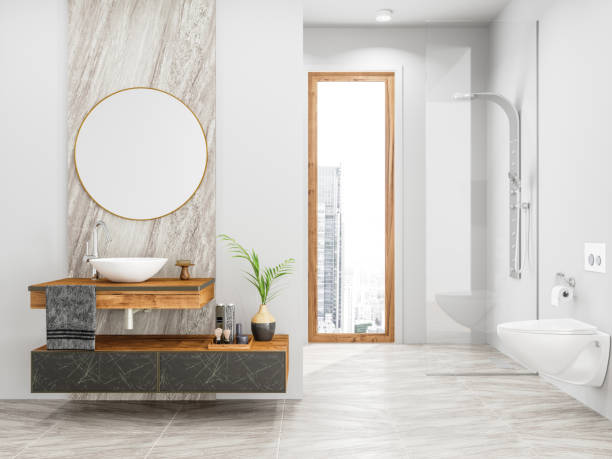
Bathrooms combine standing water, ambient humidity, and frequent temperature shifts in ways that degrade most flooring materials faster than nearly any other room. Our team has seen firsthand how the wrong flooring choice leads to warping, mold growth, and subfloor damage — problems that could have been avoided with a better-informed material selection from the outset. According to the U.S. Environmental Protection Agency, controlling indoor moisture is the most effective strategy for preventing mold. Flooring choice sits directly at the center of that effort in any bathroom.
Our team's research confirms that the benefits of a genuinely clean home multiply when the floor itself resists the moisture and bacteria that accumulate in bathroom environments. The flooring decision shapes every maintenance routine that follows — from weekly mopping to annual resealing schedules — so getting it right from the start is worth the research investment.
Contents
The most widespread bathroom flooring failure our team observes is moisture infiltration at seams and edges — a problem that develops gradually and worsens until it becomes structural. When water repeatedly penetrates between tiles or planks, the subfloor absorbs it and begins to deteriorate. The result is soft spots, mold colonies, and eventually the need for complete replacement where a timely repair would have sufficed. Most people install new flooring without first addressing the subfloor's moisture barrier, which accelerates this deterioration cycle considerably and turns a manageable fix into a full-scale renovation.
The solution is layered: the surface material must be genuinely waterproof, the installation must include a vapor barrier beneath the floor, and grout or seams must be fully sealed at the surface level. Our team recommends inspecting bathroom floor edges quarterly, particularly around the toilet base and tub perimeter. These are the zones where water pooling is most consistent and where early moisture damage appears before it spreads into the field of the floor.
Grout cracking and plank seam separation represent the second-most common issues our team encounters during bathroom flooring evaluations. Standard cement-based grout becomes brittle over time under repeated exposure to cleaning chemicals and the constant expansion and contraction from temperature cycling. Epoxy grout resolves most of these vulnerabilities, resisting both moisture and chemical degradation far better than cement alternatives. Our team considers it the standard recommendation for any tiled bathroom floor. For luxury vinyl plank installations, ensuring a fully engaged click-lock seam during initial installation is the single most effective preventive step against the most common long-term failure point.
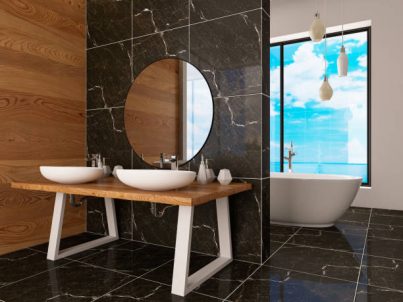
For households working within a limited renovation budget, luxury vinyl tile and sheet vinyl represent the most accessible waterproof bathroom flooring ideas without meaningfully compromising core protection. Sheet vinyl eliminates seams entirely across most bathroom footprints, making it inherently more waterproof than any tile or plank installation. Our team considers this a structural advantage that is widely underappreciated by most home renovators pricing out their options. Quality sheet vinyl from established manufacturers performs comparably to mid-range tile in moisture resistance at roughly one-third the total installed cost. Those evaluating the best laminate flooring brands should note that standard laminate is not waterproof — only products specifically labeled waterproof laminate hold up under the continuous moisture exposure of an active bathroom.
At the premium end of the spectrum, porcelain tile and natural stone deliver the highest moisture resistance paired with the longest service life of any residential flooring category our team has evaluated. Porcelain, fired at higher temperatures than ceramic, achieves a water absorption rate below 0.5% — making it essentially impervious to bathroom moisture when properly grouted with an epoxy compound. Natural stone requires significantly more maintenance but offers an aesthetic quality and thermal mass that no synthetic material replicates. For those prioritizing both acoustic comfort and moisture buffering beneath the surface material, our work with cork underlayment confirms it improves performance in both dimensions regardless of what surface material sits above it.
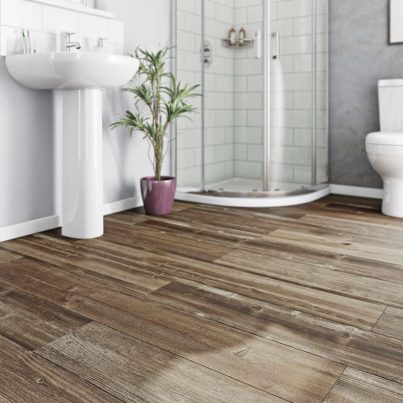
Ceramic and porcelain tile remain the dominant recommendation across the waterproof bathroom flooring ideas our team evaluates. They combine genuine waterproofing with design flexibility, durability, and long-term value that no single alternative matches simultaneously. Luxury vinyl plank has gained significant ground in recent years, delivering waterproof performance at lower cost with a softer underfoot feel that many home users actively prefer over the harder surface of tile. Rubber flooring, while less common in residential settings, delivers outstanding slip resistance and 100% waterproofing without sealers or grout maintenance — making it the strongest recommendation for households where fall prevention is a critical priority.
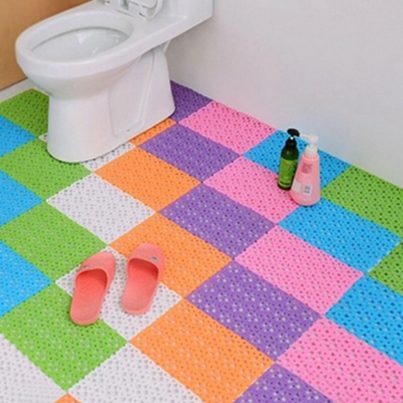
Waterproof carpet tiles carry more limitations in bathrooms than their marketing materials typically suggest, and our team recommends against them in high-moisture environments. While the surface fiber resists water, the backing and adhesive layer often fail under continuous wet exposure, allowing mold to grow beneath the tile without any visible surface warning. Our team also notes that hardwood flooring — even when well-sealed — is not a reliable waterproof option for primary bathrooms. The maintenance realities covered in our detailed guide to cleaning hardwood floors reinforce why water exposure shortens the material's usable life dramatically. Natural stone requires annual resealing to sustain its water resistance, and any lapse in that schedule quickly undermines the considerable investment the material represents.
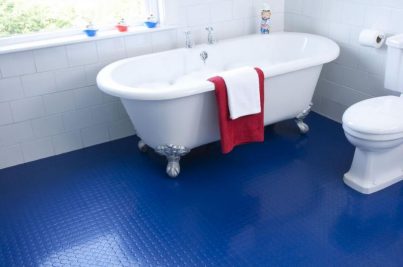
Pro tip: Never assume a "water-resistant" label equals waterproof — water-resistant materials tolerate brief splash exposure but fail under the continuous wet conditions found in active bathrooms, where standing water and high humidity are daily realities.
Our team assembled the following comparison based on direct testing experience and installation data across each material category. These ratings reflect typical residential bathroom conditions, not commercial or extreme-use environments. Cost ranges reflect material only; installation labor adds considerably depending on tile complexity and subfloor preparation requirements.
| Material | Waterproof Rating | Slip Resistance | Maintenance Level | Cost (per sq ft) | Typical Lifespan |
|---|---|---|---|---|---|
| Porcelain Tile | Excellent | High (textured) | Low | $3–$10 | 25–50 years |
| Ceramic Tile | Very Good | Medium–High | Low–Medium | $1–$7 | 15–30 years |
| Luxury Vinyl Plank | Excellent | Medium | Very Low | $2–$8 | 15–25 years |
| Natural Stone | Good (sealed) | Medium | High | $5–$25 | 50+ years |
| Rubber Flooring | Excellent | Very High | Low | $2–$6 | 20–30 years |
| Sheet Vinyl | Excellent | Medium | Very Low | $0.50–$3 | 10–20 years |
| Waterproof Laminate | Good | Medium | Low | $2–$6 | 10–20 years |
The maintenance routine a bathroom floor receives directly determines how long it performs at its original level. Our team has observed that even excellent material choices fail years ahead of schedule when maintenance is inconsistent. Our recommendation for tile and luxury vinyl plank bathrooms is a daily dry sweep or dust-mop pass, followed by a weekly damp mop with a pH-neutral cleaner. This routine prevents mineral deposits and soap scum from bonding permanently to grout lines and surface pores. The same principles that make cleaning linoleum floors effective apply equally to vinyl bathroom surfaces, since both materials suffer under harsh alkaline cleaners that degrade the protective wear layer over time.
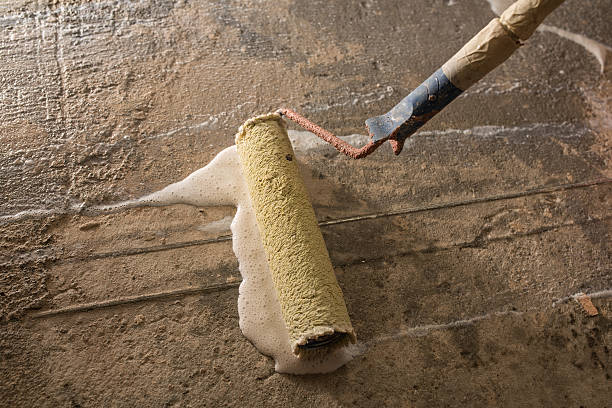
Tile grout lines require annual deep cleaning and resealing to maintain their moisture barrier integrity — a step that most people skip, creating conditions for discoloration and water infiltration simultaneously. Our team applies a penetrating grout sealer after each deep cleaning cycle, which closes the porous surface and extends the resealing interval by preventing staining compounds from bonding at the substrate level. Natural stone floors follow the same annual schedule but require a stone-specific impregnating sealer rather than standard grout sealant to avoid surface damage. Anyone building a comprehensive floor-care routine will find that understanding how to apply polyurethane to floors illuminates the broader logic of how protective coatings degrade and when reapplication becomes necessary across all flooring types.
The waterproof bathroom flooring ideas that deliver the best long-term return combine manageable installation cost with a realistic lifespan and a low ongoing maintenance burden. Porcelain tile, despite its higher initial cost, carries a service life of 25 to 50 years under normal residential conditions. Calculated over the full service window, its per-year cost is among the lowest of any flooring material available. Luxury vinyl plank occupies the most practical middle ground for most home users — offering certified waterproof performance at a reasonable installed cost with a maintenance burden low enough to integrate into any standard weekly routine. Adopting the broader home organization habits that reduce clutter on bathroom floors also reduces moisture trapping against the surface, extending flooring life without any material upgrade required.
Our team's practical threshold for tile repair versus full replacement is the 20% rule. If more than 20% of the surface shows cracking, significant grout deterioration, or persistent moisture staining, full replacement typically costs less over the following decade than serial repairs. Soft spots in the subfloor beneath any bathroom flooring are an unambiguous signal that replacement — including subfloor remediation — is necessary rather than optional. Partial tile replacement is viable when matching tiles are available and damage is confined to isolated areas with intact surrounding grout. Luxury vinyl plank allows individual plank swapping in most click-lock systems, making localized damage far less expensive to address than a complete tear-out and reinstallation.

Porcelain tile, luxury vinyl plank, and rubber flooring all achieve the highest waterproof ratings our team has recorded across material categories. Porcelain absorbs less than 0.5% water by mass, making it essentially impervious when properly grouted with epoxy. Rubber flooring is a 100% waterproof surface that requires no sealing or grout maintenance to sustain that level of protection.
Luxury vinyl plank specifically rated as fully waterproof — not merely water-resistant — is a reliable and high-performing choice for bathroom floors in our team's experience. The distinction is critical: fully waterproof LVP has a solid core that resists swelling under standing water, while water-resistant versions can fail at the click-lock seam under continuous moisture exposure from active bathroom use.
Standard laminate is not appropriate for bathrooms, as its HDF core absorbs moisture and swells irreversibly. Only products specifically labeled as waterproof laminate — with a sealed composite core and waterproof backing — hold up in bathroom environments. Even those products perform best in lower-moisture half-bath settings rather than primary wet rooms with daily shower or tub use.
Service life varies considerably by material: porcelain tile routinely reaches 25 to 50 years, luxury vinyl plank typically lasts 15 to 25 years, and sheet vinyl serves well for 10 to 20 years under normal residential conditions. Maintenance consistency — particularly annual grout sealing and avoiding harsh alkaline cleaners — is the primary factor determining where any floor lands within those ranges over its lifetime.
Rubber flooring is one of the most practical waterproof bathroom flooring ideas for households where safety and moisture resistance are equally important considerations. It delivers the highest slip resistance of any material category our team has evaluated, requires minimal maintenance, and resists mold growth naturally without chemical treatment. The primary limitation is a narrower design and color palette compared to tile or luxury vinyl options.
Solid hardwood, standard laminate, and traditional carpet are the materials our team recommends avoiding in bathrooms without exception. All three absorb moisture at levels that cause structural damage, promote mold growth, and lead to complete material failure under normal bathroom conditions — regardless of any surface sealing or protective treatment applied after installation is complete.
 |
 |
 |
 |

About Liz Gonzales
Liz Gonzales grew up surrounded by art and design in a New York suburb, with both parents teaching studio arts at the State University of New York. That environment sharpened her eye for aesthetics and spatial detail — skills she now applies to evaluating home products where form and function both matter. She has spent the past several years writing about lighting, home decor accessories, and outdoor living gear, with a particular focus on how products perform in real residential settings rather than showrooms. At Linea, she covers lighting fixtures and bulb reviews, outdoor and patio gear, and general home product comparisons.
You can Get FREE Gifts. Furthermore, Free Items here. Disable Ad Blocker to receive them all.
Once done, hit anything below
|
|
|
|