
The best pool cleaners for above ground pools fall into three main types: robotic, suction-side, and pressure-side. Each one works differently, and choosing the wrong type means wasted money and a dirty pool. If you take your home cleaning seriously — and you should — keeping your above-ground pool spotless deserves the same intentional approach. This guide covers every type in plain language so you can buy with confidence.

Above-ground pools are not just smaller versions of in-ground pools. They have flexible vinyl liners, flat bottoms, and shallower water depths. That matters because many pool cleaners are engineered for concrete or tile surfaces — and using them on a vinyl liner can scratch or tear it. You need a cleaner built specifically for above-ground use, and that's exactly what this breakdown covers.
From a basic $80 suction unit to a fully autonomous robotic cleaner, there's a right fit for every pool size and budget. By the end of this guide, you'll know which type suits your pool, what to budget, and how to keep whatever you buy running for years.
Contents
These three categories cover everything on the market. Once you understand how each type operates, picking a brand becomes straightforward. Start here before you look at any specific product.
Robotic cleaners are fully self-contained units. You drop them in the pool, plug them into a low-voltage power supply, and they navigate the pool floor on their own. They don't use your pool's pump or filtration system at all, which means they add zero extra load to your existing equipment.
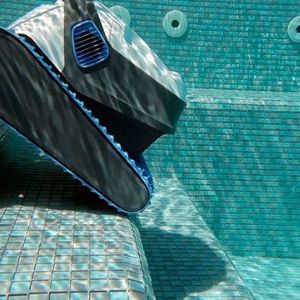
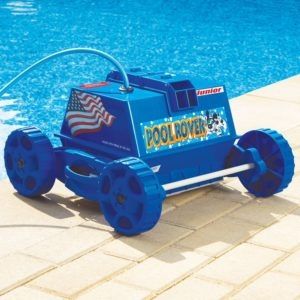
For above-ground pools, look for models rated specifically for flat-bottomed vinyl pools. The Aquabot Pool Rover series is purpose-built for this. Robotic cleaners are quiet, energy-efficient, and capable of filtering fine particles — including algae — that suction and pressure cleaners routinely miss.
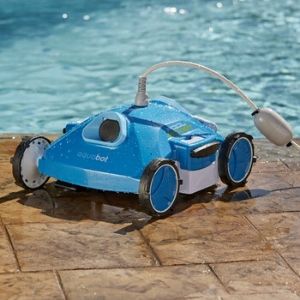
Suction-side cleaners connect to your pool's skimmer or a dedicated suction port. They use the pull from your existing pump to move around the floor and suck up debris. These are the most affordable automatic option and work well in above-ground pools with a consistent pump output.
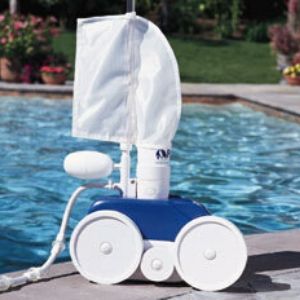
The Kreepy Krauly E-Z Vac is a popular suction-side model for above-ground pools — lightweight, easy to assemble, and effective on flat vinyl floors. The tradeoff is that debris flows through your main filter, so your pump works harder and you'll need to clean the filter basket more frequently.
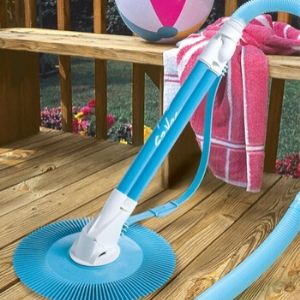
Pressure-side cleaners use your pool's return line — the water being pushed back into the pool — to propel themselves and sweep debris into a separate bag. Because debris goes into its own bag and not your main filter, your filtration system lasts longer.
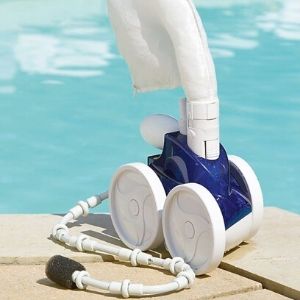
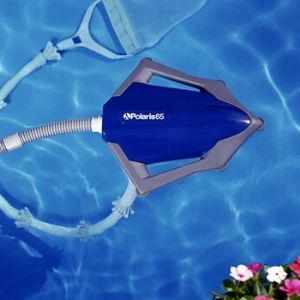
The Polaris 65 and Zodiac Ranger are well-known pressure-side picks for above-ground pools. They work best when your pump produces strong return pressure — check your pump specifications before buying one.
Think of pool cleaners the way you think about vacuums. There's a big performance difference across price tiers, just like there's a real difference between a corded and cordless vacuum once you compare them directly. And just like figuring out how much a premium vacuum costs before committing, it's worth knowing what you get at each spending level before you pull the trigger.
Pro tip: Don't buy based on price alone. A $90 suction cleaner in the wrong pool setup will underperform a $200 robotic unit every single time.
Suction-side cleaners dominate this range. They handle leaves, dirt, and fine debris without fancy navigation. They won't wow you, but they'll keep your pool cleaner than doing nothing. Good for small pools and owners who don't mind emptying the filter basket every day or two.
This is where entry-level robotic cleaners and better pressure-side models appear. The Aquabot Pool Rover Jr. lands at the lower end of this range and delivers real value for above-ground pool floors — systematic navigation, its own filter, and no pump dependency.
Top-tier robotic units offer programmable schedules, fine-particle filtration down to 2 microns, and longer warranties. If you swim frequently and hate manual maintenance, the upfront cost pays back in time saved and reduced pump wear.
| Price Range | Type | Best For | Filter Impact |
|---|---|---|---|
| Under $150 | Suction-Side | Small pools, tight budgets | High (uses main filter) |
| $150–$250 | Entry Robotic | Flat-bottom above-ground pools | None (self-contained) |
| $200–$350 | Pressure-Side | Debris-heavy pools, strong pumps | Low (separate bag) |
| $400+ | Premium Robotic | Large pools, frequent use | None (self-contained) |
A lot of pool owners get burned by bad advice — from YouTube comments, neighbor recommendations, or outdated product listings. Here are the myths that cost people real money.
Warning: Using an in-ground pool cleaner on a vinyl above-ground pool liner can scratch or puncture the material. Always verify the product is rated for above-ground use before buying.
This is flat-out wrong. In-ground pool cleaners are designed for sloped surfaces, tiled walls, and concrete floors. Many can't navigate a flat vinyl liner without getting stuck, traveling in circles, or causing damage. Always check that a cleaner is specifically rated for above-ground pools before purchasing.
Entry-level robotic cleaners now start around $150. They reduce pump wear, filter finer particles, and save you hours of manual work each season. A clean home — inside and out — has real daily value. Your pool is part of that equation.
Manual brushing removes algae from pool walls, but it doesn't pick up the debris that settles on the floor. You still need a cleaner that physically collects what falls to the bottom. Brushing and automatic cleaning work together — neither replaces the other.
A pool cleaner is only as reliable as the maintenance it receives. Skip the upkeep and you'll be replacing parts — or the whole unit — long before the warranty expires.
Tip: Rinse your cleaner's filter or debris bag after every single use. Letting wet debris sit inside the unit is the fastest way to grow algae inside your cleaning equipment.
After every use, remove and rinse the filter cartridge or debris bag with a hose. For suction-side cleaners, also check and empty the pump basket — it fills faster when the cleaner is running. This two-minute step prevents most performance problems.
Check hoses and connection points monthly for cracks or loose fittings. Suction-side cleaners rely on a sealed hose to maintain pull — even a small crack kills performance. Worn wheels on robotic cleaners cause navigation drift. Replace them as soon as you notice the unit moving unevenly.
Never leave your cleaner in the pool when it's not in active use. UV exposure from sunlight degrades plastic components and hoses faster than anything else. Store the unit in a cool, dry location — a mesh bag or a simple plastic tote works perfectly. This same care applies to other home tools. Whether you're learning how to clean hardwood floors without damaging the finish or storing cleaning equipment properly, consistent upkeep always pays off.
There's no universal best cleaner. The right pick depends on your pool's dimensions, shape, and debris situation. Here's how to match them.
Suction-side cleaners are the smart choice here. They're affordable, lightweight, and cover a compact surface area without issue. You don't need complex navigation or systematic path-planning in a small pool — a basic suction unit does the job at a fraction of the cost.
Robotic cleaners are the clear winner for large above-ground pools. They navigate methodically and cover the full floor without missing patches. Pressure-side cleaners also perform well at this size if your pump output is strong enough to sustain good flow through the return line.
If your pool sits under trees or collects leaves and garden debris regularly, a pressure-side cleaner with a large debris bag handles high-volume cleanup without overwhelming your main filter. For fine particles — including pet hair that blows into the water — a robotic cleaner with a fine mesh filter is the only real solution. Suction units struggle with fine particles and will clog your pump basket constantly in high-debris environments.
Buying the right cleaner is half the battle. Using it correctly is the other half. These habits make a measurable difference in results.
Run your pool cleaner before — not after — your pump's main filtration cycle. The cleaner stirs up settled debris and suspends it in the water. Then when the pump runs, it filters all of it out completely. Most pool owners do this backwards, which leaves fine particles resettling on the floor after the cleaner finishes.
For manual vacuuming or for edge zones that automatic cleaners miss, work in overlapping rows — the same method you'd use when cleaning linoleum floors for even coverage. Systematic passes beat random movement on every surface type.
No cleaner can fix a chemistry problem. Cloudy water caused by imbalanced pH or high alkalinity will clog your cleaner's filter within minutes of a cycle. According to the CDC's healthy swimming guidelines, proper water chemistry is the foundation of safe, clean pool water. Fix the chemistry first, then run the cleaner.
Most automatic cleaners need just 2–4 hours to cover an average above-ground pool floor. Running it for 8 hours straight doesn't clean better — it wears out the motor, wheels, and filter faster. Set a timer and pull it when the cycle is done.
| Feature | Robotic | Suction-Side | Pressure-Side |
|---|---|---|---|
| Pump dependency | None | High | Medium |
| Filter impact | None (self-filtered) | High (clogs faster) | Low (separate bag) |
| Fine particle filtration | Excellent | Fair | Poor |
| Vinyl liner safety | High (soft brushes) | High | High |
| Setup complexity | Low | Medium | Medium–High |
| Best price range | $150–$500+ | $60–$200 | $150–$350 |
| Ideal pool size | Any | Small–Medium | Medium–Large |
You should not. In-ground cleaners are built for sloped surfaces and hard tile or concrete walls. Most will struggle to navigate a flat vinyl liner, get stuck on the bottom, or cause liner damage. Stick with models specifically rated for above-ground pools.
For a standard above-ground pool with moderate use, running your cleaner every 2–3 days is usually enough. If you swim daily or your pool is near trees, run it daily. Each cycle should last 2–4 hours — not all day.
Yes. Robotic cleaners operate on their own low-voltage power supply and have no connection to your pool's pump or filtration system. You can run them independently at any time, which is one of their biggest advantages.
Robotic cleaners are the easiest to maintain. They have self-contained filter cartridges you simply remove, rinse, and replace. Suction-side cleaners require you to also monitor and empty your pump basket, adding an extra step to the routine.
Some lightweight robotic cleaners will, but most suction and pressure-side units are too heavy or have suction cups and rollers that can damage softer inflatable materials. Check the product specifications carefully — some manufacturers explicitly list compatible pool types.
Most suction-side cleaners require a minimum flow rate, which is listed in the product specifications as gallons per minute (GPM) or gallons per hour (GPH). Check your pump's output rating and compare it against the cleaner's requirements before purchasing. If your pump is undersized, the cleaner will move sluggishly or stall.
 |
 |
 |
 |

About Liz Gonzales
Liz Gonzales grew up surrounded by art and design in a New York suburb, with both parents teaching studio arts at the State University of New York. That environment sharpened her eye for aesthetics and spatial detail — skills she now applies to evaluating home products where form and function both matter. She has spent the past several years writing about lighting, home decor accessories, and outdoor living gear, with a particular focus on how products perform in real residential settings rather than showrooms. At Linea, she covers lighting fixtures and bulb reviews, outdoor and patio gear, and general home product comparisons.
You can Get FREE Gifts. Furthermore, Free Items here. Disable Ad Blocker to receive them all.
Once done, hit anything below
|
|
|
|