
You're standing in the cleaning aisle — or more likely, scrolling through Amazon at midnight — wondering which vacuum will finally stop leaving streaks and debris on your tile floors. With grout lines, gloss finishes, and the way tile amplifies every scratch, the wrong vacuum can do more damage than good. The right one, though, transforms your floors from a daily chore into a five-minute win.
Tile is one of the most demanding floor surfaces to keep clean. Dust settles into grout lines, pet hair clings to smooth surfaces, and debris kicked up by a harsh brush roll can scratch the finish permanently. Not every vacuum is built for tile, and that distinction matters more in 2026 than ever — especially with so many hybrid, robot, and cordless options flooding the market. If you're also considering how your flooring type affects your cleaning strategy, our guide on ceramic tile vs hardwood flooring cost is worth a read before you commit.
We've tested and researched the best vacuums for tile floors across every category — cordless, canister, upright, robot, and wet-dry combo. Whether your home is all tile, mixed-surface, or you're dealing with pet hair on glossy porcelain, this guide cuts through the noise. Head over to our cleaning hub for more floor care recommendations, or keep reading for our top picks and detailed reviews below.
Contents




Below you'll find our full breakdown of each model — what makes it stand out for tile floors specifically, where it falls short, and who it's built for. We've included a range of price points and vacuum styles so you can find the right fit for your home.
The Dyson V15 Detect Plus is the most capable cordless vacuum you can buy for tile floors in 2026, and it's not particularly close. The standout feature is the Fluffy Optic cleaner head, which uses a green laser at a precise 1.5-degree angle to illuminate microscopic dust particles that are otherwise invisible to the naked eye on hard, reflective surfaces like glazed ceramic or polished porcelain. Once you use it, you'll never want to go back — you'll be shocked at what you've been leaving behind.
The motor spins at up to 125,000 rpm and delivers 240AW of suction, which is serious power for a cordless unit. The Fluffy Optic head is gentle on tile — no aggressive bristles that could scratch your finish — while the Digital Motorbar head handles carpet and pet hair when you need to transition between surfaces. You get up to 60 minutes of runtime in standard mode, though that drops to around 5 minutes in Boost. For most homes, standard mode is all you'll need on tile. The wall dock keeps everything organized and charged, and the four included attachments mean you can vacuum grout lines, baseboards, and ceiling corners with the same machine.
If you want the deepest, most satisfying tile cleaning experience on the market and you're willing to pay for it, the V15 Detect Plus is the one to get. It converts to a handheld for upholstery and car interiors, and the LCD screen gives you real-time filter and battery status. This is a long-term investment in clean floors.
Pros:
Cons:

If the Dyson V15 is overkill for your budget or your square footage, the Shark IZ462H Vertex Ultra delivers serious cleaning performance at a more accessible price point. The DuoClean PowerFins technology is Shark's answer to multi-surface cleaning: a soft roller in front pulls in fine debris and maintains direct contact with hard floors, while a bristle brush behind handles deeper carpet cleaning. On tile specifically, the soft roller is exactly what you want — it picks up fine dust and debris without scratching glazed surfaces.
The Hypervelocity Accelerated Suction system is no marketing gimmick. It genuinely pulls more dirt in fewer passes compared to older DuoClean models, and the performance on tile grout lines is noticeably better than most stick vacuums in this price range. The removable battery delivers up to 60 minutes of runtime measured at the handheld unit — real-world results on tile in standard mode put it closer to 45-50 minutes, which still covers a large home. The MultiFLEX technology lets the vacuum bend at the wand so you can clean under low furniture without bending your back. Anti-allergen complete seal traps 99.9% of dust and allergens inside the filter system.
The included accessories — crevice tool, pet multi-tool, brush, and anti-allergen tool — give you solid coverage for everything from grout lines to upholstery. If you want a cordless vacuum built specifically for tile floors without paying flagship prices, the Shark Vertex is your pick.
Pros:
Cons:
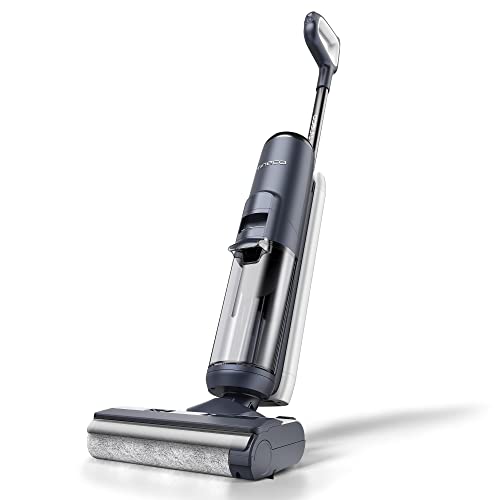
Tile floors get dirty in ways that a dry vacuum alone can't handle — sticky spills, dried food, muddy footprints. The Tineco Floor ONE S5 is the answer to that problem. It vacuum and mops simultaneously, which sounds like a gimmick but is actually one of the most practical things you can own for an all-tile kitchen or bathroom. The iLoop Smart Sensor Technology is the real standout here: sensors detect how dirty the floor is in real time and automatically adjust suction power, water flow, and brush roller speed to match. Over a clean stretch of tile, it runs quietly and conservatively. Hit a sticky patch, and it ramps up without you doing anything.
The brush roller is designed to clean close to baseboards — within a couple of millimeters — which eliminates the need to go back with a separate tool in corners. The dual-tank system keeps clean water and dirty water completely separated, so you're never mopping with contaminated water. The clean tank is 30% larger than the previous generation Floor ONE, which means fewer refill stops on larger surfaces. When you're done, the self-cleaning cycle flushes the brush roller and internal channels. Your floors are dry and streak-free in minutes.
This isn't the machine for deep carpet cleaning — it's purpose-built for hard floors, particularly tile. If your home is primarily tile or you want to stop treating vacuuming and mopping as two separate chores, the Tineco S5 is a genuine time-saver. For homes with porcelain tile or wood-look tile, the gentle wet cleaning approach is ideal since those surfaces need regular mopping without harsh scrubbing.
Pros:
Cons:
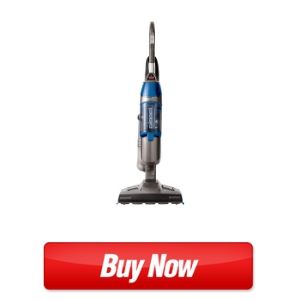
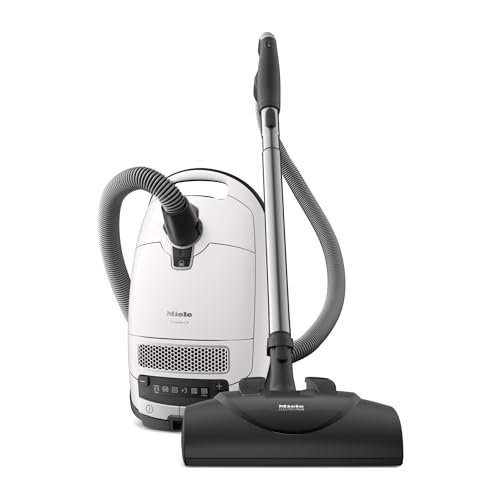
Miele has been making vacuums since 1927, and the Complete C3 Cat & Dog represents the pinnacle of their canister lineup for pet owners with tile floors. The Parquet Twister floorhead is specifically engineered for smooth, hard surfaces — it pivots 180 degrees and uses soft bristles that glide without scratching tile, while still generating enough airflow to pull pet hair out of grout lines. This is not a compromise machine. It's designed from the ground up to excel on both tile and carpet.
The Active AirClean filtration system includes a charcoal filter that actively neutralizes pet odors — the air coming out of the exhaust is measurably cleaner than the air going in, which is something the EPA identifies as particularly important for households with indoor pets. The 36-foot cleaning radius means you can vacuum an entire large room without unplugging once. Foot controls handle power level and suction adjustment so you never have to bend down during a cleaning session. Auto cord rewind and a parking system for cleaning breaks round out a machine that's built for serious, frequent use.
The electrobrush floorhead offers five carpet settings, so when you need to transition from your tile kitchen to a carpeted living room, it handles both without swapping heads. The bagged design is a genuine advantage for pet owners — no cloud of allergens when you empty it, and filtration performance stays consistent as the bag fills.
Pros:
Cons:
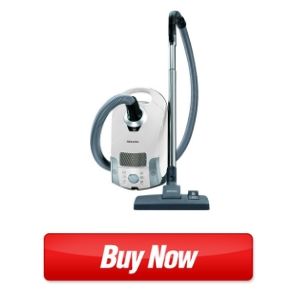
The Shark Navigator NV360 proves you don't need to spend a fortune to get a reliable, hard-working vacuum for tile floors. This upright handles bare floors and carpet with equal competence, and the Lift-Away pod detaches from the main body so you can carry just the canister portion into tight spaces — under bathroom vanities, around toilet bases, in narrow hallways. On tile specifically, the bare floor mode reduces brush roll agitation so you get strong suction without scattering fine debris.
The HEPA filter combined with Shark's Anti-Allergen Complete Seal Technology traps 99.9% of dust and allergens inside the vacuum, which matters if anyone in your household has allergies or asthma. The large dust cup capacity means you won't be emptying it every five minutes, which is a real convenience for homes with heavy foot traffic or pets. Swivel steering handles furniture legs and tight corners well for an upright design.
This is the right pick if you have a mixed-surface home — tile in the kitchen and bathrooms, carpet in bedrooms — and you want one machine that does both jobs adequately without requiring a significant investment. It's not the most sophisticated vacuum on this list, but at its price point, the value-to-performance ratio is hard to beat. Check our full breakdown of the best upright vacuum cleaners if you want to compare more options in this category.
Pros:
Cons:
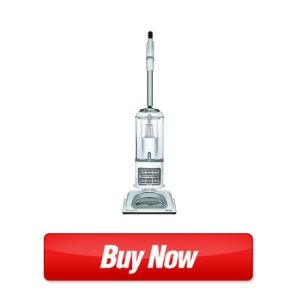
Robot vacuums have matured significantly, and the DREAME L10s Pro Ultra Heat represents the best that autonomous tile cleaning has to offer in 2026. The 7,000Pa suction is enough to pull debris out of grout lines and lift pet hair from smooth tile without you lifting a finger. The MopExtend technology extends the mop pad toward edges and corners with precision — a long-standing weakness of most robot vacuums — and the advanced edge recognition means it actually cleans the perimeter of your room rather than leaving a grimy border.
The hot water self-cleaning system is what separates this machine from the competition. After each mopping session, the robot returns to its dock and cleans its mop pads using 136°F hot water, then dries them with hot air. That eliminates the sour, mildewy smell that plagues cheaper robot mops and ensures the pads aren't redistributing bacteria across your tile. The obstacle avoidance system handles chair legs, cables, pet toys, and most household objects without getting stuck.
Setup takes about 20 minutes for mapping, and after that, you schedule it and forget it. This is the right pick if your tile floors need daily maintenance and you want that maintenance to happen automatically. The price is significant, but for large tile homes or households with pets, the time savings justify the investment many times over.
Pros:
Cons:
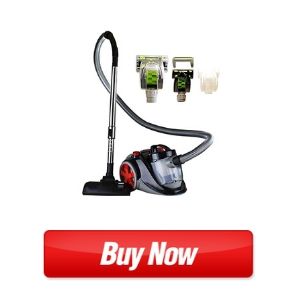
The roborock Q10 S5+ takes the hands-free robot vacuum concept further than almost anything else on the market. The 10,000Pa HyperForce suction — the highest on this list — creates serious airflow for a robot unit, pulling embedded pet hair, fine sand, and crumbs from tile and grout lines with authority. The dual anti-tangle system (JawScrapers Comb main brush plus anti-tangle side brush) minimizes the hair-wrap problem that makes so many robot vacuums a maintenance headache in pet households.
The self-emptying station holds a 2.7-liter dust bag, which translates to roughly 70 days of cleaning before you need to swap the bag. That's the longest maintenance interval on this list by a wide margin. The sonic mopping function vibrates the mop pad at high frequency to scrub dried-on spots rather than just wiping the surface — a meaningful advantage on tile kitchens where grease and food residue accumulate. Auto mop lifting prevents the mop pad from dragging across carpets when the robot transitions between rooms.
Obstacle avoidance is solid, and roborock's app and mapping system are among the most mature in the industry. You can set room-specific cleaning frequencies, no-go zones, and cleaning schedules down to the zone level. If you want a robot that essentially runs itself for two-plus months at a time with minimal intervention, this is your machine.
Pros:
Cons:
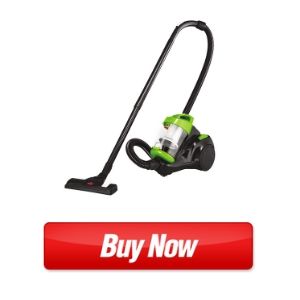
Not every vacuum on the market belongs on tile. Some are too aggressive, some scatter debris instead of picking it up, and some simply lack the filtration to handle the fine dust that settles between ceramic or porcelain tiles. Here's what actually matters when you're making this decision in 2026.
The brush roll — or lack thereof — determines how safe and effective a vacuum is on your tile floors. Soft rollers and bare-floor modes are non-negotiable for polished or glazed tile. A stiff bristle brush roll at high RPM scatters fine debris, can scratch tile finishes, and tends to miss fine dust entirely by blowing it sideways. Look for vacuums with a dedicated hard floor mode that reduces or stops brush roll rotation, or machines like the Dyson V15's Fluffy Optic head that use a full-width soft roller instead.
For textured or unglazed tile — think matte ceramic or stone — a slightly more aggressive brush roll is acceptable since there's no finish to scratch. But even then, soft roller designs generally outperform stiff bristle heads on hard floors across the board.
Grout is the tile owner's nemesis. Those recessed channels trap fine dirt, pet hair, and bacteria, and surface-level suction doesn't reach them. Higher airflow — measured in CFM — matters more than raw suction wattage for grout cleaning. A vacuum with 10,000Pa suction is impressive, but if the floorhead doesn't channel that airflow directly across the grout line, it's wasted. Look for floorhead designs that sit flush with the tile and create a tight seal to maximize airflow across the surface, rather than heads that let air escape at the sides.
If grout maintenance is a serious concern in your home, also consider pairing your vacuum with a dedicated cleaning tool. Our guide to the best grout cleaning machines covers options specifically designed to scrub those channels clean.
Tile homes often feel cleaner because you can see the floor surface, but vacuuming without adequate filtration simply redistributes fine particles into the air. Look for HEPA filtration as a minimum standard — HEPA-rated filters capture 99.97% of particles 0.3 microns or larger, which includes most allergens, dust mite debris, and pet dander. Sealed filtration systems (sometimes called "anti-allergen complete seal") ensure that air exits through the filter rather than leaking around it through the machine body. Bagged vacuums like the Miele C3 have an additional advantage here: the bag itself acts as a secondary filter, and emptying doesn't expose you to a cloud of collected debris.
Your lifestyle matters as much as your tile type when choosing between vacuum categories:
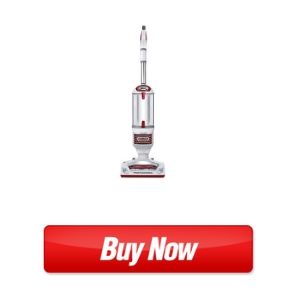
For cordless vacuums, runtime in standard mode is your real usable figure — ignore boost mode numbers. Most manufacturers measure at the handheld unit, which means the actual runtime with a full floorhead attached is typically 10-15% lower. For homes under 1,500 square feet of tile, 45-60 minutes in standard mode is more than adequate. Larger homes either need a swappable battery (like the Shark Vertex) or a corded option. For corded machines, cord length plus cleaning radius (the Miele's 36-foot radius is exceptional) determines how often you replug during a full cleaning session.
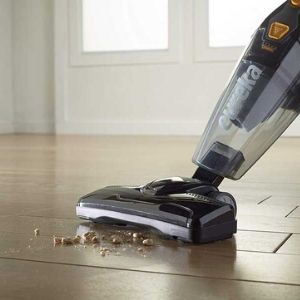
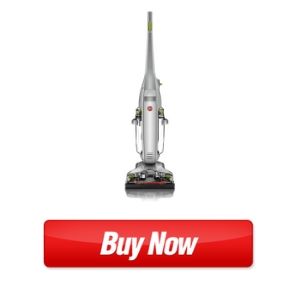
Canister vacuums and cordless stick vacuums with soft roller heads are generally the best options for tile. They generate strong airflow at the floor level, work gently on smooth surfaces, and handle grout lines effectively. The key feature to look for is a dedicated hard floor mode or soft roller floorhead that doesn't scatter fine debris. Robot vacuums with tile-specific mopping functions are also excellent for maintaining clean tile floors between full manual cleanings.
Yes — the wrong vacuum can scratch tile, particularly glazed ceramic or polished porcelain. Stiff bristle brush rolls spinning at high speed are the most common culprit, especially if they pick up and then fling small grit across the surface. To avoid this, choose a vacuum with a soft roller head, a bare floor mode that reduces brush roll speed, or a floorhead specifically rated for hard floors. Suction-only modes on canister vacuums (no brush roll) are completely safe on all tile types.
You don't need a specialty machine, but you do need a vacuum with adequate airflow and a floorhead that sits close to the surface to pull debris from grout channels. High-suction models like the roborock Q10 S5+ (10,000Pa) or Dyson V15 (240AW) generate enough airflow to lift debris from recessed grout lines. For deep grout cleaning beyond what a vacuum can handle, a dedicated grout cleaning machine with a rotating brush is more effective as a periodic treatment.
High-traffic areas like kitchens and entryways benefit from daily vacuuming, especially in pet households. Bedrooms and lower-traffic tile spaces can typically go every two to three days. The advantage of tile over carpet is that dirt is visible — you can let your floor tell you when it needs cleaning. Robot vacuums make daily maintenance on tile effortless since they run on a schedule without any manual effort.
A wet-dry combo like the Tineco Floor ONE S5 is genuinely worth it if your home is predominantly tile and you mop frequently. Vacuuming and mopping in a single pass saves significant time, and the dual-tank design ensures you're always cleaning with fresh water. The value proposition diminishes if you have significant carpet coverage in the same home, since these machines aren't designed for carpet cleaning. For mixed-surface homes, a high-quality dry vacuum paired with a separate mop is typically the better solution.
Tile doesn't require as much suction as carpet does — you're lifting surface debris and grout-line buildup rather than pulling embedded particles from fibers. For most tile homes, anything above 15,000–20,000 Pa (or 100AW for cordless Dyson models) is more than adequate. Where suction matters more on tile is for grout line cleaning and pet hair removal. Models in the 7,000–10,000Pa range (like the robot vacuums on this list) outperform lower-power units on grout specifically because of their sustained airflow at the floor surface.
The best vacuum for your tile floors is the one you'll actually use consistently — so match the machine to your lifestyle first, and the specs second. If you want the absolute best performance, the Dyson V15 Detect Plus delivers a cleaning experience nothing else on the market matches; if you want tile cleaning to run itself, the roborock Q10 S5+ or DREAME L10s Pro are worth every penny. Pick the one that fits your home, your budget, and your routine, then click through to Amazon to check today's price — deals on these models shift frequently, and 2026 has already brought some of the best pricing we've seen on premium vacuums.
 |
 |
 |
 |

About Liz Gonzales
Liz Gonzales grew up surrounded by art and design in a New York suburb, with both parents teaching studio arts at the State University of New York. That environment sharpened her eye for aesthetics and spatial detail — skills she now applies to evaluating home products where form and function both matter. She has spent the past several years writing about lighting, home decor accessories, and outdoor living gear, with a particular focus on how products perform in real residential settings rather than showrooms. At Linea, she covers lighting fixtures and bulb reviews, outdoor and patio gear, and general home product comparisons.
You can Get FREE Gifts. Furthermore, Free Items here. Disable Ad Blocker to receive them all.
Once done, hit anything below
|
|
|
|