
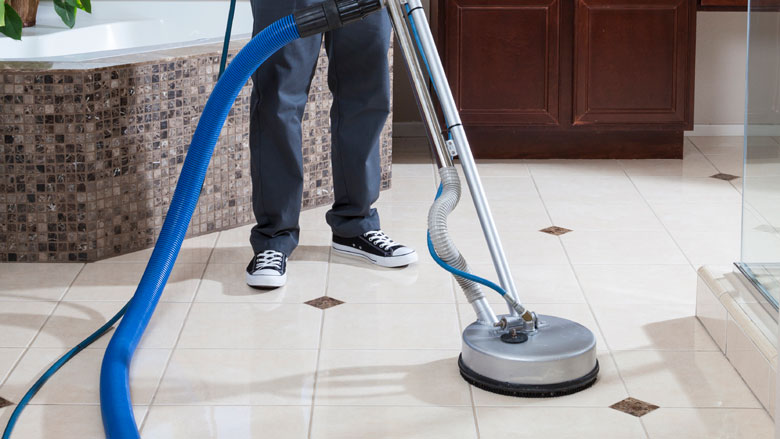
Grout lines cover roughly 10–15% of the total surface area of a tiled floor — and because they're porous and recessed, they trap dirt, mold, and bacteria that a regular mop simply pushes around. If you've been scrubbing grout by hand and getting nowhere fast, you already know the problem. A dedicated grout cleaning machine uses pressurized steam or motorized brushes to dissolve what household cleaners leave behind, cutting your cleaning time by more than half and doing it without bleach or harsh chemicals.
The market in 2026 is loaded with options ranging from compact handheld steamers under $80 to full canister systems with two-hour runtimes and 23-piece accessory kits. Choosing the wrong one means either overspending on power you don't need or buying something too weak to handle ground-in grout stains. Before you make that call, it helps to understand what separates a machine that works from one that sits in a closet after two uses. If you're also weighing options for broader floor care, our guide to the best cordless vacuum for tile floors covers the dry-cleaning side of the equation.
We tested and reviewed the top grout cleaning machines currently available on Amazon to give you a clear, honest breakdown. Whether you're dealing with bathroom tile, kitchen backsplash, or entryway stone, this guide narrows it down to five machines that actually deliver. For deeper context on tile material decisions that affect how aggressively you can clean, see our comparison of ceramic tile vs hardwood flooring costs — the material you have determines the steam intensity you can safely use.
Contents




The McCulloch MC1385 is the machine grout cleaning veterans keep coming back to. Its large on-board water tank delivers a full two-hour continuous runtime, which means you can tackle an entire bathroom floor, the shower surround, and the kitchen backsplash without stopping to refill. Steam temperature and pressure are high enough to break up years of built-up soap scum and mildew in grout lines — the kind of grime that normally requires commercial-grade tile cleaners and significant elbow grease.
What separates the MC1385 from cheaper canister steamers is its 23-accessory kit. You get a floor mop with pads, a nylon scrub brush purpose-built for grout lines, a brass brush for heavy deposits, an angled nozzle for corners, a squeegee, a scraper, and a scrub pad — plus a storage bag to keep it all organized. Every accessory locks on securely and the steam pressure stays consistent regardless of which attachment you're running. The canister design keeps the weight off your hand, so extended cleaning sessions don't wear you out the way handheld units do.
For car detailing enthusiasts, the MC1385 doubles as a powerful vehicle interior steamer — the angled nozzle reaches into seat stitching and door panel seams with no chemical residue left behind. It's a genuine multi-purpose machine, not just a grout cleaner with marketing copy. Build quality is solid and the cord length is generous enough to cover most rooms without repositioning the unit. This is the one to buy if you want a long-term solution and you're serious about chemical-free deep cleaning across your home.
Pros:
Cons:
If sanitizing power is your primary concern, the Dupray Neat earns its spot at the top of this category. It generates superheated steam at up to 275°F (135°C) — a temperature independently verified to kill up to 99.9% of bacteria and viruses on contact. That's not a marketing stat; it's the result of Dupray's focus on medical-grade steam technology filtered down into a home appliance. Bathroom grout, which collects mold spores and moisture-loving bacteria in every pore, responds to this level of heat in a way that lower-temperature steamers simply can't replicate.
The 17-piece accessory kit is intelligently curated rather than padded with redundant attachments. You get brushes scaled for grout lines, extension wands, a scraper, a mop head, and upholstery tools — everything you need to move from the bathroom to the car interior to the kitchen in one session. The compact, lightweight canister is easy to carry room to room, and the hose has enough length to work comfortably without dragging the unit every few feet. Dupray's build quality has a reputation for longevity; this isn't a machine that burns out after six months of regular use.
The Neat is especially well-suited to households where allergen control or immune health is a priority — think homes with young children, elderly family members, or anyone dealing with respiratory issues. Steam cleaning at these temperatures reaches deep into grout pores where chemical sprays pool on the surface without penetrating. The trade-off is a smaller water tank than the McCulloch, which means shorter runtimes per fill. For most users tackling one area at a time, that's a non-issue. If you're cleaning an entire house in one continuous session, factor in one or two refills.
Pros:
Cons:
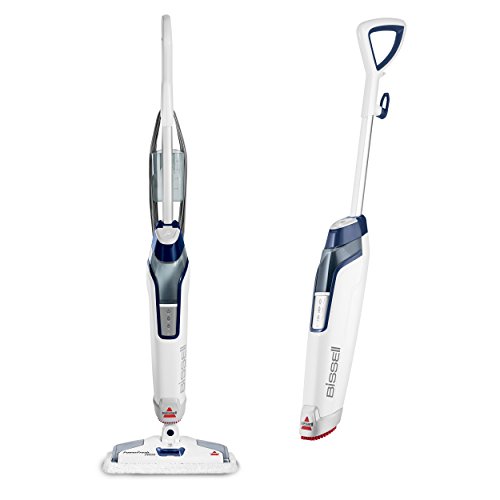
The Bissell PowerFresh Deluxe is the right answer if you want a machine that handles large tiled floor areas efficiently while still addressing grout lines. It's ready to clean in just 30 seconds — heat up, start mopping. The 12-inch cleaning path covers ground fast, which matters when you're dealing with an open-plan kitchen or large bathroom. Steam output is adjustable between high and low settings, giving you control based on what the floor surface actually needs rather than running everything at maximum.
The built-in SpotBoost brush is the feature that makes this mop relevant for grout work specifically. While the flat mop pad handles general floor sanitizing, you can pivot the SpotBoost brush directly onto a stubborn grout line, stain, or sticky mess without switching tools. It eliminates 99.9% of germs on hard floors when used as directed — so you get cleaning and sanitizing in one pass. Every Bissell purchase also contributes to the Bissell Pet Foundation, which supports pet adoption efforts nationwide.
Be clear about what this machine is and isn't. It's a floor steam mop with grout-cleaning capability, not a full canister system with a wand and multiple brush attachments for walls, counters, and cars. If your grout problems are concentrated on floor surfaces and you want something that stores compactly and heats up instantly, the PowerFresh Deluxe delivers. If you need to tackle shower walls, vertical tile, or vehicle interiors, step up to the McCulloch or Dupray. For anyone comparing floor-cleaning options more broadly, our roundup of the best mops for vinyl plank floors is a useful companion read.
Pros:
Cons:
The PurSteam 10-in-1 is the machine for buyers who want maximum flexibility without moving into canister-system territory on price or complexity. It heats up in 30 seconds and functions as a floor steam mop for tile, hardwood, laminate, and carpet — but here's what sets it apart: the upper steamer unit detaches completely to become a standalone handheld cleaner. One purchase gives you a floor mop and a portable handheld steamer. That's a genuine two-in-one, not just a marketing angle.
As a floor mop, it handles grout lines effectively with direct steam penetration. As a handheld unit, you can point it at shower tile walls, bathroom fixtures, stovetop burners, window tracks, and upholstery. It's safe for homes with children and pets because it uses only heated steam — no chemical additives. The included measuring cup and funnel make filling easy without spills, and the microfiber mop pads are washable and reusable. At its price point, the PurSteam punches well above what you'd expect.
The handheld steamer is lightweight enough to use on hanging clothes, making it useful beyond cleaning tasks entirely. If you've been looking for a machine that bridges floor cleaning and spot-treatment cleaning in tight spaces — think grout lines behind the toilet, the space between oven burners, or fabric sofa seams — the PurSteam finds those gaps better than a dedicated floor mop or a full canister unit. It does each task competently without being the absolute best at any single one, which is exactly the trade-off you're making when you choose versatility over specialization.
Pros:
Cons:
This compact 10-in-1 steamer punches hard for its price category. It reaches operating temperature in just 10 seconds — the fastest heat-up of any machine on this list — and generates 248°F steam that handles grout stains, kitchen limescale, and barbecue grill grime without breaking a sweat. The 320ml removable water tank is a smart design choice: because the heater and water tank are separate components, you can refill mid-session without waiting for the unit to cool down first. That's a practical advantage that more expensive machines don't always offer.
Three detachable extension poles let you configure the unit as a floor steam mop or collapse it down to a compact handheld for targeted work. Two washable microfiber pads are included, and the 10-accessory kit covers the most common cleaning scenarios: grout brushes, a nozzle for window tracks, a fabric steamer attachment, and more. At its price point, the accessory count is impressive. The bright white design looks clean and modern, which won't matter to everyone but is worth noting for anyone who keeps appliances visible in their home.
Where does this machine fall short? Steam pressure is lower than the McCulloch or Dupray at maximum output. For extremely stubborn, years-old grout staining, you may need multiple passes rather than the single-pass results you'd get from a higher-end canister unit. The water tank, while refillable without cooling, is smaller than full canister systems. Think of this machine as the right answer for regular maintenance cleaning — keeping grout lines in check week to week — rather than as a deep-restoration tool for neglected tile. For that kind of project, spend more. For everything else, this delivers real value in 2026.
Pros:
Cons:
The cleaning equipment market is full of machines that make big promises on the box and deliver mediocre results in practice. These are the criteria that actually separate a good grout cleaner from a waste of money.
Temperature determines whether you sanitize or just clean. Steam below 212°F loosens surface dirt. Steam above 250°F — like the Dupray Neat's 275°F output — penetrates porous grout and kills bacteria and mold at the source. According to the U.S. Environmental Protection Agency, steam cleaning at sufficient temperatures qualifies as an effective sanitizing method without chemical residues. If you're dealing with bathroom grout where mold is a recurring problem, prioritize steam temperature above almost every other spec.
Pressure matters as much as temperature. High-pressure steam drives heat deep into grout pores rather than sitting on the surface. Canister units with enclosed boiler tanks consistently outperform open-system steam mops on this dimension. If your grout staining is severe, pressure is your priority spec.
These three form factors serve different use cases. Match the machine to your actual cleaning pattern:
If you only have floor grout to clean, a steam mop handles it efficiently. If you also need to address shower walls, countertops, or vehicle interiors, buy a canister or convertible unit.
Tank size directly determines how long you can clean before stopping to refill. This is a practical consideration, not just a spec sheet number. Calculate the square footage you typically clean in one session:
The McCulloch MC1385's 2-hour runtime is the benchmark for extended sessions. The budget 10-in-1 unit compensates for its smaller tank with a refill-while-hot design — a useful engineering choice that partially offsets the capacity disadvantage.
A steam cleaner without the right brush attachment is useless on grout. The grout lines in your tile are narrow, recessed, and textured — a flat pad can't access them effectively. Every machine on this list includes some form of narrow brush attachment, but quality varies significantly.
If you're also considering how your floor type affects cleaning approach, our guide on porcelain wood tile pros and cons covers the material-specific maintenance considerations that should inform your machine choice.
Steam cleaning is safe for properly sealed grout and standard ceramic or porcelain tile. Unsanded grout, old grout with cracks, or grout that hasn't been resealed in several years can be vulnerable to water infiltration from high-pressure steam. Inspect your grout condition before using any steam cleaner and reseal annually as a preventive measure. Avoid steam on natural stone tile like marble or travertine, which can be permanently damaged by heat and moisture.
No. Every machine on this list is designed to clean and sanitize using only water heated to steam. Chemical cleaners can leave residue in grout pores, accelerate grout degradation over time, and create fumes in enclosed spaces like bathrooms. High-temperature steam at 250°F or above kills bacteria, viruses, and mold spores without any chemical additives. Chemical-free cleaning is particularly important in households with children, pets, or anyone with respiratory sensitivities.
A steam mop is optimized for flat floor surfaces — it's wide, low-profile, and designed for efficient back-and-forth sweeping. A steam cleaner (typically a canister or handheld unit) uses a wand and interchangeable attachments to direct concentrated steam at specific surfaces, including vertical tile, corners, and hard-to-reach areas. For floor grout, both work. For shower walls, countertops, or any vertical grout surface, you need a proper steam cleaner with a wand attachment, not a mop.
For kitchen and bathroom floors that see daily use, steam cleaning every 4–6 weeks prevents buildup from becoming severe. Shower grout benefits from monthly treatment given constant moisture exposure. Entryway or mudroom grout may need more frequent cleaning depending on foot traffic. Regular light cleaning is far more effective than infrequent deep-cleaning sessions — it's much easier to maintain clean grout than to restore heavily stained grout after months of neglect.
Epoxy grout is non-porous and highly durable — it handles steam cleaning better than cement-based grout and is less prone to staining in the first place. Steam is actually one of the preferred cleaning methods for epoxy grout because it loosens surface dirt without any risk of chemical interaction. Colored cement grout is generally safe for steam cleaning, but avoid abrasive brush attachments like brass bristles on heavily pigmented grout as they can gradually fade the color with repeated use. Use nylon brushes instead for routine maintenance.
For small bathrooms, a convertible handheld or steam mop unit is more practical than a full canister system. The PurSteam 10-in-1 and the budget 10-in-1 unit are both maneuverable enough to work in tight spaces, heat up in 30 seconds or less, and handle the typical bathroom cleaning load without requiring you to drag a larger canister around a small room. If your bathroom has a shower with vertical tile walls, choose the PurSteam for its detachable handheld capability. If it's a simple tiled floor with no shower walls, the Bissell PowerFresh Deluxe covers it efficiently.
Buy the machine that matches your worst cleaning job — not your average one — and you'll never need to buy a second one.
 |
 |
 |
 |

About Liz Gonzales
Liz Gonzales grew up surrounded by art and design in a New York suburb, with both parents teaching studio arts at the State University of New York. That environment sharpened her eye for aesthetics and spatial detail — skills she now applies to evaluating home products where form and function both matter. She has spent the past several years writing about lighting, home decor accessories, and outdoor living gear, with a particular focus on how products perform in real residential settings rather than showrooms. At Linea, she covers lighting fixtures and bulb reviews, outdoor and patio gear, and general home product comparisons.
You can Get FREE Gifts. Furthermore, Free Items here. Disable Ad Blocker to receive them all.
Once done, hit anything below
|
|
|
|