
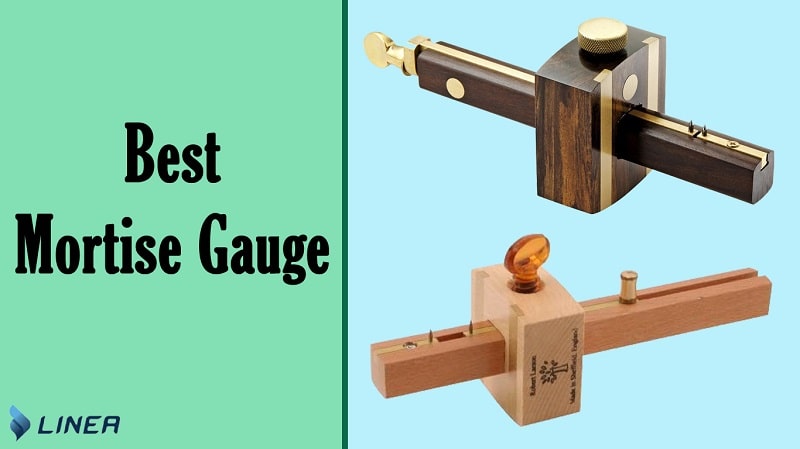
The Woodpeckers Wheel Marking Gauge (WWMG) leads the 2026 field for serious woodworkers who demand laser-precise layout lines — its razor-sharp circular blade and micro-adjust mechanism set a benchmark that traditional pin gauges rarely match. Mortise and tenon joinery lives or dies by the accuracy of a single scribed line, which makes choosing the right marking gauge one of the most consequential tool decisions a woodworker can make.
A marking gauge sounds deceptively simple: a fence, a beam, and a cutter. Yet the range of designs available in 2026 — from traditional beechwood pin gauges to fully machined aluminum wheel gauges — reflects widely different philosophies about what precision means in a shop environment. Buyers choosing between a Sheffield-made brass-fitted classic and a CNC-milled American-made wheel gauge are really choosing between two distinct working styles. Both are valid; neither is universally superior.
This guide covers seven of the strongest mortise marking gauges currently available, drawn from our full reviews catalog of hand tools and workshop equipment. Whether the goal is scribing clean mortise layouts by hand or achieving sub-millimeter consistency across a production batch, there is an option here worth examining. Woodworkers who spend time learning precision layout also tend to invest in complementary scribing tools — the same discipline that drives interest in a quality calligraphy set applies to mastering clean, controlled marking in wood.
Contents


The Robert Larson 605-1250 is a dependable workhorse that sits comfortably in the hands of woodworkers who prefer the feel and warmth of traditional beechwood construction. The gauge ships with a dual-pin configuration that allows users to scribe both single marking lines and parallel mortise lines without swapping tools. Build quality for the price point is solid — the beechwood stock is smooth, the fence slides without excessive play, and the locking mechanism holds calibration through a typical marking session without frequent readjustment.
Dimensions of 4.0" L × 11.0" W × 2.0" H place this gauge in the standard working range — long enough for furniture-scale mortises, compact enough for smaller joinery work. The manufacturer's claim of "consistent accuracy and performance" is largely borne out in use: the pins score cleanly across both hardwood and softwood grain when the gauge is pushed rather than dragged. Beginners and hobbyists will find the learning curve shallow. More experienced woodworkers may wish for finer fence adjustment, but for everyday marking tasks this gauge punches above its price class.
One insider observation worth noting: beechwood gauges like this one perform best when the stock is given a light coat of paste wax periodically. It keeps the fence sliding smoothly and extends the life of the wood appreciably — a small maintenance habit that many new owners overlook.
Pros:
Cons:
Crown Hand Tools Ltd. out of Sheffield, England carries one of the most storied names in traditional hand tool manufacturing, and the 153 Mortise Gauge reflects that heritage directly. The brass fittings and plated head are the immediate differentiators — they give the tool a substantially more refined appearance and feel compared to economy alternatives, and the brass components resist corrosion reliably in shop environments where humidity fluctuates seasonally.
Sheffield-made tooling carries an implicit quality guarantee that resonates with traditional woodworkers. The Crown 153 delivers on this in tactile ways: the fence glides with a reassuring smoothness, the beam is precisely dimensioned, and the pin adjustment maintains its set position with less tendency to drift than many competitors at similar or higher prices. The plated head adds durability at the marking end without adding meaningless weight. For woodworkers doing hand-cut mortise and tenon joinery — especially those working in hardwoods like oak, walnut, or maple — this gauge will outlast the project by decades.
The primary trade-off is the absence of a micro-adjustment mechanism. Buyers who work from precise measured drawings and need to dial in settings to fractions of a millimeter will find the Crown 153 workable but somewhat demanding of patience. Those who set gauges by feel or by reference to a chisel width — the traditional method — will find it perfectly suited to hand-tool workflow.
Pros:
Cons:
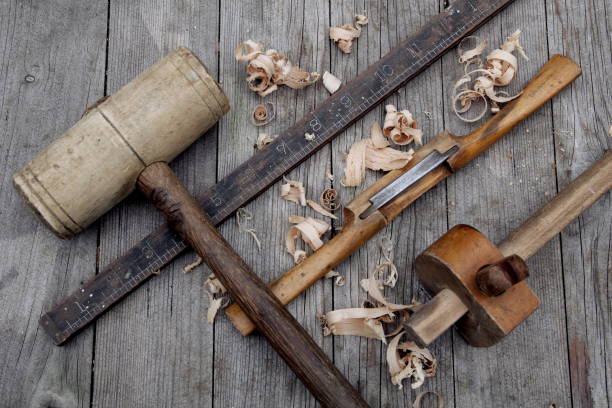
The ARC-POWER mortise gauge targets buyers who want the aesthetic and functional advantages of a wooden-body, brass-fitted design without committing to premium pricing. The combination of wood body and brass hardware is a time-tested pairing in traditional marking gauges — the wood provides warmth and grip while the brass components add weight and corrosion resistance at the critical adjustment points. For the price, the material combination punches above expectations.
This gauge functions as a straightforward mortise marker and tenon scriber. The wooden stock feels natural in the hand during extended layout sessions, reducing fatigue compared to fully metallic alternatives. Brass inlays at the fence and locking points hold up reasonably well to regular shop use. Performance on softwoods is particularly clean; hardwoods require a bit more deliberate pressure to achieve consistent line depth. Woodworkers who are building their first serious hand-tool kit and need a reliable mortise gauge without a significant investment will find this an honest value.
The trade-offs are typical of this category: fence adjustment is more art than science, and the tool requires a break-in period before the components settle into consistent alignment. It is not a gauge that suits meticulous measured joinery from day one, but one that rewards patient calibration and becomes a trusted shop companion over time.
Pros:
Cons:
Woodpeckers has built a reputation for producing USA-made precision tools that genuinely justify their premium pricing, and the WWMG Wheel Marking Gauge represents the pinnacle of this approach in the marking gauge category. The razor-sharp circular blade leaves a line less than one-fifth the width of a pencil mark — a specification that matters enormously when the goal is fitting a mortise to a chisel with zero slop. In practice, the wheel leaves a crisp, burnished groove rather than a torn fiber line, which translates directly to cleaner chisel registration and tighter final joint fit.
The micro-adjust mechanism deserves specific attention. Fine-threaded adjustment allows users to dial in the plate-to-blade distance with a precision that pin gauges simply cannot replicate without considerable skill and patience. The 2-position reference plate offers versatility for different stock thicknesses and joint types. Construction is stainless steel and aluminum — materials chosen for dimensional stability across temperature and humidity changes rather than for aesthetics alone. This is the kind of tool that serious furniture makers and professional woodworkers invest in once and keep for the rest of their working lives.
For woodworkers who also maintain a precision-oriented workshop — the type who reach for a precision connector tool in the electrical bay and a micrometer on the bench — the Woodpeckers WWMG feels philosophically at home. It is unapologetically a specialist instrument, priced accordingly, and it delivers on every specification it claims.
Pros:
Cons:
Ebony is an unconventional choice for a marking gauge stock, but it is not an arbitrary one. Ebony's exceptional hardness and density make it inherently resistant to the wear and compression that gradually loosen the fence fit on softer wood bodies. This 8-inch gauge capitalizes on those material properties — the fence slides on a brass slideway that resists rust and maintains accurate registration over years of use. The combination is a traditional-looking tool with meaningful material engineering behind it.
The primary use case is straightforward: draw parallel straight lines on wood for layout. The 8-inch beam length handles most furniture-scale joinery comfortably. The ebony stock feels noticeably denser and more substantial than beechwood alternatives — a quality that some woodworkers genuinely appreciate and others find unnecessarily heavy for a layout tool. Performance is clean on both hard and softwoods when the pins are properly set and the fence is locked. The brass slideway earns its keep in humid shops where an iron or steel component would corrode and bind.
This gauge occupies a middle tier: better materials and more refined feel than budget wood-body options, but without the micro-adjust precision of aluminum/steel wheel gauges. It suits woodworkers who prefer working with traditional materials and methods but want a step up from entry-level beechwood construction.
Pros:
Cons:
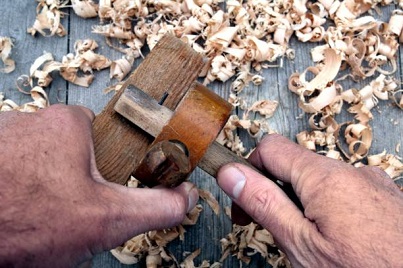
The Moofey 8-inch gauge distinguishes itself with a double-sided three-needle design that allows users to draw single or double parallel lines without any tool change. This versatility makes it one of the more functional traditional-style gauges in this price bracket. The ebony body brings the same material advantages seen in the previous entry — hardness, density, dimensional stability — while the three-needle configuration adds a layer of practical flexibility that single-pin designs lack.
In use, the Moofey handles standard marking and layout tasks competently. The double-sided design means woodworkers can switch between single-line marking for general layout and double-line marking for mortise scribing without swapping gauges. The ebony grain varies from piece to piece, which means individual units will have slightly different visual character — a quirk of natural material selection that most woodworkers find appealing rather than problematic. Marking accuracy holds well across both hard and softwoods when the gauge is properly calibrated and locked.
Where the Moofey makes the most sense is as a primary gauge for woodworkers who do a mix of general layout and occasional mortise work and want one tool that covers both without sacrificing too much precision. It is not a specialist instrument for demanding hand-cut joinery, but it is a capable generalist that serves its intended audience honestly.
Pros:
Cons:
The ADOEIAK sits at an interesting inflection point in the market: it offers wheel-gauge precision and micro-adjustment at a price point that makes it accessible to serious hobbyists who cannot justify the Woodpeckers premium. The fine-threaded micro-adjustment mechanism allows precise measurement setting and secure locking — a critical feature for woodworkers cutting dovetails and mortise-and-tenon joints where half a millimeter of slop translates directly to visible gaps in the finished piece.
The dual metric and imperial scales, laser-etched into a stainless steel bar, are a genuinely useful feature for woodworkers who move between plans drawn in different unit systems. Laser etching resists wear far better than printed or stamped markings, maintaining readability through years of shop use. The high-strength aluminum alloy body construction combines a lightweight feel with workshop-appropriate durability — it resists corrosion and handles the incidental drops and knocks of active shop work. The anti-roll design is a small but thoughtful detail that keeps the gauge where it was placed on the bench rather than rolling onto the floor mid-project.
Compared to the Woodpeckers WWMG, the ADOEIAK is a logical choice for woodworkers who want wheel-gauge performance but are working within a tighter tool budget. The precision gap is real but narrower than the price gap suggests. For most hobby and semi-professional joinery applications in 2026, the ADOEIAK delivers results that are difficult to fault at the price. Woodworkers who regularly invest in quality measuring and layout tools — those who also research options like a combustion analyzer for their home heating systems — will recognize the ADOEIAK as the kind of careful value proposition that rewards discerning buyers.
Pros:
Cons:
The single most consequential decision in this category is the choice between a traditional pin (or spur) gauge and a modern wheel gauge. Each approach has genuine merits:
Body material affects feel, longevity, and calibration stability in meaningful ways:
How easily and accurately a gauge can be set — and how well it holds that setting — determines its practical usefulness in the shop:
Not all marking gauges are true mortise gauges. Understanding the distinction saves buyers from purchasing the wrong tool:
A standard marking gauge has a single pin or wheel and scribes one line at a time. A mortise gauge has two pins — one fixed, one adjustable — that scribe both walls of a mortise simultaneously in a single pass. Combination gauges incorporate both functions. For woodworkers who regularly cut hand-mortises, a dedicated mortise gauge saves time and improves accuracy by eliminating the need for two separate fence settings per joint.
Most hand-tool instructors recommend starting with a quality traditional pin gauge. Pin gauges are simpler to understand, easier to set by reference to a chisel width, and teach the fundamental technique of working with the grain. Wheel gauges reward woodworkers who already understand marking technique and want to improve line quality. That said, if the primary goal is precise layout from measured drawings, starting with a micro-adjustable wheel gauge is equally defensible in 2026.
The traditional method: loosen the fence, place the two pins on either side of the chisel blade, and press them gently against the chisel's flat faces to register the pin spacing. Then position the fence to center the mortise on the stock thickness. Lock both adjustments. This technique ensures the mortise width exactly matches the chisel, so the final paring pass removes no material and leaves a clean wall.
Ebony and rosewood are the traditional premium choices — both are extremely dense, stable across humidity changes, and resistant to wear at the fence seat. Beechwood is the most common material and performs well when maintained with periodic wax on the sliding surfaces. Avoid gauges with bodies made from unspecified or low-density woods; they tend to loosen at the fence over time as the wood compresses around the locking hardware.
A wheel marking gauge uses a small circular blade that rolls along the wood surface, scoring a clean groove. A knife wall gauge uses a fixed blade set at a specific angle to shear fibers cleanly at the baseline of a joint. Wheel gauges are more versatile for general layout; knife wall gauges produce an exceptionally crisp baseline specifically suited to hand-saw and chisel work at joint shoulders. Serious hand-tool woodworkers often keep both in the shop.
Three maintenance habits preserve gauge performance over the long term: First, keep the sliding surfaces of the beam waxed with paste wax to ensure smooth, consistent fence movement. Second, keep the pin or wheel sharp — a dull pin tears wood fibers instead of scribing cleanly, which produces ragged layout lines. Third, store the gauge with the fence locked in position to prevent the locking hardware from loosening through vibration over time. Ebony and rosewood bodies require no oiling; beechwood benefits from occasional treatment with linseed or danish oil.
 |
 |
 |
 |

About Liz Gonzales
Liz Gonzales grew up surrounded by art and design in a New York suburb, with both parents teaching studio arts at the State University of New York. That environment sharpened her eye for aesthetics and spatial detail — skills she now applies to evaluating home products where form and function both matter. She has spent the past several years writing about lighting, home decor accessories, and outdoor living gear, with a particular focus on how products perform in real residential settings rather than showrooms. At Linea, she covers lighting fixtures and bulb reviews, outdoor and patio gear, and general home product comparisons.
You can Get FREE Gifts. Furthermore, Free Items here. Disable Ad Blocker to receive them all.
Once done, hit anything below
|
|
|
|