
You're standing in the cleaning supplies aisle — or more likely scrolling through endless product pages at midnight — trying to figure out which central vacuum hose kit actually works with your home's built-in system. It's confusing, and one wrong purchase means a return trip and more waiting. That's exactly why we put together this guide to the best central vacuum systems and accessories you can buy in 2026.
A central vacuum system (also called a built-in vacuum) routes suction power from a central power unit installed in your garage or basement through pipes in your walls, so you plug a hose into wall inlets around your home instead of dragging a heavy machine from room to room. The result is quieter operation, stronger suction, and no allergens recirculated into your living space. If you're already managing other home cleaning tools and equipment, adding a quality central vacuum kit is one of the best upgrades you can make. You might also want to check out our guide to the best vacuum for tile floors if you have hard-surface rooms that need extra attention alongside your central system.
The real shopping challenge isn't the power unit itself — it's finding the right hose, power nozzle, and tool kit that fits your existing inlets and cleaning habits. Whether you need a 30-foot reach for a smaller home or a 40-foot hose for a large two-story, we've reviewed six of the top-rated options below so you can make a confident, informed choice. According to Wikipedia's overview of central vacuum systems, these built-in systems have been gaining popularity since the 1980s, and today's accessories are better engineered than ever.

Contents


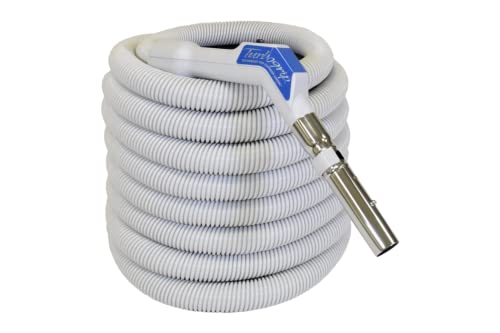


If you want one kit that handles virtually every central vacuum brand on the market, this Prolux 35-foot package is the one to get. Universal compatibility is the headline feature here — it fits Prolux, Honeywell, Vacumaid, Beam, Hoover, Aggressor, NuTone, and any other system that uses a 1.5-inch wall hose inlet. The kit includes both a pigtail adapter and a Direct Connect adapter, so you don't need to guess which connection type your wall inlets use before ordering.
The 35-foot crush-proof hose is lightweight despite its length, which means you can carry it up a staircase or drag it across a large open floor plan without your arm giving out halfway through. The handle features a 3-way switch that lets you control the central vacuum unit and the Wessel Werk power nozzle independently, making transitions between carpet and hard floors quick and effortless. The Wessel Werk brand is a German-engineered nozzle line known for durability and strong brush roll contact, and it lives up to that reputation here.
For most homeowners upgrading a central vacuum system in 2026, this kit hits the right balance of reach, compatibility, and professional-grade tool quality. It's a complete solution out of the box, and you won't need to hunt down extra adapters or spend extra money on a separate nozzle.
Pros:
Cons:
The Vacuflo TurboGrip 30-foot low voltage hose is designed for homeowners who live in a smaller or single-story home where 35 to 40 feet of hose is more than you'll ever use. Low voltage (LV) hoses carry a small electrical signal through the hose itself to activate and deactivate your central vacuum power unit when you plug or unplug from the wall inlet — no separate switch or button required on the inlet valve. This makes the cleaning process feel seamless and modern compared to older on/off switch systems.
Vacuflo has been one of the most trusted names in central vacuum accessories for decades, and the TurboGrip handle design reflects that engineering experience. The grip is ergonomic, reduces wrist fatigue during long cleaning sessions, and the hose flexibility is tuned to be easy to guide around furniture without kinking. At 30 feet, it's the right length for homes under 2,000 square feet where you want a hose that's easy to store and doesn't bunch up in closets.
If you're replacing an older hose on a Vacuflo system or any compatible low voltage central vacuum, this is a clean, reliable upgrade that works exactly as advertised.
Pros:
Cons:
When you want the absolute best brush performance for deep-pile carpets and thick rugs, the Electrolux H400 set is the kit to choose. The electric power brush (motorized nozzle) gets its power directly through the hose rather than relying on airflow-driven turbine rotation, which gives it consistently stronger brush roll speed regardless of suction level. The five-level height adjustment lets you dial in the perfect contact for everything from thin area rugs to plush bedroom carpet.
The built-in LED headlight is a standout practical feature — it illuminates the floor in front of the nozzle so you can see pet hair, crumbs, and debris hiding under bed frames or in dark corners, something the Prolux and Beam kits above don't offer. The 30-foot crush-proof electric hose features a reversible cuff so it fits both standard and reverse-locking wall inlets, and the full-swivel handle with integrated cord management keeps the cord from tangling around your legs as you clean. This is a premium set priced accordingly, but every component justifies the investment.
If you own a home with a mix of carpeted bedrooms and hard-floor living areas and you want one set that handles both beautifully, this Electrolux kit delivers professional-level cleaning performance in 2026.
Pros:
Cons:
If your home already has a Beam central vacuum system installed, buying a genuine OEM (original equipment manufacturer) kit is the most reliable upgrade path you can take. Aftermarket hoses and nozzles can work, but they sometimes have small compatibility issues with Beam's inlet designs or motor controls that genuine parts simply don't have. The Beam Rugmaster Plus kit comes with a 35-foot crush-proof hose featuring a 3-way Progression handle switch, a Rugmaster Plus power brush in charcoal, and a 2-piece chrome wand set for full-home reach and versatility.
The Rugmaster Plus is Beam's mid-tier motorized brush, and it performs strongly on both low-pile and medium-pile carpet surfaces, handling pet hair and household debris with consistent thoroughness. The 3-way switch on the handle gives you the ability to turn the central unit on, turn the power brush on, or run both independently — a feature that's especially useful when you're switching between hard floors and carpet in an open-plan living space. The chrome wand set adds extension reach for cleaning baseboards, ceiling fans, and high shelves without bending or straining.
The one trade-off is no LED headlight on the nozzle — the Rugmaster Plus doesn't illuminate the cleaning path the way the Electrolux H400 does. But if you have a Beam system and you want a genuine, factory-tested kit with a full 35-foot hose and proven brush performance, this is exactly what you should be buying in 2026.
Pros:
Cons:
For large homes, multi-story homes, or homes where the wall inlets are spaced farther apart than typical, a 40-foot hose is the practical solution that prevents you from running back and forth between outlets mid-clean. The Cen-Tec 93048 is one of the few quality central vacuum hoses on the market at this length, and it's manufactured in the USA — a rarity in this product category that gives you confidence in material quality and consistent production standards.
The hose is highly flexible and lightweight despite its extra length, and the switch control activates and deactivates the central power unit through standard pin-jack inlet valves — the most common type found in modern central vacuum installations. Compatibility is excellent: it works with Beam, Electrolux, Eureka, Vacuflo, Vacumaid, MD, Cyclovac, Canavac, Hayden, Star Power, Imperium, and more. It's also compatible with the most popular air turbine nozzles (turbine nozzle = brush driven by airflow rather than electric motor) including the Turbocat, Wessell, Beam, Electrolux, and Cen-Tec brand offerings. The wall-end fitting is designed to fit NuTone and other inlets with a measured 1.50-inch diameter opening.
If you manage cleaning across a large home and you've found that 30 or 35 feet leaves you stretching, this Cen-Tec kit solves that problem definitively. It's also worth pairing with our review of the best vacuum for upholstery if you have a lot of fabric furniture to tackle in addition to floors.
Pros:
Cons:
The Vacuflo TurboGrip 35-foot low voltage hose is the larger sibling of the 30-foot model reviewed above, and it's the better choice for most average-sized homes in the 2,000 to 3,000 square foot range. The extra five feet of reach makes a real difference when you're trying to get from a central inlet location into the corners of a large living room, down a hallway, or up a flight of stairs without switching to a second outlet. Like the 30-foot version, this hose uses a low voltage signal to auto-start and auto-stop the central power unit when plugged or unplugged from the wall.
The TurboGrip handle is Vacuflo's signature ergonomic design, with a grip shape and weight distribution that reduces the strain on your wrist and forearm during extended cleaning sessions. The hose itself is crush-proof and flexible, and Vacuflo's build quality in this line has been consistently reliable in consumer testing year over year. If you've ever used a stiff or kinky hose with your central vacuum, you'll immediately appreciate how this one moves through doorways and around furniture without fighting you.
For homeowners who want to upgrade from an older or generic low voltage hose to a well-built 35-foot replacement, this Vacuflo model is the cleanest, most reliable option in 2026. If you're also thinking about other cleaning equipment for hard floors, our guide to the best cordless vacuum for tile floors covers portable options that complement your central system for quick cleanups.
Pros:
Cons:
Hose length is the first decision to make, and it's directly tied to the size of your home and the placement of your wall inlets. Here's a practical breakdown:
A hose that's too short means you're constantly re-plugging into different outlets mid-clean, and one that's too long creates storage problems and excess weight you're always dragging around. Get the length right first, and everything else becomes easier to decide.
The type of hose you need depends entirely on what kind of wall inlets your central vacuum system has installed. There are three main types:
If you're not sure which type your home has, check the wall inlet — LV inlets typically have two small metal contact pins visible, electric inlets have a standard two-prong outlet visible, and switch-control (pin-jack) inlets have a small round hole for the switch pin. If you're still unsure, call the installer or check your home's central vacuum documentation.
The nozzle (also called the power head or floor tool) is what actually does the cleaning work on your floors, and choosing the right one matters as much as the hose itself.
Central vacuum accessories use standardized inlet sizes — most wall inlets accept a 1.5-inch hose fitting — but there are important compatibility checks you should make before ordering any kit:
For most average-sized homes between 1,800 and 3,000 square feet, a 35-foot hose is the right choice and covers the majority of homes with standard wall inlet placement. If your home is larger or your inlets are spaced farther apart, a 40-foot hose like the Cen-Tec 93048 gives you the reach you need without constantly re-plugging. For condos and apartments under 1,800 square feet, a 30-foot hose is perfectly sufficient and much easier to store.
Most central vacuum hoses use the industry-standard 1.5-inch wall fitting, so the physical connection works across brands. The more important compatibility check is the hose type — low voltage, switch-control, or electric — which must match the type of inlets your home has installed. Universal kits like the Prolux 35-foot set include multiple adapters to cover different connection types, making them the safest choice if you're unsure of your exact inlet configuration.
A low voltage (LV) hose carries a small signal current — typically 24 volts — through the hose to automatically turn the central power unit on and off when you plug and unplug from the wall. An electric hose carries full 120-volt household current through the hose to power an electric motor inside the floor nozzle, which spins the brush roll more powerfully and consistently than an air turbine. Electric hoses require special electric wall inlets, while low voltage hoses require LV inlets — and these are different things, so you need to verify which type your home has before buying.
A high-quality central vacuum hose should last anywhere from five to fifteen years depending on usage frequency and how carefully it's stored. Signs that your hose needs replacing include visible cracks or splits in the outer casing, reduced suction that can't be explained by a full canister, a hose that won't hold its shape and collapses during use, or a faulty switch that no longer reliably starts or stops the power unit. Replacing the hose is significantly less expensive than replacing the central power unit and is a normal part of maintaining your system over time.
If your home has significant carpet coverage — especially medium-pile or thick plush carpet — an electric motorized nozzle is worth the higher investment because the brush roll speed is consistent and powerful regardless of your central vacuum's suction level. Air turbine nozzles are a more affordable alternative that work well on low-pile carpet and area rugs, but they lose brush roll power as suction varies, which can leave debris behind in thicker carpet. For homes that are mostly hard floors with area rugs, an air turbine nozzle is perfectly sufficient and a better value choice.
Central vacuum systems can absolutely be installed in existing homes through a process called retrofitting, where the tubing is routed through walls, attic spaces, and crawl spaces much like adding new electrical wiring. The process is easier in homes with accessible basements, attics, or crawl spaces, and most central vacuum dealers offer installation services. The accessories reviewed in this guide — hoses, nozzles, and tool sets — are the components you purchase separately after the power unit and in-wall tubing are already in place, whether in new construction or a retrofit installation.
Choosing the right central vacuum kit comes down to three things: matching the hose length to your home's size, confirming the hose type matches your wall inlets, and picking a nozzle that suits your flooring. Start by checking your inlet type and measuring the distance from your most remote room to the nearest outlet, then let that guide your length decision — the rest follows naturally. Every product reviewed here is a quality choice in 2026, so once you know your specs, you won't go wrong with any of them.
 |
 |
 |
 |

About Liz Gonzales
Liz Gonzales grew up surrounded by art and design in a New York suburb, with both parents teaching studio arts at the State University of New York. That environment sharpened her eye for aesthetics and spatial detail — skills she now applies to evaluating home products where form and function both matter. She has spent the past several years writing about lighting, home decor accessories, and outdoor living gear, with a particular focus on how products perform in real residential settings rather than showrooms. At Linea, she covers lighting fixtures and bulb reviews, outdoor and patio gear, and general home product comparisons.
You can Get FREE Gifts. Furthermore, Free Items here. Disable Ad Blocker to receive them all.
Once done, hit anything below
|
|
|
|