
The Oreck XL2100RHS upright vacuum is a lightweight, no-fuss machine that handles everyday floor cleaning reliably. If you're searching the cleaning category for an upright that's easy to maneuver and simple to maintain, the XL2100RHS is worth a serious look. Oreck designed this vacuum around a single principle: give you strong suction in a body that weighs just about 8 pounds, without piling on features you'll never use.
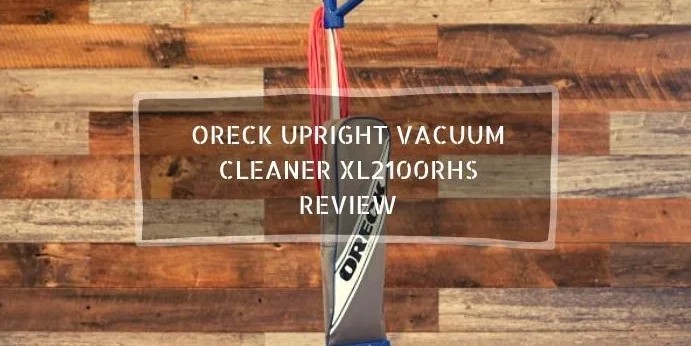
That minimalist philosophy shapes every part of this vacuum — from the slim upright profile to the classic bagged dust system. The XL2100RHS won't impress you with a touchscreen or a self-cleaning brushroll, but it will move smoothly from room to room, pick up fine dirt and debris, and start reliably every time you plug it in.
Whether you're replacing an aging vacuum or comparing the XL2100RHS against other mid-range uprights, this guide covers the background, specs, real-world performance, common myths, maintenance, and who this machine is actually built for.
Contents
Oreck Corporation has been manufacturing upright vacuums since the 1960s. The company originally targeted the hotel and hospitality industry, where staff needed vacuums they could push quickly down long corridors without fatigue. That commercial DNA carried directly into Oreck's consumer products — the priority was always weight, durability, and ease of use over feature complexity.
The XL line became Oreck's flagship consumer series. Over many product generations, Oreck refined the same core concept: a single-fan motor inside a slim upright body, paired with a disposable bag system that captures debris and seals it away. The machines rarely changed dramatically from year to year, which is actually a selling point — replacement bags, belts, and brushrolls stayed compatible across generations.
The "XL" designates the extended-life commercial-grade motor series. "2100" refers to the motor configuration within that family. "RHS" indicates the version sold through retail channels with specific bundled accessories — typically a set of disposable bags and an attachment caddy.
If you see variants like the XL2100RH or XL21, they're closely related. The core motor and filtration design is essentially the same; the suffix usually reflects the retail package or accessory bundle, not a meaningful spec difference.
Pro tip: When buying replacement bags or belts, use the model number printed on the base of your vacuum rather than the retail box — some XL2100 bundles use slightly different bag types depending on the year of purchase.
The Oreck XL2100RHS performs most consistently on hard floors and low-to-medium-pile carpets. The brushroll spins at a fixed speed and sits low to the floor, which makes it effective at agitating debris from carpet fibers without requiring height adjustment. On hardwood, tile, or laminate, the suction pulls fine particles and surface dirt into the bag cleanly.
If your home has a mix of hardwood and area rugs, the XL2100RHS transitions between them without much fuss. The slim base slides under most sofas and beds, and the swivel-style steering (depending on your specific unit) keeps the vacuum responsive. If you're maintaining hardwood surfaces, pairing this vacuum with a routine like the one in this guide to cleaning hardwood floors with vinegar gives you a solid two-step floor care system — vacuum first, then follow up with a damp treatment.
Where it struggles:
The 8-pound body is the XL2100RHS's biggest practical advantage. You can carry it up a staircase with one hand, vacuum each step from the top down, and not feel worn out halfway through. In open-plan living areas, the long power cord (40 feet on most units) means fewer outlet changes per session.
The slim profile also fits between furniture legs and along baseboards more easily than canister vacuums with wide suction heads. For apartment living or single-story homes without a lot of carpet variation, this machine covers the floor plan efficiently.
The XL2100RHS uses Oreck's single-fan motor, which the brand has used in various forms across its commercial and consumer lines. The motor drives both the suction fan and the brushroll through a single drive belt. This design is simpler than dual-motor systems — fewer parts, fewer failure points, and easier belt replacements when the time comes.
Oreck rates the motor in terms of airflow rather than wattage alone. The single-fan design prioritizes strong airflow through the bag, which means filtration efficiency depends heavily on keeping the bag from overfilling. A bag that's more than two-thirds full will noticeably reduce suction — something Oreck's own documentation acknowledges. According to Wikipedia's overview of vacuum cleaner design, single-fan uprights of this type typically generate strong airflow at the nozzle but can lose efficiency faster than dual-motor machines as the bag fills.
| Specification | Detail |
|---|---|
| Weight | Approximately 8 lbs |
| Motor type | Single-fan, commercial-grade |
| Cord length | 40 feet |
| Bag system | Disposable, micron-filtration |
| Brushroll | Fixed-height, motorized |
| Filtration | Hypo-allergenic micron filter bag |
| Noise level | Approximately 70–75 dB |
| Floor types | Hardwood, low-to-medium carpet, tile |
| Included accessories | Bags, owner's manual (varies by retail bundle) |
| Warranty | Typically 1-year limited (commercial use) or longer for residential |
In day-to-day use, the XL2100RHS handles the debris most homes accumulate well: tracked-in dirt, crumbs, dust, hair, and lint. The brushroll agitates low-pile carpet effectively, and on hard floors, the suction picks up fine particles without blowing them around like some lightweight vacuums do.
Users consistently note that the machine feels responsive — push it forward and it moves easily, pull it back and it doesn't snag. The slim body also makes under-furniture cleaning genuinely practical rather than a contortion exercise.
Where the XL2100RHS shows its limits:
If you're comparing this to other uprights in the same price class, the Shark Rocket Ultra Light Upright is a common alternative worth considering. It has a swivel head and a detachable handheld mode, which the Oreck lacks, but the Oreck's bagged system is often preferred by allergy-sensitive households.
The XL2100RHS handles light-to-moderate pet hair reasonably well on hard floors. On carpet, the motorized brushroll picks up surface hair effectively, though hair can wrap around the brushroll over time and require manual removal. The hypo-allergenic micron filter bag helps contain fine particles and dander, which matters if anyone in your household has allergies or respiratory sensitivities.
It's not a dedicated pet vacuum — no specialized pet attachments are included — but for a single-pet household with mainly hard floors or low-pile carpet, it performs adequately.
Note: If pet hair wraps around the brushroll regularly, inspect and clear it every 2–3 sessions to avoid motor strain and reduced brushroll effectiveness.
Setting up the XL2100RHS is genuinely simple. Here's the process:
The machine needs no height adjustment for most floor types. If you're moving from a soft rug to a hard floor, slightly reduce forward pressure so the brushroll doesn't scatter debris before it's captured.
Bag changes are where bagged vacuums often frustrate users. With the XL2100RHS, the process is clean if you do it correctly:
Change the bag when it's about two-thirds full, not completely packed. A full bag chokes airflow and forces the motor to work harder, which shortens its life. Oreck's micron bags are the recommended replacement — generic bags may fit but sometimes don't seal as effectively around the collar mount.
This is the most common objection you'll hear about the XL2100RHS, and it's worth addressing directly. Weight and suction power are not correlated in vacuum design. The XL2100RHS achieves its light frame through a compact motor housing and a streamlined body — neither of which reduces the motor's output.
Heavier vacuums often carry extra weight from larger dustbins, water tanks, multiple attachments, or reinforced housings designed for more demanding commercial use. The Oreck XL2100RHS's motor is the same type used in Oreck's commercial hotel vacuums, which are chosen specifically because they maintain consistent suction during extended use — not because they're heavy.
That said, a legitimate limitation is that the single-fan design does lose suction faster as the bag fills. The weakness isn't the weight — it's the bag capacity and the need to replace bags before they're completely full.
Bagless vacuums dominate retail shelf space, which leads many shoppers to assume bagged machines are outdated. But bagged systems have a real advantage for people who care about air quality. When you empty a bagless canister, you're releasing a cloud of fine dust back into the room. With a bagged vacuum, you pinch the bag closed and drop it in the trash — the debris never escapes.
For households where someone has dust allergies, asthma, or respiratory sensitivities, a bagged system like the XL2100RHS can genuinely reduce airborne particle exposure. The ongoing cost of replacement bags is real, but many users find it a worthwhile trade-off for cleaner disposal. A good seasonal routine — like the habits covered in these spring cleaning tips — pairs naturally with a bagged vacuum's contained disposal method.
Oreck vacuums have a reputation for longevity, and the XL2100RHS can last many years with basic care. Your routine doesn't need to be complicated:
The belt on the XL2100RHS is accessible from the brushroll housing and takes about five minutes to replace. No specialty tools are needed. If you've ever worked through a teardown on a similar machine — like the process outlined for disassembling a Hoover WindTunnel — the Oreck is actually simpler to service.
The main consumables for the XL2100RHS are the bag, the drive belt, and the brushroll. Here's when to act:
Oreck sells replacement parts directly, and the XL series parts are widely available through third-party retailers. Stick with brand-name bags if you can — the collar sizing on the XL2100RHS bag mount is specific, and off-brand bags occasionally don't seal properly.
The Oreck XL2100RHS upright vacuum fits a specific type of household well. You'll get the most value from it if:
It also suits older adults or anyone who finds heavier vacuums tiring to push. The long cord reduces the number of outlet swaps per session, which makes it practical for larger open-plan spaces.
The XL2100RHS isn't the right fit for every home. Consider a different vacuum if:
The XL2100RHS is a focused tool. It does a few things very well — lightweight floor cleaning, reliable suction on hard surfaces, and clean debris disposal — and it doesn't try to be everything else. That clarity is either its strength or its limitation depending on what your home actually needs.
Yes, the Oreck XL2100RHS performs well on hardwood floors. The motorized brushroll and strong airflow pick up fine debris and surface dirt effectively. For best results on bare hardwood, make sure the brushroll is clean and the bag isn't overfilled, as both factors directly affect suction at the nozzle.
The XL2100RHS uses Oreck's XL standard micron filtration bags, sometimes listed as the "Celoc" bag type. Oreck sells them in packs of eight under the part number PK80009DW or similar. Third-party compatible bags are available, but Oreck's own bags are recommended for the best seal at the bag collar mount.
Change the bag when it's approximately two-thirds full. A full bag restricts airflow significantly and forces the motor to work harder. Depending on how often you vacuum and how dirty your floors get, that could mean changing the bag every two to four weeks in an average household.
It handles light-to-moderate pet hair reasonably well, particularly on hard floors and low-pile carpet. The brushroll can tangle with longer pet hair over time, so you'll need to clear it every few sessions. For homes with multiple heavy-shedding pets and deep carpet, a vacuum with a tangle-free brushroll may be more practical.
The XL2100RHS does not use a traditional HEPA filter. Instead, it uses Oreck's hypo-allergenic micron filtration bags, which are designed to trap fine particles including dust mite debris and pollen. These bags are not certified HEPA, but they do reduce the amount of fine dust released into the air during vacuuming compared to standard bags.
 |
 |
 |
 |

About Liz Gonzales
Liz Gonzales grew up surrounded by art and design in a New York suburb, with both parents teaching studio arts at the State University of New York. That environment sharpened her eye for aesthetics and spatial detail — skills she now applies to evaluating home products where form and function both matter. She has spent the past several years writing about lighting, home decor accessories, and outdoor living gear, with a particular focus on how products perform in real residential settings rather than showrooms. At Linea, she covers lighting fixtures and bulb reviews, outdoor and patio gear, and general home product comparisons.
You can Get FREE Gifts. Furthermore, Free Items here. Disable Ad Blocker to receive them all.
Once done, hit anything below
|
|
|
|