
Last spring, I walked into my kitchen after a week of heavy foot traffic and spotted a dull, grimy film settling into my oak floorboards. I'd burned through three different commercial cleaners — all left streaks or a waxy buildup that attracted even more dirt. A neighbor finally suggested vinegar, and I haven't looked back since. If you want to clean hardwood floors with vinegar the smart way, this guide covers everything from the right dilution to long-term care. For more home cleaning advice, browse the cleaning section.

Vinegar works because it's mildly acidic. That acidity — specifically acetic acid — cuts through grime, neutralizes odors, and dissolves light residue without harsh chemicals or synthetic fragrances. But on hardwood, dilution is everything. Too much acid and you risk dulling the polyurethane finish. Left too wet, and you risk warping the boards beneath.
This guide walks you through every step: what to mix, how to mop, what to avoid, how to fix common problems, and how to build a routine that keeps your floors looking sharp for years. Whether your floors are brand-new or have seen decades of foot traffic, these steps work.
Contents
Before you start, gather your supplies. Nothing fancy required:
That's it. You don't need commercial additives, special conditioners, or anything sold in a spray bottle with a wood-themed label.
Never skip the dry-clean step. Mopping over loose grit is like sanding your floors with sandpaper. Here's the right order:
If your vacuum has a hard-floor mode, use it. It lowers suction and lifts the beater bar so it doesn't scratch the surface. Doing a thorough dry pass before mopping also reduces how often you need to wring out the mop, which means less moisture on the wood overall.
Work in manageable sections. The floor should be dry to the touch within five minutes of mopping each section. If it isn't, your mop is too wet.
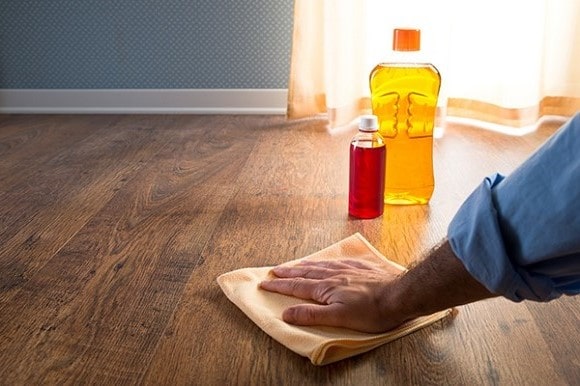
The most common mistake is using too much vinegar. More acid doesn't mean cleaner floors — it means more damage over time. Use this table as your reference:
| Water Volume | Vinegar Amount | Best For |
|---|---|---|
| 1 quart | 1 tablespoon | Light touch-up cleaning |
| ½ gallon | ¼ cup | Standard weekly clean |
| 1 gallon | ½ cup | Deep clean or high-traffic areas |
| 1 gallon | 1 cup or more | Too acidic — avoid on hardwood |
Always use warm water, not hot. Hot water opens the wood grain and allows moisture to penetrate deeper than it should, which accelerates warping and swelling over time.
Some products seem like upgrades but cause real damage on hardwood:
Vinegar's smell disappears fast — usually within 20 minutes of mopping. But if you want a pleasant scent while you work, add 5–10 drops of essential oil to your solution:
Use water-soluble essential oils and keep the drops low. More oil doesn't mean more clean — excess oil leaves spots on the floor.
How often you mop depends on how much traffic your floors see:
Between mop sessions, a dry microfiber sweep every couple of days handles dust and pet hair without any moisture on the wood. Pair your floor routine with a bigger seasonal clean — the Spring Cleaning Tips guide has a room-by-room system you can adapt for any time of year.
Streaks after mopping almost always come from one of three causes:
Fix existing streaks by re-mopping the area with clean warm water only, then drying immediately with a dry microfiber cloth. Going forward, wring the mop out more aggressively and stick to the ½-cup-per-gallon ratio.
A hazy look after cleaning usually means one of a few things. Here's how to diagnose it:
Never use vinegar on waxed floors. Acid dissolves wax and creates a patchy, uneven mess. If you're unsure whether your floor is waxed or has a polyurethane seal, drop a few beads of water on the surface. Wax repels water into tight beads. Polyurethane lets water sit flat.

The less dirt and grit that reaches your floors, the less often you need to deep clean. These habits make the biggest difference:
Hardwood floors respond to humidity changes across seasons. In dry winter months, boards contract slightly and small gaps appear. In humid summers, they expand. Watch for these warning signs:
If you have vinyl plank flooring in adjacent rooms or are considering it as an alternative, the care routine differs — check the guide on how to clean vinyl plank flooring for a side-by-side comparison of what works where.
A consistent schedule beats marathon cleaning sessions every time. Here's a simple framework to follow:
Write it into your calendar the same way you'd schedule any other maintenance. The floors that look incredible after 30 years aren't luck — they're consistent, low-effort upkeep stacked over time.
Vinegar cleaning maintains a healthy floor — it doesn't repair structural damage. You need professional refinishing when:
Solid hardwood is a long-term investment. Most solid floors can be sanded and refinished five to seven times across their lifespan. With proper cleaning and periodic refinishing, a quality hardwood floor can realistically last a century or more.
Yes — as long as you dilute it properly. Stick to ½ cup of white distilled vinegar per gallon of warm water, keep the mop barely damp, and dry the floor quickly. At this dilution and frequency, vinegar is safe for sealed polyurethane finishes. Problems arise when people use too much vinegar or mop too wet, too often.
Use plain white distilled vinegar with 5% acidity — the standard kind you find in any grocery store. Avoid apple cider vinegar (it leaves a sticky residue), cleaning vinegar concentrate (too acidic at 6–10%), and flavored or specialty vinegars.
No. Vinegar, even diluted, will penetrate bare wood and can stain it, raise the grain, or cause discoloration. Unfinished hardwood needs a pH-neutral cleaner specifically designed for raw wood. Have the floor sealed first, then use the vinegar method once the finish is applied and fully cured.
Streaks are almost always caused by too much vinegar in the mix, a mop that's too wet, or not buffing dry after cleaning. Re-mop the area with plain warm water, dry immediately, and reduce your vinegar ratio next time. Wring the mop more aggressively before each pass.
The standard ratio is ½ cup of white distilled vinegar per gallon of warm water. For a spray bottle, use 1 tablespoon per quart. Never exceed 1 cup per gallon — higher concentrations are too acidic for the finish and will cause long-term dullness and damage.
Cleaning hardwood floors with vinegar is one of the simplest, most effective switches you can make in your home cleaning routine — no expensive products, no chemical residue, and real results you can see. Start with the ½-cup-per-gallon ratio, keep your mop barely damp, and build a consistent weekly or biweekly schedule based on your traffic level. Try it on one room this week and see the difference for yourself.
 |
 |
 |
 |

About Liz Gonzales
Liz Gonzales grew up surrounded by art and design in a New York suburb, with both parents teaching studio arts at the State University of New York. That environment sharpened her eye for aesthetics and spatial detail — skills she now applies to evaluating home products where form and function both matter. She has spent the past several years writing about lighting, home decor accessories, and outdoor living gear, with a particular focus on how products perform in real residential settings rather than showrooms. At Linea, she covers lighting fixtures and bulb reviews, outdoor and patio gear, and general home product comparisons.
You can Get FREE Gifts. Furthermore, Free Items here. Disable Ad Blocker to receive them all.
Once done, hit anything below
|
|
|
|