
Is a cordless vacuum always the smarter buy — or has clever marketing led most people to overlook a genuinely powerful option? Corded stick vacuum cleaners are among the most underrated tools in the home cleaning toolkit, and our team keeps recommending them to anyone who wants reliable, consistent performance without the premium price tag. In our cleaning guides, we've tested everything from robot vacuums to full-size uprights, and the corded stick category keeps punching above its weight every single time.
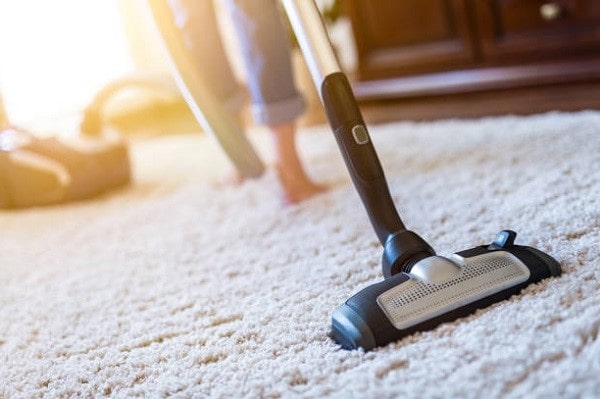
Battery-powered stick vacuums grab most of the attention these days. The convenience is real — no cord to manage, no outlet to locate. But there's a trade-off that surfaces mid-clean: as the battery drains, suction fades. Corded stick vacuums don't have that problem. They draw steady power from the wall the entire time, which means the first pass across the living room carpet and the last pass through the back hallway deliver the same results.
Before getting into comparisons, buying tips, and troubleshooting, it's worth knowing where corded stick models fit in the wider vacuum landscape. Our guide to different types of vacuum cleaners breaks down the full range — from uprights to canisters to handheld units — but this post focuses specifically on corded stick designs: what makes them worth considering, what specs actually matter, and how to get the most out of them over the long run.
Contents
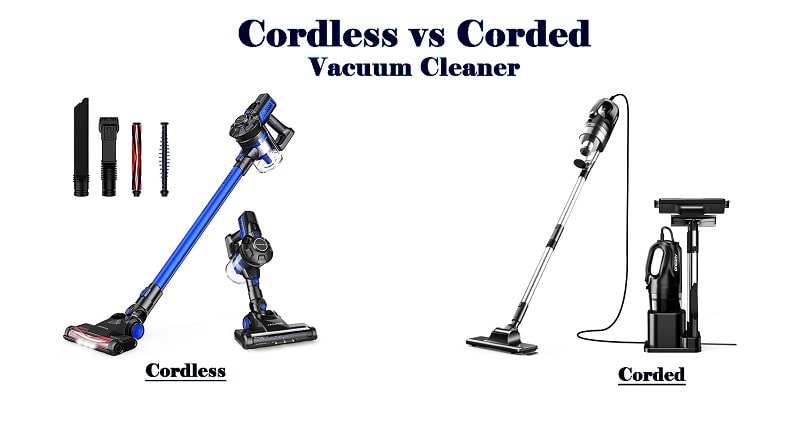
Most people assume cordless means better. Our testing says otherwise. When our team runs direct comparisons between corded and cordless stick models in the same price range, corded units consistently hold their own — and in several key categories, they come out ahead. Understanding those differences makes it much easier to choose the right tool for a specific home and cleaning routine.
On hard floors and low-pile carpet, both types perform similarly when the cordless battery is fully charged. The gap opens on thick carpet and deep-pile rugs. Corded models maintain full motor speed throughout the entire session. Cordless units gradually lose suction as power drains — a drop that becomes especially noticeable during longer cleaning runs. Our team has also found that corded models handle fine dust and embedded pet hair on carpet more consistently in a single pass, without needing to go back over the same area.
Corded stick vacuums typically cost less upfront and carry no battery replacement costs over their lifespan. Replacement lithium-ion batteries for quality cordless models often run $60–$120, and most degrade enough to need replacing every two to four years. That adds up quickly on a premium cordless unit. Our team's assessment: over a five-year ownership period, a corded stick vacuum often costs half as much to own as a comparable cordless model when battery replacements are factored in.
| Feature | Corded Stick Vacuum | Cordless Stick Vacuum |
|---|---|---|
| Suction consistency | Constant throughout session | Decreases as battery drains |
| Runtime | Unlimited (while plugged in) | 20–60 minutes per charge |
| Average price range | $40–$200 | $80–$700+ |
| Battery replacement cost | None | $60–$120 every 2–4 years |
| Average weight | 2–4 lbs | 3–6 lbs (battery adds weight) |
| Best suited for | Large homes, heavy use, budget buyers | Quick touch-ups, small apartments |
Walking into a store — or scrolling through product listings — it's easy to get lost in specs. Our team has narrowed down the numbers that actually predict real-world performance from the ones that are mostly marketing noise. Knowing the difference saves money and prevents disappointment.
Wattage is a starting point, but air watts (AW) — a measure of actual suction force at the floor head — are a far more useful number. A corded stick vacuum rated at 100 AW or higher is well-suited for carpet. Anything below 60 AW is better reserved for hard floors only. Our team recommends not chasing the highest wattage number on the box: beyond a certain point, increases in wattage don't translate into meaningfully cleaner floors, and a heavier motor adds weight without adding performance.
For households where anyone deals with allergies or asthma, HEPA filtration (High Efficiency Particulate Air) is worth prioritizing. HEPA filters trap 99.97% of particles 0.3 microns or larger — including dust mite debris, pet dander, and mold spores. The EPA's indoor air quality resources consistently highlight fine particulate matter as a key driver of respiratory problems indoors. Standard filters capture larger debris effectively but let fine particles recirculate back into the room air. Our team covered filtration in depth in our guide on best vacuums for allergy sufferers — an essential read for anyone sensitive to airborne dust.
A well-designed floor head makes a bigger real-world difference than most buyers expect. The floor head is where cleaning actually happens, and its design determines how well debris gets lifted rather than pushed around. Our team looks for:
A vacuum that ships with a complete attachment set saves money over models that charge separately for each tool. Our team finds that included attachments see more use than most buyers anticipate once the full range of surfaces gets covered — baseboards, upholstery, stairs, and ceiling fans all benefit from the right head.
Every vacuum type has a sweet spot. Corded stick vacuums have clear strengths, and being honest about their limits is just as useful as highlighting what they do well. Our team's experience across dozens of home setups makes this picture fairly clear.
There are situations where a corded stick isn't the optimal tool, and our team doesn't shy away from saying so:
Our team's honest take: corded stick vacuums make the most sense as a primary cleaner for anyone regularly cleaning 800 square feet or more. For smaller spaces used occasionally, a cordless or handheld may fit better into the daily routine.
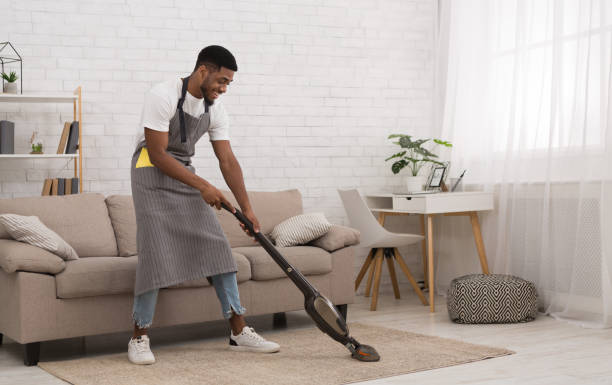
A corded stick vacuum is a simple machine by design, but simple doesn't mean maintenance-free. Our team has tracked performance on well-maintained models versus neglected ones, and the lifespan difference is significant. Most issues that send a vacuum to the trash early are preventable with a basic routine.
The most common cause of poor performance is a neglected dustbin or clogged filter — not a failing motor. Our team recommends the following schedule:
For a thorough step-by-step breakdown, our guide on how to clean a vacuum cleaner covers every component in detail. Musty smells are worth addressing promptly as well — left untreated, they become significantly harder to eliminate. Our team's post on removing odor from vacuum cleaners walks through the most effective methods.
Pro tip from our team: Never run a corded stick vacuum with a full dustbin — suction drops immediately, and fine particles begin bypassing the filter and collecting inside the motor housing, which shortens motor life considerably.
The cord is the component most people ignore until something goes wrong. Wrapping it too tightly around the body of the vacuum stresses the internal wiring at the bend points over time. Storing it with the same sharp kink repeatedly causes the outer insulation to crack, which eventually becomes a safety hazard. Our team's rule: always coil the cord loosely and avoid wrapping it under any tension against the machine's body.
For filters: HEPA filters in most corded models are not washable and need replacement every 6–12 months depending on use frequency. Running a vacuum past the filter's service life doesn't just reduce cleaning performance — it sends fine particles back into the room air, which defeats the purpose of having HEPA filtration in the first place.
Our team has observed consistent patterns in how these machines get misused. Most of the problems people encounter are preventable once the root habits are identified. None of these require technical knowledge — just awareness.
Waiting until the dustbin is visibly overflowing before emptying it is one of the most common habits our team encounters. A full dustbin cuts suction by as much as 40% because the motor can't pull air efficiently through a packed chamber. Most bins should be emptied when they reach the marked fill line, not the absolute physical maximum.
The second most common issue our team encounters is cord damage from poor handling habits. Running over the cord with the vacuum's own floor head is an easy mistake that cuts through the outer insulation quickly. Yanking the cord from the wall by pulling on the cable — rather than gripping the plug — damages internal wire connections over time. Both habits are easy to break with a small routine adjustment: unplug by the plug, and always move the cord out of the cleaning path before starting a session.
Most problems with corded stick vacuums trace back to a small set of root causes. Our team works through a standard checklist before concluding that a machine needs professional repair — and in the majority of cases, the fix is something a home user can handle in five minutes.
The most common cause of weak suction is a blockage or full filter, not a failing motor. Before assuming a mechanical problem, our team checks these in order:
If suction remains weak after clearing all of the above, worn motor seals or a crack in the housing may be allowing air to escape the system. At that point, the cost of repair on a corded stick model often approaches the cost of a replacement unit — making a new machine the more practical option.
A high-pitched whine usually means a clog the motor is working against — check the full air path first. A grinding or rattling sound typically points to debris caught in the brush roll rather than a motor issue. Our team's advice: switch the unit off immediately, flip it over, and clear the brush roll before continuing. Running the motor against physical resistance accelerates wear on the brush roll bearings. If the noise continues after clearing blockages, a repair shop inspection is warranted before the underlying issue worsens into a motor failure.
Some beliefs about corded stick vacuums persist despite being demonstrably wrong. Our team encounters these regularly, and clearing them up helps most people make a better-informed decision.
Myth 1: "Corded means heavy and bulky." Modern corded stick vacuums weigh 2–4 lbs on average. The absence of a battery pack actually makes many corded models lighter than comparable cordless units. The slim stick form factor is designed for maneuverability — not bulk — and most models weigh less than a bag of sugar.
Myth 2: "More watts always means better cleaning." Wattage measures power draw from the outlet, not cleaning effectiveness. A 1,400-watt vacuum with poor internal seals cleans worse than an 800-watt unit with a well-designed floor head and airtight airflow path. Our team focuses on air watts and real-world debris pickup performance, not the headline wattage figure printed on the box.
Myth 3: "Corded vacuums are outdated technology." The cord is a deliberate design choice, not a relic of older engineering. Corded stick vacuums use the same brushless motor technology, HEPA filtration systems, and ergonomic engineering found in premium cordless models. The cord is simply the power delivery method — and for consistent, uninterrupted suction, it remains the most reliable option available.
Myth 4: "They're only good for quick cleanups." Corded stick vacuums have no runtime limit whatsoever. That actually makes them better suited for whole-home deep cleans than any cordless model on the market. Our team routinely runs corded sessions exceeding 45 minutes with zero performance drop from start to finish.
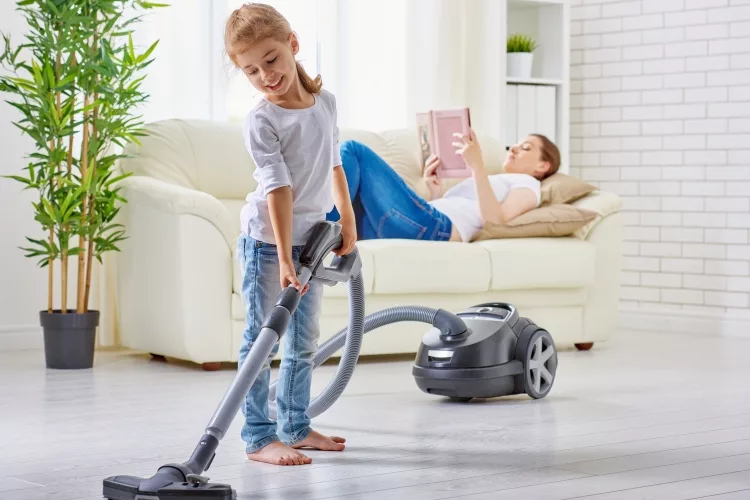
Yes — corded stick vacuums with a motorized brush roll handle low-to-medium pile carpet effectively. For very thick, high-pile carpet, a full-size upright or canister may deliver deeper agitation, but quality corded stick models with strong suction perform well on most standard residential carpets. The key factor is the floor head design, not the cord.
With proper maintenance, most corded stick vacuums last five to eight years. The absence of a battery means one of the most failure-prone components in cordless models isn't a concern. Regular filter cleaning, brush roll maintenance, and proper cord storage are the biggest contributors to long-term reliability.
Our team considers them among the stronger options for pet hair on carpet specifically. Consistent suction — which doesn't fade the way a cordless battery does mid-session — means pet hair embedded in carpet fibers gets lifted rather than left behind. A motorized brush roll improves results significantly on medium and high-pile carpet.
Our team recommends at least 80–100 air watts for reliable carpet performance. Below that threshold, fine debris and embedded pet hair often remain behind on medium-pile carpets even after multiple passes. For hard floors only, 50–70 air watts is sufficient for everyday cleaning needs.
Most quality corded stick models include a brush roll on/off switch specifically for this reason. Hard floors benefit from the brush roll switched off — which prevents fine particles from being scattered rather than collected. Carpet benefits from the brush roll active, agitating fibers for deeper pickup. A single corded stick with this feature handles mixed-flooring homes effectively.
 |
 |
 |
 |

About Linea Lorenzo
Linea Lorenzo has spent over a decade testing home gadgets, cleaning products, and consumer electronics from his base in Sacramento, California. What started as a personal obsession with keeping his space clean and stocked with the right tools evolved into a full-time writing career covering the home products space. He has hands-on experience with hundreds of cleaning solutions, robotic and cordless vacuums, and everyday household gadgets — evaluating them for performance, value, and real-world usability rather than spec sheet appeal. At Linea, he covers home cleaning guides, general how-to tutorials, and practical product advice for everyday home care.
You can Get FREE Gifts. Furthermore, Free Items here. Disable Ad Blocker to receive them all.
Once done, hit anything below
|
|
|
|