
The GearLight XR68 UV Flashlight earns our top pick for 2026 because its 68-LED array delivers 30% more UV brightness than standard 51-LED options at the same price. If you have ever scrubbed a carpet that smelled faintly of pet urine, cleaned the spot, and then discovered three more spots you had completely missed, you already understand why a quality UV blacklight (a flashlight that emits ultraviolet light to make dried urine glow) is one of the most practical tools a pet owner can own. Urine dries clear and becomes invisible to the naked eye almost immediately, but the organic compounds inside it fluoresce (glow brightly) under UV light, turning an impossible guessing game into a straightforward cleaning mission.
Not all UV flashlights work the same way, and the differences matter more than most buyers expect going in. The number of LEDs determines how wide an area you can scan with each pass, the wavelength — measured in nanometers (nm) — controls how strongly stains glow and whether you can see other things like skin conditions or currency security strips, and the build quality determines how long the flashlight lasts before it starts dimming or dying in your hand. For pet urine specifically, a 395nm wavelength is the sweet spot: bright enough to make dried urine glow clearly, visible enough to work without complete darkness, and compatible with most of the multi-purpose uses like scorpion detection and mineral identification that make these lights so versatile. A 365nm light, by contrast, produces a truer blacklight effect that cuts visible output more sharply, which is more useful for medical inspection but less practical for quick home scans. You can read more about how light intensity works in our guide on how bright a lumen is to better understand what the specs actually mean in practice.
We reviewed seven of the best UV lights for urine detection available in 2026, covering everything from budget two-packs and compact pocket lights all the way up to 100-LED wide-coverage powerhouses and a professional-grade 365nm Wood's lamp for skin inspection. Whether you are tracking down a hidden pet accident, doing a thorough pre-move-in inspection of a rental, or scanning hotel sheets before you sleep in them, there is a pick on this list built for your exact situation. A UV light works best when it is part of a complete cleaning routine — check out our list of 15 places you probably forget to clean for a full rundown of the spots most people miss. All of these lights are available through the lighting category on our site alongside other top-rated illumination tools.
Contents




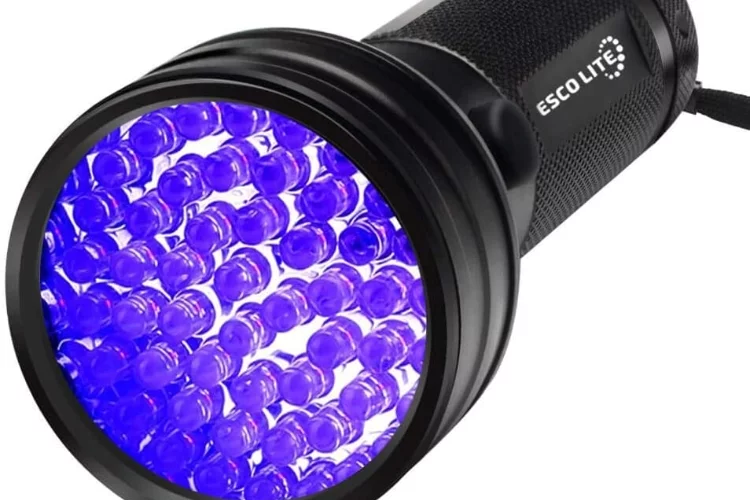
The ESCO LITE 51 LED is one of the most recognized UV flashlights on the market, and after years of steady sales and thousands of verified reviews, it has earned that reputation honestly. The upgraded 395nm UV LEDs are arranged to maximize beam spread, which means you can cover a larger section of carpet or tile with each sweep rather than crawling across your floor inch by inch looking for a glow. The light handles the core job — finding dried pet urine on rugs, hardwood, and upholstery — with solid consistency, and the wide coverage beam pattern is noticeably better than cheaper single-LED flashlights that produce a narrow spot rather than a usable wash of light.
Beyond pet stains, this light pulls double duty in a number of surprisingly useful situations. You can use it to scan baby clothes and cosmetics for fluorescent whitening agents (FWAs), which are chemical compounds some manufacturers add to fabrics and creams that can irritate sensitive skin, and the light makes those compounds glow immediately on contact. It also works well for authenticating currency and spotting fake IDs, charging glow-in-the-dark items, curing UV resin for small crafts, and hunting scorpions outdoors at night, which is genuinely useful if you live in the Southwest. The build quality is straightforward and durable, with a grip that feels solid in your hand and a switch that does not require fiddling to operate.
The one limitation you should know going in is that this flashlight, like all UV pet stain detectors, only works on dry urine — fresh wet spots will not produce the same fluorescent glow. You also get the best results by dimming the room significantly before scanning; the faint glow of a day-old stain simply does not stand out against ambient daylight the way it does in a darkened room. For first-time UV flashlight buyers who want a reliable, versatile tool without paying a premium price, this is an excellent starting point.
Pros:
Cons:

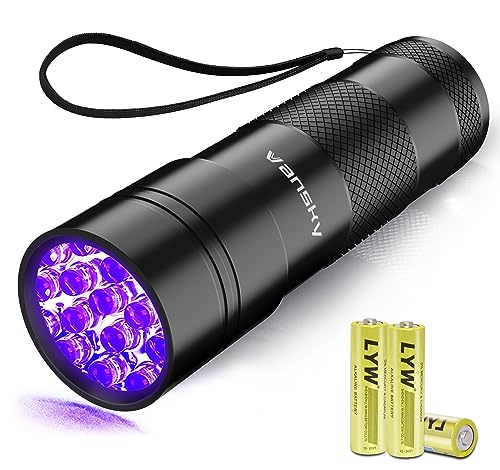
The Vansky 51 LED UV Flashlight has carved out a loyal audience among pet owners and travelers alike, and it is not hard to see why once you actually put it in your hands and turn it on. The 51 LED array at 395nm produces a well-distributed beam that lights up dried cat and dog urine on carpet, rugs, and upholstery with a bright yellow-green glow that is impossible to miss when the room is adequately dimmed. The light is also effective at revealing food stains, bodily fluid stains, and other organic material that blends invisibly into fabric under normal light, which makes it a genuinely useful tool for deep-cleaning your home before guests arrive or after a long stretch of busy weeks.
Where the Vansky 51 LED stands apart from basic pet-stain tools is its versatility across multiple tasks that matter in everyday life. Currency and document authentication is a real use case here — the UV light causes the fluorescent security strips embedded in most modern banknotes to glow brightly, and the same applies to watermarks on official documents like driver's licenses and passports. If you travel frequently and want a compact tool that pulls triple duty as a pet stain finder, a travel hygiene checker for hotel rooms, and a document verifier, this flashlight fits comfortably in a bag without adding meaningful weight. Keep in mind that it runs on three AA standard alkaline batteries that are sold separately and not included in the package, so have those ready before you open the box.
The construction is straightforward and reliable, built around an aluminum housing that handles drops and daily carry without showing obvious wear. For pet owners who want a single flashlight that covers the core stain-detection job alongside several other practical tasks, the Vansky 51 LED delivers reliable performance in a package that is easy to recommend. Combine this with a good mop for the cleanup phase — our review of the 10 best mops for vinyl plank floors is a useful companion read if your pet spends time on hard flooring.
Pros:
Cons:
If you want a UV blacklight that slips into your pocket, takes up almost no space in a travel bag, and still does a credible job of detecting dried pet urine, the Vansky 12 LED Mini is the one to reach for. The 12 high-intensity 395nm UV LED beads are specifically chosen for output quality rather than pure LED count, and in practice the beam is stronger than you might expect from such a compact form factor. Dried pet urine on carpets and sofas glows with clearly visible fluorescence in a darkened room, and the light is precise enough for targeted spot-checking rather than wide-area scanning, which is exactly what a smaller flashlight should do well.
The mini form factor pays dividends in specific situations where a full-sized 51-LED flashlight feels like overkill or inconvenience. When you are checking a hotel room before unpacking your bags, you want something that fits in your jacket pocket and turns on instantly, not something that takes up half your carry-on. The Vansky 12 LED also works well for identifying scorpions around doorways and windows at night, curing UV resin on small projects, inspecting currency, and finding fluorescent rocks and minerals like Yooperlite, which makes it appealing to hobbyists who already know what they are doing with a UV light. For a thorough deep-clean session, though, the narrow beam coverage means more time scanning compared to a 51 or 68-LED option, so manage your expectations if your dog has been using a large carpeted room as a bathroom.
The build is genuinely pocket-friendly and the output is impressive relative to the size, which makes this the right answer for travelers, apartment renters doing pre-move-out inspections, and pet owners who need a backup light rather than a primary workhorse. At its price point, it is hard to argue against keeping one of these in your cleaning kit alongside your regular go-to flashlight.
Pros:
Cons:
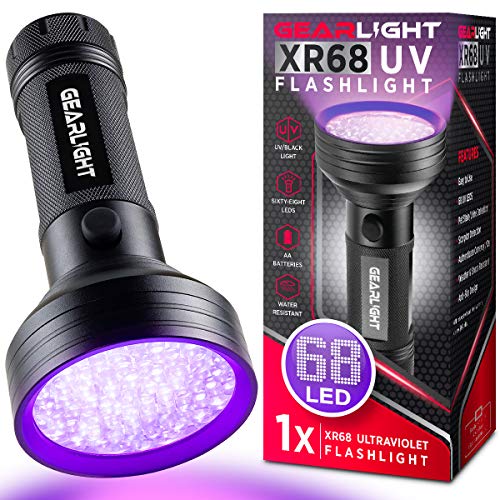
The GearLight XR68 is our overall top pick for 2026 and the clearest example of what happens when a manufacturer decides to actually listen to buyer complaints rather than ship the same product as everyone else. While most UV flashlights in this price range are built around 51 LEDs — a configuration that buyers consistently describe as functional but underpowered for larger rooms — the XR68 steps up to 68 LEDs and delivers a measurable 30% increase in UV brightness without meaningfully increasing the size or price. The result is a flashlight that covers your floors, carpets, and furniture with noticeably more confidence, lighting up dried dog urine and forgotten stains with a glow that is hard to miss even in rooms that are not fully pitch-black.
The practical difference shows up most clearly when you are scanning a large carpeted living room or a hallway where your pet has been making regular trips. A 51-LED light requires you to move the beam in tight overlapping rows to make sure you catch everything; the XR68 covers more ground per sweep and makes the whole process faster and less tedious. The light runs on three AA batteries sold separately, which is the standard configuration across most of this product category, and the switch is simple and responsive without requiring any complicated multi-press sequences to operate. Pet stain detection is where this flashlight excels, but it also performs well for bed bug inspection, ID checking, resin curing, and scorpion spotting during outdoor evening walks.
If you have ever bought a cheaper UV flashlight and found yourself thinking "I can sort of see something there, maybe," the GearLight XR68 fixes that problem definitively. The brightness jump from 51 to 68 LEDs is not just a marketing number — it translates into real-world visibility that makes stains obvious rather than ambiguous, and that is exactly what you need when you are deciding whether a carpet needs spot treatment or a full professional clean. Pair this light with your regular vacuuming routine and the tips in our 14 effective vacuum cleaning hacks guide to build a complete floor-care system that leaves nothing hidden.
Pros:
Cons:
When 51 LEDs is not enough and 68 is still leaving you wanting more, the ESCO LITE 100 LED UV flashlight is the answer. Equipped with 100 high-intensity 395nm UV LEDs, this flashlight produces a wide wash of ultraviolet light that covers more floor area per sweep than any other pick on this list, making it the right tool if you have a large home with multiple pets, heavy-traffic carpeted areas, or a stubborn odor problem you have been chasing for weeks without fully resolving. The broader illumination means fewer passes across each room, and the higher LED count produces a noticeably brighter output that makes even faint stains — the kind that have been cleaned once but not fully neutralized — visible as a subtle glow.
The 100 LED configuration does not just help with pet urine detection; it extends the flashlight's usefulness across a broader range of inspection tasks. Checking fabrics and surfaces for fluorescent materials, inspecting for bed bugs, curing UV resin on DIY projects, and spotting scorpions on outdoor patrols all benefit from the extra output, and the wider beam means you are covering more area with less effort in every scenario. The light performs best under dark conditions, and like every 395nm UV flashlight it only detects dry stains — you will need to wait for a fresh accident to dry completely before scanning, which is not a design flaw so much as a fundamental property of how UV detection works on organic compounds.
The build quality is sturdy and designed for repeated use, and the size remains portable despite the higher LED count, which is not a given at this specification level. If you manage a large property, run a pet boarding service, or simply want the most thorough UV scanning tool available without stepping into professional-grade pricing, the ESCO LITE 100 LED is the definitive high-coverage option for home use in 2026. It is the kind of tool that makes you realize how much you were missing with a lower-powered light the first time you turn it on in a room you thought was clean.
Pros:
Cons:
Every other UV light on this list operates at 395nm and is optimized for pet urine detection and general household use. This one is different in a meaningful way. The Wood's UV Lamp uses a true 365nm wavelength — the same wavelength used in professional Wood's lamps (a medical tool named after physicist Robert Wood, as noted on Wikipedia) that dermatologists and veterinarians use to identify certain fungal skin infections. All light emitters on this device are covered with a black glass filter that blocks visible light and passes only true ultraviolet, which produces a purer and more accurate fluorescence response than an unfiltered 395nm flashlight can achieve.
The primary use case that sets this apart is cat ringworm detection. Cat ringworm (tinea) is a highly contagious fungal skin disease that spreads easily from cats to people and is notoriously difficult to spot by eye alone, especially in the early stages when treatment is easiest. Under this lamp, affected skin areas on a cat fluoresce green, providing a clear visual indicator that something requires veterinary attention. This is genuinely useful information that a standard 395nm pet stain flashlight simply cannot provide at the same level of accuracy. The lamp also works for esthetician skin analysis, checking whether banknotes are counterfeit, and as a small supplemental power bank in certain charging scenarios, making it a more specialized but genuinely useful tool for specific situations.
You should approach this light with clear expectations: it is not the fastest or most convenient option for scanning large carpet areas for dried dog urine in the dark, and the 365nm output looks different than the purple glow you might expect from a 395nm flashlight. What it does, it does with precision, and if you have a multi-cat household, work in pet care, or want a light that doubles as a professional skin inspection tool, this is the pick that delivers capabilities none of the others can match. The compact size and USB charging make it genuinely portable for people who need it in veterinary or skincare contexts.
Pros:
Cons:
There is a smart use case for buying two UV flashlights at once that most people do not think about until they need it: one lives upstairs and one lives downstairs, eliminating the hunt for the light every time your dog has an accident at 11pm. The ESCO LITE 2 Pack delivers exactly that convenience, bundling two 12-LED 395nm blacklight mini flashlights at a combined price that undercuts most single larger-LED options while giving you genuine flexibility in how and where you keep your detection tools. Each flashlight in the pack is compact enough to slip into a pocket, a cleaning caddy, or a travel bag, and the 395nm output handles dried pet urine detection on carpets, rugs, and upholstery reliably in adequately dimmed conditions.
The mini form factor is the point here, not maximum coverage, and the ESCO LITE 2 Pack is best understood as a convenience and portability play rather than a high-output powerhouse. Each unit covers a narrower area per sweep than a 51 or 68-LED flashlight, which means scanning a large room takes more passes and more patience, but for spot-checking specific areas — a corner where your puppy keeps returning, a piece of furniture with a mysterious smell, the floor of a car or truck where your pet rides regularly — these are perfectly sized and appropriately powered. If you need help with pet hair and odor cleanup after the detection phase, our guide on how to remove pet hair from your car covers the cleanup side of things thoroughly.
The additional use cases are the same as most 395nm tools: scorpion detection, bed bug identification, uranium glass inspection, jade checking, resin curing, and currency or ID verification. Having two of these means you can keep one at home and pack one for travel without worrying about losing your only UV flashlight to a checked bag. For budget-conscious pet owners who want coverage across multiple rooms or locations without breaking the bank, this two-pack is the most practical buy on the entire list.
Pros:
Cons:
Shopping for a UV blacklight is deceptively simple on the surface — they all look roughly the same in product photos and they all make similar claims — but the differences between a flashlight that genuinely works and one that leaves you squinting at ambiguous glows are real and predictable. Here are the factors that actually matter when you are making your decision in 2026.
The number of LEDs in a UV flashlight directly determines how wide an area you can illuminate with a single sweep, and this matters more than most buyers initially realize. A 12-LED mini flashlight produces a focused spot that works well for targeted inspection but requires many overlapping passes to cover a large floor area thoroughly. A 51-LED model covers a noticeably wider swath per sweep, and a 68 or 100-LED flashlight gives you the most coverage with the least effort, which is genuinely valuable when you are searching a 20-by-15-foot carpeted bedroom at midnight. The practical rule is this: the more floor area you need to scan regularly, the higher your LED count should be. If you have one small apartment and one cat, a 12 or 51-LED light is plenty. If you have a large house and multiple dogs, go straight to 68 or 100 LEDs and thank yourself later.
The wavelength of a UV flashlight, measured in nanometers (nm), determines what the light is best at detecting and how it looks to your eye. A 395nm flashlight produces a noticeable purple-ish glow visible to the human eye, which makes it easy to aim and position while you scan, and it causes pet urine, scorpions, many minerals, and fluorescent security strips to glow brightly. A 365nm flashlight produces a deeper ultraviolet output with a stronger black glass filter that cuts visible light more aggressively — this is the type used in professional Wood's lamps for medical skin inspection and ringworm detection, where accuracy matters more than casual usability. For the vast majority of pet owners and home cleaners, 395nm is the right choice: it is brighter, more versatile, and easier to use. Choose 365nm only if you have a specific medical or veterinary use case that requires it, like monitoring cat ringworm or doing professional esthetic skin analysis.
Every UV flashlight for urine detection, regardless of LED count or wavelength, performs significantly better under specific conditions that are easy to replicate once you know about them. First and most importantly, the stain must be dry — fresh urine does not fluoresce reliably at 395nm because the proteins that cause the glow are concentrated differently in wet versus dried deposits. Second, the room should be as dark as possible, because ambient daylight and even indoor lighting compete with the UV glow and make faint stains harder to distinguish. Turn off overhead lights, close blinds, and let your eyes adjust before you start scanning, and you will find stains you would completely miss under normal illumination. Third, hold the flashlight at a low angle to the floor rather than pointing it straight down, as this catches the glow at a more visible angle and reveals stain edges more clearly.
UV flashlights in this category range from plastic-bodied budget tools to aluminum-housed durable options, and while the output quality is more important than the housing material for most buyers, durability matters if you plan to use the light regularly over multiple years. Aluminum housings handle drops better than plastic, and a recessed or protected LED array avoids the lens scratches that can reduce output over time. Battery type is worth considering too — most models on this list use three standard AA batteries, which are universally available and inexpensive, but a few smaller models use AAA batteries for a more compact form. Avoid flashlights that use proprietary or rechargeable-only battery systems unless the USB charging mechanism is genuinely convenient for your routine, since running out of power mid-scan in a darkened room with no charged backup is a frustrating experience. Choose a model with a battery type you always have on hand, keep spares in your cleaning kit, and the light will be ready whenever your pet decides to surprise you.
A UV blacklight at 395nm detects dried pet urine reliably by causing the urea and proteins in the dried deposit to fluoresce. Fresh wet urine does not produce the same strong glow because the compounds are still dissolved in water rather than concentrated in a dry residue. Once the urine dries completely — typically within a few hours of the accident — the stain becomes clearly visible under UV light in a darkened room. The detection is consistent across cat urine, dog urine, and most other mammal urine, so you can use the same flashlight for multi-pet households without any special adjustment.
Both wavelengths are ultraviolet light, but they work differently and are optimized for different tasks. A 395nm light sits at the border between ultraviolet and visible light, producing a noticeable purple glow that makes it easy to use in a home environment and causes pet urine, scorpions, and fluorescent materials to glow brightly. A 365nm light is deeper into the ultraviolet range and uses a black glass filter to block more visible light, producing a purer UV output that is better for medical-grade applications like detecting fungal skin infections under a Wood's lamp. For everyday pet stain detection and home cleaning, 395nm is the practical choice. Choose 365nm specifically if you need to check for cat ringworm or perform professional skin analysis.
UV stain detection works best in a significantly darkened environment, but it does not require total blackout conditions. Turning off overhead lights and closing curtains or blinds is usually enough to make dried urine glow clearly visible, especially with a higher-powered 68 or 100-LED flashlight. Faint stains that have been partially cleaned or are old and degraded require darker conditions to show up, while fresh bright stains from a recent accident can often be seen even in moderate dimness. The practical approach is to do your initial scan in the darkest conditions you can arrange, then use normal lighting to confirm and treat the spots you marked during the UV sweep.
Yes, and this is one of the most popular non-pet uses for UV flashlights. Hotels launder sheets and towels regularly, but surfaces like mattresses, pillows, upholstered headboards, carpets, and bathroom fixtures are cleaned far less frequently, and a UV blacklight reveals organic stains on these surfaces that are completely invisible under normal lighting. A compact 12 or 51-LED flashlight is ideal for travel use since it fits in a carry-on without adding meaningful weight. Scan the mattress, pillow, and visible upholstery surfaces in a darkened room before you unpack, and you will have a clear picture of what you are dealing with before you decide how comfortable you are with the room.
It depends on how thoroughly the stain was treated. Standard cleaning products — soap, water, and general-purpose carpet cleaners — remove the visible surface stain and most of the odor-causing bacteria, but they often leave behind trace amounts of the fluorescent proteins that UV light detects. A UV blacklight can frequently reveal these residual traces as a faint glow even after multiple cleanings, which is why professional carpet cleaners and pet odor specialists use enzyme-based cleaners specifically designed to break down urine proteins completely. If your UV light keeps showing a faint glow in a spot you have cleaned repeatedly, switch to an enzymatic cleaner for that area and give it adequate dwell time to fully neutralize the residue.
Consumer UV flashlights in the 395nm range used for home stain detection are generally safe for brief exposure at normal operating distances. The output level is far below the thresholds used in industrial UV equipment and does not produce the same risks associated with prolonged direct UV exposure. The standard precaution is to avoid pointing the light directly into eyes — yours, your children's, or your pets' — since UV light at close range and high intensity can cause temporary eye discomfort. For normal use, which involves holding the flashlight at floor level and scanning surfaces from a standing or kneeling position, the safety risks are minimal and comparable to other household lighting tools. Use sensible precautions, keep the beam directed at surfaces rather than people, and these flashlights are straightforward to use safely in any household environment.
The right UV light does not just show you where the smell is coming from — it shows you exactly how much cleaning you still have left to do.
 |
 |
 |
 |

About Liz Gonzales
Liz Gonzales grew up surrounded by art and design in a New York suburb, with both parents teaching studio arts at the State University of New York. That environment sharpened her eye for aesthetics and spatial detail — skills she now applies to evaluating home products where form and function both matter. She has spent the past several years writing about lighting, home decor accessories, and outdoor living gear, with a particular focus on how products perform in real residential settings rather than showrooms. At Linea, she covers lighting fixtures and bulb reviews, outdoor and patio gear, and general home product comparisons.
You can Get FREE Gifts. Furthermore, Free Items here. Disable Ad Blocker to receive them all.
Once done, hit anything below
|
|
|
|