
You're in the middle of setting up a small office network, and everyone needs access to the same printer — but you don't want to leave a dedicated PC running 24/7 just to handle print jobs. That's exactly the problem a print server solves, and in 2026, there are more solid options than ever across wired, wireless, and multi-port configurations. Whether you're managing a home office setup or a small business with a dozen users, the right print server can eliminate bottlenecks and streamline your workflow without a major infrastructure overhaul.
Print servers work by connecting your USB printer directly to your network, making it accessible to every computer on that network — no host machine required. The core technology has matured significantly, and today's units support everything from legacy LPR protocols to AirPrint and Google Cloud Print for mobile devices. If you're also researching other networking peripherals, our guide to best DSL filters covers complementary gear for optimizing your network connection at the line level. For a broader look at the category before diving into individual picks, check out our print server buying guide.
We evaluated seven of the top-selling print servers available in 2026, comparing connection type, protocol support, ease of setup, compatibility, and real-world reliability. Below you'll find our detailed breakdown of each model, a buying guide, and answers to the questions buyers ask most. Let's get into it.

Contents
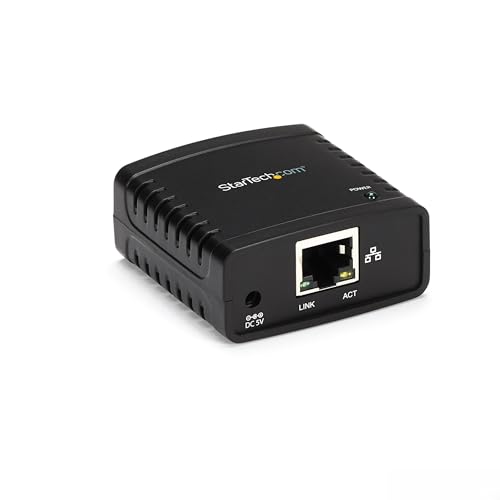





If your office runs on a wired Ethernet backbone and you need a rock-solid, no-frills print server that just works, the StarTech 1-Port USB 2.0 Network Print Server is the most dependable choice in this roundup. It connects a single USB 2.0 printer to your 10/100 Mbps Ethernet LAN via an RJ-45 port, with auto-sensing to negotiate the best available connection speed automatically. The device is TAA Compliant, which matters if you're purchasing for a government agency or any organization with federal procurement requirements — a detail most competitors in this price range skip entirely.
Setup requires intermediate networking knowledge since this is not a plug-and-play device; you'll configure it through a web interface using either a static IP or DHCP, and print jobs are sent via an LPR queue labeled "LP1." That manual configuration requirement is a deliberate trade-off — it gives you precise control over the device's network behavior rather than relying on auto-discovery protocols that can behave unpredictably on managed networks. StarTech provides online FAQs that cover the most common configuration scenarios, and the documentation is genuinely helpful rather than the sparse afterthought you get from budget brands.
One important caveat: this unit does not work with USB hubs, multi-function printers requiring proprietary drivers, or printers that need full bi-directional USB communication. If your printer falls into any of those categories, you'll want to look at the D-Link or Lantronix options below. For straightforward single-function USB printers using standard drivers, though, this is an excellent value with proven long-term reliability in office deployments.
Pros:
Cons:
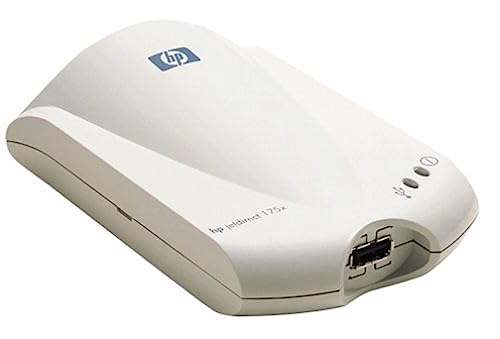
The HP Jetdirect 175x is a legacy unit with a reputation that has held up remarkably well — if you're running HP printers and want seamless protocol-level integration, this is the print server that other brands still get benchmarked against. It connects to your printer via USB and to your network via RJ-45 Fast Ethernet, offering a clean, well-supported bridge between the two. The embedded web server is the standout feature here, giving you a browser-accessible management interface that lets you monitor print queues, configure network settings, and check device status without installing any dedicated software on your workstations.
HP's Jetdirect firmware has been iterated for decades, and the 175x benefits from that accumulated refinement — it handles multi-user print job queuing gracefully and rarely drops connections mid-job, which is a real problem on cheaper units. The setup experience is significantly smoother on HP printers than on third-party hardware, partly because HP's own drivers are built with Jetdirect in mind. If you're managing a mixed fleet of HP and non-HP printers, you may find the 175x works acceptably across the board, but you'll get the most out of it on HP hardware.
The main limitation is that this is an older platform, so support for newer operating systems and mobile printing protocols isn't built in. If printing from iOS or Android devices is a priority, the Lantronix xPrintServer below is a better fit. For traditional desktop and laptop workstation environments, though, the Jetdirect 175x remains a proven workhorse that earns its spot on this list in 2026 due to sheer reliability and ease of management.
Pros:
Cons:
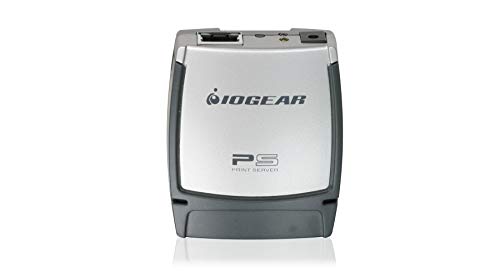
The IOGEAR GPSU21 delivers a no-nonsense print-sharing solution at a price point that makes it easy to justify even in budget-conscious small office or home office environments. It connects your USB 2.0 or USB 1.1 printer to a network via its 10Base-T/100Base-T auto-sensing Ethernet port, comes bundled with both a USB cable and a Cat 5 Ethernet cable, and allows multiple computers on the same network to share a single printer without dedicating a host PC. The inclusion of both cables in the box is a thoughtful touch that eliminates a common "why didn't I buy cables" frustration during installation.
Setup follows a standard print server configuration flow — IOGEAR strongly recommends reading the user guide before attempting installation, which is good advice since the web-based configuration interface has a few non-obvious steps around IP assignment that can trip up first-timers. Once configured correctly, however, the GPSU21 maintains stable connections and handles moderate print workloads without issue. You can also send print jobs from across the Internet, not just from within the local network, which adds flexibility for remote workers who occasionally need to print documents to an office printer.
The GPSU21 is best suited for environments with a single shared printer and a small-to-medium number of users — it doesn't offer multi-port connectivity or advanced queue management features, but for its intended use case it performs well above its price bracket. If you're also sourcing other network diagnostic tools for your office, our review of the best power supply testers covers another category of essential hardware worth having on hand.
Pros:
Cons:
The Cisco-Linksys PSUS4 solves two problems at once — it gives you a dedicated print server while simultaneously expanding your wired network with a built-in 4-port 10/100 Ethernet switch, making it an unusually practical choice for small offices where desktop space and available Ethernet ports are both at a premium. Instead of occupying a port on your existing switch and requiring a separate device footprint, the PSUS4 integrates the switching function directly into the print server chassis, giving you net-positive port availability after installation.
The print server component connects your USB printer directly to the network without requiring a dedicated host PC, which is the core value proposition of any print server — but Linksys executes it cleanly here. The 10/100 Ethernet switch is genuinely useful rather than a marketing checkbox, handling standard office traffic loads without bottlenecking the print queue. The Cisco-Linksys brand heritage means you're getting hardware that was designed to corporate networking standards, with firmware stability that smaller brands often can't match.
This is the pick for small offices that need both a print server and a few additional wired Ethernet ports — buying both separately would cost more and take up more space. The trade-off is that this is an older platform with no wireless capability and no mobile printing protocol support, so it belongs in wired infrastructure environments. If your network topology is already fully wireless, one of the other options on this list will serve you better.
Pros:
Cons:
The Hawking HWPS1UG brings wireless connectivity to your USB printer without requiring you to run Ethernet cabling to wherever the printer lives — a meaningful advantage in environments where cable routing is difficult or simply undesirable. It features a 10/100 Mbps auto-sensing port alongside its Wireless-G radio, so you have the flexibility to connect it to your network either wirelessly or via a wired connection depending on which works better in your specific environment. The elimination of a dedicated print-server computer is the headline benefit, and Hawking delivers on that promise cleanly.
The multi-protocol support is what separates this unit from simpler wired alternatives — it handles multiple server protocols simultaneously, meaning your Windows, Mac, and Linux workstations can all send print jobs without requiring per-OS configuration gymnastics. Internet and Intranet printing support means remote workers can submit jobs directly to the office printer, which is a workflow capability that many small offices underestimate until they actually have it available. The setup process requires more attention than purely wired units, particularly around wireless security configuration, but the documentation walks you through the process adequately.
Keep in mind that Wireless-G (802.11g) is an older wireless standard — if your access points are modern Wi-Fi 6 or Wi-Fi 6E units, they will still communicate with this device via backwards compatibility, but you won't get the throughput headroom of a newer wireless standard. For printing workloads, throughput is rarely the bottleneck, so this practical limitation almost never matters in real-world use.
Pros:
Cons:
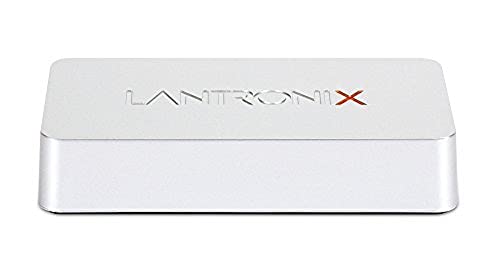
If your team prints from iPhones, iPads, Android phones, or Chromebooks — and in 2026, most teams do — the Lantronix xPrintServer Office Edition is the standout choice in this roundup. It adds native Apple AirPrint support and Google Cloud Print support to any existing networked printer, without requiring you to download or install a separate app on your devices. The zero-app requirement is a genuine differentiator: most competing solutions that claim mobile printing support actually require a companion app on each device, adding IT overhead and friction for end users.
The xPrintServer auto-discovers printers on your network and makes them immediately available to AirPrint and Cloud Print clients — the setup experience from unboxing to first mobile print job is faster than any other device on this list, assuming your network DHCP is working correctly. This makes it the right choice for offices where the IT person isn't always available to walk users through printer configuration. Lantronix built this device specifically to solve the mobile-to-legacy-printer problem, and the focused design intent shows in how polished the experience is.
The xPrintServer is the pick for any office where mobile device printing is a daily workflow requirement, not an occasional edge case. The price is higher than the wired-only alternatives on this list, but the time saved on mobile device printer configuration and the elimination of per-device app management justify the premium decisively for teams of five or more people printing from mobile regularly.
Pros:
Cons:
The D-Link DPR-1260 is the only device on this list that lets you share up to four printers or multifunction printers simultaneously on a single wireless network — making it the clear recommendation for small offices, home offices, schools, and other environments where multiple printers need to be centrally managed without running cable to each one. The wireless RangeBooster G radio extends connectivity to printers located away from your network closet or main networking hardware, solving a real physical infrastructure problem that single-port wired units simply can't address.
The scan support for multifunction printers is a significant capability that most print servers on this list don't offer — you can both print and scan wirelessly without booting up a host PC, which matters enormously in offices where the MFP doubles as the document scanner for the entire team. D-Link designed the DPR-1260 specifically with small business and education environments in mind, and the four-printer capacity reflects an understanding of how real shared printing environments actually work rather than the single-user assumption baked into most print servers.
Setup requires wireless security configuration and printer-by-printer driver installation on workstations, so the initial investment of time is higher than simpler single-port units. If you're managing several devices across a network and want a deeper understanding of signal and connectivity tools, our guide on best satellite finders covers adjacent diagnostic hardware worth knowing about. Once the DPR-1260 is configured, however, ongoing maintenance is minimal and the wireless range performance lives up to the RangeBooster branding.
Pros:
Cons:
The first decision you need to make is whether you want a wired or wireless print server, and the answer comes down to where your printer physically lives relative to your network infrastructure. Wired print servers — like the StarTech and IOGEAR units — are more stable, faster to configure, and immune to wireless interference, making them the right choice when you can run an Ethernet cable to the printer location. Wireless units — like the D-Link DPR-1260 and Hawking HWPS1UG — trade some configuration simplicity for physical placement flexibility, letting you position the printer wherever it makes most ergonomic sense rather than wherever Ethernet cabling terminates.
Most print servers on the market support a single USB printer, which is perfectly adequate for small offices with one shared device. If you're managing a multi-printer environment — a common scenario in schools, small businesses with dedicated color and monochrome printers, or legal offices with separate document printers — you need a multi-port unit like the D-Link DPR-1260, which supports up to four printers simultaneously. Buying four single-port print servers instead of one four-port unit costs more, takes up more outlets and desk space, and creates more separate devices to maintain and troubleshoot over time.
In 2026, a significant portion of print jobs originate from mobile devices — smartphones, tablets, and Chromebooks that don't run traditional desktop printer drivers. AirPrint (Apple's wireless printing protocol) and Google's mobile printing ecosystem are the two dominant standards, and not all print servers support either. If your team prints from iOS or Android devices regularly, you need a print server that explicitly supports these protocols — the Lantronix xPrintServer Office Edition is the strongest performer in this category. Units without mobile protocol support require desktop driver installation on each workstation, which is fine for traditional environments but a significant friction point in mobile-first offices.
Not every USB printer works with every print server, and this is where many buyers get tripped up. The critical question is whether your printer uses standard USB printing protocols or proprietary vendor-specific drivers that require bi-directional USB communication. Most single-function laser and inkjet printers use standard protocols and work reliably with any print server on this list. Multifunction printers — those that also scan, copy, or fax — often require proprietary drivers and full bi-directional communication, which simple wired print servers don't support. If you have an MFP, the D-Link DPR-1260 is specifically designed to handle them, while the StarTech and IOGEAR units explicitly warn against MFP use. According to the Wikipedia article on print servers, compatibility with multifunction devices remains one of the most common failure points in print server deployments.
A print server connects a USB printer to your network — either wired or wirelessly — so that multiple computers can send print jobs to it without needing a dedicated host PC to stay powered on. It manages print queues, receives jobs from client machines, and sends them to the printer in order. In 2026, modern print servers also handle mobile device printing via AirPrint or similar protocols, making them useful well beyond traditional desktop environments.
No — if your printer has built-in Wi-Fi and supports AirPrint or your OS's wireless printing stack natively, you don't need a separate print server. Print servers are primarily for older USB-only printers that lack any network connectivity, or for situations where you want centralized queue management across multiple printers on a managed network. If your printer already connects to your network directly, a print server adds unnecessary complexity.
It depends on the print server and the MFP. Basic single-port wired print servers — like the StarTech or IOGEAR units — explicitly do not support MFPs that require proprietary drivers or bi-directional USB communication. The D-Link DPR-1260 is specifically designed for multifunction printers and supports both printing and scanning wirelessly. Before purchasing, check your MFP's driver type and verify compatibility with the specific print server model you're considering.
The difficulty varies significantly by model. Plug-and-play units like the Lantronix xPrintServer auto-discover printers and require minimal configuration, making setup accessible to non-technical users. Configuration-heavy units like the StarTech require intermediate networking knowledge — you'll need to assign an IP address, configure an LPR queue, and install the driver on each workstation. Most print servers fall somewhere between these extremes, and all of them include documentation that covers the setup process step by step.
There's no hard limit on the number of computers that can connect to a print server — any machine on the same network that has the printer driver installed can send jobs to it. The practical limit is print throughput: if you have 30 users regularly sending large print jobs, even a good print server will create a noticeable queue. For high-volume environments, look for print servers with robust queue management features, or consider deploying multiple print servers across multiple printers to distribute the workload.
Several print servers on this list — including the IOGEAR GPSU21 and the Hawking HWPS1UG — explicitly support Internet printing, meaning you can send a print job to an office printer from a remote location over the Internet. This requires proper network configuration on your router (typically port forwarding), and you should enable appropriate security measures to prevent unauthorized access. For most small offices, VPN-based remote access to the local network is a more secure approach to remote printing than direct Internet exposure.
 |
 |
 |
 |

About Linea Lorenzo
Linea Lorenzo has spent over a decade testing home gadgets, cleaning products, and consumer electronics from his base in Sacramento, California. What started as a personal obsession with keeping his space clean and stocked with the right tools evolved into a full-time writing career covering the home products space. He has hands-on experience with hundreds of cleaning solutions, robotic and cordless vacuums, and everyday household gadgets — evaluating them for performance, value, and real-world usability rather than spec sheet appeal. At Linea, he covers home cleaning guides, general how-to tutorials, and practical product advice for everyday home care.
You can Get FREE Gifts. Furthermore, Free Items here. Disable Ad Blocker to receive them all.
Once done, hit anything below
|
|
|
|