
If you want your Dyson V15 running like it did the day you unboxed it, the BOTKK 10000mAh replacement battery delivers 90 minutes of continuous high-powered suction — the longest runtime of any third-party option we evaluated in 2026. Keeping a bagless vacuum at peak performance is less about the machine itself and more about the quality of the components inside it, and whether you need a high-capacity replacement battery, a fresh set of HEPA filters, or a complete brush-and-belt maintenance kit, the right part produces a tangible, immediate improvement every time you switch the machine on.
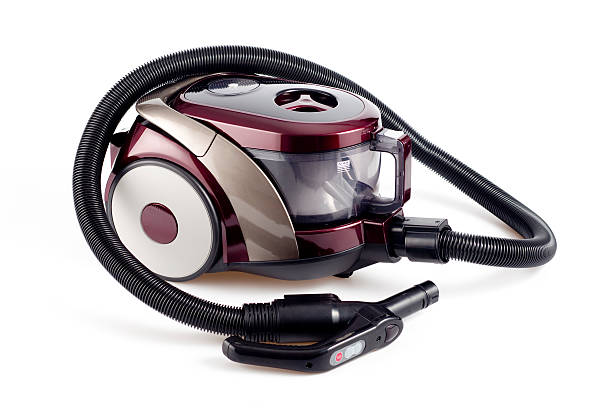
Bagless vacuums have been the dominant choice in the home cleaning category for over two decades, and it is easy to understand why — no replacement bags to buy, transparent dust cups that show you exactly when to empty, and cyclonic suction technology that increasingly rivals commercial-grade performance in a machine you can carry upstairs with one hand. According to Wikipedia's overview of vacuum cleaner history, cyclonic separation was popularized in the 1980s and has since become the dominant filtration design across premium household appliances worldwide. Today, whether you own a Dyson, Shark, Bissell, or Hoover, the longevity and effectiveness of your machine is largely determined by how consistently you maintain it — and that means replacing filters, batteries, and brush components before they degrade to the point of affecting performance rather than after.
In this guide, we have reviewed the top replacement parts, filter packs, and accessories for the most popular bagless vacuum brands available in 2026. You will find everything from high-capacity click-in batteries for Dyson V11 and V15 models to multi-pack HEPA filter sets for Shark Navigator and Bissell Crosswave machines, plus genuine OEM filter kits for Hoover WindTunnel uprights and a powered floor nozzle replacement for the Shark Rotator NV501. If you are shopping for a complete new machine rather than replacement components, our best cordless vacuum reviews cover the top units available at every price point right now. Read on for detailed product reviews, a practical buying guide, and answers to the most common maintenance questions.
Contents


The BOTKK V15 replacement battery stands out in a crowded aftermarket field because of its genuinely impressive 10,000mAh capacity, which translates to approximately 90 minutes of continuous runtime at standard power settings — a meaningful advantage if you manage a large home or multiple floors where stopping to recharge mid-clean disrupts your entire workflow. The click-in design is compatible with Dyson V11 and V15 series machines manufactured after 2020, covering the Detect, Detect Absolute, Detect Submarine, Outsize, and Torque Drive variants, so verifying your model number before purchasing is a straightforward exercise using the SV-series designation printed on the battery compartment. The 240AW power output matches what you would expect from a well-maintained OEM pack, ensuring you do not sacrifice suction performance in exchange for the extended capacity.
Build quality is solid for an aftermarket unit, and the included filters — two come in the box — add real value that justifies the price point compared to purchasing components individually across separate orders. The package positions itself as both a primary daily-driver replacement and a spare unit for uninterrupted cleaning across multi-story environments, and that dual-purpose framing holds up in practice because the capacity is high enough that most households will complete a full cleaning pass before needing a battery swap at all. One important caveat: this battery is not compatible with screw-in designs like the SV14, so checking that your model uses a click-in mechanism rather than a threaded connection is a necessary step before you commit to the purchase.
For pet owners and larger households in particular, the ability to run 90 minutes of deep-cleaning suction without interruption is a practical improvement over a worn OEM battery that has started dropping charge after 30 or 40 minutes. If your original Dyson battery has begun truncating cleaning sessions noticeably, this BOTKK replacement is a cost-effective long-term solution rather than the more drastic step of purchasing an entirely new machine at full retail in 2026.
Pros:
Cons:
If you own a Shark Navigator Lift Away and your machine has started losing suction or leaving a faint musty odor after cleaning, clogged or degraded filters are almost certainly the culprit, and this six-piece replacement set addresses the problem comprehensively in a single purchase. The package includes four foam filters, four ultra-thick felt filters, and two H13 HEPA filters — a combination that covers both the pre-motor and post-motor filtration stages that together determine how thoroughly your vacuum captures fine dust, allergens, and pet dander before exhausting air back into the room you just cleaned. The H13 HEPA rating means these filters capture 99.97% of airborne particles down to 0.3 microns, which is the standard that matters if anyone in your household deals with seasonal allergies, asthma, or sensitivity to pet dander.
Compatibility is the strongest practical selling point here, with an exceptionally broad list of supported Navigator models spanning NV350 through UV550 and the ZU503AMZ — effectively covering almost every Shark Navigator Lift Away variant produced over the past decade, which means you are unlikely to encounter a mismatch even with an older machine. The foam filters are constructed from FSC-Certified material with a 60 PPI density that balances filtration efficiency against adequate airflow resistance, so the motor is not working harder than necessary to pull air through a clogged medium. Filter replacement itself is a simple two-minute task: both the foam and felt layers slide into their respective housing slots without tools, and the HEPA cartridge snaps into the exhaust port at the rear of the machine.
Long-term cost savings are where this pack genuinely justifies its value, since buying replacement filters in bulk costs considerably less per unit than sourcing them from Shark's official retail channel, and having a ready supply means you can adhere to the recommended replacement schedule without a reorder interrupting your routine. Pair consistent filter maintenance with the advice in our best vacuums for human hair guide for a complete care routine that keeps your Shark performing at rated suction levels across all floor types.
Pros:
Cons:
Bissell's Cleanview Swivel Pet series earns consistent praise from households with pets because of its tangle-resistant brush roll and strong suction-to-price ratio, and this CauYien replacement kit extends the practical lifespan of your machine by bundling all the components most likely to wear out first under heavy use. The kit includes one brush roll, two drive belts, and four filters — a combination that covers the three most common maintenance failure points that cause Bissell uprights to lose performance before the motor itself shows any signs of wear. The brush roll uses high-quality bristles specifically configured to capture embedded pet hair from both carpet pile and hard floor surfaces, and the rubber drive belts are flexible and uniform enough to install without the snapping or over-stretching issues that make some third-party belts frustrating to work with.
Compatibility spans an extensive list of Bissell 2252, 2486, 2488, 2489, 2253, 2254, and 2258 series models, including the Cleanview Swivel, Cleanview Swivel Pet, and Crosswave variants that share the same motor-drive architecture despite their different naming conventions. The replacement brush roll part numbers 1604545 and 1611230 are explicitly called out, which makes cross-referencing your specific model straightforward before you place the order. Installation of the brush roll requires removing two screws and lifting a bottom plate cover — a five-minute task with a small Phillips head screwdriver — while belt replacement follows the standard wrap-and-guide method Bissell details in their own maintenance documentation.
For households managing heavy pet-hair accumulation across multiple floor types, having a complete spare kit on hand rather than ordering individual components as they fail means your machine is never out of service waiting on a single part to arrive. If you deal with deeply embedded pet hair in carpets specifically, our best carpet shampooers for pets covers dedicated wet-extraction machines that complement what even a well-maintained vacuum can accomplish on its own.
Pros:
Cons:
When aftermarket filter compatibility is a genuine concern — and for machines still under warranty or used in households with severe allergy management needs, it sometimes is — this genuine Hoover kit provides the assurance that comes with components manufactured to the exact tolerance specifications your machine was built around. The kit includes one washable primary filter (part number 303173001) and one HEPA exhaust cartridge (part number 303172002), covering both the pre-motor and post-motor filtration stages of Hoover's T-Series WindTunnel bagless uprights with the fit certainty only OEM parts can guarantee. Genuine parts matter here specifically because poor filter fit allows air bypass — unfiltered air that routes around a slightly undersized filter and exhausts directly back into the room, undermining the entire filtration effort entirely.
The washable 303173001 primary filter is designed to be rinsed clean with water and reused across multiple cleaning cycles, which means the upfront cost of the OEM kit is partially offset by the reusability factor over time rather than representing a purely one-time expense. The HEPA cartridge is a replace-rather-than-wash component, and Hoover's own recommendation is to swap it approximately every twelve months under normal household use conditions — though heavier use, larger homes, or pet-hair environments may warrant a shorter replacement interval to maintain peak WindTunnel suction performance. Together, these two filters working in proper sequence deliver the consistent airflow that Hoover's WindTunnel technology depends on to maintain suction across a full cleaning session.
The primary trade-off with OEM parts is cost per unit — you will pay more than you would for a third-party multi-pack, and the kit covers only two filters rather than the six or eight that budget aftermarket bundles often include. However, if your Hoover is still under manufacturer warranty, or if you have had previous experiences with aftermarket filters that fit loosely or degrade quickly, the guaranteed compatibility of genuine parts is a defensible premium for the long-term health of the machine.
Pros:
Cons:
A cracked housing or brush-worn floor nozzle is one of the most common reasons a Shark Rotator starts leaving visible debris behind rather than picking it up, and replacing the full powered nozzle assembly is often a significantly more cost-effective solution than purchasing a new machine when everything else on your NV501 is functioning correctly. This replacement nozzle comes in the white/red or white/blue color variant and includes integrated headlights — a feature that sounds minor but makes a genuine practical difference when you are cleaning under low-profile furniture, along dark baseboards, or in hallways where debris hides effectively against shadows. The brush roll receives its power from the main motor through the assembly's direct-drive connection, so you retain the same active agitation on carpet pile that makes the Rotator series effective on medium to deep-pile carpet.
Compatibility is specifically stated for the Shark NV501 Professional model, and it is worth emphasizing that Shark's Rotator lineup includes several similar-looking nozzle designs that are not interchangeable despite the visual resemblance, so confirming your exact model number before ordering is important rather than optional. Installation is designed to be tool-free: the floor nozzle snaps into place at the same connection point as the original assembly, and the entire swap typically completes in under sixty seconds once you have the new nozzle in hand and the old one released. The headlights operate on the same power circuit as the original nozzle, so there are no additional wiring steps or battery compartments involved in the installation process.
If your NV501's powered nozzle has developed a rattling brush roll, visible cracks in the hard plastic housing, or headlights that no longer illuminate, this assembly replaces all of those components simultaneously, restoring complete floor-cleaning performance across both hard surfaces and carpet at a fraction of what a new vacuum costs in 2026. Color variant availability can vary between white/red and white/blue depending on current stock, so confirm the listing matches your machine's colorway before finalizing the order if aesthetics matter to you.
Pros:
Cons:
Dyson Ball uprights are among the most durable bagless vacuums on the market, and a significant part of maintaining that durability is replacing the pre-motor and post-motor filters on schedule — a task that many owners neglect simply because clean filters are invisible while dirty ones produce no obvious warning sign until suction has already degraded measurably. This four-piece replacement pack, which includes two pre-motor filters and two post-motor filters, covers the full DC41, DC65, DC66, UP13, UP20, and UP30 Animal and Multi Floor range, with explicit part number callouts for 920769-01, 920769-03, and 920640-01 to simplify compatibility verification before purchase. The H13 HEPA-rated post-motor filters capture 99.97% of particles at 0.3 microns — the standard that matters if you are managing fine dust, pet dander, or pollen in a home shared with allergy-sensitive family members.
One of the most practical advantages of this particular set is that all four filters are washable and fully reusable across multiple cleaning cycles — you rinse them under cold water, allow them to air dry completely for at least 24 hours, and reinstall them rather than discarding after one use cycle as you would with a disposable alternative. That washable characteristic directly addresses the cost objection many buyers raise around Dyson filter maintenance: instead of purchasing new filters every few months, you wash the existing set and replace them only when visible degradation — tears, deformation, or permanent discoloration after washing — makes renewal necessary. Dyson's own guidance typically recommends full replacement every six to twelve months under regular household use, and having a spare set from this pack means you can install fresh filters immediately while the cleaned set air dries over the following 24 hours without any gap in your cleaning schedule.
One important limitation to be aware of: the pack explicitly excludes DC40 and DC50 models despite the visual similarity of those machines to the supported DC41 and DC65 series, so verifying your model number against the compatibility list before ordering prevents a return shipment that costs time and inconvenience. If you want to complement strong vacuum filtration with whole-room air quality management, our best air purifier for open floor plans covers the top-rated units designed to work alongside your cleaning routine rather than duplicating it.
Pros:
Cons:
While this guide focuses primarily on components for bagless machines, the Kenmore Elite 31150 replacement kit — pairing HEPA dust bags with an EF-9 HEPA exhaust filter — deserves attention from owners of this well-regarded bagged upright as a reminder that bagged vacuum technology remains genuinely competitive in 2026, particularly for allergen containment. The Kenmore Elite 31150 is a multi-surface, multi-floor upright designed for homes, dens, and kitchens with a wide sweeper path that covers more floor area per pass than most bagless competitors at the same price tier. It uses Type O replacement bags, and you should always confirm your specific model number against the bag compatibility specification before purchasing to avoid a mismatch, since Kenmore's extensive product line spans many years and configurations that share similar names.
The HEPA filtration in this kit operates at two separate stages: the HEPA dust bags capture the bulk of debris and a large fraction of fine particulates before they ever reach the motor, while the EF-9 HEPA exhaust filter captures anything that passes through the bag's media before air exits through the motor housing back into the room. This dual-stage approach produces measurably cleaner exhaust air than a single-filter design, which is a meaningful practical advantage in smaller rooms, hallways, and enclosed spaces where recirculated exhaust air affects the room environment noticeably during a cleaning session. The machine's multi-surface capability handles transitions between carpet, hardwood, and tile without requiring manual adjustment to the brush roll height setting.
For households where the mess of emptying a bagless dust cup — the fine particle cloud released when you open a full cup over a trash bin — is a genuine deterrent, HEPA dust bags contain all captured debris completely until the bag is sealed and removed with no secondary exposure. If you are deciding between bagged and bagless designs and want a comprehensive side-by-side comparison of the top-rated options in each category, our best bagged vacuum reviews covers the full landscape of current models across every budget range.
Pros:
Cons:
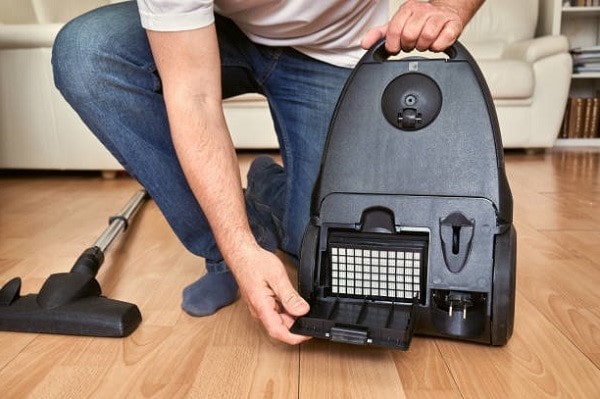
Not all HEPA filters are created equal, and the rating tier your replacement filter falls into determines how thoroughly it handles fine particles that standard filters allow to pass through. The H13 HEPA standard — which several products in this guide meet — captures 99.97% of particles at 0.3 microns, which is the size range where airborne allergens, mold spores, and fine pet dander concentrate. Lower-grade filters labeled simply as "HEPA-style" or "HEPA-like" offer meaningfully weaker filtration, often capturing only 85–95% of particles at that size range, which sounds close but represents a significant difference in actual allergen load over repeated cleaning sessions in a home where air quality matters. When you are shopping for replacement filters in 2026, look for explicit H13 or H14 certification rather than descriptive marketing language that gestures toward HEPA performance without committing to a specific standard.
Pre-motor and post-motor filters serve different purposes and should be replaced or cleaned on different schedules. Pre-motor filters protect the motor from fine debris that passes through the cyclonic separation stage, and they accumulate particulates quickly in high-use environments — washing these every one to three months under normal conditions maintains adequate airflow through the motor assembly. Post-motor or exhaust HEPA filters are the final barrier before cleaned air returns to the room, and they are typically the more critical of the two for air quality management because they capture anything the earlier filtration stages missed.
Purchasing the wrong filter or part for your specific vacuum model is the single most common frustration reported by buyers of aftermarket accessories, and it is almost always avoidable with thirty seconds of model-number verification before placing the order. Every vacuum manufactured in the past decade has a model number printed either on a label on the machine's underside or inside the dust cup housing, and cross-referencing that number against the compatibility list on the product listing is the only reliable method of confirming fit before purchase. Brand-family compatibility lists — a product claiming to fit "all Dyson V-series" or "most Shark Navigator models" — should be treated skeptically until you verify your specific model designation appears explicitly in the list, because motor-drive architectures and filter geometries vary significantly within a brand's own lineup across different production years.
Part number cross-referencing provides the highest confidence: when a product explicitly calls out OEM part numbers like 920769-01 for Dyson or XFF350/XHF350 for Shark, you can verify your machine's required part number from the original manual or the manufacturer's website and confirm a match with certainty rather than relying on general compatibility claims. Model verification is especially important for Dyson's lineup, where click-in and screw-in battery designs coexist across V-series machines that look externally identical and are often confused with each other.
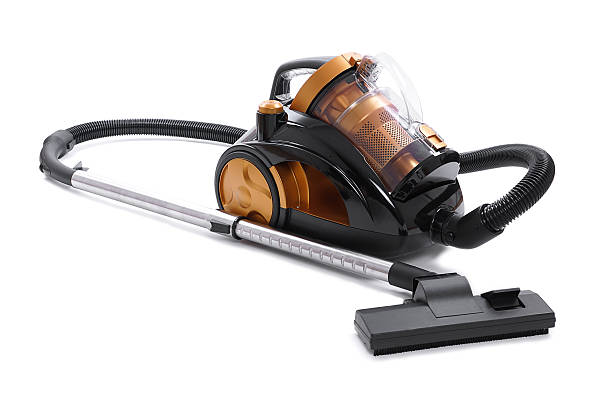
Genuine OEM replacement parts carry a fit guarantee and are manufactured to the exact tolerances the machine was designed around, but they typically cost two to four times more than comparable aftermarket alternatives and are often sold in smaller quantities per order. Aftermarket parts, when sourced from reputable manufacturers with explicit part number cross-referencing rather than vague "fits most" claims, perform well for the majority of households and offer meaningful cost savings over the ownership life of a machine that otherwise has many years of useful service remaining. The practical decision point is straightforward: if your machine is still under warranty, OEM parts are the safe choice because aftermarket components can void coverage depending on the manufacturer's terms, and the warranty itself has monetary value worth protecting during its active period.
Outside of warranty situations, aftermarket filters and accessories from brands that provide explicit compatibility data and include meaningful specifications — filter density ratings, material certifications, capacity in mAh for batteries — represent a reasonable alternative to OEM for routine maintenance like filter replacement cycles. Reserve OEM purchases for components where fit tolerance is critical, like replacement floor nozzle assemblies where a slight geometry mismatch produces performance degradation that a well-specified aftermarket filter simply does not create. The reviews in this guide attempt to draw that distinction clearly for each product category reviewed.
Replacement battery capacity for cordless vacuum models like the Dyson V11 and V15 series is measured in milliampere-hours (mAh), and this figure is the primary determinant of how long a single charge lasts under active cleaning conditions at a given power mode. A 10,000mAh replacement battery in the BOTKK unit delivers approximately 90 minutes at standard power — but runtime at max power mode will be considerably shorter, typically 15 to 25 minutes, because suction-boosting modes draw exponentially more current from the battery cells to achieve the higher airflow rate. When a manufacturer advertises a runtime figure, always check whether that figure refers to standard mode or max mode, as the gap between these two figures is large enough to make a material difference in how you plan large-home cleaning sessions.
Capacity degradation is unavoidable in any lithium-ion battery over a charging cycle lifespan, and the rate at which capacity decreases is influenced by storage temperature, charging habits, and whether the battery is regularly depleted fully before recharging. Storing a replacement battery at room temperature and avoiding full discharge cycles extends usable capacity retention over the first 300 to 500 charge cycles — a range that, at one full charge per day, represents roughly one to one and a half years of daily use before noticeable runtime reduction sets in. Keeping a second replacement battery on hand as a spare extends the practical life of your vacuum well beyond what a single-battery strategy allows.
Most manufacturers recommend replacing or thoroughly cleaning foam and felt filters every one to three months under regular use conditions, and replacing HEPA exhaust filters every six to twelve months depending on household dust levels and pet presence. In high-use environments — daily vacuuming, multiple pets, or anyone in the home with respiratory sensitivities — shortening those intervals by roughly one-third maintains the suction performance and air quality your machine was rated to deliver at purchase. A useful practical indicator that your filter cycle is overdue is a noticeable reduction in suction even after the dust cup is freshly emptied, since clogged filters are the most common cause of suction loss in machines where the motor remains healthy.
Aftermarket batteries from reputable manufacturers with explicit cell specifications and compatibility documentation are generally safe for use in Dyson V-series click-in models, and millions of households use them without incident every year. The key distinction to draw is between batteries from established aftermarket brands that publish their cell capacity, output wattage, and model compatibility lists with specific SV-series designations, versus unbranded batteries with vague compatibility claims and no technical specifications. Dyson's own position is that OEM batteries are recommended for optimal performance, which is a commercially motivated statement that should be weighed against the cost difference — a well-specified aftermarket battery with 10,000mAh capacity that explicitly matches your SV designation is a meaningfully different product from an unbranded generic unit.
H13 is a classification within the European HEPA standard that specifies a minimum particle capture efficiency of 99.97% for particles at 0.3 microns — the size range that includes fine dust, pollen, most pet dander, and a significant fraction of airborne mold spores. The H13 designation is the most commonly used clinical and residential standard for allergen-control applications, while H14 offers marginally higher efficiency (99.995%) at greater airflow resistance. Filters marketed as "HEPA-style," "HEPA-grade," or "HEPA-like" without a specific H-class designation do not meet the formal HEPA standard and typically capture only 85 to 99% of particles at 0.3 microns — a range that sounds high in percentage terms but represents a meaningful difference in absolute allergen load over the course of regular vacuuming in a home where air quality is a genuine health concern.
Many foam, felt, and even some HEPA pre-motor filters in bagless vacuums are washable and designed to be reused across multiple cleaning cycles — the key is to rinse them under cold water only, never use detergent or hot water, and allow them to air dry completely for a minimum of 24 hours before reinstalling them in the vacuum. Installing a damp filter causes two problems: it provides a growth medium for mold and bacteria inside the filter housing, and it risks water entering the motor assembly during operation, which can cause permanent motor damage. HEPA exhaust filters and motor protection foam rings are generally not washable even when the pre-motor filters in the same machine are, so reading the maintenance section of your specific model's manual before washing any filter is worth the two minutes it takes to confirm which components are designed for wet cleaning.
The most reliable method is locating your vacuum's full model number — printed on a label on the machine's underside, inside the dust cup, or on the back of the motor housing — and cross-referencing it against the explicit compatibility list on the product listing rather than relying on brand-level or series-level claims. When a replacement part lists specific OEM part numbers (such as XFF350 for Shark filters or 303173001 for Hoover), you can verify your machine requires that specific part number by checking the original manual or the manufacturer's parts lookup tool, providing certainty that is not available from general compatibility statements alone. For batteries specifically, confirm both the connector type (click-in versus screw-in) and the SV-series designation on your existing battery before purchasing any replacement to avoid the most common compatibility mismatch in the Dyson V-series lineup.
The repair-versus-replace calculation in 2026 generally favors repair when the cost of replacement parts falls below roughly 30 to 40 percent of the current retail price of a comparable new machine, and when the component being replaced is a wear item (battery, filter, brush roll, belt) rather than the motor, cyclonic separator, or main housing structure. A Dyson V15 that retails for $600 to $700 is a candidate for a $50 to $80 battery replacement many times over before the accumulated parts cost approaches new-machine territory — and the machine's suction performance with a fresh high-capacity battery and new filters often returns it to near-new operating condition. The exception is when multiple primary components fail simultaneously: replacing a motor assembly, a cracked housing, and a battery on the same machine at the same time shifts the economics significantly toward a new purchase.
The vacuum you already own — properly filtered, freshly batteried, and running a clean brush roll — will outperform a new budget machine every single time, and that is the most cost-effective upgrade available to you in 2026.
 |
 |
 |
 |

About Linea Lorenzo
Linea Lorenzo has spent over a decade testing home gadgets, cleaning products, and consumer electronics from his base in Sacramento, California. What started as a personal obsession with keeping his space clean and stocked with the right tools evolved into a full-time writing career covering the home products space. He has hands-on experience with hundreds of cleaning solutions, robotic and cordless vacuums, and everyday household gadgets — evaluating them for performance, value, and real-world usability rather than spec sheet appeal. At Linea, he covers home cleaning guides, general how-to tutorials, and practical product advice for everyday home care.
You can Get FREE Gifts. Furthermore, Free Items here. Disable Ad Blocker to receive them all.
Once done, hit anything below
|
|
|
|