
You're standing in the electrical aisle — or scrolling through Amazon at midnight — staring at a wall of plastic caps in every color of the rainbow, wondering which ones won't fail in your walls two years from now. It happens to every DIYer and electrician at some point. Wire nuts look simple, but choosing the wrong type for your application can mean loose connections, overheating, or worse.
In 2026, the market has more options than ever: traditional twist-on connectors, push-in lever nuts, waterproof caps for outdoor and irrigation work, and specialty connectors for aluminum wiring. This guide cuts through the noise. Whether you're wiring a new outlet, running landscape lighting, or tackling a whole-house renovation, the right electrical connector makes all the difference. Every product below has been evaluated on wire range, bite strength, insulation quality, and real-world reliability.
And while you're upgrading your electrical setup, it's worth pairing quality connectors with quality fixtures — check out our picks for the best LED dimmer switches with no flicker if you're updating your lighting circuits at the same time. Now, let's get into the picks.

Contents
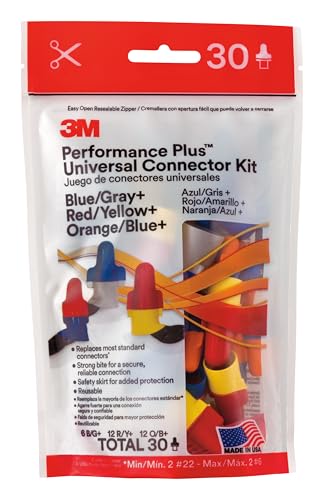



If you only buy one pack of wire nuts, make it this one. The 3M Performance Plus assortment gives you 30 connectors across three sizes — 6 Blue/Green, 12 Red/Yellow, and 12 Orange/Blue — covering the wire ranges you'll actually encounter on most residential and light commercial jobs. 3M's flexible spring is the standout feature here: it expands to accommodate a wider range of wire combinations than the spring in most budget connectors, which means you get a secure bite whether you're joining two 14 AWG wires or mixing gauges.
The twist-on installation is smooth and progressive. You feel the connection tighten with each turn, and the connector doesn't back off once seated. These are reusable, which matters if you're the type who wires something, changes your mind, and rewires it — the spring retains its tension across multiple cycles. The flame-retardant thermoplastic shell handles heat without cracking or warping, and the color coding aligns with the industry standard ranges, so you're not guessing which cap goes where.
For most homeowners and pros handling everyday branch-circuit work — outlets, switches, fixtures, junction boxes — this kit is all you need. It's not specialized for aluminum wiring or outdoor wet locations, but for everything else, it earns the top spot in 2026.
Pros:
Cons:
Aluminum wiring is a known hazard in homes built between the 1960s and early 1970s, and connecting copper conductors to it with a standard wire nut is a fire risk. The Ideal Twister Pro is one of the only connectors specifically engineered to solve this problem, and it does it right. The specially formulated, corrosion-resistant compound inside the cap penetrates oxidation on aluminum conductors — oxidation is what causes those connections to overheat and fail — and dramatically increases conductivity at the junction.
The compact, one-piece design features a ribbed cap, swept wings, and a hexagonal head that works with a standard nut driver. That hex head is a practical detail you'll appreciate when you're working overhead or in a tight junction box and need to apply consistent torque without your hand slipping. These come in a jar of 500, which tells you this product is built for electricians rewiring older homes where every junction needs the proper connector.
One thing to know upfront: the Twister Pro is a single-use connector. The anti-oxidant compound bonds to the conductors during installation, and removing and reinstalling the connector breaks that bond. Plan accordingly — once it's on, leave it on. According to Wikipedia's overview of aluminum wiring hazards, the connection interface is the critical failure point, and a properly rated connector with anti-oxidant compound is the accepted remediation method.
Pros:
Cons:
Wing-nut connectors are the workhorses of residential wiring, and IDEAL's 30-451P is the best version of that classic form factor you can buy in 2026. The contoured wings give you genuine grip — not just something to pinch between two fingers, but a real ergonomic surface that lets you apply serious torque by hand without a tool. That matters when you're wiring a panel or junction box and installing connector after connector.
The copolymer shell is the engineering highlight here. Unlike standard polypropylene caps, the copolymer material actually expands as you tighten, creating a smooth, progressive grip that distributes clamping force evenly across the wire bundle. The deep skirt design provides maximum dielectric protection, guarding against flash-over — the kind of arcing event that causes fires in junction boxes where wires are crammed together. The live-action spring inside accepts different wire shapes and sizes without pre-twisting, which speeds up installation considerably.
At 100 per bag, these are priced for contractors but practical for any serious DIYer. They're color-coded yellow for 22–10 AWG wire combinations, and the performance is consistent across that entire range. If you're also picking up new lighting while you work, our guide to the best smart LED light bulbs covers the fixtures you'll be connecting these to.
Pros:
Cons:
Standard wire nuts have no business being anywhere near irrigation systems, landscape lighting, or outdoor junction boxes that see rain and moisture. The King Innovation DryConn is built for exactly those environments, and it's the connector you reach for when a standard cap would fail within a season. The black and gray shell identifies this as the heavy-duty outdoor variant, rated for 600V on building wire and up to 1000V for signs and luminaries.
One-step installation is the DryConn's biggest practical advantage. You strip the wire ends, bring them together, and twist the cap on — the corrosion-proof compound inside seals around the conductors as you tighten. There's no separate gel, no secondary step, no tape. The sealed chamber keeps moisture out at the conductor junction, which is exactly where corrosion starts in outdoor connections. UL 486D listing confirms it meets the standard for sealed wire connectors used in wet locations.
This is the product for irrigation valve connections, deck lighting, low-voltage landscape wiring, and outdoor outlet extensions. If you're installing an outdoor fixture and you're using a standard wire nut, you're creating a maintenance problem for yourself. The DryConn eliminates it. Pack of 100 gives you enough to wire a full irrigation system or landscape lighting run with spares left over.
Pros:
Cons:
WAGO Lever-Nuts represent a fundamentally different approach to wire connections, and if you haven't used them yet, you're going to wonder why you ever struggled with twist-on connectors. The 221-413 is a 3-conductor version — you can splice three wires from the same junction with one connector, no tools needed beyond your wire stripper. Strip the insulation to the correct length, open the orange lever, insert the wire until it seats, and close the lever. Done. The connection is mechanical and reversible — open the lever and the wire comes out cleanly.
The transparent housing is a genuine differentiator. You can see exactly how far the wire has been inserted, confirming a proper connection before you close the junction box. With standard wire nuts, you're making a blind connection — you feel resistance and hope it's right. With WAGO, you see it. That visual confirmation matters on complex jobs where you're making dozens of connections and need confidence in every one.
The 221-413 handles 24 to 12 AWG and accepts solid, stranded, and flexible copper conductors in any combination — you can mix a solid 12 AWG with a stranded 14 AWG in the same connector with no issues. This is particularly useful when connecting modern LED drivers, smart switches, or dimmer modules where conductor types often vary. The spring clamp mechanism maintains consistent contact pressure regardless of temperature cycling, so the connection stays tight through seasons. Bag of 10 is the entry point, though professionals typically buy in larger quantities once they've committed to the platform.
Pros:
Cons:
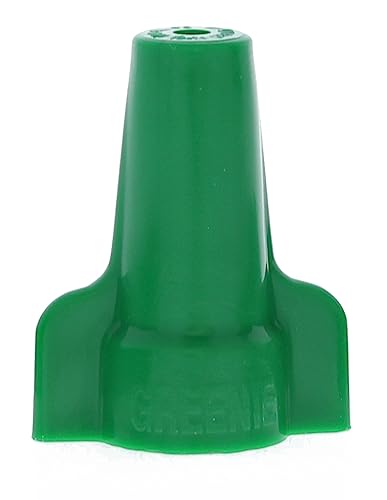
Grounding connections are not the place to cut corners. The Ideal Greenie is a dedicated grounding connector — the green color is not just aesthetic, it's the NEC-recognized identifier for equipment grounding conductors. Using a standard red or orange wire nut on a grounding pigtail technically works, but it creates inspection issues and introduces the possibility of confusion during future maintenance. The Greenie eliminates that ambiguity.
The live-action, square-wire spring is the performance core. Square wire springs provide more contact surface area against the conductors than round springs, which translates directly to lower resistance and a more reliable grounding path. A solid ground connection is the difference between a tripped breaker and a real hazard — the Greenie ensures that connection stays tight under vibration and thermal cycling. It's rated for #14 to #10 AWG copper conductors at 600V, covering the full range of residential branch circuit grounding applications.
The minimum range is two 14 AWG wires, maximum is four 12 AWG. That covers virtually every grounding pigtail scenario you'll encounter in residential work: receptacle grounding, fixture grounding, panel grounding, and subpanel grounding. At 100 per bag, the per-unit cost is low, and since every outlet, switch, and fixture needs a grounding connection, you'll use all of them. If you're measuring electrical loads on the circuits you're grounding, our guide to the best watt meters covers the testing tools to pair with this work.
Pros:
Cons:
Not everyone needs 500 wire nuts or a specialist pack. If you're a homeowner who occasionally swaps a fixture, adds an outlet, or troubleshoots a circuit, the Secmity 122-piece assortment gives you a complete range of sizes in a single purchase without committing to large quantities of any one size. The kit includes 55 grey, 35 blue, 14 orange, 10 yellow, and 8 red connectors — five sizes that collectively cover the most common AWG combinations in residential wiring.
The flame-retardant material is the key safety specification here. Budget wire nuts sometimes use lower-grade plastics that crack under heat or become brittle over time. The Secmity connectors are rated for continuous service from -40°F to 221°F, which means they handle the temperature ranges inside walls, attics, and junction boxes without degrading. The reinforced casing resists crushing during installation, and the reusable design maintains torque integrity for 50-plus cycles — more than enough for any reasonable DIY use case.
Installation is the standard three-step process: strip the wire ends, twist the conductors together, and secure with the connector. No tools, no soldering, no electrical tape required. The color-coded assortment makes it easy to grab the right size at a glance. For a homeowner's toolbox, this kit represents good value — you get every size you're likely to need, the quality is sufficient for residential applications, and the price stays reasonable. It's not a contractor-grade product, but that's not what it's trying to be.
Pros:
Cons:
Every wire nut has a rated wire range printed on the package or embossed on the shell — and that range matters. Using a connector that's too small for your wire bundle creates an incomplete connection; using one that's too large means the spring never fully bites. Most manufacturers color-code by size, though the exact color-to-range mapping varies between brands. Before you buy, identify the AWG sizes of the conductors you'll be joining and the number of wires in each bundle. A junction box with three 12 AWG wires under one connector needs a different cap than a two-conductor 14 AWG splice. When in doubt, the wire range is always stamped on the connector — check it every time.
Standard twist-on wire nuts are rated for dry indoor use. The moment you're working in an outdoor junction box, connecting irrigation valve solenoids, wiring landscape lighting, or running cable through a damp crawl space, you need a waterproof connector rated for wet locations. Look for UL 486D listing, which is the specific standard for sealed wire connectors. Products like the DryConn include an anti-corrosion compound that seals the connection at the conductor level. Do not use standard wire nuts outdoors and cover them with electrical tape — that is not an acceptable substitute for a properly rated waterproof connector.
If your home was built between 1965 and 1973, there's a real possibility it has aluminum branch circuit wiring. Aluminum oxidizes at connection points, increasing resistance and generating heat — which is exactly the failure mechanism behind aluminum wiring fires. You cannot safely connect copper conductors to aluminum branch wiring using standard wire nuts. The only acceptable solution is a connector specifically rated and formulated for copper-to-aluminum connections, like the Ideal Twister Pro reviewed above. Check your panel: aluminum wiring is typically labeled "AL" on the conductors or the breakers themselves. If you have it, use the right connector — it's not optional.
Traditional twist-on wire nuts are generally reusable, but the spring does experience some wear with each removal and reinstallation. If you're wiring something permanent — a junction box inside a wall, a fixture, a panel connection — reusability doesn't matter much. But if you're doing prototyping, staging wiring for a renovation, or working in an environment where you'll need to disconnect and reconnect, consider lever-style connectors like the WAGO 221-413. They release cleanly every time with no degradation in clamping force, which makes them ideal for situations where the connection needs to be revisited. The per-unit cost is higher, but the convenience and reliability over multiple connection cycles justifies it for the right applications.
Wire nuts are safe for copper-to-copper connections in dry indoor locations when you use the correctly sized connector for your wire gauge and bundle count. They are not safe for aluminum-to-copper connections without a specialty anti-oxidant connector, and standard wire nuts are not rated for wet or outdoor locations. Always check the manufacturer's rated wire range and the location rating before selecting a connector.
Wire nut colors indicate the connector's rated wire range — the range of AWG sizes and wire counts the spring can reliably grip. The color coding is not perfectly standardized across all manufacturers, but there are common conventions: yellow and gray for small gauges (22–14 AWG, small bundles), red and orange for medium (18–12 AWG), and blue or tan for larger combinations. Always read the specific wire range printed on the package rather than relying on color alone, especially when mixing brands.
Most standard twist-on wire nuts are reusable for a limited number of cycles — typically 5 to 20 times for consumer-grade products, and up to 50-plus cycles for premium connectors with robust springs. The spring is the wear component: each removal and reinstallation compresses and releases it slightly. For high-reuse applications, lever-style connectors like WAGO Lever-Nuts are a better choice since they maintain consistent clamping force through hundreds of connection cycles. Some specialty connectors, like the Ideal Twister Pro for aluminum wiring, are single-use only.
It depends on the connector. Traditional twist-on wire nuts typically perform better when wires are pre-twisted together — this ensures the conductors are aligned before the spring engages. However, many modern connectors, including the IDEAL 30-451P reviewed here, feature live-action springs that accept untwisted wires directly, aligning them during tightening. Check the manufacturer's instructions for the specific product you're using. Pre-twisting is never harmful, but it adds time; the right connector design eliminates the need for it.
The maximum wire count depends on the specific connector's rated wire range, which is always published by the manufacturer. Most residential wire nuts handle 2 to 4 conductors depending on the AWG. As a general rule: more wires require a larger connector size. Never exceed the maximum wire count or combine wire gauges outside the connector's rated range — an oversized bundle won't compress properly in the spring, and the connection can work loose over time. The 3-conductor WAGO Lever-Nut, for example, is specifically designed and rated for exactly 3 conductors.
Wire nuts use a coiled spring that grips conductors through rotational force — you twist the cap onto the wire bundle. Push-in connectors, like WAGO Lever-Nuts, use a spring clamp mechanism where the wire is inserted straight in and clamped by a lever or automatic spring. Push-in connectors are faster to install, accept mixed conductor types (solid and stranded), and are fully reusable in lever designs. Wire nuts are more familiar, lower cost per unit, and adequate for most permanent connections. Both types are code-compliant and UL listed when used within their rated parameters.
 |
 |
 |
 |

About Linea Lorenzo
Linea Lorenzo has spent over a decade testing home gadgets, cleaning products, and consumer electronics from his base in Sacramento, California. What started as a personal obsession with keeping his space clean and stocked with the right tools evolved into a full-time writing career covering the home products space. He has hands-on experience with hundreds of cleaning solutions, robotic and cordless vacuums, and everyday household gadgets — evaluating them for performance, value, and real-world usability rather than spec sheet appeal. At Linea, he covers home cleaning guides, general how-to tutorials, and practical product advice for everyday home care.
You can Get FREE Gifts. Furthermore, Free Items here. Disable Ad Blocker to receive them all.
Once done, hit anything below
|
|
|
|