
Here's a hard truth: algae can turn a crystal-clear pool into a green swamp in as little as 24 hours when conditions are right. Warm temperatures, sunlight, and even a brief lapse in chemical balance can trigger a bloom that coats your walls, floors, and steps in stubborn green, black, or yellow slime. Scrubbing it out by hand is exhausting — and often ineffective on its own. That's where the right pool vacuum makes all the difference.
Not every pool vacuum is built to handle algae. Algae clings to surfaces with surprising tenacity, so you need a machine with active scrubbing brushes, strong suction, and the coverage to reach every corner of your pool. A basic handheld vac might handle light debris, but a serious algae problem demands a more capable tool. In 2026, there are more options than ever — from Wi-Fi-connected robotic cleaners to simple plug-and-play units for above-ground pools.

In this guide, we've reviewed seven of the best pool vacuums for algae across different pool types and budgets. Whether you own a large in-ground pool or a compact above-ground setup, there's a pick here for you. We'll also walk you through the key things to look for so you can make the right call — no guesswork needed. For more on cleaning tools and techniques, check out the rest of our coverage. And if you've ever dealt with a vacuum that smells after heavy use, you might also find our guide on how to remove odor from a vacuum cleaner handy once your pool vac has done its dirty work.
Contents


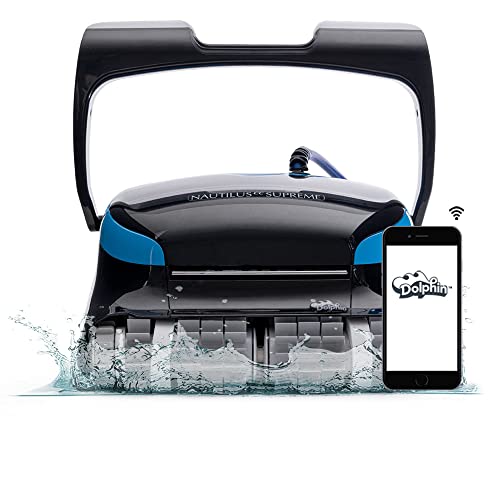


If algae is your main enemy, the Dolphin Nautilus CC Plus is one of the most capable tools you can own. It features an active scrubbing brush that physically agitates algae off pool walls and floors — not just suction, but actual mechanical scrubbing. That dual-action approach is exactly what you need when algae grips a surface. The robot climbs walls efficiently, covering vertical surfaces that hand vacuums often miss entirely. For in-ground pools up to 40 feet, it maps and navigates the entire pool systematically, so nothing gets skipped.
The Wi-Fi connectivity sets it apart from cheaper models. You can schedule cleanings from your phone, so the robot runs while you're at work and the pool is ready before you get home. The top-load filter basket is genuinely easy to empty — lift, rinse, replace. It won't clog during a heavy algae clean the way smaller filters sometimes do. One thing to note: this is a 2-hour cleaning cycle robot, so plan around that. It's not a quick spot-cleaner. But for a thorough, whole-pool algae job, it's hard to beat at this price point.
Build quality is solid. Dolphin has been refining this line for years, and the CC Plus reflects that maturity. The brushes are designed to handle different surface types — concrete, vinyl liner, fiberglass — without scratching. If you're dealing with recurring algae problems and want a set-it-and-forget-it solution, this should be near the top of your list in 2026.
Pros:
Cons:
The Dolphin Nautilus CC Supreme is the upgraded sibling of the CC Plus, and it earns its premium price tag with a few meaningful upgrades. The most important for algae control: it adds dedicated waterline scrubbing, which targets the stubborn ring of algae and grime that builds up at the waterline where pool walls meet the surface. That's notoriously hard to clean and easy to overlook with most robots. The Supreme handles it automatically.
Coverage extends to in-ground pools up to 50 feet — larger than the CC Plus — which makes this a strong choice if you have an especially long or irregularly shaped pool. The dual-drive system (two independently controlled motors) allows the robot to navigate more precisely around obstacles and tight corners. Active scrubbing brushes cover the floor, walls, and waterline in a single cycle, which means comprehensive algae removal without multiple passes.
The Wi-Fi scheduling and top-load filter basket are the same as the CC Plus, which is a good thing — those features work well. Where the Supreme really shines is in completeness: if algae is growing at the waterline in addition to the floor and walls, this robot handles all three zones without any manual intervention. That said, if your pool is under 40 feet and you don't have a waterline algae problem, the CC Plus will likely serve you just as well for less money.
Pros:
Cons:
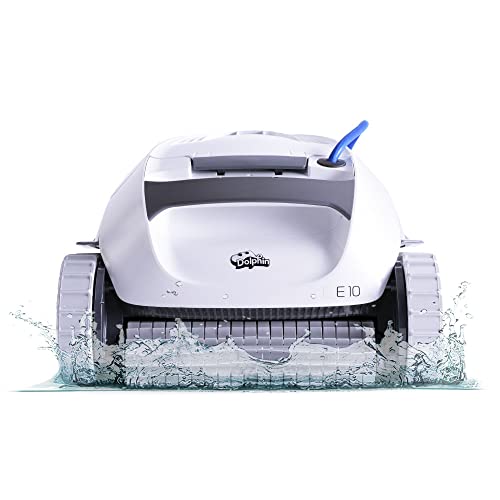
The Dolphin E10 is Dolphin's entry-level robotic pool cleaner, and it punches above its weight when it comes to algae on pool floors. The active scrubbing brush — the same core feature found on the pricier models — physically dislodges algae from the floor surface rather than just vacuuming it up passively. For flat-bottom pools where algae settles on the floor, the E10 is remarkably effective for what you pay.
The plug-and-play design is one of its strongest selling points. Drop it in the pool, plug it in, and it runs for about 1.5 hours. No complicated setup, no hoses to connect. The top-load filter basket makes cleanup straightforward — lift it out, rinse under a hose, and you're done. Where the E10 falls short compared to its siblings is wall climbing. It doesn't climb walls the way the CC Plus or Supreme do, so algae on vertical surfaces will require a separate manual scrub or a different robot.
If your pool has algae primarily on the floor and you want a capable, affordable robotic option that doesn't require Wi-Fi or app setup, the E10 is a smart pick for 2026. It's also a great first robotic cleaner if you're new to this type of pool maintenance. Just know its limits: floor-focused, not a wall climber.
Pros:
Cons:
The Hayward TigerShark QC brings something the Dolphin models don't: a dedicated Quick Clean mode that cleans your pool in just 90 minutes. When algae has taken hold and you need the pool cleared before a weekend gathering, that speed matters. It also offers a full 4-hour deep cleaning cycle for more thorough sessions. The on-board pump is its own self-contained system — it doesn't depend on your pool's filtration system, so it works independently and consistently.
Coverage reaches pools up to 20 x 40 feet, which covers most standard in-ground pool sizes. The 24-volt motor is energy-efficient, which means you can run it more frequently without worrying much about electricity costs — particularly useful if you're running maintenance cycles to prevent algae from returning after treatment. The TigerShark navigates systematically across the pool floor and can handle different surface textures without issue.
On the downside, the TigerShark doesn't have Wi-Fi connectivity or app control, and its wall-climbing ability isn't as aggressive as the CC Plus. If algae is concentrated mostly on the floor and you value speed of cleaning over smart scheduling, this Hayward unit is a strong competitor. It's also a well-known brand with established service support, which counts for something when you're investing in a piece of pool equipment.
Pros:
Cons:
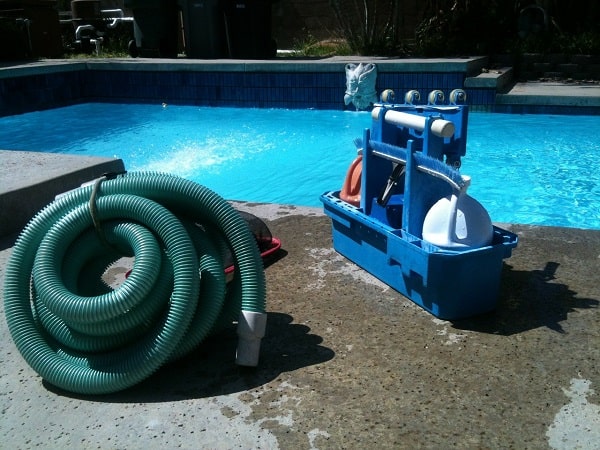
The Zodiac MX8 takes a different approach from the robotic models above. It's a suction-side cleaner — meaning it connects to your existing pool pump and uses that flow to power itself around the pool. Dual cyclonic suction gives it more vacuum power than most suction cleaners, pulling algae, debris, and sediment into your pool's existing filtration system. That's actually an advantage for algae cleanup: the debris goes straight into your pool filter rather than a separate on-board basket, keeping the water continuously filtered during cleaning.
The X-Trax traction system handles all in-ground pool surfaces — tile, concrete, vinyl — and a 39-foot hose provides solid coverage for standard pool sizes. The wider cleaning path means fewer passes needed to cover the same area, which translates to more efficient cleaning. Setup is straightforward if you've used a suction cleaner before: attach the hose to your skimmer or dedicated suction port and let it go.
The trade-off with suction-side cleaners is that their performance depends on your pool pump. If your pump is older or under-powered, the MX8 won't perform as well. It also doesn't have the active scrubbing brushes of the Dolphin robots — it relies more on suction than physical agitation, so it's better for loose algae and debris than for heavily crusted algae that needs scrubbing. That said, at its price point, it delivers genuinely strong suction-side performance and is one of the better options in its category for algae control.
Pros:
Cons:
Not everyone has an in-ground pool, and the Intex 28001E is designed specifically for above-ground pools — a market segment that most of the robotic options don't serve well. It uses pressure-side cleaning (water pressure from your filter pump propels it and blows debris into its internal net), and a small brush underneath sweeps algae and sediment into the debris net as it moves across the pool floor. It's compact, lightweight, and genuinely easy to use.
Setup requires a filter pump with a flow rate between 1,600 and 3,500 GPH (gallons per hour — the volume of water your pump moves per hour). Your pump connects via the included 24-foot hose using a standard 1.5-inch fitting. It's not a complicated installation. The debris net collects algae and sediment internally, so your pool filter isn't burdened with all the debris load — you just empty the net after cleaning.
The limitations are clear: it's floor-only and works only on Intex above-ground pools with the right fitting size. It won't climb the pool walls, and it's not going to tackle heavy algae buildup the way a robotic scrubber would. But for routine maintenance in an above-ground pool — keeping floor algae from accumulating in the first place — it's a practical, affordable, and reliable option. If you own an Intex pool and need an automatic helper, this is the one to get.
Pros:
Cons:
Every pool owner eventually faces a situation where they need to spot-clean — a patch of algae in the corner, debris that settled in the steps, sediment along the side wall. The POOL BLASTER Max is built for exactly that. This cordless, hoseless handheld vacuum lets you target specific areas in seconds without setting up a full robotic unit or connecting any hoses. It runs on a rechargeable battery and uses the Water Tech P30 motor for strong suction.
The design is intentionally flexible: it works in both in-ground and above-ground pools, and you can use it for whole-pool cleaning on smaller pools or strictly for spot-cleaning in larger ones. For algae, the practical use case is after you've shocked your pool and brushed the walls — the dead algae settles to the floor, and you want to vacuum it out quickly before your filter has to process all of it. The POOL BLASTER Max handles that job efficiently. Minimum operating depth is 14.25 inches at a 45-degree angle, so it works in shallow sections too.
It's not a replacement for an automatic cleaner in a large pool — battery life limits how long you can run it continuously, and there's no auto-navigation. But as a complement to a robotic cleaner, or as a standalone tool for smaller pools, it earns its place. It's also worth noting that Water Tech is a USA-based company with over 20 years in cordless pool vacs, and the one-year warranty is backed by USA-based customer service. If you're dealing with post-algae-treatment cleanup and want a fast, no-fuss tool, this delivers. For more tips on keeping your pool cleaning gear in shape, check out our guide on how to clean a vacuum cleaner — many of the same principles apply to pool vacs.
Pros:
Cons:
Picking the right vacuum for algae comes down to understanding a few key factors. Not every pool vacuum is equally effective at dealing with algae — the design, suction type, and brush configuration all matter. Here's what to pay attention to before you buy.
This is the most important distinction for algae removal. Algae doesn't just sit loosely on the surface — it grips pool surfaces like a biofilm (a thin layer of living organisms that sticks stubbornly to surfaces). A vacuum that only provides suction will move algae around without fully collecting it, especially on textured surfaces like concrete or tile grout. You want a cleaner with an active scrubbing brush that physically agitates and dislodges the algae before the suction pulls it in. All three Dolphin models in this guide and the TigerShark QC have active scrubbing brushes. The Zodiac MX8 is suction-focused, which is fine for loose debris but less effective on stuck algae.
Most robotic and suction-side cleaners are built for in-ground pools. They assume a certain pool depth, hard surface construction (concrete, plaster, fiberglass), and a pool pump setup. Above-ground pools — typically soft-sided or metal-framed — need a different kind of cleaner. The Intex 28001E is the only pick in this list specifically rated for above-ground pools. The POOL BLASTER Max is the only one in this guide that explicitly works well in both types. If you own an above-ground pool, pay close attention to compatibility before purchasing.
Pool vacuums are rated for specific pool sizes. Buying a vacuum that's undersized for your pool means it won't complete full coverage in a single cycle — or it may struggle to navigate a longer pool effectively. Here's a quick reference:
If you have a large or irregularly shaped pool, size up rather than down. Running a cleaner in a pool that's too big for it means incomplete coverage and more algae left behind.
Understanding the four main types helps you match the right tool to your situation. Robotic cleaners (Dolphin CC Plus, CC Supreme, E10, Hayward TigerShark) have their own motors and filters — they work independently of your pool's pump and are generally the most effective for algae. Suction-side cleaners (Zodiac MX8) attach to your skimmer or dedicated suction line and use your pool pump's flow to move and collect debris — effective but dependent on pump performance. Pressure-side cleaners (Intex 28001E) use water pressure from your pump to propel the unit and blow debris into an internal bag or net. Handheld cordless vacuums (POOL BLASTER Max) give you manual control and are best for spot-cleaning. According to the CDC's guidelines on healthy swimming, maintaining proper pool chemistry is the first line of defense — but vacuuming is essential for removing the organic material algae leaves behind.
Algae cleanup is a dirty job. After a bloom, your vacuum's filter is going to collect a significant amount of organic debris. You want a filter that's easy to remove, rinse, and reinstall — and ideally one with enough capacity to handle a heavy algae load without clogging mid-cycle. Top-load filter baskets (found on the Dolphin CC Plus, CC Supreme, and E10) are especially user-friendly. If you're doing a full algae remediation, plan to rinse the filter halfway through and again after the cycle completes. Also keep in mind that regular maintenance of your pool equipment extends its life significantly — our guide on how to spring clean covers seasonal maintenance routines that apply to pool gear as well.
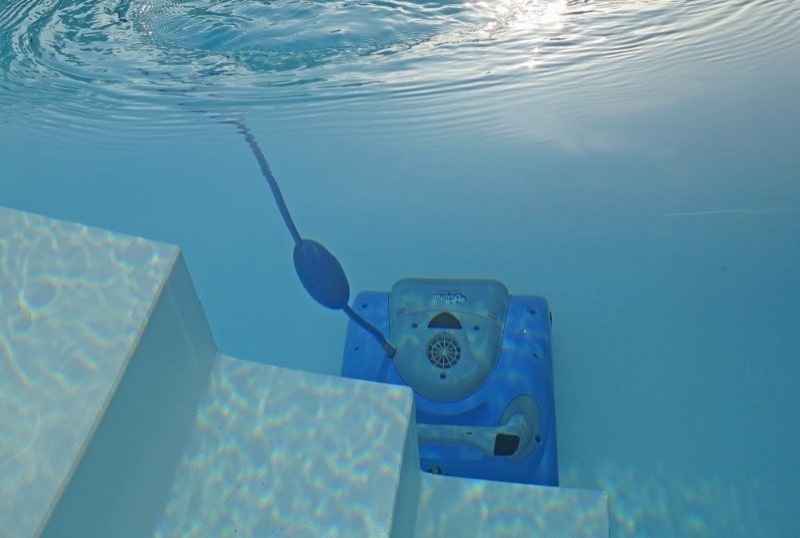
A pool vacuum is a critical part of algae removal, but it usually works best as part of a complete process. The typical approach in 2026 is to brush the algae off pool surfaces first, then shock the pool with chlorine to kill the algae, then vacuum up the dead algae once it settles. A vacuum with an active scrubbing brush can combine the brushing and vacuuming steps, but you'll still need to treat the water chemically to prevent regrowth. Vacuuming alone won't kill living algae — it removes it mechanically, which is still a necessary step.
When vacuuming a heavy algae bloom, many pool professionals recommend vacuuming "to waste" — bypassing your filter and sending the algae-laden water directly out of your pool system. This prevents clogging your filter with a massive amount of organic debris all at once. Robotic cleaners with their own internal filters handle this differently — the debris goes into the robot's filter basket, not your pool's system, so this isn't a concern. If you're using a suction-side cleaner connected to your pool's filter, vacuuming to waste is often the smarter move for heavy algae.
Black algae is considered the most difficult type to remove. Unlike green algae (which floats and settles loosely) or yellow/mustard algae (which brushes off relatively easily), black algae grows deep roots into porous pool surfaces like concrete and plaster. It has a protective outer layer that resists chlorine. You need aggressive brushing with a stainless steel brush before vacuuming, and even then, multiple treatments may be needed. A vacuum with a strong scrubbing brush helps, but black algae often requires a targeted chemical treatment combined with thorough mechanical brushing before vacuuming will be effective.
For algae prevention, running an automatic pool cleaner two to three times per week is a common recommendation during the swim season, especially in warm climates where algae growth accelerates. In peak summer heat, some pool owners run their robotic cleaners daily. Regular vacuuming removes organic material (dead leaves, dirt, sunscreen residue) that algae feeds on — so it's as much a preventive measure as a reactive one. During winter or when the pool isn't in use, monthly cleaning is typically sufficient.
For algae specifically, robotic cleaners generally have the edge. The main reasons: they have active scrubbing brushes that mechanically agitate algae off surfaces (suction cleaners typically don't), they operate independently from your pool's pump and filtration (so you're not stressing your filter during a heavy algae cleanup), and they often have better navigation to ensure full pool coverage. Suction-side cleaners like the Zodiac MX8 are excellent for routine debris and can help with loose algae, but for a serious algae outbreak, a robotic cleaner with scrubbing brushes is the more effective tool.
You should generally wait until the chlorine levels return to a safe range (typically below 5 ppm — parts per million, the unit used to measure chemical concentration in pool water) before running a robotic cleaner. High chlorine concentrations can degrade rubber seals and plastic components in your cleaner over time. Most pool owners shock in the evening, let the pump run overnight, then test the water and run the cleaner the next morning once levels have dropped. The handheld POOL BLASTER Max with its simpler construction is often more tolerant of higher chlorine levels for brief spot-clean sessions, but the same caution applies.
 |
 |
 |
 |

About Liz Gonzales
Liz Gonzales grew up surrounded by art and design in a New York suburb, with both parents teaching studio arts at the State University of New York. That environment sharpened her eye for aesthetics and spatial detail — skills she now applies to evaluating home products where form and function both matter. She has spent the past several years writing about lighting, home decor accessories, and outdoor living gear, with a particular focus on how products perform in real residential settings rather than showrooms. At Linea, she covers lighting fixtures and bulb reviews, outdoor and patio gear, and general home product comparisons.
You can Get FREE Gifts. Furthermore, Free Items here. Disable Ad Blocker to receive them all.
Once done, hit anything below
|
|
|
|