
Picture this: a mechanic is crouched under a dashboard at 9 PM, squinting into a tangle of wiring harnesses, one hand holding a ratchet and the other desperately seeking a light source that doesn't roll off the seat or need two hands to operate. A penlight is the obvious answer — slim, pocketable, and ready in seconds. But with dozens of options flooding the market in 2026, picking the right one takes more than grabbing whatever's on the shelf at the auto parts store.
The best penlight for mechanics balances brightness, beam quality, durability, and runtime. A shop environment is punishing — tools get dropped, workspaces get greasy, and lighting conditions range from harsh fluorescents to pitch-black engine bays. The wrong penlight fails when it matters most. The right one becomes an everyday carry that mechanics reach for without thinking. For a broader look at what the lighting category has to offer, there are excellent options beyond penlights worth exploring — but for close-up inspection work, nothing beats a well-made pen-format light.
This guide covers seven of the strongest performers on Amazon right now, tested and evaluated against the demands of real shop work. Each pick is ranked by how well it handles the specific conditions mechanics face daily. Understanding how bright a lumen really is helps put the specs below in context — because raw numbers don't always tell the whole story.
Contents





Streamlight has built a reputation over decades of outfitting law enforcement, medical staff, and industrial technicians — and the Stylus Pro USB earns its spot at the top of this list without argument. At 350 lumens on high mode, it punches far above the typical penlight class, delivering enough output to properly illuminate recessed areas inside an engine bay, under a dashboard, or inside a wheel well. The beam is steady and consistent, with no hot spots or color shift that would make detailed inspection work frustrating.
Runtime is one of the most practical features here. The high mode runs for 1.5 hours, which covers most shop shifts without interruption, and the low mode stretches to 3.5 hours for situations where extended runtime matters more than peak brightness. Charging via micro-USB takes around 2.5 hours, and the included cable means mechanics aren't hunting for a proprietary charger. The body is ultra-slim and lightweight, slipping easily into a shirt pocket or the pen loop of a tool pouch without adding bulk. Build quality is exactly what's expected from Streamlight — solid, no-flex construction that survives drops and pocket abuse equally well.
One insider observation worth noting: the USB rechargeable format eliminates the ongoing cost and hassle of AAA batteries, which matters for mechanics who use a penlight daily. This is the benchmark other penlights are measured against in 2026, and for good reason. The price point sits in the mid-range, making it accessible without feeling like a compromise.
Pros:
Cons:
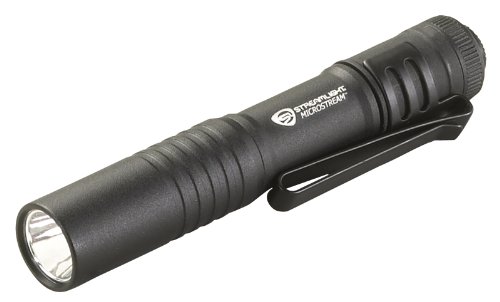
The MicroStream is the version of this list that every mechanic wants in their toolbox as a backup — or as their primary carry if the budget is tight. At 45 lumens, it's not a powerhouse, but it's more than adequate for close-up inspection tasks: reading torque specs on a label, checking fluid levels, or illuminating a fuse box. The beam is clean and focused, which matters more for precision inspection work than raw output.
Construction is where this light truly earns its keep. Type II MIL-SPEC anodized aircraft aluminum (a standard for abrasion and corrosion resistance used by the military) makes the body genuinely tough. The polycarbonate lens is rated scratch-resistant and unbreakable under normal use — important when a light lives in a tool bag next to metal objects. A single AAA alkaline battery powers the MicroStream, so there's no charging downtime. Replacement batteries are available anywhere, which matters when a light dies in the middle of a job. For mechanics who prefer not to rely on rechargeable devices, this is the sensible alternative.
The ultra-compact size fits in a shirt pocket without any noticeable weight. It's the penlight that disappears until it's needed, then performs reliably every time. For shops that issue penlights to multiple technicians, the MicroStream's price point makes equipping a whole team practical. If battery costs are a concern, checking out a guide to the best AAAA batteries (a different but related format) gives useful context on battery quality and longevity.
Pros:
Cons:
The NEBO Slim+ occupies a unique spot in the penlight market because of how aggressively it commits to the slim form factor. For mechanics who work in tight spaces — hands deep inside a dashboard cluster, reaching behind an HVAC unit, threading wiring through a firewall — the thinner the light, the better. The Slim+ delivers on that premise without sacrificing a useful output level. The magnetic tail cap is a feature that becomes indispensable fast: stick the light to a metal surface and both hands are free to work.
The body sits comfortably in the hand despite its slender profile, and the clip is functional without adding bulk. Brightness output is respectable for the size class, and the light mode options — typically a high and low setting — cover the range from fine inspection work to general illumination. NEBO has refined their penlight lineup over several years, and the Slim+ reflects that accumulated design intelligence.
The magnetic base is the defining feature that separates this light from competitors in the same size bracket. Most mechanics who try it don't want to go back to non-magnetic lights afterward. For shop environments filled with metal surfaces — engine blocks, door frames, transmission housings — having a light that sticks exactly where it's needed changes the workflow. This is the pick for mechanics who prioritize versatility and hands-free convenience over maximum lumen output.
Pros:
Cons:
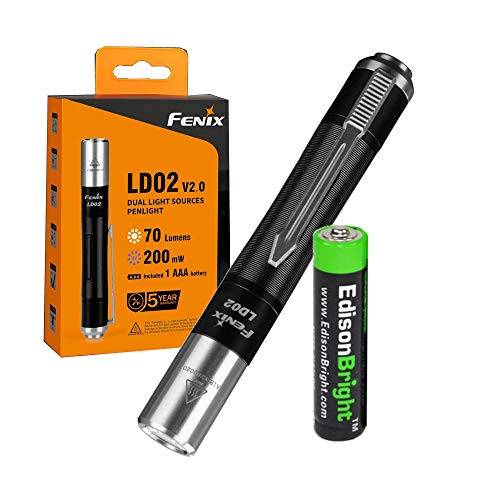
The Fenix LD02 V2.0 bundled by EdisonBright is the specialist pick on this list — and it earns that designation through a dual-output design that no other penlight here can match. The combination of 70 lumens of neutral white LED and a dedicated UV (ultraviolet) LED makes this light genuinely useful for detecting fluid leaks, which is a common task in automotive diagnostics. Many refrigerants, oils, and coolant additives contain fluorescent dyes that only appear under UV light. A mechanic who can spot a leak without disassembling components saves significant time.
The stainless steel head is a premium touch that adds corrosion resistance and heft without making the light cumbersome. The tail cap switch cycles through all four output modes — white high, white low, white moonlight, and UV — with a straightforward interface that works even with greasy gloves. The neutral white output (as opposed to cooler blue-white LEDs) renders colors more accurately, which helps when reading wiring color codes or identifying component colors under the hood.
The UV capability also has secondary applications: checking for counterfeit currency, verifying fluid contamination, or inspecting seals on components. For mechanics who work in specialty shops — HVAC, refrigeration, or high-end automotive — this dual capability is worth more than a few extra lumens. The EdisonBright bundle includes a AAA battery and protective case, making it a complete ready-to-use package. Fans of UV light applications should also see the best UV lights for urine detection to understand just how broad the UV spectrum's practical uses are across different fields.
Pros:
Cons:
The Coast G20 is built around a specific concept: the inspection beam. Where most penlights produce a circular hot spot surrounded by spill light, the G20 produces a consistent, edge-to-edge illuminated field with no dark center and no distracting rings. For mechanics doing visual inspection — checking for cracks, corrosion, wear patterns, or fluid seepage — a uniform beam reveals detail that a hot-spot beam actually obscures through contrast and shadow.
At 54 lumens, the output is moderate, but the beam efficiency is exceptional. The 22-meter (72-foot) beam distance is notable for a penlight — this light reaches further than expected for its output class, which comes from the precision optics Coast is known for. Runtime extends to 10 hours on a single battery, which is genuinely impressive and means this light rarely needs new batteries during a standard work week. ANSI/FL1 rating (an independent standard for flashlight performance verification) confirms the published specs are real-world accurate, not marketing numbers.
The adjustable pocket clip allows for multiple carry positions, and the compact black anodized body is professional enough to double as an EDC (everyday carry) light outside of shop hours. The G20 is the penlight for mechanics who care more about beam quality and accuracy than peak lumen numbers — a preference that experienced technicians often develop after years of working with inferior beam patterns. According to Wikipedia, flashlight beam quality and optics design are often more critical to usability than raw brightness output — the G20 validates that principle directly.
Pros:
Cons:
Klein Tools is a brand that mechanics and electricians trust because the company has manufactured professional-grade hand tools for over 160 years. The 56026R penlight reflects that heritage: it's a thoughtfully equipped tool that goes beyond simple illumination. The 70-lumen LED paired with a Class 3R red laser pointer (rated up to 300 meters range, under 5mW output) creates a combination that's genuinely useful in shop environments where technicians need to point to specific components on a schematic or within a complex assembly without crawling into position.
The glow ring tip is a feature that sounds trivial until a penlight gets buried in a dark parts tray or under a seat at the end of a shift. The tip charges passively while the light is in use, then glows faintly in the dark for easy retrieval. It's a small design decision that reflects how Klein engineers tools for real use conditions rather than spec-sheet comparisons. The laser makes this model double as a presentation tool for shop managers briefing technicians on disassembly procedures or pointing out damage locations during vehicle inspections.
The three-function design — LED light, laser pointer, glow tip — means this penlight carries in a single pocket what would otherwise require two separate tools. The clip is sturdy and provides reliable retention in a chest pocket during overhead work, which is critical when a light falling from height can damage sensitive components below. For electricians and mechanics who regularly conduct walkthroughs or need to reference diagrams during repairs, the Klein 56026R is the most versatile option on this list.
Pros:
Cons:
Energizer is a name that buyers recognize immediately, and the X-400 penlight leverages that brand familiarity with a solid rechargeable entry that undercuts the Streamlight Stylus Pro on price while still delivering capable performance. The LED output provides bright, directional illumination suited for close-up work, and the compact form factor slips into a pocket without announcing itself. The USB charging cable is included, making this a complete out-of-box package without any additional purchases required.
The IPX4 water resistance rating (protection against splashing from any direction) makes the X-400 more durable than it might appear at first glance. Shop environments involve coolant splashes, oil drips, and the occasional rain shower during a roadside repair. A light that fails when wet is a liability. The IPX4 rating doesn't mean it's submersible, but it survives the realistic hazards of automotive work without drama. Lightweight construction keeps the total carry weight minimal even over a full shift.
Where the X-400 earns its "best value" designation is in the combination of rechargeable convenience, water resistance, and brand-backed reliability at a price point that makes it an easy recommendation for mechanics who want USB charging without spending premium money. It's the entry point into the rechargeable penlight segment that doesn't feel like a compromise — and for mechanics building out their first serious tool kit in 2026, that's exactly what it needs to be.
Pros:
Cons:
Lumen count (the total measure of light output) matters, but beam type matters equally. A 300-lumen light with a narrow hot-spot beam can blind instead of illuminate in a confined space. For mechanics, the sweet spot for most inspection tasks sits between 50 and 150 lumens. Higher outputs — like the 350 lumens on the Streamlight Stylus Pro — are beneficial for engine bay work at distance, but overkill for reading part numbers on a component held at arm's length. Look for lights that offer at least two brightness settings so the output can be matched to the task. Inspection-beam optics (as found on the Coast G20) outperform raw lumen numbers when visual accuracy matters more than throwing distance.
The rechargeable vs. battery debate comes down to workflow. Rechargeable penlights eliminate the cost and inconvenience of replacement batteries, but they introduce charging downtime — a dead light mid-shift is useless if there's no outlet nearby. Battery-powered lights carry a slight ongoing cost but recover from zero in seconds with a fresh cell. Shops with reliable USB charging infrastructure (workstation USB ports, charging strips) benefit clearly from rechargeable models. Mobile mechanics or those working remote job sites benefit from battery-powered reliability. Many experienced technicians carry one of each: a rechargeable primary and a battery-powered backup.
A shop penlight faces drops, compression in tool bags, exposure to chemicals, and temperature extremes. Anodized aluminum construction is the baseline standard for a penlight that lasts beyond six months in a real shop environment. MIL-SPEC anodizing (Type II or Type III) adds corrosion and abrasion resistance that matters when tools contact oils, solvents, and brake fluids. Water resistance ratings — expressed as IPX ratings — indicate splash and submersion tolerance. IPX4 handles splashes; IPX7 means temporary submersion to one meter. For most mechanics, IPX4 is sufficient. The lens material should be polycarbonate (not glass), which survives drops without shattering.
A penlight that doesn't stay put isn't useful. The pocket clip design affects whether the light stays clipped during overhead work, bending, and reaching — or whether it falls into a wheel well at the worst possible moment. Look for clips with positive tension that grip fabric firmly without requiring excessive force to clip and unclip. Adjustable clips (like the one on the Coast G20) allow for different carry positions — tip-up or tip-down — based on personal preference. Magnetic tail caps add a third carry option, allowing the light to stick to metal surfaces hands-free. For mechanics who spend significant time working with both hands, the magnetic option is a genuine productivity improvement.
For most shop inspection tasks, 50 to 150 lumens is the practical range. Higher output (300+ lumens) is useful for engine bay work or illuminating larger areas, but can cause glare in tight enclosed spaces. The best approach is a penlight with at least two brightness settings so the output matches the task. The Streamlight Stylus Pro at 350 lumens with a high/low switch covers both ends of the spectrum effectively.
Rechargeable penlights are better for mechanics with reliable access to USB power during their shift — they eliminate ongoing battery costs and are more environmentally practical for daily-use tools. Battery-powered penlights are better for mobile mechanics or those working in locations without charging access, since a fresh AAA battery restores full power in seconds with no downtime. Both types have legitimate use cases, and many mechanics keep one of each.
Yes, particularly for detecting fluid leaks. Many automotive fluids — refrigerants, oils, and coolants — contain fluorescent dyes that only become visible under ultraviolet light. A penlight with a built-in UV LED (like the EdisonBright Fenix LD02 V2.0) allows mechanics to scan for leaks without disassembling components first, saving significant diagnostic time. UV capability is especially valuable for HVAC and air conditioning work where refrigerant leaks are common.
IPX4 is an international standard rating indicating that a device is protected against water splashing from any direction. For mechanics, this is the practical minimum for a penlight — shop environments involve coolant splashes, rain, and accidental contact with wet surfaces. IPX4-rated lights handle real shop conditions without failing. Higher ratings like IPX7 (1-meter submersion for 30 minutes) are available but generally unnecessary unless the mechanic works in marine environments or submerged applications.
A practical mechanic's penlight should last at least one full work shift (8–10 hours) on a single charge or battery when used on the lower brightness setting. On high mode, 1.5 to 3 hours is typical for rechargeable models. Battery-powered penlights often last 10+ hours on a single cell at moderate output. The Coast G20 achieves 10 hours on one battery. For shift work, carrying a spare battery or a light with a low mode significantly extends practical runtime without interruption.
A penlight handles the majority of close-up inspection tasks that mechanics encounter daily — checking components, reading labels, illuminating confined spaces, and detailed visual work. However, a penlight is not a replacement for a full-size flashlight or a work light for general area illumination, long-distance beam tasks, or lighting an entire undercarriage. The two tools serve complementary roles. Most professional mechanics carry both: a penlight clipped to a shirt pocket for immediate access and a larger work light positioned for area coverage.
 |
 |
 |
 |

About Linea Lorenzo
Linea Lorenzo has spent over a decade testing home gadgets, cleaning products, and consumer electronics from his base in Sacramento, California. What started as a personal obsession with keeping his space clean and stocked with the right tools evolved into a full-time writing career covering the home products space. He has hands-on experience with hundreds of cleaning solutions, robotic and cordless vacuums, and everyday household gadgets — evaluating them for performance, value, and real-world usability rather than spec sheet appeal. At Linea, he covers home cleaning guides, general how-to tutorials, and practical product advice for everyday home care.
You can Get FREE Gifts. Furthermore, Free Items here. Disable Ad Blocker to receive them all.
Once done, hit anything below
|
|
|
|