
You reach for your stylus pen mid-presentation, and it's dead. Or your glucose meter flickers out right when you need a reading. AAAA batteries are small, easy to overlook, and frustratingly hard to find at the corner store — but the right pack keeps your critical devices running when it counts. If you're shopping for the best AAAA battery in 2026, this guide cuts through the noise and gives you seven real options worth considering.
AAAA cells — also called LR61, MN2500, or Quadruple-A — are thinner than a AAA and shorter than most AAs. They're the battery of choice for LED penlights, Surface stylus pens, blood glucose monitors, laser pointers, and compact Bluetooth devices. According to Wikipedia's battery size guide, AAAA cells measure 8.3mm in diameter and 42.5mm in length — significantly slimmer than the AAA most people are used to. Getting the wrong size is a common mistake, so always double-check your device's spec sheet before ordering.
This review covers seven of the best options available right now, from trusted brands like Duracell and Energizer to value-packed picks from Amazon Basics and Voniko, plus a rechargeable option for heavy users. Browse our full battery reviews section if you need coverage of other cell sizes. For now, let's get into what makes a great AAAA battery and which ones actually deliver.

Contents




Duracell has been synonymous with dependable alkaline power for decades, and the Ultra AAAA doesn't break from that tradition. This cell is specifically formulated for photo and electronic devices — meaning it's optimized for the kind of intermittent but demanding discharge cycles you see in digital pens, handheld gadgets, and remote control toys. The consistency of voltage output across the discharge curve is what separates Duracell's Ultra line from generic alkaline cells: you get reliable performance right up until the battery is nearly spent, rather than a steep drop-off halfway through.
Build quality is exactly what you'd expect from Duracell. The casing is tight, leak-resistant, and holds up well in devices that sit unused for extended periods. If you're storing these in medical or professional equipment that only gets pulled out occasionally, that matters. The cell is also compatible with remote-control toys, which expands its utility beyond the usual stylus-and-glucose-meter use case. One thing to note: Duracell sells this in smaller pack sizes, so the per-battery cost runs higher than bulk alternatives. But if you only need a few and want zero guesswork about performance, this is the pick.
For users who pair their AAAA batteries with compact LED penlights, the Duracell Ultra's consistent output keeps brightness steady — something we covered in detail in our guide on lumens and light output. Voltage sag in cheap batteries causes noticeable dimming well before the cell is dead. That doesn't happen here.
Pros:
Cons:
Sometimes you only need two batteries. If your stylus or key fob just died and you're not looking to stockpile, Energizer's 2-count AAAA pack is the no-nonsense solution. These are standard 1.5V miniature alkaline cells — the same reliable chemistry that powers Energizer's entire alkaline lineup. They deliver dependable power to flashlights, key fobs, and Bluetooth devices without any of the frills. What you're paying for here is Energizer's quality control and consistency, not exotic chemistry or premium features.
The 2-count format is intentionally priced for convenience rather than value. If you find yourself needing AAAA batteries occasionally — say, once every few months for a stylus replacement — this format makes sense. You don't end up with six leftover batteries sitting in a drawer for years. That said, if your household runs through AAAA cells with any regularity (glucose monitors, multiple stylus pens, penlights), you'll save significantly by moving up to Energizer's 10-pack or one of the other bulk options in this list.
Energizer rates these batteries for long-lasting performance in important electronic devices, and in practice they hold up. Bluetooth device users report solid performance over extended sessions, and flashlight users note consistent brightness output throughout the battery's life. The 1.5V nominal voltage is standard alkaline — no surprises, no compatibility issues.
Pros:
Cons:
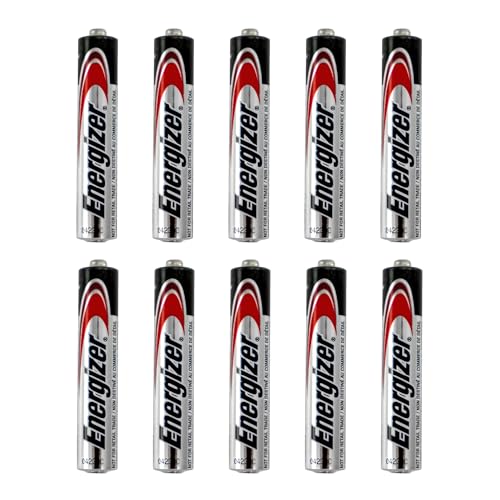
The Energizer EN96 in a 10-pack is the sweet spot for anyone who uses AAAA batteries with any regularity. These are the same alkaline cells as the 2-count, but buying ten at once drops the per-unit cost substantially. The EN96 designation confirms compliance with IEC standards for miniature alkaline cells — this matters when you're powering precision devices like connected home security systems and wireless mice that may be sensitive to off-spec voltage. Energizer's alkaline chemistry is engineered for consistent output in these applications, and the 10-pack gives you a working supply and a backup reserve in one purchase.
Stylus pen users will find these particularly well-suited. Devices like the Microsoft Surface Pen and similar active styluses run on AAAA cells, and they're unforgiving of voltage inconsistency — pressure sensitivity and tip response degrade noticeably when battery voltage starts to sag. The EN96's stable discharge profile helps avoid that problem. The reclosable packaging on this 10-pack is a practical detail: it keeps the unused cells organized and protected from humidity and short-circuit contact with loose change or other metal items.
For users who already own Energizer's 2-count and want to switch to a smarter buy, this is the obvious next step. The EN96/LR61 designation also makes it easy to cross-reference compatibility with your device's manual before purchasing.
Pros:
Cons:
Amazon Basics has quietly become one of the most reliable budget battery brands on the market, and the 8-pack AAAA cells are a solid example of why. At 1.5 volts with a rated 3-year shelf life, these cells are purpose-designed for specialty electronics where you need dependable alkaline power without paying a premium brand markup. The shelf life rating is especially useful: buy a pack, toss it in your emergency kit or junk drawer, and know it'll still be fresh when you actually need it.
In practice, Amazon Basics AAAA cells perform well in low-to-medium drain applications — stylus pens, laser pointers, LED penlights, and glucose meters all fall into this category. They're not specifically engineered for high-drain devices (where Duracell Ultra or Energizer might edge ahead), but for the typical intermittent use case of a stylus or medical monitor, the performance gap is minimal. You're getting around 85-90% of the performance of premium cells at significantly lower cost per battery.
The 8-pack format is well-chosen. It gives you enough to stock your current devices and keep extras on hand without the commitment of a 10+ pack. If you're outfitting a home office or want a reliable backup supply for specialty devices, this is the pragmatic pick for 2026. The packaging is simple but functional, and the batteries arrive individually sealed to prevent contact shorts.
Pros:
Cons:
Voniko isn't a brand that dominates the battery aisle at big-box stores, but in the AAAA niche they've carved out a solid reputation. The headline feature here is a 5-year shelf life backed by patented power barrier technology — that's meaningfully longer than Amazon Basics' 3 years and matches ACDelco at the top of the longevity chart. If you're buying AAAA batteries for devices you don't use daily — glucose meters that sit in your bag most of the time, penlights stored in a first aid kit, or blood monitors used intermittently — that shelf life matters more than you'd think.
Performance in active stylus pens and LED lighting applications is strong. Voniko's super alkaline chemistry delivers consistent 1.5V output, and the leak-proof construction is tested to prevent electrolyte damage to expensive devices. Battery leakage is a real concern in specialty devices that sit idle for months — corroded contacts in a stylus or medical instrument can render the device unusable. Voniko's sealed cell construction directly addresses that risk.
The 8-pack offers good value for the premium features. You're paying a slight premium over Amazon Basics, but the extra shelf life and leak-proof guarantee justify the difference if your devices sit unused between sessions. The TopElek LED reading light, for example, uses this category of battery and benefits directly from leak-proof construction when stored. This is a smart buy for anyone who stocks batteries proactively rather than running out to buy them as needed.
Pros:
Cons:
EBL's rechargeable AAAA kit stands apart from every other option in this list because it's the only one designed to eliminate the ongoing cost of disposable batteries. The cells are 1.2V Ni-MH rated at 400mAh with a 1,200-cycle lifespan — charge these batteries up to 1,200 times before they reach end of life. For someone who uses a Surface Pen or similar stylus daily, that cycle count translates to years of use before you need to replace anything. The upfront cost is higher than any single pack of alkalines, but the math flips quickly for regular users.
The included smart charger is a key differentiator. It accepts DC 5V/1A input (standard USB), outputs DC 1.5V/400mA per cell, and uses IC control to detect full charge and stop automatically — no timer required, no risk of overcharging. The charger is specifically designed for AAAA cells, which is important since most universal chargers don't support this size. One quirk worth knowing: the charger's indicator light doesn't illuminate until a battery is inserted. If you plug it in empty and see no light, that's normal.
The 1.2V nominal output versus the 1.5V of alkalines is worth addressing directly. Most stylus pens and AAAA-powered devices are designed to work within a range that accommodates both. In practice, the EBL cells perform reliably in stylus applications. However, some high-drain devices may report low battery warnings sooner with Ni-MH due to the lower nominal voltage. Test your specific device before committing to rechargeables exclusively.
Pros:
Cons:
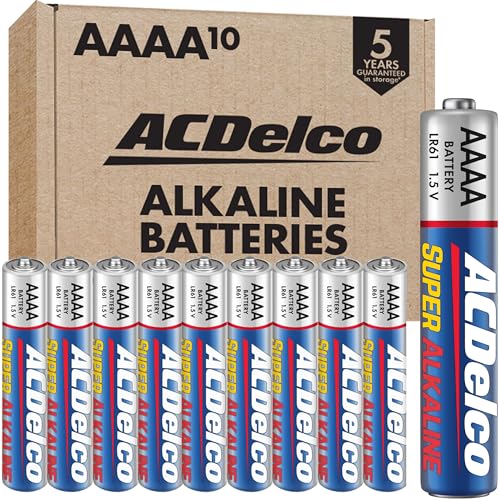
ACDelco built its reputation in automotive components, but the company's super alkaline batteries carry the same engineering rigor into the consumer electronics space. The 10-count AAAA pack targets a specific use case: powering critical medical devices like glucose meters and blood monitors where battery failure is not a minor inconvenience. At 1.5V per cell with a 5-year shelf life and reclosable packaging, ACDelco positions this pack for healthcare professionals, diabetics who monitor frequently, and anyone who treats battery reliability as a safety issue rather than a preference.
The "Maximum Power Super Alkaline" designation reflects a higher-grade internal chemistry compared to standard alkaline formulations. In high-drain devices like LED penlights and laser pointers — where current draw can spike intermittently — ACDelco's cells maintain voltage better than standard alkaline competitors. For laser pointers, this translates to consistent brightness and dot intensity. For penlights, it means the beam doesn't fade mid-use. The reclosable packaging keeps unused cells protected between uses, which matters for a 10-pack that might span months of intermittent draws.
At 10 cells with a premium chemistry and 5-year shelf life, this pack delivers a combination of capacity and longevity that makes it the top pick for medical and professional users who can't afford uncertainty about power supply. These are non-rechargeable — ACDelco makes that explicit on the packaging — but for critical-use scenarios, the predictability of fresh alkaline chemistry is often preferred over rechargeable alternatives anyway.
Pros:
Cons:
The vast majority of AAAA batteries on the market are standard alkaline cells rated at 1.5V. Alkaline chemistry delivers a higher nominal voltage, a longer shelf life (3–5 years), and broad compatibility with every AAAA-powered device. They're the default choice for intermittent-use devices like stylus pens, glucose meters, and emergency penlights. Rechargeable Ni-MH cells like EBL's option run at 1.2V — slightly lower than alkaline. Most devices tolerate this fine, but some may flag a low-battery warning earlier. Rechargeables pay off only if you go through batteries frequently enough to justify the upfront cost of the charger kit.
AAAA batteries are often purchased in advance and stored for months before use. This makes shelf life a critical spec — not an afterthought. A 3-year shelf life (Amazon Basics) is adequate for general use. A 5-year shelf life (Voniko, ACDelco) is better for emergency kits, medical supplies, or infrequently used equipment. Look for reclosable packaging if you're buying 8–10 packs, since it keeps unused cells isolated and prevents accidental shorts from metal contact inside a drawer or bag.
AAAA batteries are sold in 2, 8, and 10-count packs. The math is simple: more cells per pack means a lower per-battery cost. A 2-count Energizer pack is convenient for occasional users but costs significantly more per cell than the Energizer 10-pack. Buy in quantities that match your actual usage. If you own one stylus pen and change the battery twice a year, an 8-pack covers four years. If you run a clinical setting with multiple glucose meters and penlights, a 10-pack per quarter is more realistic.
Not every AAAA battery performs equally across all device categories. Duracell Ultra is explicitly formulated for photo and electronic devices, making it the choice for camera-adjacent tech. Energizer EN96 LR61 is recommended by manufacturers for wireless mice and connected home security systems. ACDelco targets glucose meters and blood monitors with its super alkaline chemistry. Match the battery to your primary device category when there's a clear manufacturer recommendation — it's not marketing speak. The internal chemistry and discharge curve are actually tuned for those use cases.
AAAA batteries power a range of compact specialty devices: active stylus pens (like the Microsoft Surface Pen), LED penlights, glucose meters, blood pressure monitors, laser pointers, Bluetooth remote controls, wireless mice, and some key fobs. They're thinner and shorter than AAA batteries, so they're not interchangeable with other common cell sizes.
Yes. AAAA, LR61, MN2500, and EN96 all refer to the same battery size and chemistry. LR61 is the IEC designation, EN96 is Energizer's model code, and MN2500 is Duracell's equivalent. When your device manual calls for any of these codes, a standard AAAA alkaline cell will fit and function correctly.
In an active stylus pen like the Microsoft Surface Pen, a single AAAA alkaline battery typically lasts 12 months with moderate daily use. Heavy users who draw or take handwritten notes for hours per day may see shorter life — closer to 6–9 months. Rechargeable Ni-MH cells like EBL's 400mAh option tend to last slightly less per charge but eliminate the need to keep disposables stocked.
Most glucose meters specify alkaline batteries and may not perform optimally with rechargeable Ni-MH cells. The 1.2V nominal output of Ni-MH can cause the meter to report low battery earlier than expected, and some meters are calibrated assuming a 1.5V alkaline starting voltage. For medical devices where accuracy and reliability are critical, stick with fresh alkaline cells — Voniko, ACDelco, or Energizer are all appropriate choices.
AAAA batteries are much less common in physical retail than AA, AAA, or 9V cells. Some larger pharmacy chains and electronics stores stock them, but availability varies widely by location. Online purchasing through Amazon is the most reliable way to find a good selection and the best per-unit pricing, especially for bulk packs. Keeping a spare pack on hand prevents the inconvenience of a dead stylus with no replacement nearby.
Standard alkaline batteries use a basic zinc-manganese dioxide chemistry optimized for general use. Super alkaline cells — like ACDelco's Maximum Power line — use a higher-grade formulation with improved electrolyte composition and internal cell structure. The result is better performance under high-drain conditions, a flatter voltage discharge curve, and often a longer shelf life. For everyday stylus or penlight use, standard alkaline is sufficient. For medical devices or high-drain applications, super alkaline delivers a measurable advantage.
 |
 |
 |
 |

About Linea Lorenzo
Linea Lorenzo has spent over a decade testing home gadgets, cleaning products, and consumer electronics from his base in Sacramento, California. What started as a personal obsession with keeping his space clean and stocked with the right tools evolved into a full-time writing career covering the home products space. He has hands-on experience with hundreds of cleaning solutions, robotic and cordless vacuums, and everyday household gadgets — evaluating them for performance, value, and real-world usability rather than spec sheet appeal. At Linea, he covers home cleaning guides, general how-to tutorials, and practical product advice for everyday home care.
You can Get FREE Gifts. Furthermore, Free Items here. Disable Ad Blocker to receive them all.
Once done, hit anything below
|
|
|
|