
You're staring at a stubborn layer of old vinyl tile adhesive that's been baked onto your subfloor for decades. Your knees ache just thinking about getting down there with a putty knife. That's exactly when a proper floor scraper becomes your best friend — the right one turns a weekend-long nightmare into a manageable afternoon project.
Whether you're prepping for new hardwood, ripping up ancient linoleum, or clearing dried thinset after a tile job, the tool you choose matters more than the effort you put in. A quality floor scraper saves your back, protects your subfloor, and gets the job done in half the time. We've tested and reviewed the top options on the market to help you find the perfect match for your specific project.
In this guide, we break down 7 of the best floor scrapers available in 2026, covering everything from heavy-duty long-handle models to compact offset designs for tight spaces. We'll walk you through what to look for, common mistakes to avoid, and which scraper fits which job. If you're also tackling floor maintenance afterward, check out our steam mop reviews for getting those freshly exposed floors sparkling clean.

Contents
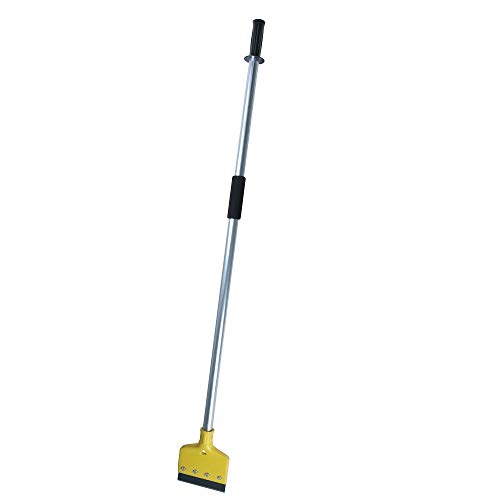




The Warner Bull Dog is the scraper you grab when nothing else is cutting it. With a full steel handle stretching nearly 54 inches and a 6-inch heavy-duty blade, this thing is built like a battering ram for dried adhesives. The all-steel construction means there's zero flex when you drive it under stubborn materials — every pound of force you put in goes straight to the blade edge.
What sets the Bull Dog apart is its uncompromising durability. There are no plastic joints or wooden handles to crack under pressure. The steel-on-steel design handles repeated impacts without loosening up at the head. You can stomp on it, hammer it, and lean into it with your full weight without worrying about snapping a handle mid-job.
The trade-off is weight. This isn't the scraper for delicate work or overhead applications. It's purpose-built for floor-level demolition where brute force wins. If you're clearing a whole room of glued-down tile or decades-old sheet vinyl, the Bull Dog earns its name.
Pros:
Cons:
Roberts designed this scraper for professionals who need one tool to handle multiple situations. The "convertible" part is the real selling point — it works as a standard push scraper out of the box, but add stretcher extension tubes (sold separately) and it transforms into a stand-up scraper for large open areas. That flexibility alone justifies the investment if you tackle different types of flooring projects.
The "Action Lock" handle adjustment is genuinely clever engineering. It rotates 360 degrees and locks at any angle, which means you can attack adhesive residue under cabinets, along walls, and in corners that fixed-angle scrapers simply cannot reach. When you're working in a kitchen with appliance alcoves or a bathroom with tight clearances, this feature saves real time.
The 6-inch wide blade handles adhesive, carpet backing, tile, and sheet flooring with equal confidence. It's heavy-duty enough for commercial jobs but not so overbuilt that it becomes unwieldy. For contractors who bounce between residential and light commercial work, this is one of the most practical scrapers in the 2026 lineup.
Pros:
Cons:
MARSHALLTOWN has been making hand tools since 1890, and the FFS22 shows why they've lasted. This is the wide-blade option on our list — a massive 22-inch blade on a 54-inch handle. When you need to clear large open areas of thinset, mastic (tile adhesive), or old floor coatings, nothing covers ground faster than a 22-inch sweep.
The 20-gauge steel blade is robust enough for concrete prep and flooring removal without folding or chipping. MARSHALLTOWN offers multiple blade widths and handle lengths, so you can match the tool to your specific job. For wood floor surface preparation — stripping old finishes, clearing paint drips, smoothing filler — the wider blade gives you consistent results across the grain.
Made in the USA manufacturing means replacement parts are readily available and the steel quality is consistent. If you've ever snapped a cheap imported blade on its first day, you'll appreciate the difference. The FFS22 is a professional-tier tool priced for serious DIYers and working contractors alike. After you finish scraping, our guide to the best brooms for hardwood and laminate floors covers the cleanup phase.
Pros:
Cons:
The Wal-Board Tools FS-6 hits a sweet spot that many scrapers miss. Its 14-inch blade is wide enough to cover real ground but narrow enough to maneuver around obstacles. Combined with the 60-inch tubular steel handle, you get a scraper that works in both open areas and moderately confined spaces without switching tools.
What makes this scraper stand out is the heat-treated high carbon steel blade. Heat treatment (a process that hardens metal through controlled heating and cooling) gives the blade edge significantly better longevity than standard mild steel. It holds its sharpness through multiple rooms of adhesive removal and resists the chipping that kills cheaper blades on concrete subfloors.
The steel mounting bracket connecting blade to handle is another thoughtful detail. Many scrapers at this price point use rivets or welds that eventually fail under lateral stress. The bracket design here distributes force across a wider area, which translates to longer service life when you're prying up stubborn materials. The rubber handle cap reduces vibration on the push stroke — a small touch you'll appreciate after hour three.
Pros:
Cons:
Not every scraping job involves wide-open floor space. The Hyde 19424 is built specifically for the spots where long-handle scrapers can't go — under radiators, behind toilets, along baseboard edges, and in closets where you barely have room to kneel. The 12-inch handle and 5-inch offset blade give you precise control in confined areas.
The offset blade design is the key feature here. By angling the blade relative to the handle, Hyde lets you get the cutting edge flat against the floor or wall while keeping your knuckles clear of the surface. Standard straight scrapers force you to hold your hand almost parallel to the floor, which is awkward and limits the force you can apply. The offset solves that geometry problem.
A cushioned grip with a protective hand stop rounds out the ergonomics. The hand stop prevents your grip from sliding forward onto the blade during aggressive pushing — a genuine safety feature when you're applying serious force in a tight spot. This is a specialty tool, not a whole-room scraper, but for detail work and confined-space cleanup it has no equal on this list.
Pros:
Cons:
Red Devil's 2108 brings a clever twist to the standard floor scraper formula: a dual-edge blade. One side is sharpened for aggressive material removal — tile, linoleum, carpet backing, dried adhesive. Flip it around and the blunt edge handles cleanup and smoothing without gouging your subfloor. Two tools in one blade means less time hunting through your toolbox mid-project.
The long handle keeps you standing upright, and the cushioned grip absorbs vibration on hard impacts. Red Devil designed this specifically for the homeowner tackling a full-room flooring tearout. It handles carpet removal, roofing material, and adhesive stripping with equal capability. The 4-inch blade is narrower than some competitors, which actually helps when working along walls and baseboards where wider blades catch on trim.
This scraper also excels in corners and along baseboards where rotary floor sanders (machines that spin abrasive discs to smooth floors) cannot physically reach. If you're prepping a room for new flooring and need one scraper that handles both the demolition and the final surface prep, the dual-edge design eliminates the need for a second tool. For more floor prep tools, browse our full floor scrapers category page.
Pros:
Cons:
Sometimes simple wins. The MBI Tools Floor Stripper strips away everything unnecessary and gives you a lightweight, American-made scraper with a steel blade that just works. If you're tackling a single-room project and don't need the over-engineered features of professional-grade tools, this straightforward design delivers honest performance without the weight penalty.
The lightweight construction is the primary advantage here. When you're working overhead (scraping popcorn ceilings) or handling a long day of floor prep, every ounce matters. Heavy scrapers cause faster arm fatigue, which leads to sloppy technique and potential subfloor damage. The MBI keeps you fresh longer, which means cleaner results.
Made in the USA manufacturing ensures consistent blade quality. The steel blade holds a functional edge and replaces easily when worn. This isn't the tool for commercial demolition or multi-day projects, but for the weekend warrior tackling one bathroom or one bedroom at a time, it's the right balance of price, weight, and performance. Once you've finished scraping and prepping your floors, you'll want a quality vacuum for the final cleanup — our bagless vacuum guide covers top options for bare floor debris.
Pros:
Cons:
Blade width determines how quickly you cover ground and where you can work effectively. Here's the breakdown:
For blade material, high carbon steel outperforms mild steel in every measurable way — it holds an edge longer, resists chipping on concrete, and maintains flatness under heavy loads. Heat-treated blades (like the Wal-Board) add another layer of durability. Spring steel blades offer more flex, which helps on uneven surfaces but reduces your ability to apply concentrated force.
Your handle choice determines your working posture, which directly affects how long you can work before fatigue sets in. Stand-up scrapers with 48-60 inch handles let you work upright, protecting your lower back on whole-room projects. Short-handle models (12 inches or less) are specialty tools for tight spaces — plan for knee pads.
Key ergonomic features to look for:
According to the Wikipedia page on ergonomics, maintaining neutral body postures during repetitive tasks significantly reduces the risk of musculoskeletal disorders. Choose a handle length that keeps your wrists straight and your back upright during the primary scraping motion.
Different flooring materials require different scraper characteristics:
A floor scraper takes more abuse per square inch than almost any other hand tool in your kit. The connection between blade and handle is the number one failure point — rivets shear, welds crack, and press-fit joints loosen after repeated impacts. Look for scrapers with bolted or bracketed connections that can be tightened or replaced.
Handle material matters too. All-steel handles (like the Warner Bull Dog) are indestructible but heavy. Tubular steel saves weight with a small trade-off in rigidity. Wood handles are the lightest but snap under lateral force. For occasional home use, any material works. For contractor-level frequency, steel is the only serious option.
They're essentially the same tool. "Floor scraper" typically refers to removing adhesive residue and thin coatings from a subfloor, while "floor stripper" implies removing the flooring material itself (tile, vinyl, carpet). Most tools in this guide handle both tasks. The distinction is more about marketing than function — a good heavy-duty scraper strips and scrapes equally well.
Yes. Use a flat file or bench grinder to restore the cutting edge on high carbon steel blades. Work at the original bevel angle (usually 25-30 degrees) and keep the edge cool to avoid ruining the heat treatment. However, blades are relatively inexpensive — once they're visibly worn or chipped, replacement is faster and gives you a factory-fresh edge.
Start with a sharp blade at a low angle (15-20 degrees to the floor surface). Apply steady forward pressure rather than stabbing motions. For stubborn adhesive, apply a commercial adhesive remover and let it soak for 15-30 minutes before scraping. Work with the grain on plywood subfloors. A blunt-edge scraper or the blunt side of a dual-edge blade handles final cleanup without gouging.
For a standard bathroom (40-80 square feet), a 4-6 inch blade on a short-to-medium handle works best. Bathrooms have toilets, vanities, and tight corners that make wide blades impractical. The Hyde offset scraper or the Red Devil with its 4-inch blade are ideal. Keep a long-handle scraper available for the open center area, but most of your time will be spent working edges and obstacles.
For areas larger than 100 square feet, a stand-up scraper saves your back and knees significantly. For detail work, edges, and spaces under 50 square feet, a hand scraper gives you better control. Most complete flooring projects benefit from both — a long-handle model for the open areas and a short-handle offset for finishing edges and tight spots.
Blade life depends on the substrate you're scraping. On wood subfloors with water-based adhesive, a quality high carbon steel blade lasts through 200-400 square feet. On concrete with thinset mortar, expect 50-100 square feet before the edge dulls noticeably. Heat-treated blades last roughly 40% longer than untreated alternatives. Replace the blade when you notice you're applying significantly more force for the same result.
The right floor scraper turns a miserable demolition job into a manageable one. For most homeowners tackling a single room, the Roberts Convertible or Red Devil dual-edge gives you the best combination of versatility and value. Contractors handling daily tearouts should invest in the Warner Bull Dog or MARSHALLTOWN for tools that won't quit after one project. Pick the blade width that matches your typical work area, grab a pair of knee pads, and get that old flooring out of your life for good.
 |
 |
 |
 |

About Linea Lorenzo
Linea Lorenzo has spent over a decade testing home gadgets, cleaning products, and consumer electronics from his base in Sacramento, California. What started as a personal obsession with keeping his space clean and stocked with the right tools evolved into a full-time writing career covering the home products space. He has hands-on experience with hundreds of cleaning solutions, robotic and cordless vacuums, and everyday household gadgets — evaluating them for performance, value, and real-world usability rather than spec sheet appeal. At Linea, he covers home cleaning guides, general how-to tutorials, and practical product advice for everyday home care.
You can Get FREE Gifts. Furthermore, Free Items here. Disable Ad Blocker to receive them all.
Once done, hit anything below
|
|
|
|