
If you want one kit that covers every calligraphy style from pointed pen to broad-edge script, the Speedball Art Products 3062 Complete Calligraphy Kit is the one to grab first — it ships with nibs, ink, a practice pad, and the legendary Speedball textbook all in one box. Whether you are a complete beginner picking up a pen for the first time or an intermediate letterer looking to expand your toolkit, 2026 is a great year to get serious about the craft, and the right set makes all the difference.
Calligraphy has been practiced for thousands of years across cultures, and today it is enjoying a genuine revival — wedding stationery, hand-lettered logos, journaling, and social media content have all pushed demand for quality tools through the roof. The problem is that the market is flooded with cheap sets that bleed, scratch, and frustrate beginners into giving up. The sets on this list do none of those things. They are tested, well-reviewed, and purpose-built for real lettering work. If you want more curated gear guides, browse our full product reviews section for the latest recommendations.

Below you will find seven of the best calligraphy sets available right now, covering every budget and skill level — from all-in-one starter kits to professional dip-pen rigs. Each pick includes a breakdown of what you actually get, where it shines, and where it falls short. We have also included a buying guide and FAQ so you leave this page knowing exactly what to order.
Contents
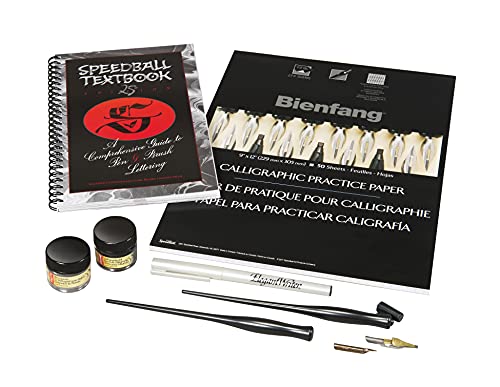


The Speedball 3062 kit earns the top spot because it gives you everything you need to practice two distinct calligraphy disciplines straight out of the box — no supplementary purchases required on day one. You get a straight penholder and an oblique penholder, a C-2 broad-edge nib for Italic and Uncial scripts, and a pointed pen nib for Copperplate and Spencerian styles. Throw in a bottle of acrylic ink, pen cleaner, an Elegant Writer broad-tip marker for quick practice sessions, and a full copy of the Speedball Textbook, and this set covers more ground than most kits three times its price.
The acrylic ink flows consistently through both nibs without clogging, and the pen cleaner is a thoughtful inclusion that beginners often forget to budget for. The Elegant Writer marker lets you practice letterforms without the fussiness of dip-pen setup — useful when you just want to loosen up. The Speedball Textbook alone is worth the price of entry; it is a comprehensive reference covering Gothic, Italic, Uncial, Roman, and Copperplate scripts with illustrated stroke guides. If you are serious about learning multiple scripts, this book will stay on your desk for years.
The practice pad included is basic — it works, but dedicated calligraphy paper with guidelines would serve you better once you advance. The nibs are entry-level, so experienced letterers may want to swap in a Nikko G or Zebra G pointed nib for finer Copperplate work. That said, for the price and the breadth of what is included, no other kit on this list delivers this much starting value. Good ambient lighting also matters when you are working on fine lettering — a quality desk lamp for studying with adjustable color temperature reduces eye strain considerably during long practice sessions.
Pros:
Cons:
STAEDTLER's 33-piece calligraphy set is the fountain pen approach to calligraphy, and it is executed extremely well. The set ships in a travel-ready metal storage tin — a real quality signal that separates it from sets that come in flimsy cardboard. Inside you get four fountain pen bodies, five interchangeable nibs spanning Extra Fine through Extra Broad, and 20 ink cartridges in a range of colors including blue, black, yellow, orange, pink, green, and brown. The interchangeable nib system means one pen body serves five different line widths, which is genuinely useful when you are exploring Italic or Gothic letterforms at different scales.
The fountain pen mechanism makes this set significantly more beginner-friendly than dip pens — there is no inkwell to knock over, no nib dipping, and no ink blobbing from an overloaded nib. You load a cartridge, attach your chosen nib, and write. Ink flow is smooth and consistent across all five nib sizes, and STAEDTLER's cartridge system is reliable. The 20 included cartridges give you enough color variety to do decorative lettering and card-making without buying additional supplies immediately. The metal tin also makes this the most portable set on this list — it fits neatly in a bag for travel or a class.
The trade-off with fountain pen calligraphy is that you are locked into cartridge ink, which limits your color choices versus bottled inks used with dip pens. The nibs also wear differently than steel dip nibs, so very fine pointed-pen scripts like Copperplate are not really in this set's wheelhouse. What it does exceptionally well is broad-edge calligraphy — Italic, Gothic, and Uncial scripts — at multiple scales. For anyone who wants a clean, low-maintenance, highly portable calligraphy setup, this STAEDTLER set is the definitive recommendation.
Pros:
Cons:
Manuscript has been making calligraphy tools since 1856, and the Deluxe Set reflects that heritage. This is a compact, focused fountain pen calligraphy kit built around a single pen body paired with six interchangeable nibs: Fine, Medium, Broad, 2B, 3B, and 4B. That nib range is notably wider than most comparable kits, giving you both standard writing widths and the chunky broad nibs used for display lettering and Gothic scripts. The included converter lets you use bottled inks rather than just cartridges, which is a meaningful upgrade over sets that lock you into proprietary cartridges.
The four included color cartridges cover your basics, but the converter opens the door to the full universe of bottled fountain pen inks — iron gall, shimmer inks, india ink formulated for fountain pens — giving you far more creative latitude as you develop your skills. The storage tin keeps everything organized and protected. Manuscript's nibs are well-finished and consistent; the 3B and 4B in particular write with a satisfying thickness that makes blackletter and flourished capitals pop on the page.
Where this set is thinner than the STAEDTLER is in cartridge color variety — four cartridges versus twenty — and it does not include any instructional material beyond a basic instruction sheet. You are expected to bring your own reference or source tutorials online. That said, if you already have some foundational calligraphy knowledge and want a reliable, versatile fountain pen kit that works with bottled inks, the Manuscript Deluxe delivers that at a price that is genuinely hard to beat in 2026.
Pros:
Cons:
If you are brand new to calligraphy and the idea of nibs, ink bottles, and dip pens feels overwhelming, the ARTEZA Hand Lettering set is your starting point. This is a complete beginner starter kit built around markers rather than traditional pens — you get 12 lettering pens with multiple nib types, an HB pencil, a kneaded eraser, and a guidebook that walks you through stroke technique step by step. No ink to mix, no nibs to install, no mess. You uncap a pen and start practicing.
The pens use black pigment and dye-based inks that genuinely resist smudging and bleeding on standard paper — a common pain point with cheaper marker sets. The multiple nib sizes let you practice pressure-sensitive strokes, which is the fundamental skill that transfers to real calligraphy tools later. The guidebook covers outlines, shading, and multiple lettering styles in a logical progression that makes self-teaching actually feasible. For journaling, hand-lettered cards, and decorative writing practice, this set does everything you need.
The limitation is that marker calligraphy is a stepping stone, not the destination. Markers do not teach you the authentic feel of a flex nib under pressure, and the inks are not interchangeable. When you are ready to graduate to dip pens or fountain pens, you will need to invest in one of the other sets on this list. But as a first step for someone who is unsure whether calligraphy is their thing, the ARTEZA set delivers real skill-building practice at a very accessible price — and the guidebook is better than many standalone calligraphy instruction books sold separately.
Pros:
Cons:
This kit separates itself from every other option on this list with one feature: a hardcover spiral-bound workbook with gold binding that functions as both an instructional text and a hands-on practice journal. The workbook covers hand lettering basics from the ground up — alphabet formations, stroke drills, spacing, and style variations — all in a format designed for working directly in the book with the included pens. It is structured learning built into the product itself, not an afterthought PDF or a thin folded insert.
The included pens are six marker-style calligraphy pens in four tip sizes: extra-fine, fine, medium, and a brush tip. That brush tip is important — it gives you access to modern brush calligraphy alongside traditional broad-edge letterforms, expanding your stylistic range considerably. The pens write smoothly and the ink saturation is good on standard paper. The workbook's guided approach means you are not staring at a blank page wondering what to practice; the exercises are sequenced to build muscle memory progressively.
If you are looking for a structured self-teaching experience — or a gift for someone who wants to learn calligraphy seriously — this kit is the most thoughtfully packaged option at this price point. The workbook alone makes it worth choosing over generic marker sets. The limitation is the same as any marker-based kit: when you are ready to move to fountain pens or dip pens, you will need to step up to a different set. But for the learning phase, this is genuinely excellent. A well-lit workspace also helps — the same logic that applies to desk setup for studying applies here, so pairing this kit with a solid work light ensures your letterforms stay visible without eye strain.
Pros:
Cons:
Kuretake is a Japanese art supply company with a strong reputation among professional letterers, and the ZIG Calligraphy II marker set is the reason why. These are dual-tip markers with a 3.5mm chisel tip and a 2.0mm chisel tip on each pen — both square-cut, both designed for crisp broad-edge calligraphy lettering. You get 12 colors, all water-based dye inks that are smooth, vivid, and consistent from first stroke to last. Made in Japan, the quality control on these nibs is visibly tighter than most mass-market alternatives.
The dual tip is the key feature. The 3.5mm tip handles standard display lettering and decorative headers; the 2.0mm tip gives you a smaller weight for body text, fine detail, and tighter letterforms. Switching between them mid-project means you can create layered lettering compositions without reaching for a second pen. The water-based ink is well-behaved on most papers — no excessive bleeding — and the colors are genuinely attractive, with well-balanced saturation that photographs cleanly for social media and print work.
These pens are particularly well-suited for professionals and serious hobbyists who produce decorative lettering for cards, art prints, signage, and social content. The color range makes them ideal for projects where the ARTEZA black-only set would be too limited. The trade-off is that the ZIG set does not include any instructional materials — you need to bring your own skill or supplement with online tutorials. They are also not a substitute for dip pen work if you are pursuing Copperplate or Spencerian scripts. But as a color calligraphy marker set, there is nothing better at this price in 2026.
Pros:
Cons:
If your goal is authentic Copperplate, Spencerian, or modern pointed-pen calligraphy, you need an oblique penholder — and this set delivers two of them along with eight replacement nibs across four styles. The oblique holder is non-negotiable for Copperplate calligraphy; it angles the nib correctly to produce the consistent letterform slant that defines the script. Straight holders simply do not replicate that geometry, which is why serious pointed-pen calligraphers universally reach for an oblique holder as their primary tool.
The pen holders here are made from a durable black plastic rod with a comfortable grip and a small curved rest for your index finger — a detail that significantly reduces hand fatigue during long sessions. The stainless steel nibs cover four distinct styles with two nibs each, giving you variety to experiment with hairline strokes, medium flex, and fine detail work. The nibs write smoothly without scratching, and stainless steel resists rust far better than the plated nibs found in budget dip pen kits. A wooden support stand is included, which keeps the inked nib elevated between strokes rather than resting it on your work surface.
This is a tool kit, not a learning kit — no ink, no practice paper, no instructional content included. You supply your own calligraphy ink (sumi ink or iron gall work well) and paper. That is standard for professional dip pen sets, but be aware of it if you are buying this as a standalone first purchase. Combined with the Speedball Textbook from the first kit on this list, or with online Copperplate tutorials, this oblique pen set gives you everything you need to pursue the most technically demanding and most visually stunning calligraphy styles. Pair your workspace with a dedicated study lamp so hairline strokes stay clearly visible as you work.
Pros:
Cons:
Not all calligraphy tools work for all scripts. This is the single most important factor to get right before you buy.
If you are unsure where to start, broad-edge fountain pen calligraphy (STAEDTLER or Manuscript) is the most forgiving entry point. If Copperplate is your goal from day one, go straight to the Speedball kit or the oblique dip pen set.
Starter kits vary enormously in completeness. Some include everything; others are tool-only and assume you supply ink and paper. Before buying, check for:
Buying above your current skill level wastes money and generates frustration. Here is a straightforward breakdown:
Your tools are only as good as your setup. Cheap paper with loose fibers causes nibs to catch and ink to bleed regardless of the quality of the pen. Look for smooth, fountain-pen-compatible paper — Rhodia, Clairefontaine, and Canson are reliable options. Maintain a consistent writing angle — most scripts specify 45° to 55° — and keep your workspace well-lit. Poor lighting makes it impossible to evaluate your hairlines and thick strokes accurately while you work.
The ARTEZA Hand Lettering Pens Set and the Calligraphy Kit for Beginners with Workbook are both excellent starting points in 2026. Both remove the complexity of ink management and nib installation so you can focus entirely on developing letterform technique. If you want to learn traditional calligraphy with real nibs from day one, the Speedball Art Products 3062 kit includes a penholder, nibs, ink, and the authoritative Speedball Textbook — the most complete beginner kit with traditional tools on this list.
Fountain pen calligraphy sets (like the STAEDTLER and Manuscript sets) use a self-contained ink reservoir — either cartridges or a converter filled with bottled ink. They are clean, portable, and maintenance-light. Dip pen sets require you to dip the nib into an ink bottle before each writing session, which is more involved but gives you access to a wider range of specialty inks including iron gall, walnut ink, and india ink. Dip pens are the traditional choice for Copperplate and Spencerian scripts.
Yes. An oblique penholder is essential for authentic Copperplate calligraphy. The angled flange on an oblique holder positions the nib correctly to produce the consistent 52-55° slant characteristic of the Copperplate script. Writing Copperplate with a straight holder requires awkward wrist positioning that produces inconsistent letterforms and causes hand fatigue. The oblique dip pen set on this list includes two oblique holders with four nib styles — everything you need to start working in this script.
For dip pen calligraphy, sumi ink and iron gall ink are the two most popular choices. Sumi ink is carbon-based, deeply black, and flows smoothly with most pointed nibs. Iron gall ink produces rich black or brown tones and is historically the traditional choice for pointed-pen scripts. Avoid acrylic-based inks in fountain pens as they can clog the feed, but they work fine in dip pens. The Speedball kit includes its own acrylic ink formulated for their nibs — start with that, then experiment with other inks as your skills develop.
Smooth, fountain-pen-friendly paper is essential for clean calligraphy work. Rhodia, Clairefontaine, and HP Premium 32lb laser paper are widely recommended by calligraphers at all levels. These papers have tight fiber structures that prevent ink from bleeding or feathering along edges. Avoid standard 20lb printer paper — the loose fibers catch metal nibs and cause ink to spread unpredictably. For practice sessions with guidelines, print guidelines on your chosen paper or use a light pad to illuminate guidelines placed underneath.
Fountain pen calligraphy sets like the STAEDTLER and Manuscript sets work well for journaling and decorative note-taking — especially with fine and extra-fine nibs. Marker-based sets like the ARTEZA and Kuretake ZIG are also practical for journaling, card writing, and planner decoration. Dip pens are less suited to casual journaling because they require ink refilling every few lines, which interrupts writing flow. For everyday expressive writing with calligraphic flair, a fountain pen set with a fine or extra-fine nib is the most practical choice.
The right calligraphy set depends on where you are in your lettering journey — beginners will get the most value from the Speedball 3062 or the Beginner Kit with Workbook, while intermediate and advanced letterers should look at the STAEDTLER 33-piece, Manuscript Deluxe, Kuretake ZIG markers, or the oblique dip pen set for Copperplate work. Pick the one that matches your current skill level and the script style you want to pursue, and start practicing — consistency with the right tools is what actually builds beautiful handwriting in 2026.
 |
 |
 |
 |

About Linea Lorenzo
Linea Lorenzo has spent over a decade testing home gadgets, cleaning products, and consumer electronics from his base in Sacramento, California. What started as a personal obsession with keeping his space clean and stocked with the right tools evolved into a full-time writing career covering the home products space. He has hands-on experience with hundreds of cleaning solutions, robotic and cordless vacuums, and everyday household gadgets — evaluating them for performance, value, and real-world usability rather than spec sheet appeal. At Linea, he covers home cleaning guides, general how-to tutorials, and practical product advice for everyday home care.
You can Get FREE Gifts. Furthermore, Free Items here. Disable Ad Blocker to receive them all.
Once done, hit anything below
|
|
|
|