
Cleaning ›
by Linea Lorenzo
According to recent housing data, over 40 percent of new apartments built in the United States since 2022 offer less than 750 square feet of living space, which means millions of renters and homeowners are hunting for laundry solutions that won't eat up half their floor plan. Stackable washer-dryer units and all-in-one combos have surged in popularity because they deliver full-size cleaning power in a footprint that fits inside a closet, a hallway nook, or even under a kitchen counter.
Whether you're outfitting a compact condo, renovating a starter home, or simply tired of hauling bags to the laundromat, a stackable or combo washer-dryer can save you hundreds of hours each year. The trick is finding the right balance between capacity, drying technology, noise level, and price — because not every unit handles bulky comforters or delicate fabrics with equal care. In this guide, you'll find honest reviews of six top-rated stackable and combo washer-dryer units available in 2026, along with a detailed buying guide and answers to the questions shoppers ask most often.
We spent weeks comparing specifications, owner feedback, and real-world performance data to help you narrow down your choices. From budget-friendly laundry centers to premium AI-powered combos, we've covered a range of needs so you can pick the machine that fits your space, your budget, and your lifestyle. If you're also upgrading other areas of your home, you might find our guide to the best carpet shampooers for pets helpful for keeping floors fresh between laundry loads.

Contents



If you live in a building where running a dryer vent through the wall isn't an option, the LG All-in-One Combo solves that problem beautifully. It plugs into a standard 120-volt household outlet — the same kind you'd use for a lamp or a phone charger — so there's no need to hire an electrician or request special wiring from your landlord. The ventless drying system uses condensation technology to pull moisture out of your clothes and drain it away, which means you can tuck this unit into a closet, a bathroom corner, or even a kitchen alcove without worrying about airflow.
At 5.0 cubic feet, the drum is generous enough to handle king-size sheets and heavy towels in a single load, which is impressive for a combo machine. LG's TurboWash360 feature uses multiple high-pressure jets to cut wash times significantly, and the built-in WiFi lets you start, pause, and monitor cycles from your phone through the LG ThinQ app. You'll appreciate the convenience of tossing in a mixed load before heading to work and coming home to clothes that are both clean and dry without any manual intervention between steps.
The trade-off with ventless drying is that cycles tend to run longer than traditional vented dryers — expect around two to three hours for a full dry cycle on heavier items. But if your priority is space savings and installation flexibility over raw speed, this machine delivers on both fronts without compromise.
Pros:
Cons:
Samsung's Bespoke AI Laundry Combo represents what happens when a company pours its artificial intelligence research into household appliances. The standout feature here is AI Opti Wash & Dry, which uses sensors to detect soil levels and fabric types in real time, then automatically adjusts water temperature, spin speed, and drying intensity mid-cycle. You don't need to guess which setting works best for a mixed load of gym clothes and dress shirts — the machine figures it out for you.
With 5.3 cubic feet of ultra capacity, this is one of the largest all-in-one combos on the market in 2026, and Samsung claims it can complete a full wash-and-dry cycle in as little as 98 minutes when you engage Super Speed mode. The heat pump drying technology is more energy-efficient than traditional condensation drying because it recycles warm air rather than generating new heat constantly, which translates to lower electricity bills over the life of the machine. Like the LG above, it plugs into a standard 120V outlet and requires no external vent, so installation stays simple.
The Dark Steel finish gives it a modern, upscale look that blends into contemporary kitchens or open-plan laundry areas without screaming "appliance." Samsung's SmartThings app integration lets you monitor cycles remotely, receive alerts when loads finish, and even download new wash programs as Samsung releases them. The main consideration is the price tag — this is firmly in the premium tier — but if you value energy efficiency and cutting-edge convenience, it delivers on both.
Pros:
Cons:
Sometimes the best solution is the simplest one, and the GE Unitized Spacemaker proves that a traditional stacked laundry center still has a lot to offer in 2026. Unlike combo machines that wash and dry in the same drum, this unit gives you a dedicated 3.8 cu. ft. top-load washer on the bottom and a separate 5.9 cu. ft. electric dryer on top. That means you can start a new wash load while the previous one dries — a workflow advantage that all-in-one combos simply cannot match.
At just 27 inches wide, this laundry center slides into tight closets and narrow hallways where side-by-side pairs would never fit. The washer offers multiple cycles for different fabric types, and the dryer includes both auto-dry (which uses moisture sensors to stop when clothes are ready) and timed-dry options for items that need a specific duration. GE has been building these unitized designs for decades, and the reliability track record shows — owners frequently report years of trouble-free operation with minimal maintenance beyond cleaning the lint filter.
The main limitation is that this model does require a 240-volt outlet and a dryer vent, so it won't work in every apartment situation. But if you have the hookups available and want the speed advantage of running wash and dry simultaneously, it's hard to beat the value this machine offers at its price point. It's a particularly strong choice for families who run multiple loads per day and can't afford to wait for a combo unit to finish one complete cycle before starting the next.
Pros:
Cons:
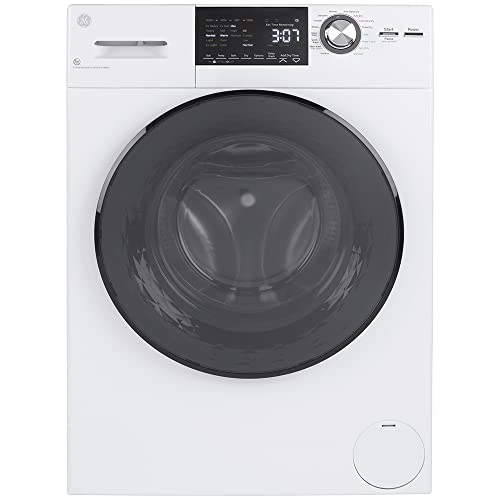
The GE Profile combo takes aim at buyers who want a do-everything machine from a brand with deep American roots in appliance manufacturing. With 4.8 cubic feet of capacity, 12 wash cycles, and 14 dryer cycles, it offers more program flexibility than most combo units in this class. The Fast Airflow Drying System is GE's answer to the common complaint that combo dryers take too long — it circulates heated air more aggressively through the drum to cut drying times compared to standard ventless systems.
At 28 inches wide, it's slightly larger than the 24-inch compact models but still fits comfortably in most laundry closets designed for full-size machines. The smart connectivity features let you control the machine through the SmartHQ app, and it supports voice commands through popular smart home platforms. You'll find specialized cycles for everything from sanitizing baby clothes to refreshing items that just need a quick steam treatment, which gives this machine a versatility edge when your household handles a wide variety of fabrics and garments.
One aspect worth noting is that like other ventless combo units, extremely heavy or bulky items may need a second dry cycle to come out completely moisture-free. The machine handles everyday loads of jeans, t-shirts, and towels reliably in a single pass, but thick blankets and down comforters sometimes benefit from a shorter follow-up tumble. If you're looking for a machine that handles 90 percent of laundry scenarios without any fuss and you have the budget for GE's premium tier, this is a strong contender. For keeping the rest of your home spotless while you wait for cycles to finish, check out our roundup of the best bagless vacuum cleaners.
Pros:
Cons:
When your available space measures just 24 inches across — think European-style kitchens, tiny house builds, or under-counter installations — the GE GFQ14ESSNWW was designed specifically for you. This compact condenser dryer combo requires no external vent whatsoever, so you can slide it under a counter, tuck it inside a closet with a folding door, or even place it in a bathroom if local codes allow. The condenser system captures moisture from the drying cycle and routes it to the drain, keeping your living space free of excess humidity.
At 2.4 cubic feet, the drum isn't going to handle a week's worth of laundry for a family of four in a single load, but it's perfectly sized for one or two people who do laundry every few days. One thoughtful feature is the automatic dry cycle selection — when you choose a wash program, the machine automatically queues up the matching dry cycle, so you don't need to remember which dryer setting pairs with which wash temperature. It's a small touch that eliminates guesswork and protects delicates from accidental high-heat damage.
The 24-inch form factor also makes this an excellent choice for adding laundry capabilities to a vacation rental, guest suite, or home office conversion where full-size machines would be overkill. The white finish is clean and unobtrusive, and the front-load design means you can stack storage or shelving above it. Keep in mind that smaller capacity means more frequent wash days if your household generates a lot of laundry, but for the right living situation, this machine is exactly what you need. You can learn more about how condenser drying technology works if you're curious about the science behind ventless systems.
Pros:
Cons:
Speed Queen has built its reputation in commercial laundromats, where machines run dozens of cycles every single day and anything less than industrial-grade construction would fall apart within months. The SF7007WE brings that same commercial-grade durability into a residential stacked format, and it's the machine to consider if you want something that will still be running strong fifteen or twenty years from now without major repairs.
The dynamic balancing system keeps the drum stable even with uneven loads, which reduces vibration and noise — a meaningful benefit if your laundry area shares a wall with a bedroom or living space. The center-mounted controls are positioned between the washer and dryer sections for easy access, and the straightforward dial-and-button interface means there's virtually no learning curve. Speed Queen intentionally avoids touchscreens and complex electronics in favor of proven mechanical controls that rarely fail.
This is not a flashy, feature-packed machine with WiFi connectivity or AI-powered cycle detection. What it is, however, is a workhorse that handles heavy daily use without complaint. Families with kids, pet owners who wash bedding frequently, and anyone who simply values longevity over bells and whistles will appreciate Speed Queen's philosophy of building things to last. The efficient wash and dry cycles get clothes clean without wasting water or energy, and the stacked design keeps the footprint compact despite the robust internal construction. If you value keeping your cleaning appliances running for the long haul, Speed Queen is the brand that professionals trust.
Pros:
Cons:
The single most important factor in choosing a stackable washer-dryer is matching the drum capacity to your household's laundry volume. A couple or single person can get by comfortably with 2.4 cubic feet, running small loads every few days without feeling cramped. Families of three or more should look at 4.5 cubic feet and above to handle sheets, towels, and multiple days' worth of clothing in fewer cycles. Remember that combo units (where one drum does both washing and drying) typically need smaller loads for effective drying than their rated wash capacity suggests — filling a 5.0 cu. ft. combo to maximum for washing might mean mediocre drying results unless you remove some items first.
This decision often comes down to your living situation rather than personal preference. If you rent an apartment without existing dryer hookups or live in a building that prohibits exterior vents, a ventless model (condenser or heat pump) is your only realistic option. Ventless machines offer far more installation flexibility because they only need a standard electrical outlet and a drain connection. The trade-off is that ventless drying cycles typically run 30 to 60 minutes longer than vented models, and they work best in rooms with decent ambient airflow. If you have a dedicated laundry room with a vent hookup already in place, a traditional vented stacked pair will dry faster and generally costs less upfront.
Modern stackable units increasingly offer WiFi connectivity, smartphone app control, and even AI-powered cycle optimization. These features genuinely add convenience if you're the type of person who wants to start a load remotely or receive a notification when clothes are done. However, smart features also mean more electronics that could potentially need service down the road, and they typically add several hundred dollars to the purchase price. Consider whether you'll actually use remote monitoring regularly or whether simple, reliable controls better match how you do laundry. If your home is already deep into the smart ecosystem, a connected machine integrates nicely into routines and automations. If you also care about maintaining other parts of your home with quality tools, our guide to the best heavy-duty steam vacuum cleaners covers another category where smart features are making inroads.
Before you fall in love with a specific model, measure your available space carefully — not just the width and depth, but also the height (especially for stacked units that can reach over six feet tall) and the clearance needed for doors to open fully. Check whether your electrical panel can support a 240V circuit if you're considering a vented stacked pair, or confirm that a standard 120V outlet exists where you plan to install a combo unit. Don't forget to account for water supply hookups, drain access, and enough breathing room behind the machine for hoses and connections. Many installation headaches come from measuring the machine but forgetting to measure doorways, hallways, and stairwells along the delivery path.
Most quality stackable washer-dryer units last between 10 and 15 years with regular maintenance, though commercial-grade brands like Speed Queen can exceed 20 years. The key to longevity is cleaning the lint filter after every cycle, not overloading the drum, and running a cleaning cycle monthly to prevent mold and odor buildup inside the gasket and drum.
You can dry most everyday loads completely in one cycle, but heavy items like thick towels, blankets, and jeans sometimes need a shorter follow-up tumble. For best results with combo machines, fill the drum to about 75 percent of its rated wash capacity — this gives clothes enough room to tumble freely during the dry cycle, which improves airflow and reduces drying time significantly.
Ventless dryers achieve the same end result — dry clothes — but they take longer to get there, typically adding 30 to 60 minutes per cycle compared to vented models. Heat pump ventless dryers are more energy-efficient over time because they recycle warm air, which can offset the longer run times on your electric bill. The clothes come out just as dry; you simply need a bit more patience.
Stackable and side-by-side configurations of the same model use identical amounts of electricity since the stacking is purely a physical arrangement. However, all-in-one combo units with heat pump technology often use less electricity per cycle than traditional vented dryers because they recycle heat rather than venting it outside. Check the Energy Guide label on any model you're considering for specific kilowatt-hour estimates based on typical usage patterns.
Regular maintenance includes cleaning the lint trap after every dryer load, wiping down the door gasket weekly to prevent mold growth, running an empty hot cycle with a washer cleaner tablet monthly, and checking the drain hose for kinks every few months. For vented models, you should also clean the exhaust duct annually to prevent lint buildup that could pose a fire hazard or reduce drying efficiency.
Many homeowners successfully install combo units themselves since they only require a standard outlet, a cold water supply line, and a drain connection. Stacked pairs that need 240V wiring and external venting are better left to professionals unless you have electrical and HVAC experience. Either way, having a second person available for lifting and positioning is essential — these machines typically weigh 200 to 300 pounds and need precise leveling to avoid vibration during spin cycles.
 |
 |
 |
 |

About Linea Lorenzo
Linea Lorenzo has spent over a decade testing home gadgets, cleaning products, and consumer electronics from his base in Sacramento, California. What started as a personal obsession with keeping his space clean and stocked with the right tools evolved into a full-time writing career covering the home products space. He has hands-on experience with hundreds of cleaning solutions, robotic and cordless vacuums, and everyday household gadgets — evaluating them for performance, value, and real-world usability rather than spec sheet appeal. At Linea, he covers home cleaning guides, general how-to tutorials, and practical product advice for everyday home care.
You can Get FREE Gifts. Furthermore, Free Items here. Disable Ad Blocker to receive them all.
Once done, hit anything below
|
|
|
|