
More than 60 percent of electronics hobbyists who purchased their first bench instrument recently chose either a Siglent or Rigol model, and the siglent vs rigol oscilloscope debate has been running hot in maker communities ever since. If you've been reading through the oscilloscope buying guide, you already know these two Chinese manufacturers dominate the affordable end of the market. Choosing between them isn't a coin flip — it's a decision that shapes how productively you work for years.
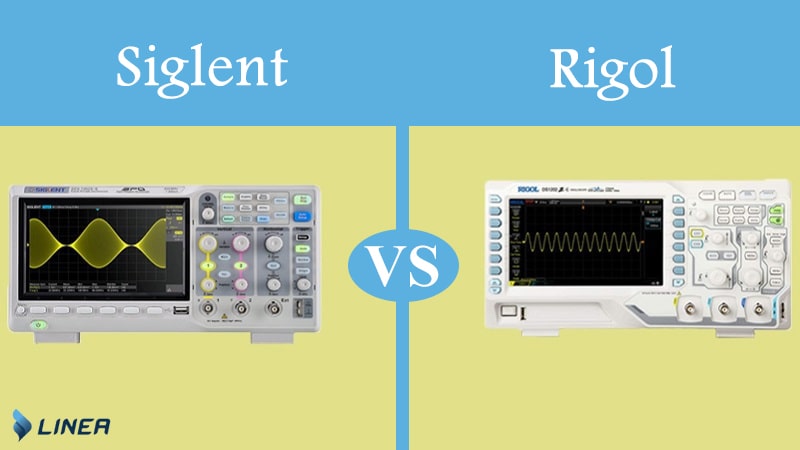
Both Siglent and Rigol earned loyal followings by delivering professional-grade measurement capability at prices that once seemed impossible. Rigol shattered the sub-$400 barrier with the DS1054Z, and Siglent responded with deeper memory, wider native bandwidth, and cleaner FFT displays that pushed the value equation further than anyone expected. Today the competition is tighter than it has ever been, which is exactly why you need a clear-headed breakdown before you commit your budget.
The right oscilloscope depends on what you're actually measuring and how you work — not on forum hype or brand loyalty. This guide lines up the real differences across specs, usability, software, and long-term value, then helps you walk away with a confident, informed choice.
Contents
An oscilloscope captures and displays electrical signals over time, letting you see voltage changes as a waveform on a screen rather than as a single number on a multimeter. That visual representation separates guesswork from real diagnosis — you can see noise, ringing, timing glitches, and signal integrity problems that a meter completely misses. Every serious electronics workbench needs one, whether you're debugging a microcontroller, testing a power supply, or verifying sensor output in a home automation project.
Rigol launched its DS1000 series in the mid-2000s and quickly became the default recommendation for students and hobbyists with tight budgets. Siglent followed with scopes that prioritized deeper acquisition memory and cleaner analog front ends, and by the time both brands reached the four-channel, 200 MHz segment, they were competing with Keysight and Tektronix units costing three to five times more. Just as selecting the right type of light bulb for a specific fixture requires understanding what each variant is built to do, choosing the right oscilloscope brand means knowing exactly what each one is optimized for.
At the entry level, Rigol's DS1054Z and the Siglent SDS1104X-E occupy the same price bracket but serve slightly different needs. The DS1054Z ships software-locked to 50 MHz while the SDS1104X-E delivers a native 100 MHz with no workarounds required. Siglent's memory depth at this tier reaches 14 Mpts per channel compared to Rigol's 12 Mpts, giving you longer captures before the buffer fills and you start missing events.
The real battleground today is the 12-bit high-definition segment, where Rigol's DHO814 and Siglent's SDS814X HD compete directly. Both offer 12-bit vertical resolution, 200 MHz analog bandwidth, and four channels — but the differences in the details matter more than the matching headline specs. The table below lines up the critical numbers so you can compare them without switching between tabs.
| Feature | Siglent SDS814X HD | Rigol DHO814 |
|---|---|---|
| Vertical Resolution | 12-bit | 12-bit |
| Bandwidth | 200 MHz | 200 MHz |
| Channels | 4 | 4 |
| Sample Rate | 2 GSa/s | 1.25 GSa/s |
| Memory Depth | 200 Mpts | 50 Mpts |
| Display | 10.1" touchscreen | 10.1" touchscreen |
| Built-in Waveform Generator | Optional add-on | Built-in |
| Approximate Street Price | ~$499 | ~$449 |
Siglent's advantage in sample rate and memory depth is substantial for engineers capturing long, fast waveforms. Rigol's built-in waveform generator adds real utility for hobbyists who don't already own a function generator, keeping total bench setup costs lower from day one.
Choose Siglent when deep memory and high sample rate are your top priorities. Embedded systems engineers who need to capture long SPI or I2C transactions without the buffer rolling over will find Siglent's 200 Mpts memory indispensable. Siglent's FFT and spectrum analysis tools are also stronger out of the box, making it the better choice for anyone doing RF troubleshooting or power electronics work. The interface is responsive and intuitive, which matters when you're in the middle of a complex debug session and need to adjust settings quickly without breaking your concentration.
Rigol is the stronger pick when you want an all-in-one bench solution at a lower entry price. The built-in waveform generator on the DHO series eliminates the need to buy a separate AWG, which saves meaningful money at the hobbyist level. Rigol's software ecosystem is also more mature — its PC application suite has been refined over more years than Siglent's equivalent tools. If you're new to oscilloscopes and want a large, active community with thousands of tutorials and forum threads, Rigol's installed base gives you a significant support advantage when things don't make sense.
Warning: Never buy an oscilloscope based solely on unlockable bandwidth — firmware updates can and do disable these hacks, so evaluate every scope on its stock specifications alone.
Before you measure anything meaningful, run a full probe compensation check using the built-in calibration signal on the front panel. Both Siglent and Rigol ship with 10:1 passive probes that need trimming to match the scope's input impedance, and skipping this step means every high-frequency measurement you take will be inaccurate in ways that are difficult to detect. The trim pot sits on the probe body — use a plastic trimming tool to avoid introducing noise during adjustment. This five-minute task is the single most overlooked setup step at the beginner level, and it costs you nothing to do correctly.
Both brands offer edge, pulse-width, pattern, and serial triggers that most users never explore beyond the basic edge trigger. Learning to use pulse-width triggering to isolate glitches, or pattern triggering to capture specific logic states, unlocks a completely different tier of diagnostic capability. Just as getting the most from a precision LED reading light means understanding its beam angle and brightness modes rather than just switching it on, getting the most from your oscilloscope means mastering its trigger library rather than defaulting to whatever the scope powers up with.
Pro tip: If you plan to do any high-speed digital or RF work, prioritize memory depth over raw bandwidth — a shallow buffer misses the transient events you're specifically trying to catch.
This argument expired about a decade ago. Both Siglent and Rigol instruments are used daily in professional R&D labs, university engineering departments, and manufacturing test environments around the world. Their analog front ends have been independently verified through detailed teardown analyses published by respected engineers, and measured accuracy aligns with published specifications in all but extreme edge cases. The real limitations appear at very high bandwidths or very low noise floors — applications where Keysight and LeCroy still hold a clear advantage. For 90 percent of real-world work, the performance gap between these brands and Western alternatives is negligible at these price points.
Bandwidth determines the fastest signal edge you can accurately capture, and the rule of thumb is that your scope needs at least five times the bandwidth of the highest frequency component in your signal. If you're working on audio circuits, Arduino projects, home automation sensors, or household wiring diagnostics, a 100 MHz scope gives you enormous headroom. Chasing 350 MHz or 500 MHz when your signals top out at 20 MHz buys you nothing useful and wastes budget that would be better spent on quality probes, a logic analyzer, or a decent isolation transformer.
First-time buyers almost always fixate on bandwidth and channel count while ignoring the specs that actually affect day-to-day usability. Display quality — size, resolution, and touch responsiveness — determines how long you can work comfortably before fatigue sets in. Waveform update rate, measured in waveforms per second, determines whether you catch intermittent faults or watch them slip through undetected. A scope that draws 500,000 waveforms per second will show you glitches that a 3,000 wfm/s scope misses completely, and that difference is invisible in a spec sheet unless you know exactly where to look. Just as tracking down intermittent faults in your car's lighting system requires the right diagnostic approach, catching intermittent electrical glitches requires an oscilloscope fast enough to see them.
Common beginner mistakes include:
Advanced users evaluate oscilloscopes on noise floor, spurious-free dynamic range in FFT mode, jitter measurement accuracy, and the completeness of the serial decode library included without paid upgrades. They also weigh whether the vendor publishes firmware updates consistently and responds to community bug reports with any urgency. Siglent has earned a strong reputation for active firmware development across its entire product line, while Rigol's cadence has been slower on older models but more disciplined on the newer DHO platform. Long-term firmware support is as important as the hardware you buy on day one, because the software defines what the instrument can do and how it grows alongside your technical skills over time.
Rigol is generally the easier starting point because its DS1054Z and DHO series have the largest online communities, the most tutorial content, and a lower entry price. The built-in waveform generator on newer Rigol models also reduces how much additional equipment a beginner needs to purchase upfront to have a functional bench.
The bandwidth unlock worked on early firmware versions of the DS1054Z, but Rigol patched it in later updates. If you buy a new unit today, evaluate it based on its stock 50 MHz specification rather than assuming any unlock will remain available or functional.
Siglent has been more aggressive with firmware updates and new feature additions in recent years, while Rigol's UltraSigma PC software is more polished for formal lab documentation. Rigol's newer DHO platform receives regular updates, so the software gap between the two brands is closing steadily.
Yes — memory depth determines how long a capture you can record at a given sample rate before the buffer fills. If you capture slow serial protocols like CAN bus or UART at full sample rate, a shallow buffer means you miss the middle portion of every transaction. Siglent's deeper memory is a genuine practical advantage, not a marketing number.
Buy the oscilloscope whose strengths match the signals you actually measure — not the one with the most impressive spec sheet in a category you'll never use.
 |
 |
 |
 |

About Linea Lorenzo
Linea Lorenzo has spent over a decade testing home gadgets, cleaning products, and consumer electronics from his base in Sacramento, California. What started as a personal obsession with keeping his space clean and stocked with the right tools evolved into a full-time writing career covering the home products space. He has hands-on experience with hundreds of cleaning solutions, robotic and cordless vacuums, and everyday household gadgets — evaluating them for performance, value, and real-world usability rather than spec sheet appeal. At Linea, he covers home cleaning guides, general how-to tutorials, and practical product advice for everyday home care.
You can Get FREE Gifts. Furthermore, Free Items here. Disable Ad Blocker to receive them all.
Once done, hit anything below
|
|
|
|