
You're standing in your garage staring at a trigger bottle that just seized up mid-job. The chemical inside is fine, but the sprayer gave out — again. If you're tired of replacing cheap plastic bottles every few months, it's time to look at what a heavy duty spray bottle actually looks like.
Heavy duty spray bottles aren't just bigger versions of what you find under the kitchen sink. They're built from chemical-resistant materials like high-density polyethylene (HDPE) or stainless steel. They come with reinforced triggers, adjustable nozzles, and sometimes pressurized tank systems. Whether you're detailing cars, cleaning industrial surfaces, applying pesticides, or maintaining equipment, the bottle matters as much as the product inside it. A bottle that breaks down or reacts with your chemical can turn a routine job into a hazardous situation fast.
This guide covers six of the best heavy duty spray bottles available in 2026. Each one was selected for build quality, chemical resistance, and real-world performance across different use cases. If you're building out a broader cleaning toolkit, it's worth pairing your spray bottles with the right cleaners — our guide to the best limescale removers is a good starting point for tackling mineral deposits and hard water buildup. Read on to find the bottle that fits your work.
Contents
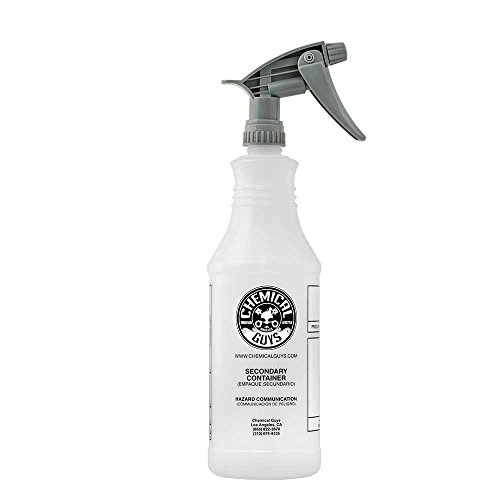




The Chemical Guys ACC_130 is a 32 oz professional-grade spray bottle built specifically for the auto detailing world. Both the bottle and the sprayer head are chemically resistant, which is an important distinction — plenty of bottles advertise a resistant tank but pair it with a standard trigger that corrodes or seizes when you run solvents and degreasers through it. With the ACC_130, the entire assembly is rated to handle professional-grade detailing chemicals, pH-neutral soaps, and concentrated cleaners without degrading.
The adjustable nozzle is one of the more versatile on this list. You can dial it from a fine mist — ideal for applying quick detailers or spray waxes to painted surfaces — all the way to a focused jet stream for flushing product into tight gaps or blasting off dried grime. The range is smooth and predictable. The trigger action is firm without being stiff. It requires a solid squeeze, which actually helps with accidental discharge when you set it down between uses.
Build quality feels consistently professional. The bottle is thick-walled and doesn't flex or deform when gripped hard. It holds up well to UV exposure if left sitting in the sun during an outdoor detail session — something cheaper bottles visibly warp from. The one practical downside is that if you stock several of these, they look identical. You'll want to label them clearly so you don't mix up your wheel cleaner with your glass spray. That's a minor inconvenience for a bottle this capable.
Pros:
Cons:
The Zep Model B is a pressurized steel solvent sprayer that plays in a completely different category from plastic trigger bottles. It's built for environments where standard HDPE plastic simply won't survive — automotive shops, machine maintenance bays, and industrial cleaning operations. The steel construction makes it safe for petroleum-based solvents, cutting oils, and other chemicals that would degrade or swell a plastic bottle within weeks of regular use.
The spring-loaded trigger is the key mechanical feature here. It stays primed between pulls, meaning you don't have to squeeze multiple times to push product through after a pause. Each trigger pull delivers an immediate, consistent shot. That matters when you're trying to control how much solvent you're applying to a specific part or surface — you don't want unpredictable pressure when working near electronics or precision components. The adjustable nozzle gives you control over spray pattern, from a targeted stream to a broader mist.
The trade-off with steel is weight. At 32 oz filled, this is noticeably heavier than a plastic bottle. For bench-level work or spraying at waist height, the weight is manageable. For overhead applications or extended use at arm's length, fatigue sets in faster. You'll also refill this more often than a gallon-capacity sprayer, which can slow down larger-scale jobs. But for targeted, precise solvent application where chemical compatibility is the priority, the Zep Model B is hard to argue with in 2026.
Pros:
Cons:
If you need to outfit a cleaning station or want separate bottles for separate chemicals without breaking the bank, the ZEP HDPRO1 three-pack makes strong economic sense. You get three 32 oz heavy-duty spray bottles at a price that typically undercuts buying three individual units elsewhere. Each bottle is designed for diluted cleaning concentrates and general-purpose spray applications, making them practical for janitorial work, household deep cleaning, or light commercial use.
The headline spec is the claimed 30-foot spray distance — produced by the strong pump pressure built into the trigger mechanism. Whether you ever actually need to spray something 30 feet away is debatable, but it tells you this nozzle generates real force at close range too. For rinsing surfaces, applying cleaners at chest height, or pushing product into grout lines, that pressure is genuinely useful. The ergonomic three-finger trigger distributes squeezing force across more of your hand, reducing the single-finger fatigue that kills cheaper triggers after an hour of work.
The adjustable nozzle goes from a gentle fine mist for delicate applications — spraying plants, applying glass cleaner to a microfiber cloth — up to a focused direct stream for targeted tasks. If you're the kind of person who likes to keep a dedicated bottle for each product (bathroom cleaner, glass spray, floor cleaner), this pack lets you do that without spending a lot per bottle. For tackling stubborn embedded grime alongside your spray work, take a look at our best grout cleaning machine guide — the right combination of spray pressure and scrubbing tool makes a real difference on tile surfaces. This pack won't handle serious solvents or petroleum chemicals, but for water-based and diluted cleaners, it punches above its price.
Pros:
Cons:
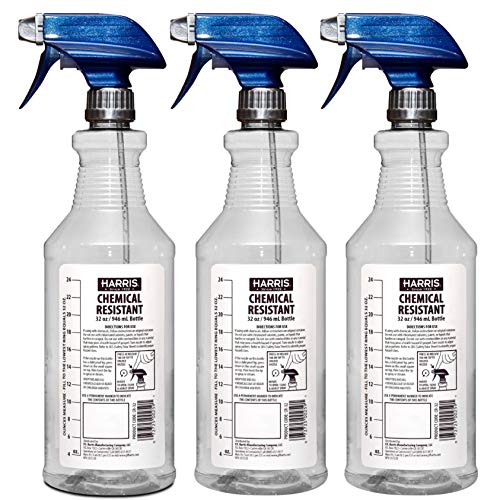
The HARRIS 3-pack is purpose-built for people who regularly work with aggressive cleaning chemicals. The key detail in the product description is that both the bottle and the sprayer head are chemically resistant — not just the tank. This distinction matters more than you might think. A weak trigger mechanism is typically the first thing to fail when you run concentrated disinfectants, bleach solutions, or acid-based cleaners through a spray bottle. HARRIS designed the entire system to handle it.
The extended trigger design allows a three-finger grip, which spreads the load across your index, middle, and ring fingers rather than making your index finger do all the work. Over a few hundred trigger pulls during a cleaning session, that ergonomic difference is real and noticeable. The pressurized auto-reload system means the sprayer primes itself after each pull, so you get a consistent, immediate shot every time without pumping the trigger multiple times to push product through. That's especially useful when you're working fast and can't afford hesitation.
For professional cleaning applications — janitorial work, disinfection protocols, heavy-duty kitchen degreasing, bathroom deep cleans — the HARRIS bottles are an excellent value proposition in 2026. The three-pack format is genuinely practical: dedicate one to bleach-based disinfectant, one to your degreaser, one to glass cleaner, and you've got a versatile cleaning station without spending much. These won't handle petroleum solvents or industrial-grade chemicals as well as the steel options on this list, but for water-based and chemical cleaning solutions, they're among the best you'll find at this price point.
Pros:
Cons:
The Pressol Industrial Sprayer takes a different approach to heavy duty spray bottle design. At 750 ml (roughly 25 oz), it's slightly smaller than the 32 oz options that dominate this list, but its material advantage compensates. It's made from polyethylene (PE) — a chemical-resistant plastic that handles a wide range of industrial chemicals including many that would degrade standard sprayer plastics. Pressol is a German brand with deep roots in industrial fluid handling and lubrication tools, and this sprayer reflects that background.
Where this bottle excels is in precision work. The compact size makes it easier to maneuver in tight spaces — think machine maintenance, bench-top component work, or applying penetrating oils to specific fasteners and hinges. You're not swinging around a large, heavy bottle; you're placing product exactly where you want it. The build quality has that characteristic German industrial feel — solid, well-fitted, and made to be used hard every day in a shop environment.
The trade-offs are real, though. You'll refill this more often than a 32 oz bottle when covering larger areas. It doesn't have the multi-finger ergonomic trigger or pressurized auto-reload that the American-made options offer. For high-volume jobs, look elsewhere. But if your work involves precision application of industrial fluids in confined spaces, the Pressol is a capable, reliable tool that won't let you down. It's the kind of sprayer you keep on the workbench next to your tools rather than under the sink with your cleaning supplies.
Pros:
Cons:
The B&G Primeline operates in a completely different category from everything else on this list. It's a professional-grade pump sprayer — meaning you manually pump a piston to build air pressure in the tank, then release it through the valve in a controlled, pressurized flow. This is the type of equipment used daily by licensed pest control operators, groundskeeping crews, and facilities maintenance contractors. The 1-gallon stainless steel tank is rated for decades of use — not years, decades. This is gear you maintain and hand down, not something you replace when the trigger wears out.
The Extenda-Ban Valve with a 24-inch brass extension gives you precise application control for targeted work — applying herbicides around structures, treating cracks and crevices for pest control, or applying disinfectants in ventilation systems. The 4-way crack and crevice tip lets you adapt your spray pattern to the task without swapping heads. Every component that touches the chemical — the tank, valve, extension, and seals — is made from stainless steel, brass, or Viton (a high-performance fluoroelastomer seal material that resists virtually all common chemicals). You're not guessing about compatibility; it's built to handle whatever professional chemicals you throw at it.
The field-repairable design is what separates this from disposable spray equipment. Seals wear out, pistons degrade — that's normal. With the B&G, you replace those parts. You don't replace the whole unit. The investment is higher upfront than any other option here, and you'll need to understand pressurized sprayer maintenance to get the most out of it. But if spraying is part of your daily professional work, this is the tool that earns its cost over years of use. For readers building out a complete professional cleaning setup, our roundup of the best upholstery steam cleaners covers the chemical-free side of deep cleaning that pairs well with a precision sprayer like this one.
Pros:
Cons:
This is the most important factor on the list, and it's the one most buyers skip. You need to know your chemical before you buy your bottle. Standard polypropylene — the plastic used in cheap household bottles — works fine for water-based cleaners and mild solutions. HDPE and PE plastics handle a much wider range, including concentrated disinfectants, bleach solutions, and most cleaning concentrates. For petroleum-based solvents, acetone, or oil-based products, you need steel.
According to OSHA's hazardous materials guidelines, improper chemical container selection is a genuine safety issue — not just an equipment maintenance problem. A bottle that reacts with your chemical can leach contaminants into the solution, weaken the container until it fails, or degrade the trigger until it sprays unpredictably. Always cross-reference the chemical's Safety Data Sheet (SDS) against the bottle's rated chemical compatibility before you fill it. When in doubt, go with a higher-rated material or a steel option.
If you're spraying for two minutes, trigger design barely matters. If you're cleaning for two hours, a poorly designed trigger will punish your hand in ways you'll feel the next morning. Multi-finger trigger extensions — the kind that allow a three-finger grip rather than single-index-finger operation — spread the mechanical load across more of your hand and significantly reduce cumulative fatigue. Look for this feature if you do high-volume spraying regularly.
Pressurized auto-reload mechanisms also help. They prime the sprayer after every pull, so you get a consistent, immediate spray without extra pumping. This reduces the total mechanical effort per ounce of product delivered. Weight plays a role too — steel bottles filled to 32 oz are noticeably heavier than plastic equivalents. For bench-level and waist-height work, that's manageable. For overhead work or extended arm's-length use, the lighter plastic option is the smarter choice for your body.
Most heavy duty spray bottles offer at least two positions: mist and stream. Better options give you a continuous dial range between those two extremes. The best nozzles lock into position and stay there under repeated use — a small but genuinely frustrating issue on cheaper models that drift mid-job and start delivering the wrong pattern without warning. If you're applying products that require a specific coverage pattern, verify that the nozzle adjustment holds under working conditions and doesn't loosen from vibration or chemical contact.
Professional pump sprayers like the B&G take this further with interchangeable tips that let you completely change the spray pattern for different applications. If your work demands that level of control — pest control, herbicide application, HVAC treatment — the tip system is a meaningful advantage over fixed nozzles. For most general cleaning and maintenance tasks, a well-built adjustable nozzle on a trigger bottle covers the full range of what you'll need.
Thirty-two ounces is the standard for heavy duty trigger bottles, and it's the right size for most spot-treatment, detailing, and routine cleaning tasks. If you're covering large areas — treating an entire lawn, disinfecting a commercial space, or applying chemicals across broad surfaces — a 1-gallon pump sprayer makes far more sense. You'll refill a 32 oz bottle six times to do what a gallon tank handles in one go. Match the capacity to the actual scope of your work, not just what's on the shelf in front of you.
If your work involves multiple chemicals that can't share a container, multi-pack options like the HARRIS or ZEP HDPRO1 three-packs let you dedicate one bottle to each product without cross-contamination risk. That setup is especially practical for cleaning professionals or anyone maintaining a detailed product rotation. Explore the full range of cleaning tools and supplies to build out a setup that covers every task you're tackling.
Heavy duty spray bottles are built from chemical-resistant materials like HDPE, polyethylene, or stainless steel — not the thin polypropylene used in standard household bottles. They feature reinforced trigger mechanisms, stronger seals, and in many cases pressurized systems that deliver consistent output. They're designed to hold up to harsh chemicals, repeated daily use, and the mechanical stress of professional environments where a standard bottle would fail within weeks.
Most HDPE and chemically rated plastic spray bottles handle household bleach concentrations without a problem. For very high-concentration bleach or bleach mixed with other chemicals, check the manufacturer's chemical compatibility specification. Steel bottles are generally not recommended for bleach because the chlorine can corrode metal over time. Viton-sealed sprayers like the B&G Primeline are rated for disinfectants and bleach solutions and handle them better than most alternatives.
Rinse the bottle thoroughly with clean water several times before switching products. Then fill it about one-quarter full with fresh water and spray through the nozzle until clear water runs out. For stubborn chemical residue, a small amount of mild dish soap in the rinse water helps. If you're switching between chemicals that shouldn't be mixed under any circumstances, the safest approach is to keep dedicated bottles for each product rather than relying on rinsing alone.
A trigger sprayer works from a direct hand-squeeze mechanism — you pull the trigger and product comes out immediately. A pump sprayer (like the B&G Primeline) uses a separate pump stroke to build air pressure inside a sealed tank, then releases that pressurized liquid through a valve in a continuous, controlled flow. Pump sprayers deliver more consistent pressure across large areas and are better suited for extended professional use. Trigger sprayers are lighter, simpler, and better for quick targeted applications.
For petroleum-based solvents, mineral spirits, acetone, and similar chemicals, metal — specifically steel — is the safer choice. Many solvents chemically attack and degrade standard plastics over time, causing the bottle to weaken, crack, or leach contaminants into your product. The Zep Model B steel sprayer is built specifically for this use case. For water-based solvents and diluted cleaning concentrates, HDPE plastic is generally compatible and offers the advantage of being significantly lighter to work with.
A quality heavy duty spray bottle should last several years under normal professional use. Trigger mechanisms tend to wear out before the bottle body does — the spring and internal valve are the first components to go. For steel and stainless steel units like the B&G Primeline, the design life is measured in decades with proper maintenance and seal replacement. Plastic bottles degrade faster when stored in direct sunlight, used with incompatible chemicals, or run through hundreds of daily trigger cycles. Buying a field-repairable design extends functional life significantly.
The right spray bottle is the one built for your chemical — everything else is just a convenient leak waiting to happen.
 |
 |
 |
 |

About Liz Gonzales
Liz Gonzales grew up surrounded by art and design in a New York suburb, with both parents teaching studio arts at the State University of New York. That environment sharpened her eye for aesthetics and spatial detail — skills she now applies to evaluating home products where form and function both matter. She has spent the past several years writing about lighting, home decor accessories, and outdoor living gear, with a particular focus on how products perform in real residential settings rather than showrooms. At Linea, she covers lighting fixtures and bulb reviews, outdoor and patio gear, and general home product comparisons.
You can Get FREE Gifts. Furthermore, Free Items here. Disable Ad Blocker to receive them all.
Once done, hit anything below
|
|
|
|