
Which AR-15 weapon light actually delivers when the stakes are high? That question has no shortage of opinions online — but the specs, build quality, and real-world performance tell a cleaner story. After evaluating the top contenders for 2026, the Streamlight 88066 ProTac Rail Mount HL-X stands out as the benchmark option for most rifle owners, combining 50,000 candela of throw with programmable switching and proven durability at a realistic price point.
Weapon lights for the AR-15 platform have matured significantly. The gap between budget and premium has narrowed in raw lumens, but it has widened considerably in beam quality, switch ergonomics, and thermal management. Buyers shopping the lighting category for the first time often fixate on lumen counts alone — a mistake that seasoned shooters know to avoid. Candela, beam distance, and activation reliability matter just as much, if not more, in a defensive or duty context.

This roundup covers seven of the most capable AR-15 lumen flashlights available in 2026, ranging from the workhorse Streamlight TLR-1 HL to the candela-monster Cloud Defensive REIN Micro. Each has been evaluated on output, mounting versatility, switch design, battery life, and value. Whether the goal is home defense, competition, or duty use, there is a clear best option for every use case below.
Contents
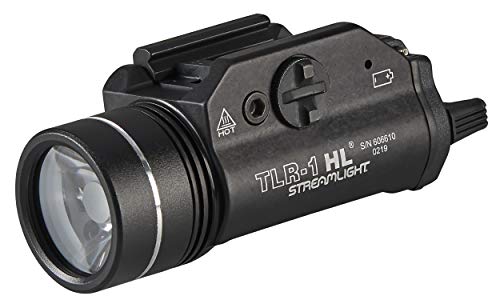


The Streamlight TLR-1 HL has been the benchmark rail-mounted weapon light for over a decade, and the 2026 production version holds that reputation firmly. At 1,000 lumens and 20,000 candela, it produces a concentrated hot spot with enough spill to maintain situational awareness in close-quarters environments. The rail clamp system is one of the fastest and most secure in the category — no tools required, and the design keeps hands away from the muzzle during installation or removal.
Compatibility is a genuine strength here. The TLR-1 HL ships with keys for Glock-style rails, MIL-STD-1913 Picatinny rails, Beretta 90two, Smith & Wesson SW99, TSW, and Sig Sauer P320 rails. For buyers running multiple platforms — a handgun and a rifle — this single light can serve both without adapters. Runtime sits at 1.5 hours on high, which is shorter than some competitors, but in real-world defensive use that window is more than sufficient. The aluminum body handles recoil from rifle-caliber rounds without issue.
One insider observation worth noting: the TLR-1 HL's 20,000 candela rating is relatively modest compared to newer entries in this roundup. It excels in room-clearing distances but loses ground to the ProTac HL-X or Cloud Defensive REIN Micro at extended ranges. For duty pistol use or home defense CQB work, however, it remains a top-tier choice — particularly given its wide rail compatibility and straightforward operation.
Pros:
Cons:
SureFire's X300 Ultra occupies the top tier of weapon lights, and the engineering behind it justifies the premium. The special off-white LED is biased toward the yellowish-green spectrum — the range of light most efficiently processed by the human visual system. In practical terms, this means faster target identification under stress compared to lights using cooler, bluer LEDs. At 1,000 lumens, the output matches the TLR-1 HL on paper, but the beam character is notably different.
The precision TIR (total internal reflection) lens creates a smooth, tight center beam with controlled peripheral spill. This is not a floodlight — it is a purpose-built identification tool optimized for threat assessment at realistic engagement distances. The one-finger ambidextrous switching system enables both momentary and constant-on activation without repositioning the hand, which matters enormously under stress. SureFire's switch ergonomics remain the industry reference point against which every other weapon light is measured.
Build quality is uncompromising. The aerospace-grade aluminum body and tempered glass lens are rated for sustained firing across calibers up to .50 BMG. For buyers who want a light that will outlast multiple firearms, the X300 Ultra is the clear answer. The price premium is real, but so is the engineering delta — particularly in switch feel, beam quality, and long-term reliability.
Pros:
Cons:
The SIG SAUER Foxtrot-MSR enters 2026 as one of the strongest purpose-built lights for short-barreled rifle platforms. At 1,350 lumens and 33,000 candela, it leads this roundup in the balance of flood and throw for MSR/SBR use. SIG engineered this specifically for close-quarters defensive applications where barrel length is compressed and rail space is at a premium. The compact housing mounts cleanly without creating snag points or adding bulk that fights the platform's handling characteristics.
Activation options are thoughtfully designed. The integrated push-button delivers both momentary and constant-on modes without modification, while the included remote tape switch — compatible with SureFire-style plugs — enables forward hand position control. For buyers running a grip-forward hold on an SBR, the tape switch option is a significant usability upgrade. Scout Mount compatibility and dual Picatinny/M-LOK mounting interfaces mean the Foxtrot-MSR adapts cleanly to most modern rail systems without separate adapter purchases.
Battery life and thermal management at 1,350 lumens require attention. High-output compact lights generate heat quickly, and users running extended training sessions should expect step-down behavior before the stated runtime is exhausted. In a duty or home defense context, this is rarely an operational concern — but it is worth knowing. For buyers interested in understanding how different lumen outputs interact with power consumption, the Best Watt Meter guide offers useful context on measuring electrical draw across devices.
Pros:
Cons:
The OLIGHT Odin Mini solves one of the persistent friction points in weapon light ownership: battery logistics. Built around a single proprietary rechargeable cell with a 4300K–5200K color temperature LED, it delivers 1,250 lumens and a 240-meter beam distance without requiring CR123A resupply. The integrated charging system means a standard USB-C connection is all that is needed between uses — a meaningful convenience advantage for range users and home defenders who do not want to manage primary battery inventory.
The slide rail mount system is genuinely clever. The Odin Mini ships with a dedicated M-LOK mount and accepts third-party Picatinny and KeyMod mounts, making it compatible across a wide range of AR-15 and carbine configurations. The removable mount design allows the light to function as a standalone handheld when dismounted — a dual-use flexibility that few competitors offer at this price point. The included remote pressure switch, at 11.22 inches of cable length, positions comfortably for most grip styles.
The rechargeable-only ecosystem does introduce one operational consideration: if the battery is depleted and a charger is not immediately available, there is no drop-in CR123A backup. For duty users in extended field environments, this matters. For home defense and range applications, the rechargeable system is a clean advantage — and OLIGHT's build quality continues to improve, with the Odin Mini surviving sustained rifle-caliber recoil without loosening or shifting.
Pros:
Cons:
The Inforce Gen 3 WMLx takes a fundamentally different approach to weapon light design than the cylindrical tube lights that dominate this category. The flat, low-profile housing mounts directly beneath the barrel with minimal forward extension, keeping the light's mass close to the receiver and reducing the visual and ergonomic signature of the setup. 1,100 lumens and 25,000 candela from a body this compact is a genuine engineering achievement, and the Gen 3 iteration refines the switch and mount reliability issues that affected earlier WMLx versions.
High mode delivers the full 1,100 lumen output for threat identification at realistic defensive distances. The 25,000 candela intensity provides meaningful throw beyond what the Streamlight TLR-1 HL achieves, while keeping the body slim enough to avoid interfering with most hand stops and foregrip configurations. For AR-15 builds with premium handguards where rail real estate and aesthetics both matter, the WMLx's profile is a genuine differentiator.
Switch reliability in earlier Inforce generations was a known concern among experienced users. The Gen 3 updates address the most common failure points, and current production units have demonstrated improved consistency in testing. That said, buyers coming from SureFire or Streamlight should understand that the WMLx still represents a different operational philosophy — one that prioritizes form factor and mounting simplicity over the belt-and-suspenders redundancy of more traditional designs. The WMLx suits well-equipped home defenders and competition shooters who clean and maintain their gear regularly. Those interested in understanding LED technology more broadly may find the Best Smart LED Light Bulbs review useful for context on how lumen and candela ratings translate across different LED applications.
Pros:
Cons:
The Cloud Defensive REIN Micro exists at the intersection of extreme output and compact packaging. 95,000 candela peak intensity is not a misprint — it is the most concentrated beam in this roundup, by a significant margin. At 1,000 lumens output with that level of candela, the REIN Micro produces a laser-like hot spot that reaches dramatically further than any other light in this comparison. For buyers who need positive identification at extended low-light distances, nothing in this roundup competes on throw.
The dual-fuel capability is a meaningful operational advantage. The REIN Micro runs primarily on an 18350 battery with a 40-minute runtime at peak output, but CR123A batteries slot in as an emergency backup — albeit with a performance reduction. This addresses the mission-critical gap that holds back rechargeable-only systems in duty or field contexts. The compact 4.88-inch body with a 1.3-inch bezel ships with a standard M-LOK mount and accepts various Scout Light mounting patterns for broad compatibility.
Forty minutes of runtime at peak output is the most significant operational constraint. Users who need sustained high-output over hours — extended search operations, for instance — will need to plan battery rotations. For defensive use in 2026, 40 minutes on a single 18350 cell represents more than enough capacity for any realistic engagement scenario, and the CR123A fallback provides genuine peace of mind. Cloud Defensive's build quality is exceptional; the REIN Micro is assembled in the USA with tolerances and coating quality that justify the premium asking price. The FDE finish option shown here is particularly well-executed — consistent, durable, and visually distinct on dark handguards.
Pros:
Cons:
The Streamlight ProTac Rail Mount HL-X earns the top overall recommendation in this roundup for one compelling reason: 50,000 candela of beam intensity at a realistic price point. At 1,000 lumens with a 447-meter beam distance, it outperforms the TLR-1 HL in throw by a factor of 2.5x while maintaining the balanced peripheral spill that makes weapon lights usable in close-quarters environments. For AR-15 owners who want a single light that handles both room-clearing and outdoor identification work, this is the answer.
Ten-TAP programmability gives users genuine flexibility. The HL-X can be configured across three modes — high only, low/high, or strobe/high — allowing buyers to tailor the light's behavior to their specific application without purchasing a separate unit. The remote pressure switch and tailcap switch are both included, covering forward-hand activation for rifles and conventional handheld or stock-mounted switch styles. Attachment is designed specifically for MIL-STD-1913 Picatinny rails, with a secure clamp that does not shift under sustained fire. Understanding the nuances of LED beam control and dimming behavior is explored in depth in the Best LED Dimmer Switches guide — relevant context for buyers who use weapon lights in dual indoor/outdoor roles where variable output matters.
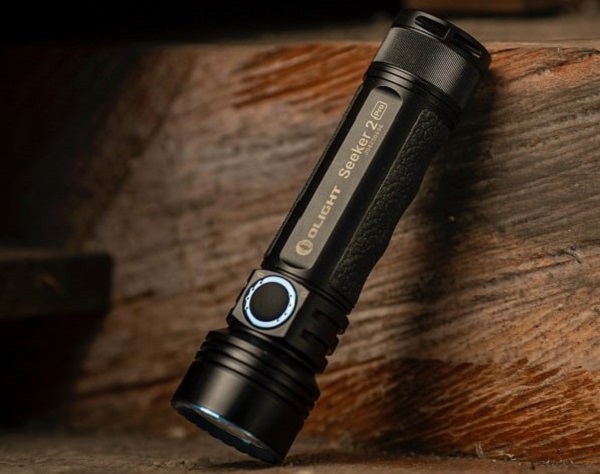
Build quality reflects Streamlight's decades of law enforcement and military supply experience. The ProTac HL-X is rated for use in rain, fog, and submerged conditions — IPX7 rated — and the aluminum body shrugs off the recoil of .223/5.56 without complaint. For buyers who want proven reliability, wide availability of replacement CR123A batteries, and documented performance across thousands of real-world units in service, the ProTac HL-X delivers everything the category demands without asking for a premium price. In 2026, it remains the most cost-effective path to serious long-gun illumination performance.
Pros:
Cons:
Lumens measure total light output — how bright the light is overall. Candela measures intensity in a specific direction — how far the beam throws and how concentrated the hot spot is. A light with 1,000 lumens and 20,000 candela (like the TLR-1 HL) produces a wider, more even beam than a light with 1,000 lumens and 50,000 candela (like the ProTac HL-X). For indoor defensive use, a broader beam is often more useful. For outdoor identification at distance, high candela wins decisively.
The AR-15 platform in 2026 runs three dominant rail systems: MIL-STD-1913 Picatinny, M-LOK, and KeyMod (declining but still present). Buyers should confirm their handguard rail type before purchasing any weapon light. Adapters exist for most combinations, but native mounts are always more secure and lower-profile than adapter stacks.
The best-specced weapon light is worthless if activation fails under stress. Switch design separates professional-grade lights from consumer products. Key considerations include:
Battery choice defines operational logistics. Primary lithium CR123A cells are the standard across most professional weapon lights — universally available, long shelf life, and reliable across temperature extremes. Rechargeable systems offer convenience at the cost of field flexibility. Dual-fuel designs like the Cloud Defensive REIN Micro bridge the gap effectively.
For indoor home defense, 500 lumens is a functional minimum — enough to identify targets and temporarily impair an attacker's vision at close range. For outdoor use or extended engagement distances, 800–1,000 lumens is the practical floor. All seven lights in this roundup exceed that threshold comfortably. In 2026, 1,000 lumens has become the baseline expectation for serious AR-15 weapon lights, not a premium feature.
For most rifle applications, yes. Lumens measure total output, but candela determines how far that light reaches in a focused beam. A rifle is more likely to be used at distances beyond 25 meters than a handgun, making beam throw more operationally relevant. The Streamlight ProTac HL-X at 50,000 candela and the Cloud Defensive REIN Micro at 95,000 candela both outperform 1,000-lumen lights with lower candela ratings at practical rifle engagement distances.
Some can, some cannot. The Streamlight TLR-1 HL is explicitly designed for cross-platform use, shipping with rail keys for Glock, Picatinny, and several other handgun rail systems. The SureFire X300 Ultra also mounts to both rail types. The larger tube-style rifle lights — ProTac HL-X, Foxtrot-MSR, Cloud Defensive REIN Micro — are designed for long gun Picatinny or M-LOK rails and are not practical for handgun use.
For home defense lights that rarely leave a controlled environment, waterproofing is a low priority. For any light that will be used in training, hunting, or outdoor defensive roles, IPX ratings matter. IPX4 covers rain and splash resistance; IPX7 (achieved by the ProTac HL-X) covers submersion up to one meter for 30 minutes. Buyers in wet climates or who anticipate field use should prioritize IPX7 or higher ratings when selecting a weapon light.
No. Weapon lights do not require zeroing in the traditional sense — the light simply illuminates the target area, and the firearm's sights or optic handles aiming. However, beam alignment relative to the bore does affect how the light performs at different distances. A light mounted far off-center from the bore axis (common with offset mounts) may illuminate a different area than the muzzle is pointing at extreme close range. For most rifle configurations, this effect is negligible.
A tailcap switch activates the light at the rear of the housing — functional for handheld use or for a shooter with a firing-hand thumb reach to the rear of the rail. A remote pressure switch connects via a coiled cable and mounts forward on the handguard where the support hand naturally rests, enabling activation without breaking grip. For AR-15 rifles, the remote pressure switch is generally preferred because it allows instant momentary activation without repositioning either hand. The Streamlight ProTac HL-X includes both options; the SIG Foxtrot-MSR includes a remote tape switch compatible with SureFire-style connectors.
 |
 |
 |
 |

About Liz Gonzales
Liz Gonzales grew up surrounded by art and design in a New York suburb, with both parents teaching studio arts at the State University of New York. That environment sharpened her eye for aesthetics and spatial detail — skills she now applies to evaluating home products where form and function both matter. She has spent the past several years writing about lighting, home decor accessories, and outdoor living gear, with a particular focus on how products perform in real residential settings rather than showrooms. At Linea, she covers lighting fixtures and bulb reviews, outdoor and patio gear, and general home product comparisons.
You can Get FREE Gifts. Furthermore, Free Items here. Disable Ad Blocker to receive them all.
Once done, hit anything below
|
|
|
|